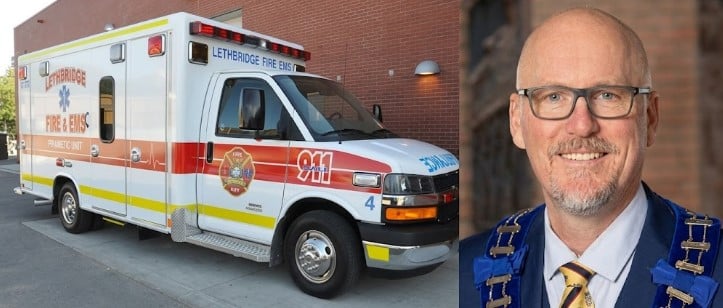
Lethbridge asked Alberta to keep talking. Alberta said no.
On May 15, Alberta Paramedic Health rejected the City of Lethbridge's request to continue negotiating its integrated Fire and EMS contract. The city had sent a joint advocacy letter alongside six other Alberta municipalities, asking the province to sit down and work through alternatives. The province declined.
The current EMS contract expires September 30, 2026. There is no new agreement in place. The clock is running.
What the fight is actually about
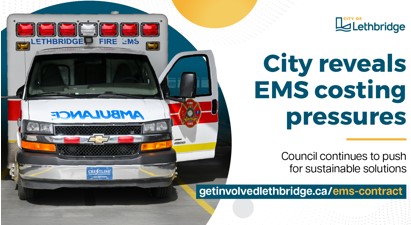
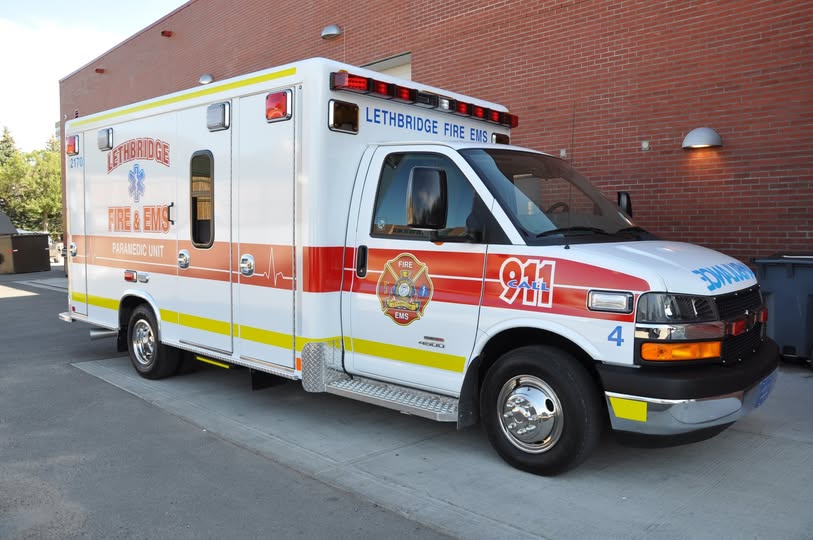
Lethbridge has run an integrated Fire and EMS model for more than 100 years. The people who show up when you call 911 in this city are trained as both paramedics and firefighters they share stations, share training, and share equipment. It's a system the city argues delivers better outcomes and faster response times than a standalone ambulance service would.
Since 2009, when EMS moved under provincial jurisdiction, the city has maintained that system through a contract with what was then Alberta Health Services now Emergency Health Services (EHS) Alberta.

On March 13, EHS sent a letter changing the terms of the relationship. Before any new contract negotiations could begin, the city would have to agree upfront to cover any costs above EHS's provincial funding benchmark. The city ran the numbers. The gap between what EHS would fund and what the integrated model actually costs came to $3.7 million a year a 1.8 per cent tax increase, or roughly $182 per household. By 2029, that climbs to $4.6 million and a 2.2 per cent increase.
The city's position was straightforward: it supports the integrated model, but it won't sign a blank cheque before negotiations even start.
What council did
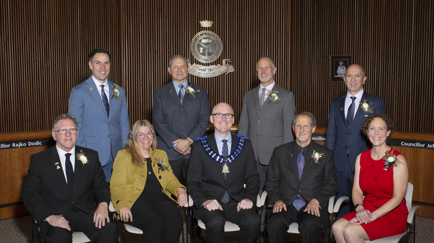
On March 24, council voted 9-0 to reject EHS's pre-condition while keeping the door open for further talks. They joined six other Alberta municipalities Red Deer, St. Albert, Strathcona County, Leduc, Spruce Grove, and the Regional Municipality of Wood Buffalo all of which run the same integrated model and face the same pressure.
"This development is something that has come up very quickly and could have a significant impact on our community," Mayor Blaine Hyggen said at the time. "We know EMS is extremely important to the health and safety of our residents."
EHS extended the city's original March 31 deadline to May 31. That bought time, but not movement. On May 12, council reaffirmed its original decision 7-2, and voted the same margin against extending the current contract beyond its September 30 end date.
Three days later, the province closed the door on further talks.
What happens now
The city says it hasn't given up on the model. In a statement issued May 13, it outlined a possible path forward reducing non-emergency inter-facility transfers to cut costs, using a new EMS-only division introduced in the latest collective agreement with the firefighters union, and exploring whether an expression of interest from the province could open a new route to keeping the integrated service.
"Refusing the financial impacts of EHS Alberta's contract conditions does not mean the City wants to walk away from an integrated service," the city said. "It means that an alternative solution needs to be found."
EHS has been clear about what happens if one isn't: the province moves to an open procurement process or takes over direct delivery of EMS in Lethbridge itself.
Not every Alberta city held the line. Red Deer council debated for more than eight hours on May 13 before voting 6-3 to accept the province's terms for two and a half years. Mayor Cindy Jefferies cited too many unknowns in the alternatives. Lethbridge made a different calculation.
Four months remain.
SOURCES:
City of Lethbridge — "City asking for provincial EMS contract talks to continue," March 25, 2026 (lethbridge.ca)
City of Lethbridge — "City remains committed to integrated Fire and EMS," May 13, 2026 (lethbridge.ca)
City of Lethbridge — "City does not accept provincial EMS contract conditions," May 12, 2026 (lethbridge.ca)








Comments
Conversation