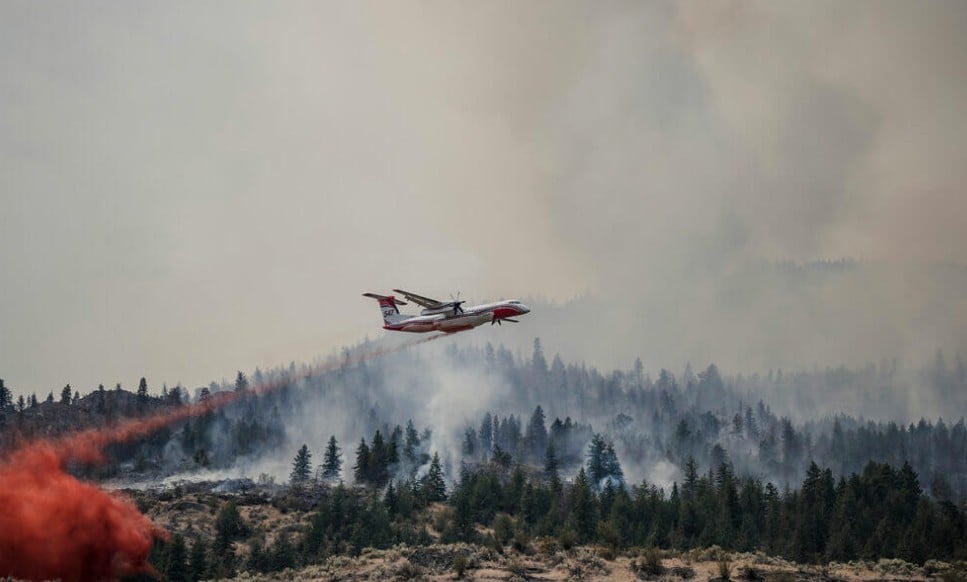
Alberta's wildfire fleet is getting a serious upgrade, and the province is keeping the contract local.
Premier Danielle Smith announced Tuesday that the province has signed a $400-million deal with De Havilland Canada for five new Canadair DHC-515 water bombers. The planes will be assembled at De Havilland's facility in Wheatland County roughly 30 minutes east of Calgary with the first aircraft expected to arrive by spring 2031.

Why Now?
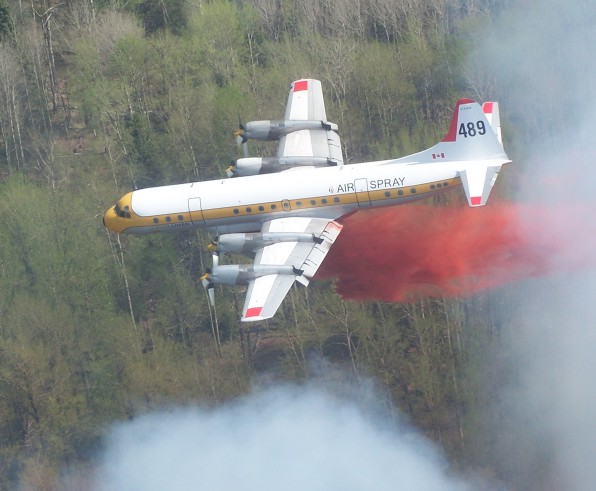
Alberta's current provincial fleet is showing its age. The four government-owned water bombers in service were all built between 1986 and 1988. While Forestry Minister Todd Loewen insists those planes still have life left in them, the province isn't willing to wait until they're grounded before bringing in replacements.
"This is an opportunity to build up our personal fleet and make sure as those other planes age that we have planes coming online for them," Loewen said at Tuesday's announcement.
Officials are calling it forward planning. Critics might call it a government that waited until its firefighting fleet was pushing 40 years old before writing the cheque.
The $400 million deal with Calgary-based De Havilland comes on top of the $160 million Alberta already spends on wildfire response every year and that's before the contingency fund kicks in when fire season gets ugly. The province has averaged over 1,000 wildfire starts annually for the past decade. The question isn't whether the investment is needed. It's whether it's already overdue.
What the DHC-515 Can Actually Do
The DHC-515 isn't just newer it's meaningfully better than what Alberta currently flies. The aircraft can hit speeds of up to 330 km/h, about 15 percent faster than the province's aging CL-215 fleet. It carries up to 6,137 litres of water per drop, also 15 percent more than the older model, and can refill its tanks by skimming a body of water in roughly 12 seconds.
The province says adding five of these aircraft will result in close to a 60 percent increase in Alberta's total water drop capacity a number that matters when you're fighting fires across a province this size.
The plane is powered by twin Pratt & Whitney Canada PW100 turboprops and features Universal Avionics touchscreen instruments. It's the same aircraft that Croatia, Greece, France, Indonesia, Spain, and Manitoba have already ordered Alberta is now among an international group of buyers.
More Than Just Planes
The deal comes with an economic upside the province was quick to highlight. The contract is expected to create and sustain roughly 1,000 jobs in Alberta, connected to manufacturing, operations, and maintenance at De Havilland's expanding facilities.
De Havilland relocated its headquarters to Alberta in 2022 and has been building out De Havilland Field a full aircraft assembly and support site in Wheatland County that will eventually house manufacturing for both the DHC-515 and the Twin Otter. Construction of the final assembly line is expected to wrap up around 2030, putting production of these planes right in Alberta before the province's first delivery.
CEO Brian Chafe said the Alberta contract is significant not just financially, but symbolically: "When you look at that strategy, it's about investing in Canadian companies, companies that have IP and a lot of significant employment in Canada."

What This Costs And What's Already Spent
The $400 million is a separate line item from the $160 million Alberta already spends on wildfire response every year. The province also maintains a contingency fund for years when costs go beyond that base amount. Smith confirmed the purchase will be funded through the provincial budget.
Alberta has averaged more than 1,000 wildfire starts per year over the past decade, trailing only British Columbia nationally. That track record is a big part of why officials weren't waiting around.
Other Wildfire Upgrades Already Underway
The water bomber announcement is part of a broader push the province has been making on wildfire preparedness. In recent years, Alberta has added night-vision helicopters to expand fire-fighting into overnight hours, and last season piloted a hoist program that can drop firefighting crews into precise locations using helicopters something the province tested for the first time in 2025.
The DHC-515 fleet, when it arrives, will slot into that expanding toolkit.








Comments
Conversation