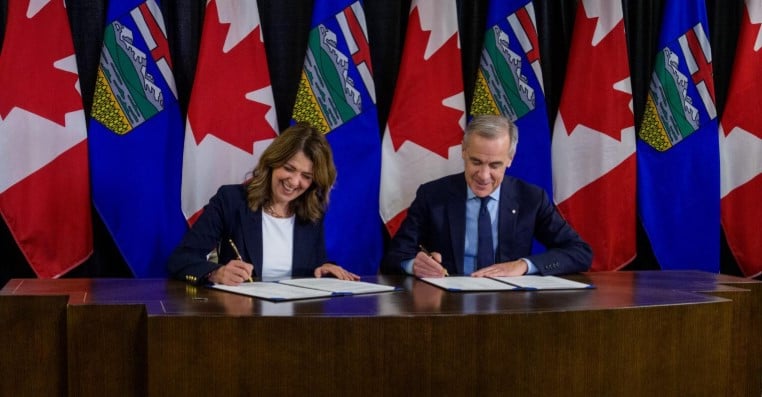
Alberta and Ottawa have a deal. After months of missed deadlines and tense negotiations, Premier Danielle Smith and Prime Minister Mark Carney stood together in Calgary on Friday and signed an energy implementation agreement that sets out a real timeline for a new oil pipeline to the West Coast.
If every step lands on schedule, shovels could be in the ground by fall 2027.
Who Would Actually Build It?
Alberta is submitting the pipeline application itself no private company has formally committed yet. Smith's government says oil sands majors including Cenovus, Canadian Natural Resources, Suncor, and Imperial Oil have been advising throughout the process and are expected to step up once federal approval lands. For Albertans, that distinction matters: if private capital follows, this is a generational infrastructure project that could mean decades of jobs, royalty revenue, and economic growth. If it doesn't, Ottawa and Alberta are holding a very expensive approval with no one to build it.
The Timeline
The agreement is built around three dates. Alberta submits a pipeline proposal to Ottawa's Major Projects Office by July 1. The federal government declares it a project of national interest by October 1. Final construction approval follows before September 1, 2027.
Alberta is acting as its own proponent on the submission meaning the province is putting the application forward directly rather than waiting on a private company to lead. No private sector proponent has stepped up yet. No route has been finalized. First Nations consultations have not happened. And B.C., which any West Coast pipeline would have to cross, remains publicly opposed.
Those are not small gaps. But Friday's agreement establishes the federal political commitment that industry and investors have been waiting on before putting money behind the project.
What Happens to the Carbon Price
The other half of the deal is the industrial carbon price which has been the sticking point for months.
Alberta froze its industrial carbon price at $95 per tonne last year. Under Friday's agreement, it stays there through the end of 2026, then rises to $100 per tonne starting in 2027. From there it climbs to $130 per tonne by 2035 on the headline price, with the effective market price reaching $130 by 2040.
Compare that to what the previous federal government had demanded: $170 per tonne by 2030. The gap is significant and it has consequences beyond Alberta.
A 2021 court ruling requires that carbon pricing be applied equally across all provinces. If Alberta's industrial price is lower, Ottawa legally has to extend the same treatment to other provinces operating under the federal system. The deal effectively resets the national standard downward.
Canada and Alberta will also jointly issue 75 million tonnes of carbon contracts for difference essentially locking in a fixed carbon price for businesses over a set period to give investors more predictability.
The Pipeline and Carbon Capture Are Tied Together
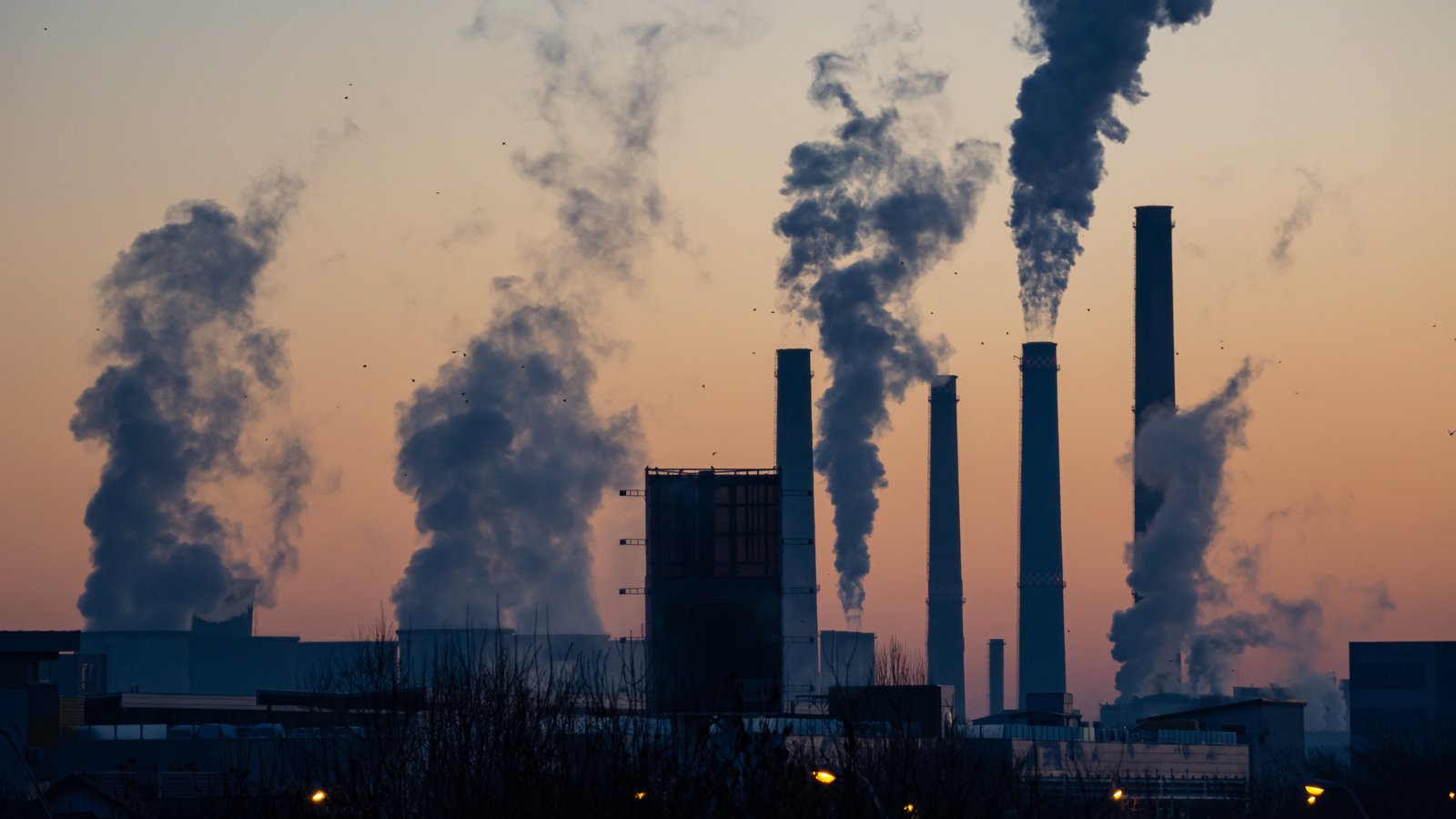
The agreement explicitly links the pipeline to the Pathways Project, a proposed carbon capture and storage system for the oil sands (the project rebranded from the Oil Sands Alliance earlier this year). The two governments describe construction of both as mutually dependent meaning one doesn't move without the other.
That matters for Fort McMurray and the broader oil sands sector. Carbon capture at that scale would represent a fundamental shift in how Alberta's energy industry operates, and it remains enormously expensive. Federal support for its economics is part of what the broader agreement is meant to provide.
What Smith and Carney Said
"Our agreement with Alberta is about building trust in a Canada that works," Carney said in a statement released Friday.
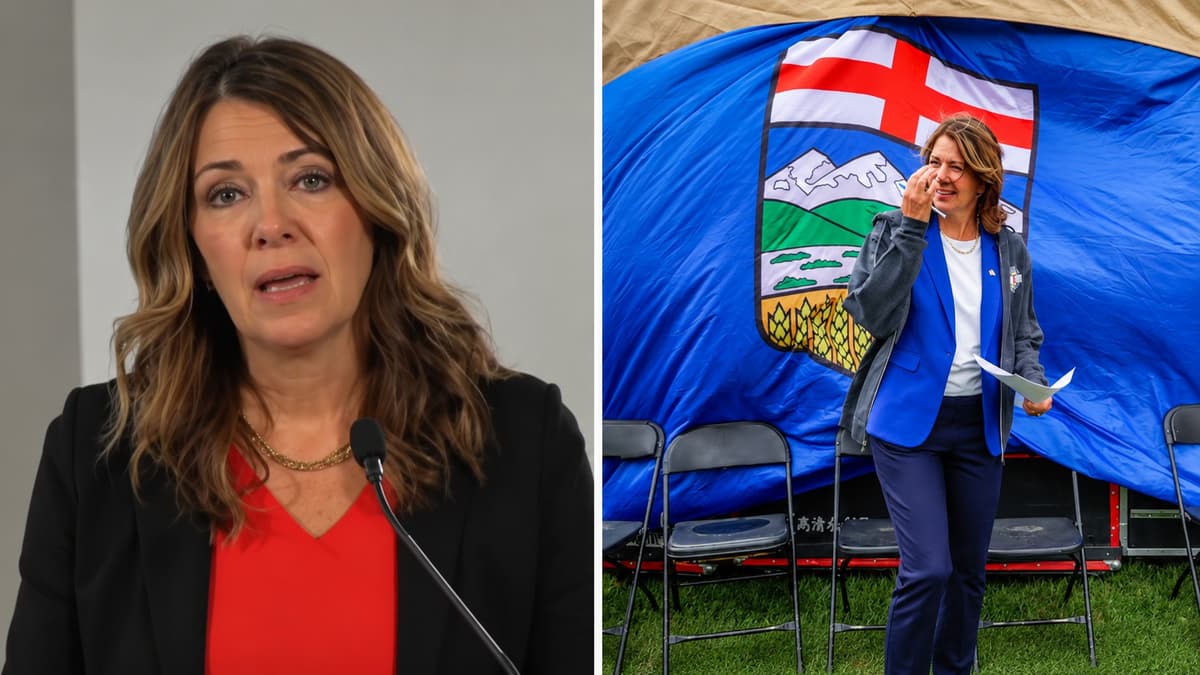
Smith framed the deal as a message to investors sitting on the sidelines. "The door is open, and it's time to turn shared ambition into real projects, jobs and results for Alberta and Canada."
Why This Deal Matters Right Now
The timing is deliberate. Earlier this week, an Alberta court threw out a petition that sought to put a separation question to referendum ruling it should never have been issued and that the provincial government failed in its duty to consult First Nations. Smith said her government will appeal.
She has argued consistently that deals like Friday's are the strongest counter-argument to separatism proof that Alberta's interests can be advanced within Confederation rather than outside it.
The clean electricity regulations that Smith spent years fighting also get addressed in the agreement. They remain in legal limbo pending a court challenge. If struck down, they're repealed. If upheld, Alberta and Ottawa negotiate an equivalency agreement instead of Alberta being forced to comply outright.
Sources: Government of Alberta / Government of Canada joint announcement, May 15, 2026; Prime Minister's Office statement, May 15, 2026







Comments
Conversation