
Edmonton has long been known for affordable housing and strong wages. But a lesser-known stat is quietly making the rounds and it says something important about what kind of city Edmonton actually is.

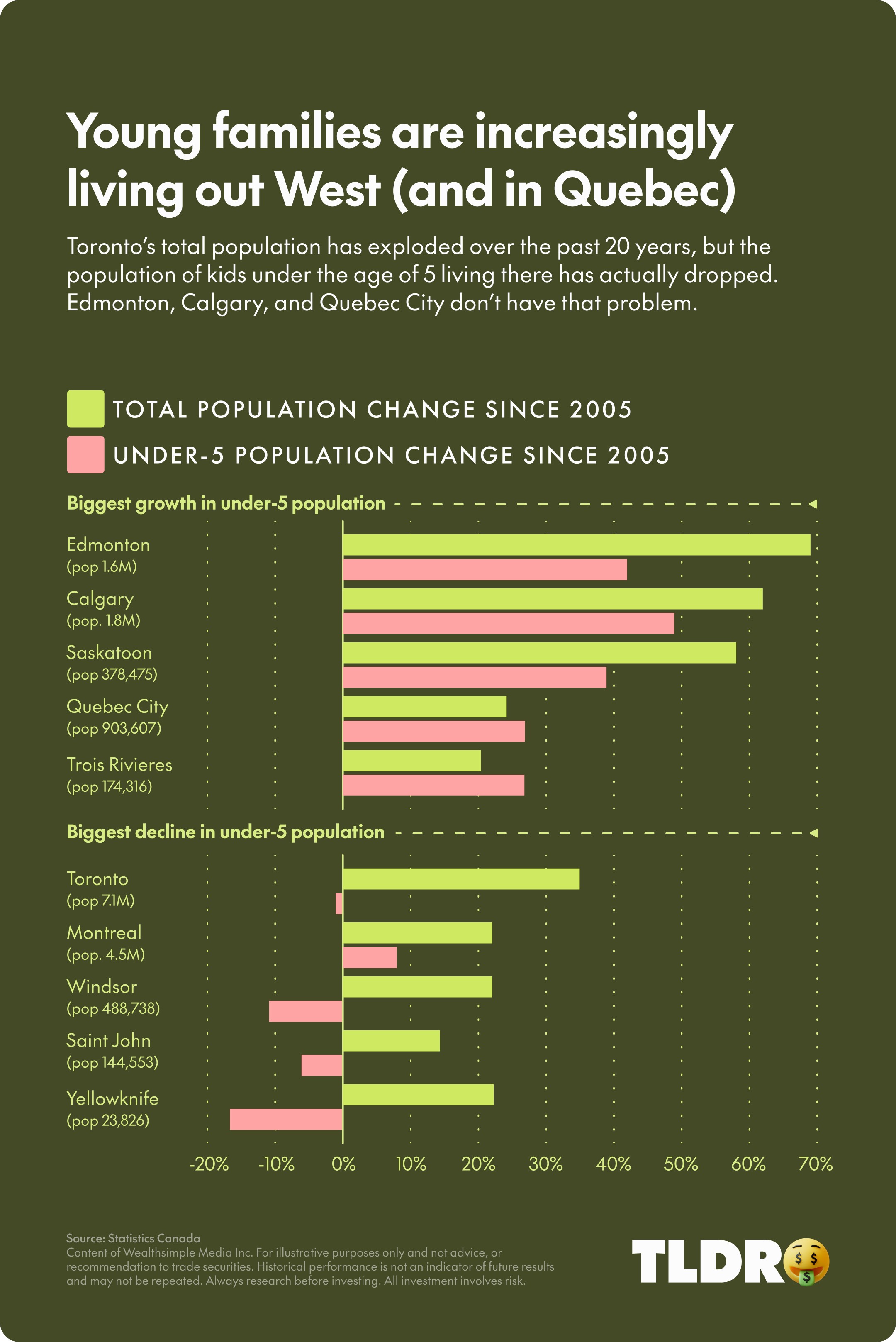
According to Statistics Canada census data, Edmonton's total population has grown by approximately 70% since 2005, making it one of the fastest-growing cities in the country. But what stands out even more is that its population of children under the age of 5 has grown by roughly 45% over the same period.
That might not sound dramatic at first. But compare it to Toronto a city that has seen massive overall population growth in the same timeframe and the picture changes completely. Toronto's under-5 population has actually declined since 2005. A city of 7.1 million people has fewer young children today than it did two decades ago.
Edmonton is doing the opposite.

Why This Stat Matters
When a city's overall population grows but its youngest residents disappear, it tells a story. It usually means families are being priced out, choosing not to have children, or leaving once kids arrive. That is the Toronto story right now.
Edmonton's story is different. Families are not just moving there they are staying, putting down roots, and having children. The under-5 population growing at roughly 45% while the overall population grew at 70% means young families are a significant and growing part of Edmonton's fabric.
Calgary tells a similar story. Its total population has grown around 65% since 2005, with under-5 growth close behind at roughly 50% second only to Edmonton among major Canadian cities.
Saskatoon rounds out the top three, with comparable under-5 growth relative to its overall expansion.
What Is Driving Families to Edmonton
Several factors help explain why Edmonton keeps attracting and retaining young families.
Affordability. Edmonton consistently ranks as one of the most affordable major cities in Canada for homeownership. For young families who need more space a yard, an extra bedroom, proximity to a good school Edmonton delivers what Toronto and Vancouver simply cannot at comparable price points.
Alberta's economy. The province has historically offered strong employment in energy, technology, healthcare, and government. Two-income households can build real financial stability here in a way that is increasingly difficult in Canada's most expensive markets.
No provincial sales tax. Alberta's absence of a PST means more take-home income for families managing childcare costs, groceries, and everything else that comes with raising young kids.
Space and infrastructure. Edmonton is a city built for families. Neighborhoods are spacious, parks are abundant, and the cost of living allows for the kind of lifestyle recreational activities, extracurriculars, family travel that is out of reach for many families in larger centers.

The Toronto Contrast Is Striking
Toronto's numbers put Edmonton's achievement in sharper relief. The Greater Toronto Area added hundreds of thousands of residents between 2005 and 2021. But those residents skew heavily toward working-age adults particularly newcomers and young professionals who are either delaying having children or leaving the city once they do.
The data suggests Toronto has become a city people arrive in but do not necessarily raise families in. The cost of a home, childcare, and everyday life makes it increasingly difficult for young parents to stay.
Edmonton has not reached that inflection point. And if the current trends hold, it may not for some time.
What This Means for Edmonton's Future
A growing base of young children today means a growing base of students, workers, taxpayers, and community members in 15 to 25 years. Cities with aging or declining youth populations face long-term fiscal and social challenges. Cities like Edmonton where young families are choosing to plant roots are building a generational advantage.
For people weighing where to raise a family in Canada, Edmonton deserves a serious look. The data, sourced directly from Statistics Canada, makes a compelling case.
Source: Statistics Canada, Census of Population. Data reflects census metropolitan area population changes from approximately 2005 to 2021. Chart data via Wealthsimple TLDR.









Comments
Conversation