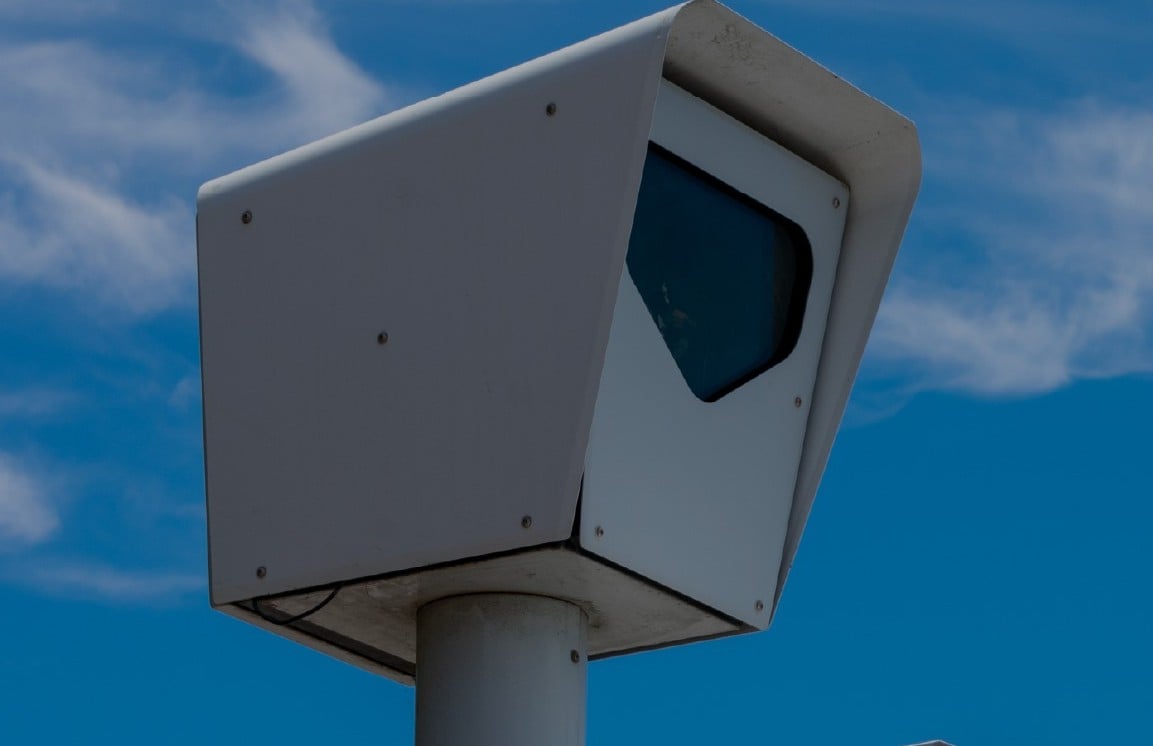
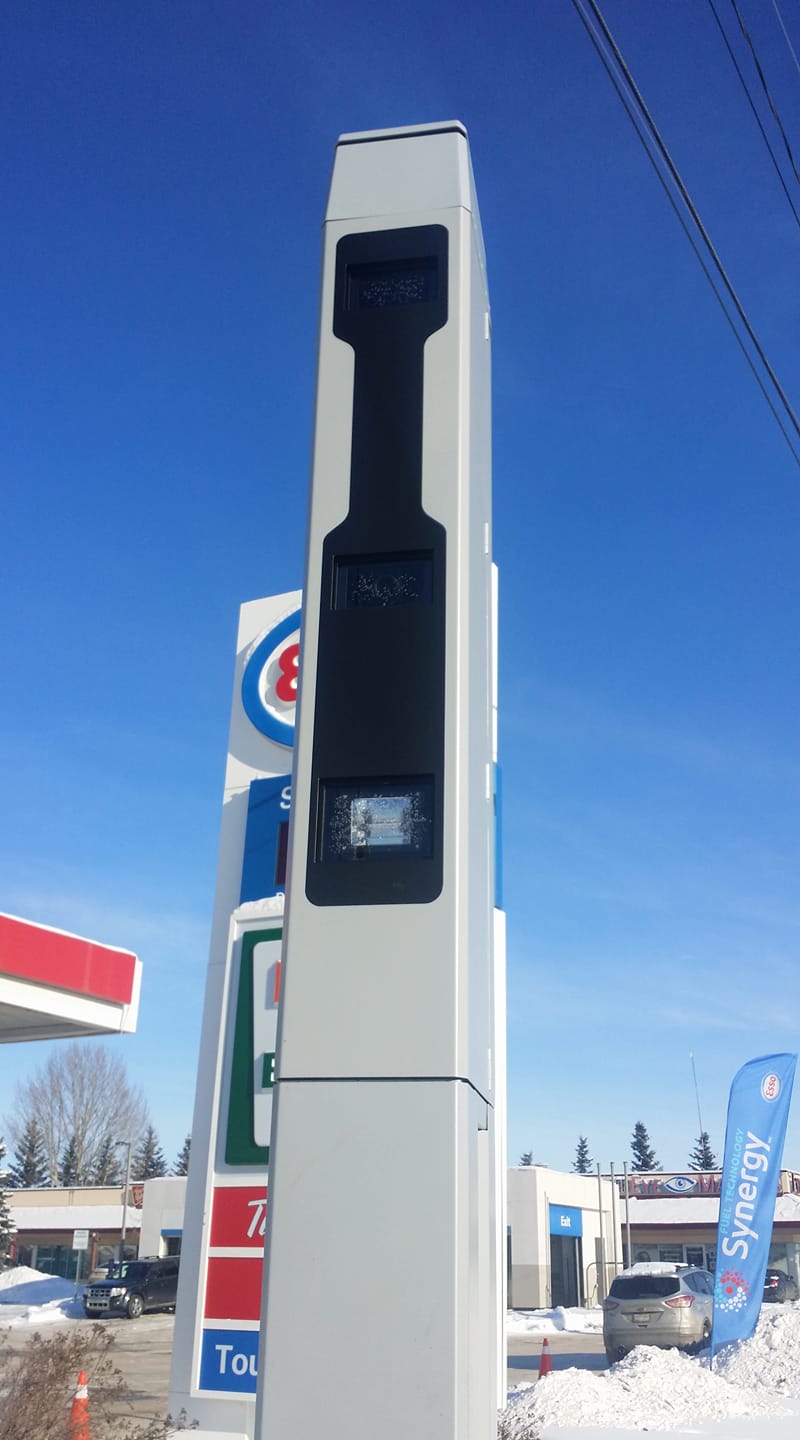
For years, if you got caught speeding anywhere in Alberta, a chunk of your fine went back to the city that ticketed you. Most drivers did not think about it that way. Photo radar was just the thing you cursed when a ticket showed up in the mail two weeks after the fact.
Behind the scenes, that revenue was doing real work. According to government data, the single busiest photo radar site in the province on Baseline Road in Strathcona County generated nearly $6 million in a single year from 52,558 tickets, or about 144 per day. In Edmonton, four of the top five revenue-generating sites in the province were located within city limits. That money fed policing budgets, traffic calming programs, and intersection upgrades. It was consistent, and municipalities built programs around it.
That pipeline is now essentially gone.
What Changed
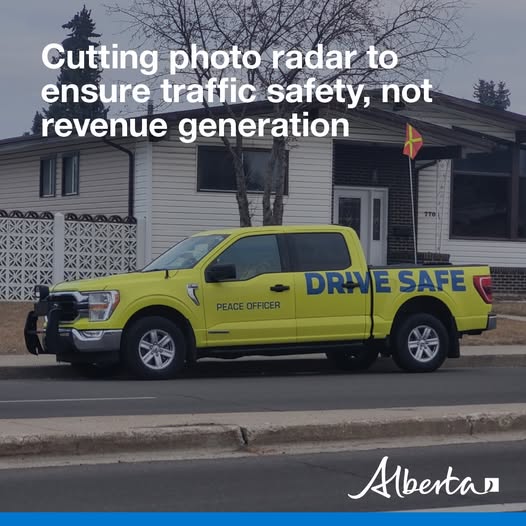
On December 2, 2024, the province announced it was restricting automated traffic enforcement to school zones, playground zones, and construction zones only effective April 1, 2025. Photo radar on all numbered provincial highways and connector roads was banned outright. Speed-on-green cameras at intersections were eliminated entirely, with intersection devices restricted to red-light enforcement only.
The province reviewed all 2,200 existing photo radar sites across 24 municipalities and targeted a 70 per cent reduction. According to the government's own release, Alberta had about 70 per cent more photo radar sites than the next highest province in Canada.
Transportation Minister Devin Dreeshen made no apologies for the framing. "We have officially killed the photo radar cash cow and the revenue-generating fishing holes that made Alberta the biggest user of photo radar in Canada," he said when the final guidelines were released in March 2025.
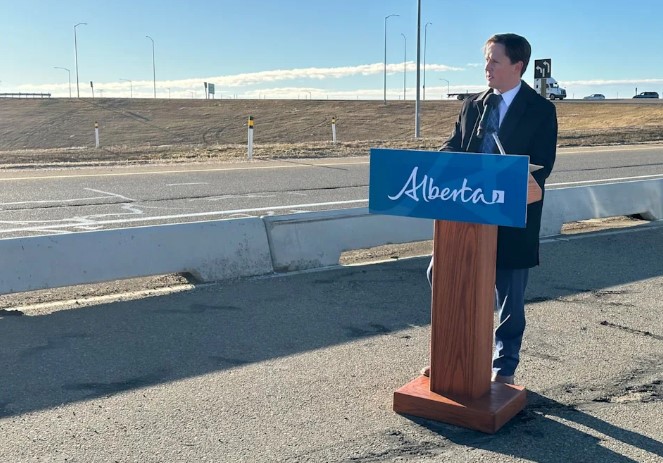
To offset the losses, the province created a $13 million Traffic Safety Fund distributed as $1 million in 2025-26, $2 million in 2026-27, and $10 million in 2027-28 for municipalities to upgrade high-risk intersections with physical improvements.
That fund is shared across all 25 municipalities that had photo radar programs.
Calgary: The Numbers Tell the Story
The Calgary Police Commission publishes its budget documents publicly, and the picture they paint is straightforward.
In 2023, the CPS budget counted on $47 million in fines and penalties revenue from photo radar, speed-on-green cameras, red light cameras, and officer-issued tickets combined. The actual amount that came in was $34 million. That $13 million gap was already a warning sign.
For 2024, CPS budgeted $47 million in fine revenue again. By early 2025, the service confirmed it had come in roughly $15 million short of that and that was before the April 1 restrictions fully kicked in.
The total damage: a $28 million structural shortfall in the CPS operating budget, projected to continue every year going forward.
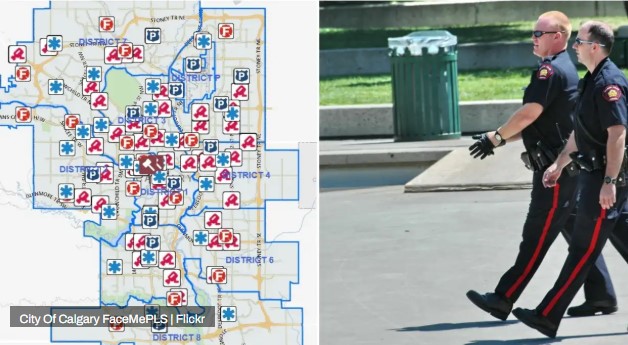
With 85 per cent of that budget committed to salaries and benefits, there was no easy place to find $28 million. Police Chief Mark Neufeld froze hiring for civilian positions and moved to cap overtime which had already cost the service $23 million in 2023 alone, well above its $11 million budget for that line item. He told reporters the cuts were not about trimming excess. "It's not as though there's a bunch of fat to cut. We're cutting muscle."
City council voted unanimously to cover the 2025 gap by drawing $28 million from Calgary's Fiscal Stability Reserve. That solved the immediate problem. A $28 million annual shortfall in every year after that is a different conversation one that ends with property taxes.
Edmonton: A Slower Bleed
Edmonton's situation unfolded more gradually but the direction was the same.
The province had been increasing its share of photo radar fine revenue since 2019, squeezing what cities actually kept. Edmonton had been relying on automated traffic enforcement to fund intersection upgrades, school zone programs, and residential street safety initiatives. As the provincial share grew and prior restrictions reduced ticket volume, those funding sources thinned.
By late 2024, the city was projecting a $14.6 million drop in photo radar and fine revenues and was openly discussing tax increases to compensate.
After April 1, Edmonton city council began exploring whether bylaw officers could take on more traffic enforcement responsibilities to replace what cameras had been doing. The math was difficult. Cameras run 24 hours a day and do not require overtime.
By June 2025, Edmonton announced it was pulling mobile photo radar from all 247 playground zones. The enforcement had worked so well at changing driver behaviour that tickets were no longer generating enough revenue to cover operating costs. The city said it would redirect existing budget dollars toward speed humps, curb extensions, and other physical traffic calming instead.
The Rest of Alberta: Smaller Cities, Proportionally Bigger Hits
The financial hit was not limited to the two largest cities. For smaller municipalities, photo radar revenue often represented a larger share of lean budgets — and much of it came from drivers just passing through.
Coaldale took perhaps the most direct hit of any small community in the province. In its approved 2025-2027 operating budget, Town Council confirmed a net loss of approximately $400,000 in operating revenue from the provincial photo radar changes. To balance its budget under the Municipal Government Act, the town needed to find nearly $973,000 in additional revenue — a combination of the photo radar loss and inflation running at three per cent in Alberta, higher than the national rate. The town noted that 70 per cent of the drivers it had been ticketing were from out of town, speeding through on Highways 3 and 845. Those drivers are back to speeding. The cameras are restricted from those roads.
St. Albert had been collecting $410,000 annually from automated enforcement. Its 2025 municipal budget projected that dropping to $85,000 after the provincial changes. That revenue had been funding emergency services, policing, and traffic safety programs. Mayor Cathy Heron, speaking to the province's announcement, said the city would struggle because its enforcement contractor could not see a viable business case under the new rules. "We might be out of all ATE sites including school and construction zones," she said. "It's going to fall upon law enforcement, but you'll never be able to pick up the majority of it."
Red Deer saw 43 traffic corridor photo radar locations eliminated as of April 1, plus ten intersections where speed-on-green enforcement ended. The city had already anticipated the changes and added four community peace officers during budget deliberations to cover the enforcement gap — officers who cost money rather than generate it.
The pattern holds across communities that have quietly dropped their programs entirely since the rules changed. According to the province's own figures, the number of municipalities with active automated enforcement programs dropped from 26 to 17 in the year following the restrictions — a reduction of more than a third.
The Province's Position Has a Hole in It
The government's argument is that photo radar was never meant to fund policing, and that municipalities only have themselves to blame for depending on it.
There is something to that. Cities did build budget lines around a revenue source that was always subject to provincial policy. That was a risk they accepted.
But the province's hands are not clean here either. In 2019, the government increased its own share of photo radar fine revenue from 27 per cent to 40 per cent. The province was not a passive observer of the cash cow it was taking four dollars out of every ten generated. Then it declared the program corrupt and shut it down, offering a $13 million fund spread across 25 municipalities over three years as compensation.
Previous Calgary Mayor Jyoti Gondek noted that the city alone has between $48 million and $97 million in unfunded traffic calming projects near schools, and between $400 million and $600 million in citywide unbudgeted traffic calming needs. The $13 million fund, shared provincially, does not register against those numbers.
"It's not even a drop in the bucket," she said. "The drop evaporates before it hits the bucket."
What It Means for Albertans
The practical question is where the money comes from now.
For Calgary, drawing on reserves is a one-year bridge, not a solution. The longer-term conversation city council started in early 2025 is about restructuring CPS funding entirely, removing the dependence on fine revenue and moving to a stable, tax-supported base. That shift protects the police budget from provincial policy swings but it means a larger share of what you pay in property taxes goes to policing.
For Edmonton, the bet is that physical infrastructure does the job cameras used to do. Speed humps do not generate revenue, but they also do not need operating budgets once they are built. The upside is sustainable. The upside requires capital the province has not provided.
For smaller communities, the math is already settled. Coaldale lost $400,000 from its budget revenue that had come almost entirely from out-of-town drivers passing through on provincial highways. Those drivers are back to speeding. The cameras are gone. And the town does not have $400,000 sitting around.
The province got what it wanted politically. Whether Alberta's roads end up safer or just less monitored is something the data will sort out over the next few years. In the meantime, cities are figuring out who holds the bill.
Sources: Government of Alberta (December 2, 2024 and March 27, 2025 press releases, alberta.ca); Calgary Police Commission 2024 Budget Financial Tables





Comments
Conversation