The Vote
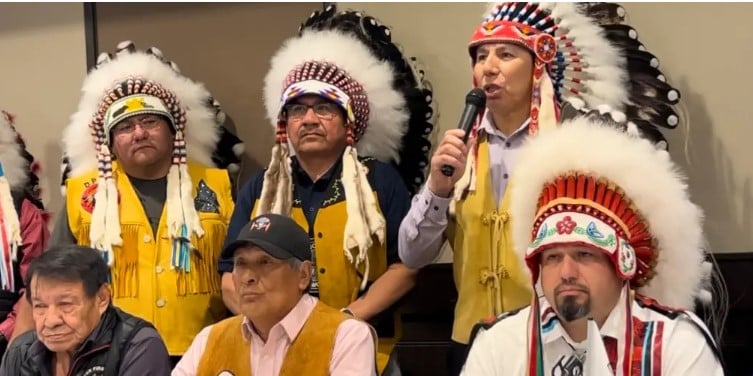
On February 26, at The Venue at River Cree Resort on Enoch Cree Nation territory just west of Edmonton, the Assembly of Treaty Chiefs held its Winter Sitting. Chiefs from Treaty 6, Treaty 7, and Treaty 8 were there nations whose territories cover the vast majority of what we call Alberta.
Every single one of them voted the same way.
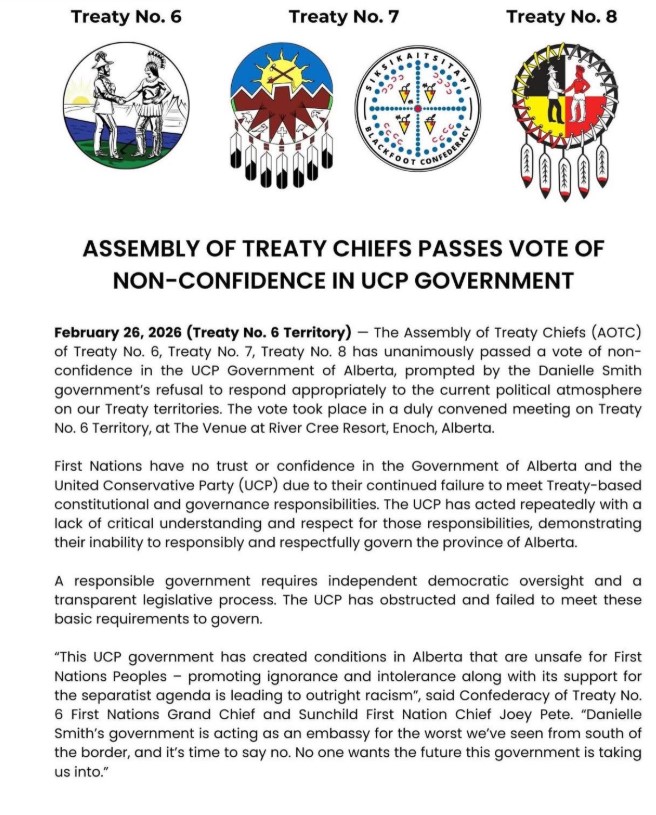
The Assembly of Treaty Chiefs formally and unanimously passed a vote of non-confidence in the United Conservative Party government of Alberta. The AOTC's own statement said the move was triggered by the Danielle Smith government's "refusal to respond appropriately to the current political atmosphere on our Treaty territories."
The NDP put it more bluntly in their response: "This has never happened in Alberta's history."
What the Chiefs Actually Said
Three voices from the primary statement stood out and they were harsher than most media covered.
Treaty 6 Grand Chief Joey Pete, who also serves as Chief of Sunchild First Nation, didn't hold back:
"This UCP government has created conditions in Alberta that are unsafe for First Nations Peoples promoting ignorance and intolerance along with its support for the separatist agenda is leading to outright racism. Danielle Smith's government is acting as an embassy for the worst we've seen from south of the border, and it's time to say no. No one wants the future this government is taking us into."
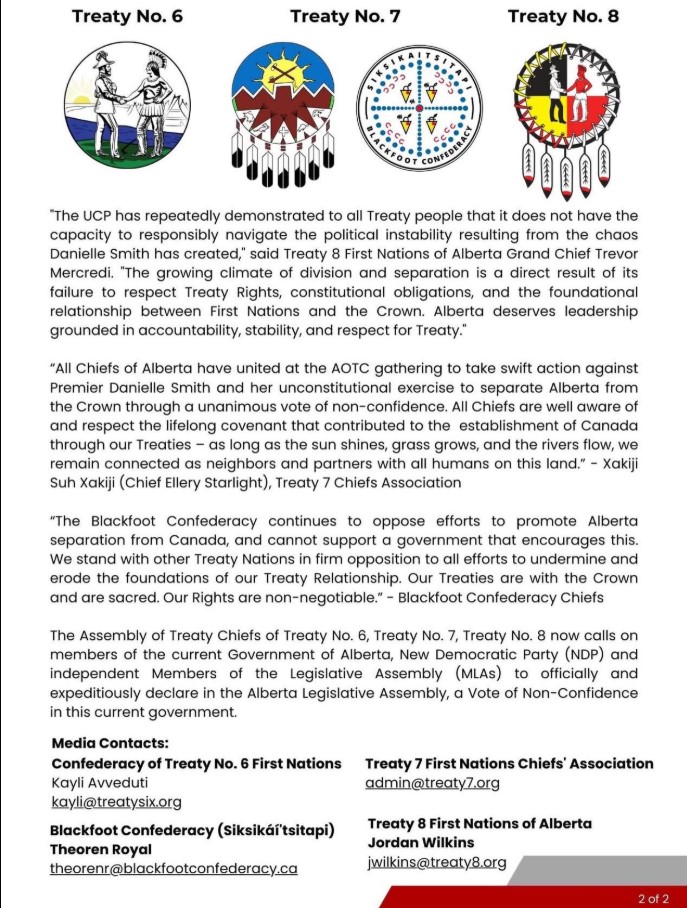
Treaty 8 Grand Chief Trevor Mercredi framed it around constitutional failure:
"The growing climate of division and separation is a direct result of its failure to respect Treaty Rights, constitutional obligations, and the foundational relationship between First Nations and the Crown. Alberta deserves leadership grounded in accountability, stability, and respect for Treaty."
And Tsuut'ina Nation Head Chief Ellery Starlight speaking on behalf of the Treaty 7 Chiefs Association invoked the language of the treaties themselves:
"As long as the sun shines, grass grows, and the rivers flow, we remain connected as neighbours and partners with all humans on this land."
The Blackfoot Confederacy also added their own statement: "Our Treaties are with the Crown and are sacred. Our Rights are non-negotiable."
Why Now
The AOTC's statement is clear that this wasn't a reaction to one moment. The chiefs say the UCP has shown a repeated and consistent failure to meet "Treaty-based constitutional and governance responsibilities" and that the government lacks the capacity to provide "independent democratic oversight and a transparent legislative process."
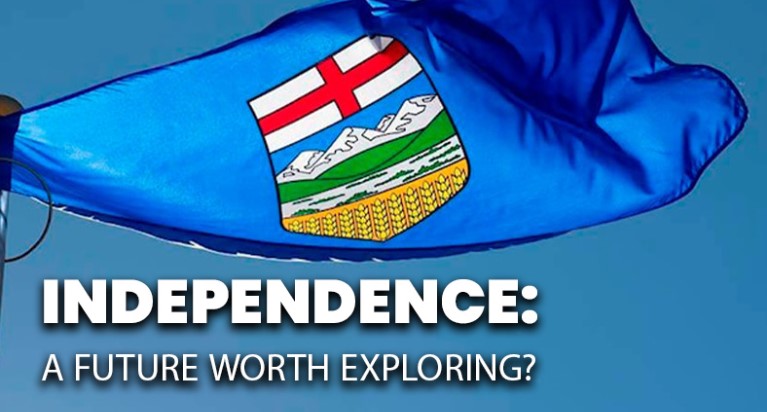
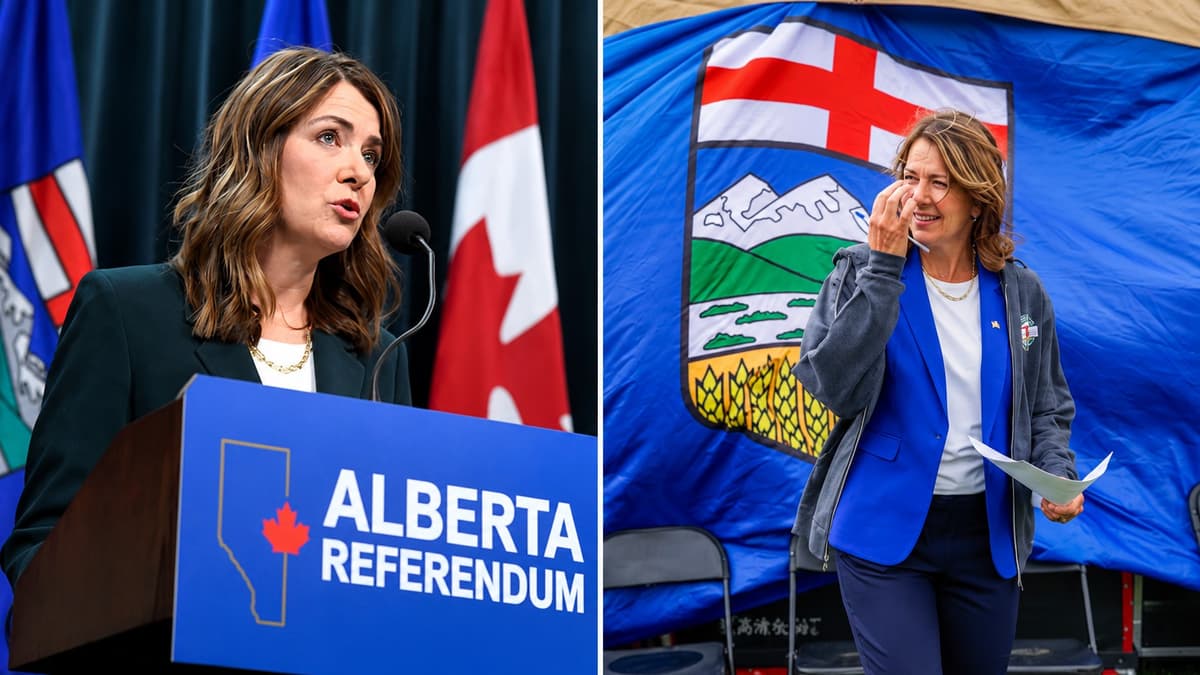
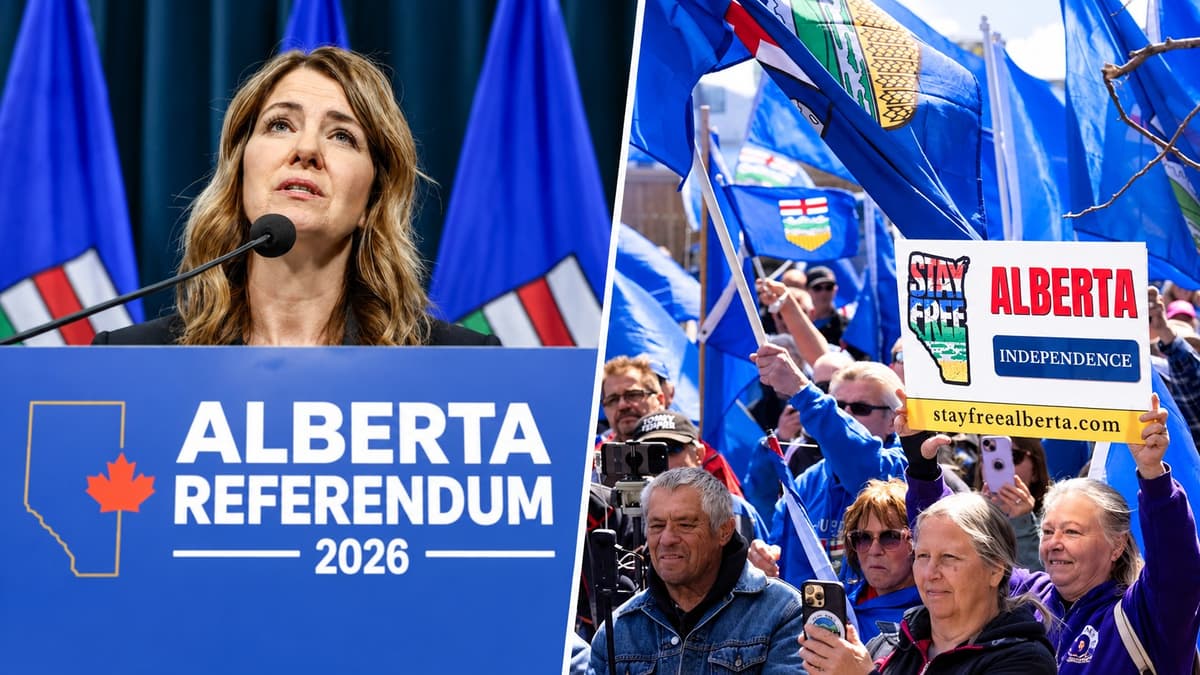
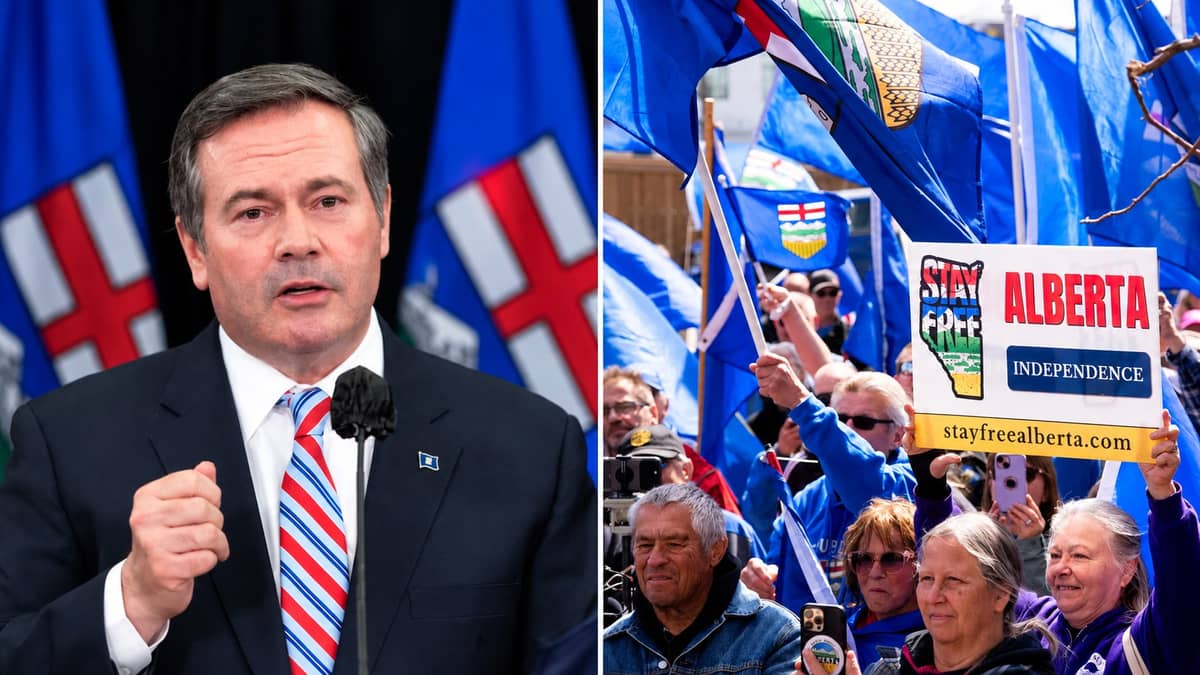
The separation petition, brought forward by the Alberta Prosperity Project, lit the match. The group is currently collecting the 177,732 signatures needed to force a referendum on whether Alberta should leave Canada entirely. A Court of King's Bench judge already ruled in December that a similar question would be unconstitutional under Charter and Treaty rights. The petition continues regardless.
The Athabasca Chipewyan First Nation, which issued its own separate statement of support for the motion, called it plainly: "There is a profound and widening disconnect between the Government of Alberta and the Treaty 6, 7, and 8 Nations whose inherent and Treaty rights are constitutionally protected."
What They're Asking For
The Assembly isn't just making a statement. They're making a demand.
The AOTC is calling on UCP members, NDP MLAs, and independents to "officially and expeditiously declare in the Alberta Legislative Assembly, a Vote of Non-Confidence in this current government."
The NDP responded quickly, with leader Naheed Nenshi alongside Indigenous relations shadow minister Brooks Arcand-Paul and forestry and parks shadow minister Jodi Calahoo Stonehouse saying they "categorically denounce separatism" and stand with First Nations to uphold the treaty relationship.
The UCP government has not issued a direct public response to the chiefs' resolution.
Source: Assembly of Treaty Chiefs official statement, February 26, 2026 (treatysix.org); Athabasca Chipewyan First Nation statement, February 27, 2026; Alberta NDP joint statement, February 2026.




Comments
Conversation