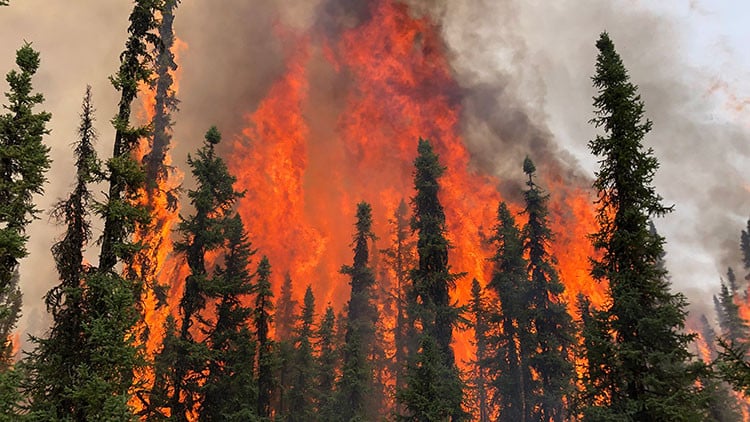
The snow hasn't fully melted across much of Alberta. The trees are still bare. It doesn't look like fire season but it already is.
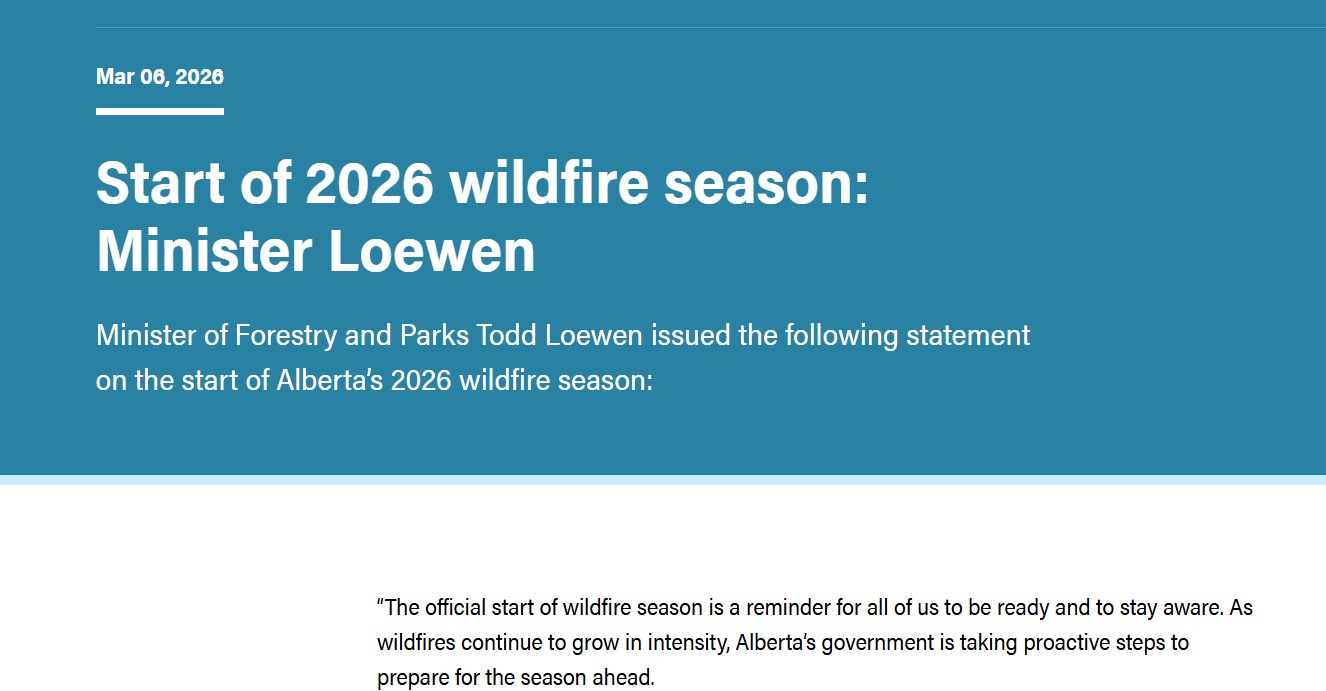
Alberta's 2026 wildfire season officially began March 1, and provincial crews have already responded to 27 fires since then. Minister of Forestry and Parks Todd Loewen confirmed the season is underway and urged Albertans to start taking precautions now, before conditions deteriorate further into spring.
When does Alberta wildfire season start?
Alberta's wildfire season officially begins March 1 every year earlier than almost anywhere else in Canada. The reason is straightforward: the weeks between snowmelt and green-up are among the most dangerous on the entire calendar.
When snow disappears, it leaves behind months of dried-out dead grass, brush, and debris that hasn't seen rain in weeks. Trees haven't leafed out. Chinook winds can push a grass fire across an open field faster than a person can run. It doesn't look dangerous. It is.
About 60 per cent of Alberta wildfires are started by people escaped burn piles, unextinguished campfires, sparks from equipment. The remaining 40 per cent are ignited by lightning.
What is Alberta doing to prepare for wildfire season 2026?
The 2024 Jasper wildfire changed how the province thinks about preparation. When a town loses a third of its structures in a single night, governments pay attention.
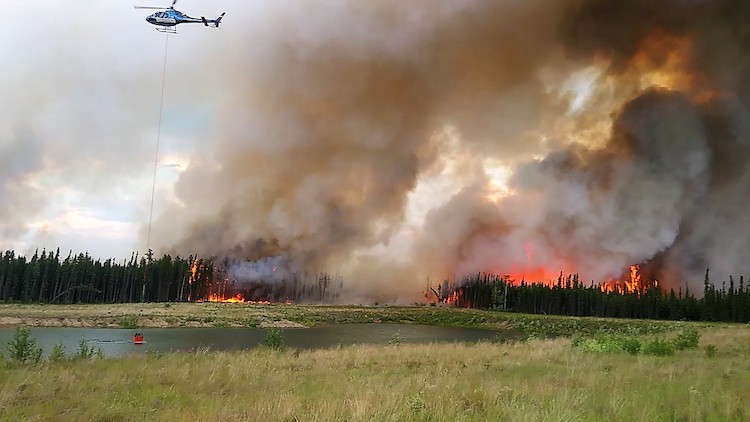
Budget 2026 maintains full funding for wildfire response crews, aircraft, equipment and technology. Two new hoist-equipped helicopters have been added to the provincial fleet, capable of reaching terrain that ground crews cannot access. Alberta is also expanding its night vision program, allowing fire operations to continue after dark rather than stopping when the sun goes down a window that historically allowed fires to spread unchecked overnight.
The province also launched the new Alberta Wildfire Mitigation Strategy in 2026, a long-term plan focused on reducing wildfire risk before fires start. Its key pillars include FireSmart programming, community fireguard projects, public education, and partnerships with municipalities and Indigenous communities across the province.
Loewen said the focus is on shared responsibility. "Wildfire safety is a shared responsibility. Follow fire bans and restrictions, obtain permits where required and fully extinguish campfires by soaking, stirring and soaking again."
What happened during the 2024 Jasper wildfire?
Nobody in Alberta needs to be reminded what an unchecked wildfire looks like. On the evening of July 24, 2024, a wall of flames moved into the townsite of Jasper. Radio logs from that night document the collapse in real time.
At 6:06 p.m., the first structure report: Maligne Lodge fully involved. By 6:27 p.m. less than half an hour after the first call the notes read simply: "roof fully involved at Petro Can. Left beyond control."
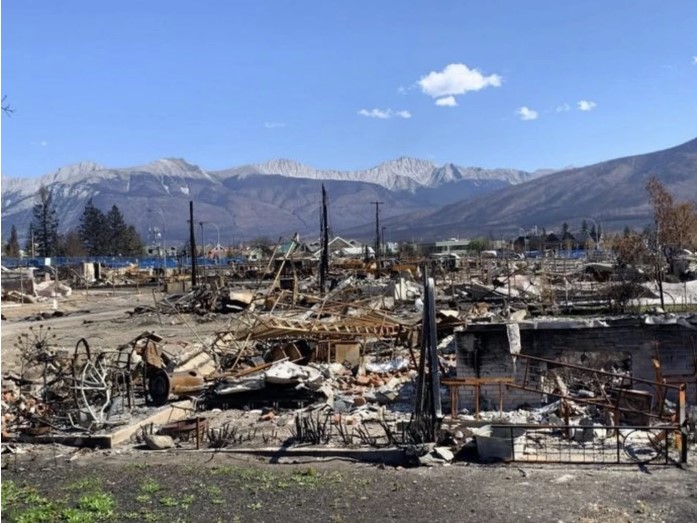
By morning, 358 structures were destroyed a third of the entire town. Twenty-five thousand people had been evacuated overnight. Insured losses climbed to $1.3 billion, making it the costliest wildfire in Alberta history.
A year later, only 15 per cent of destroyed properties had received permits to rebuild. Jasper is still not whole. It won't be for years.
The mountain towns of Canmore and Hinton haven't forgotten it. Both have accelerated their FireSmart programs and fireguard projects heading into 2026, cutting defensible space between their buildings and the surrounding forest before fire season reaches its peak.
How bad was Alberta's wildfire season in 2025?
Alberta recorded 1,260 wildfires in 2025 second only to British Columbia's 1,370 across all Canadian provinces and territories. Wildfires also burned through Saskatchewan, Manitoba, Ontario, and Nova Scotia in 2025, a scale of national fire activity that has become increasingly routine compared to a decade ago.
What can Albertans do to prepare for wildfire season?
The province has a clear list of steps every Albertan living near forests or grasslands should take now not when a fire is already burning nearby.
Know your community's evacuation routes before you need them. Create defensible space around your home by clearing debris, trimming branches away from the roof, and storing woodpiles away from exterior walls. Check fire restriction levels in your area before burning anything outdoors at alberta.ca/wildfire. And if you see a wildfire, call 310-FIRE immediately.
Current fire conditions, active wildfires, and restriction maps across Alberta are updated daily at alberta.ca/wildfire.
Sources:
Alberta Forestry and Parks: https://www.alberta.ca/forestry-and-parks
Insurance Bureau of Canada Jasper: https://www.ibc.ca/news-insights/news/one-year-after-jasper-wildfire-rebuilding-continues-amid-ongoing-challenge



Comments
Conversation