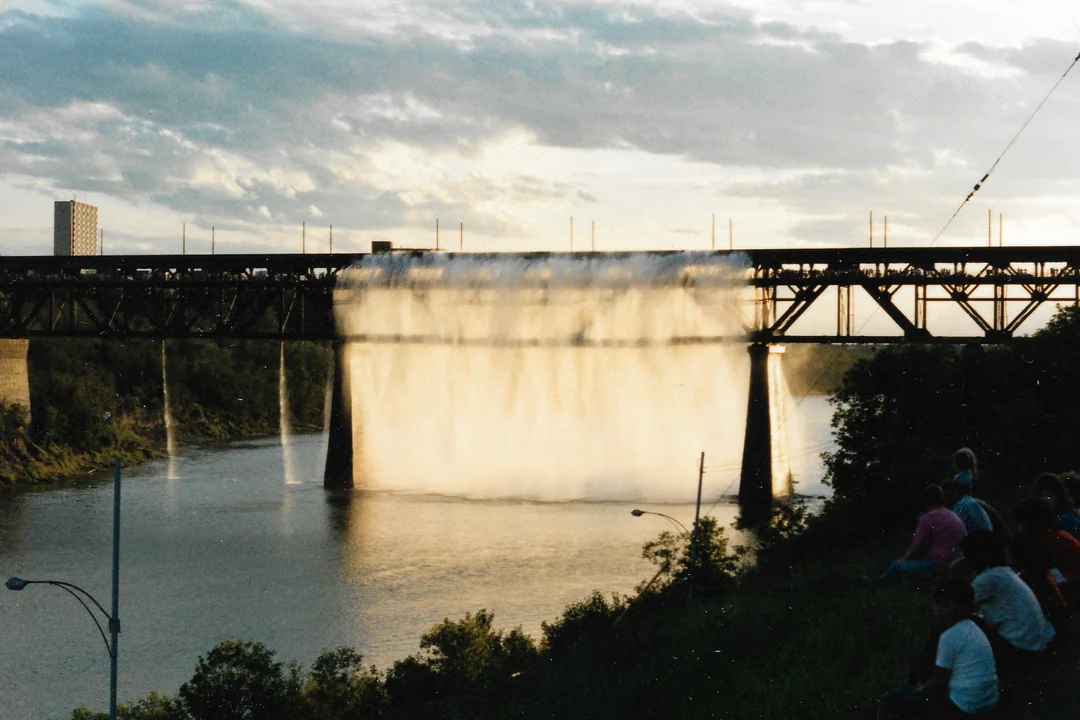
There's a chapter of Edmonton history that most people under 30 have never heard of and the ones who lived it still talk about it like it was yesterday.
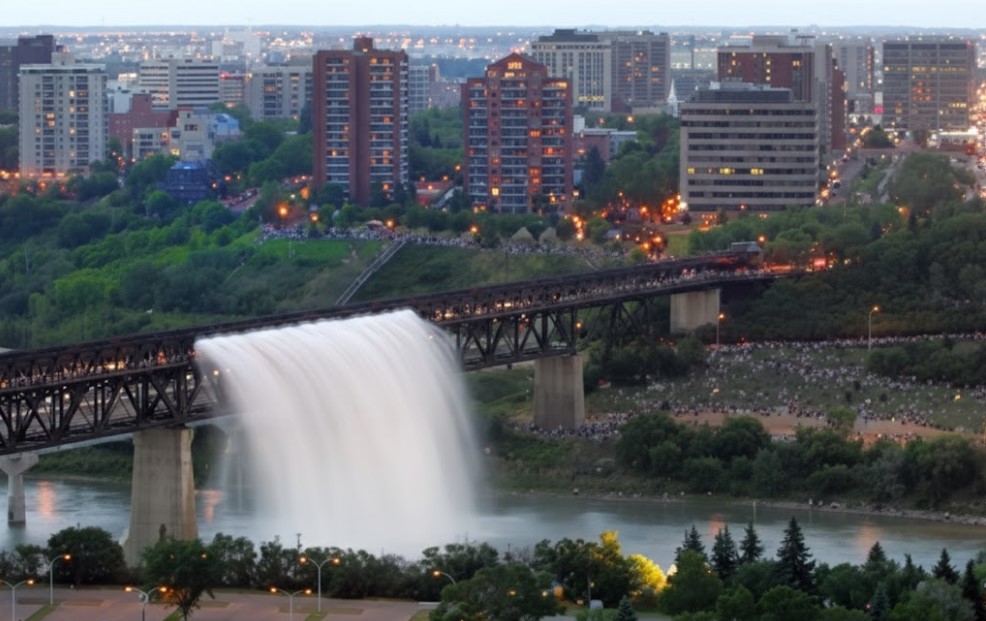
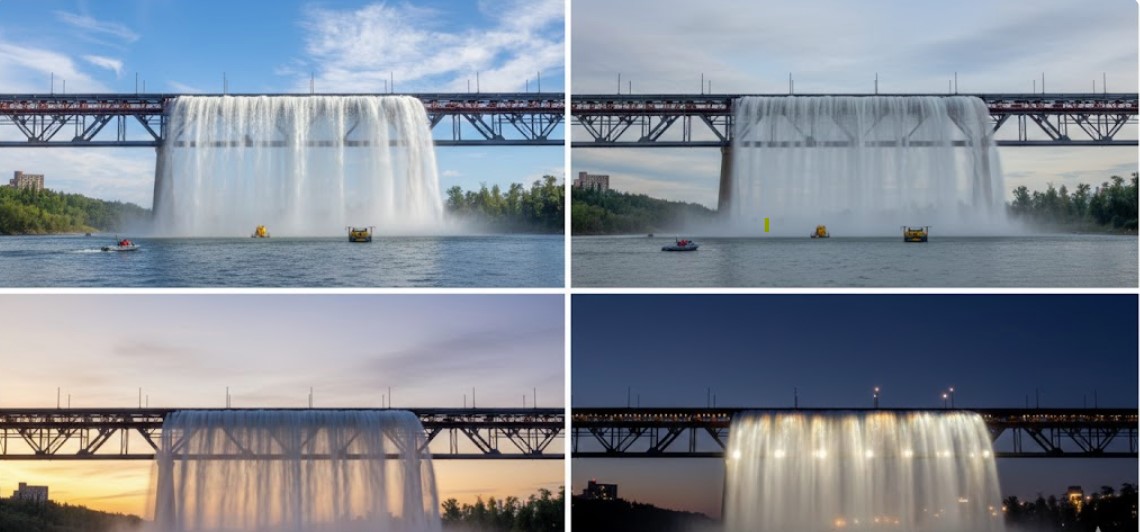
For 25 summers, a man-made waterfall poured off the High Level Bridge. Not a trickle. Not a fountain. A full, roaring curtain of water dropping 64 metres into the North Saskatchewan River taller than Niagara Falls.
And then one day, it was just... gone.
A Birthday Present Edmonton Never Forgot
It started as a celebration. On September 1, 1980, someone twisted a valve on the High Level Bridge and 50,000 litres of water per minute came thundering off the upper deck. The crowd gathered on the riverbank that evening watched something they'd never seen before and would never quite see again.
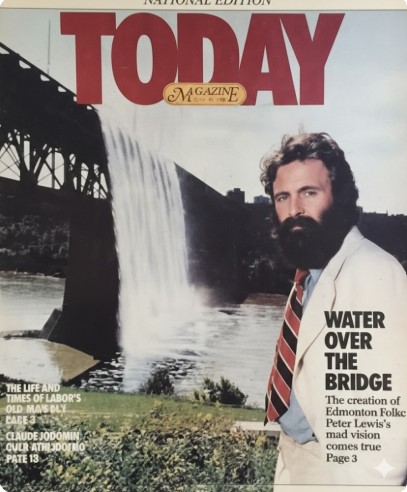
Edmonton artist Peter Lewis designed the installation to mark Alberta's 75th birthday. The city and province split the $600,000 bill.
On sunny days, the falls threw a rainbow across the river valley. On Canada Day, fireworks exploded above it while the water caught the light below. Kayakers paddled through the cascade. Pedestrians walking the east side of the bridge got soaked when the wind shifted. Raft racers in the Sourdough Race got one final drenching as they passed underneath.
It cost about $2,000 an hour to run. Nobody seemed to care.
The Part Nobody Talks About
Here's the uncomfortable truth that gets glossed over in the nostalgia: for nearly 30 years, the city was pumping chlorine-treated drinking water the same water Edmontonians drank from their taps directly into the North Saskatchewan River at 50,000 litres per minute.
Environment Canada didn't raise formal concerns until 2005. When they did, the city acknowledged the water was "unnatural and unsafe for the North Saskatchewan River." The waterfall was quietly shut off in 2009 while the city and Epcor worked to find alternatives.
The science was straightforward. Chlorine kills microorganisms that's exactly why it's in drinking water. But those same microorganisms are the foundation of a river ecosystem's entire food chain. Disrupt the bottom, and everything above it eventually follows.
The waterfall ran for nearly 30 years before anyone in an official capacity said stop.
The $2.6 Million Question
When the debate about restoring the waterfall heated up around 2012 and 2013, the city had three options: de-chlorinate the existing pipes, build a new system using river water, or replace everything entirely. Price tags ranged from just over $1 million to $2.6 million, plus $15,000–$20,000 every time they turned it on.
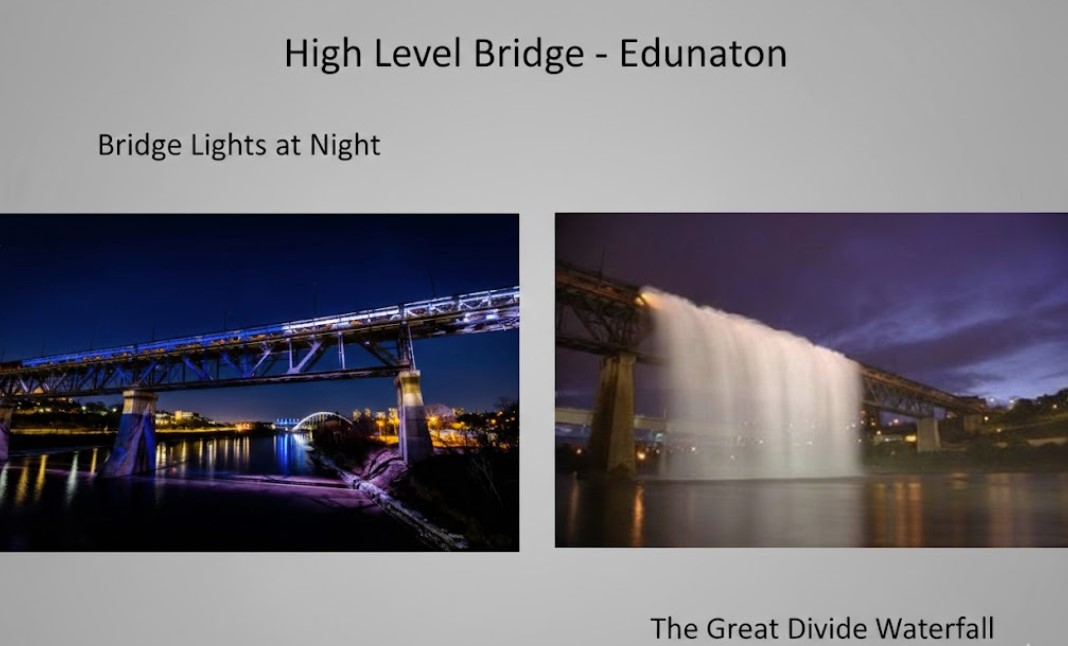
At the same time, a different project was gaining momentum. The Light the Bridge campaign championed by then-ATB president Dave Mowatt raised $2.5 million entirely from private donors selling 60,000 LED bulbs at $25 each. Eleven thousand Edmontonians bought in. People bought bulbs to mark anniversaries, birthdays, their kids' names.
By Canada Day 2014, the bridge was lit. And that same year, city council quietly voted to turn off the waterfall forever.
Coincidence? Maybe. But the contrast is hard to ignore: one project found $2.5 million in public enthusiasm almost overnight. The other couldn't justify a similar number from a city budget.
That probably tells you something about how Edmonton had changed between 1980 and 2014.
What's Left
The original pipes are still up there. They were too expensive and too risky to remove, so the city left them in place during a 2016 vote. A bridge rehabilitation project is coming the structure is over 100 years old but what happens to the pipes afterward is still unknown.
The city says a revival "is not anticipated."
The LED lights are beautiful. On a winter night, the High Level Bridge glows purple and blue over the river valley and it genuinely stops you in your tracks.
But it's not the same as standing on the bank in July, watching 50,000 litres of water pour off a bridge while a rainbow forms above the river and kayakers disappear into the mist below.
Some things you can't replicate with electricity.The Great Divide Waterfall was the kind of only-in-Edmonton thing that made this city feel alive in summer. And honestly? We'd love to see that debate reopened.


Comments
Conversation