
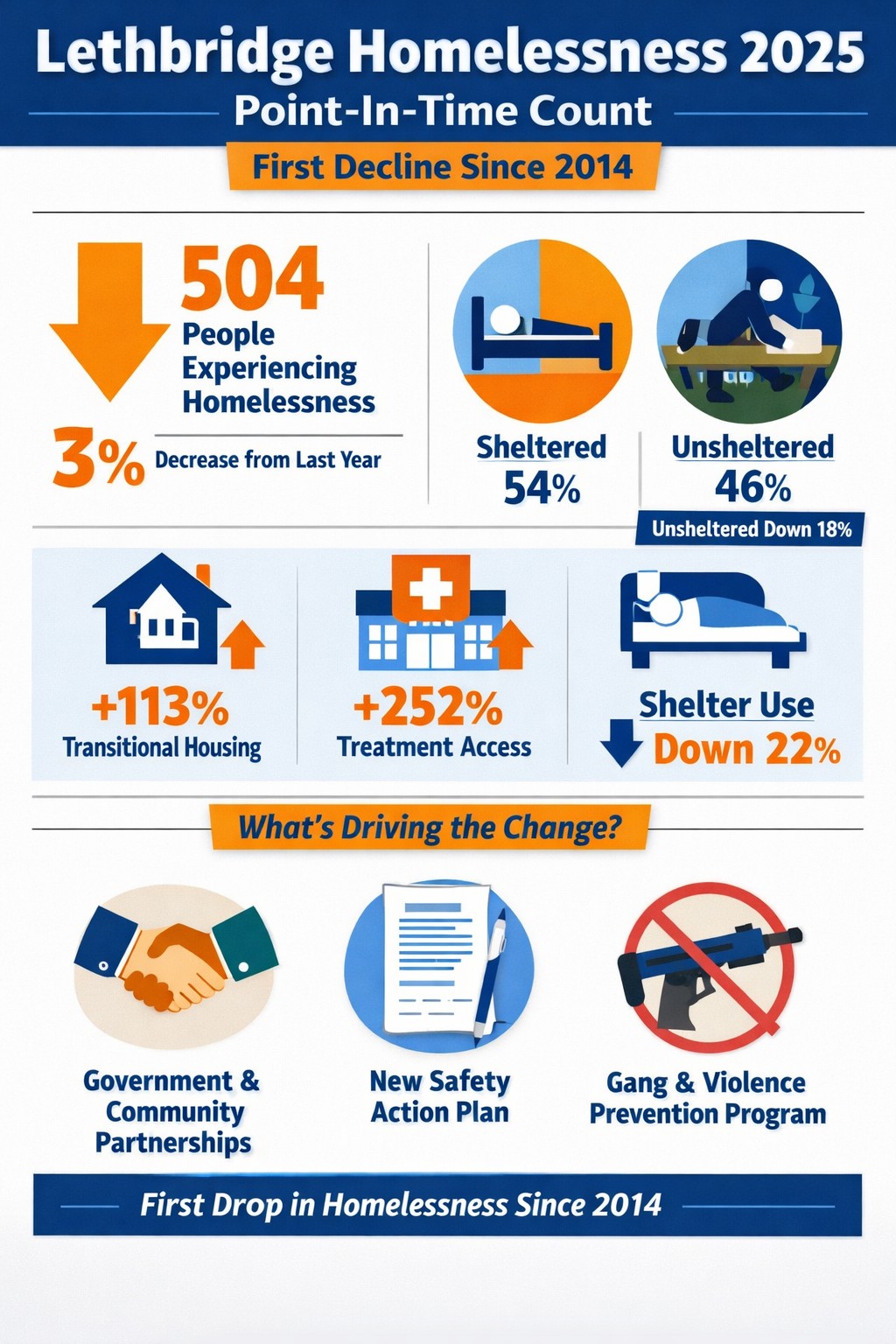
Lethbridge city's 2025 Point-In-Time Count, conducted on the night of October 2, found 504 people experiencing homelessness in Lethbridge. That's a 3% drop from the previous year modest on paper, but historically significant. It's the first recorded decline since the city began tracking homelessness in 2014.

What the Count Found
The PiT Count is a national snapshot volunteers and outreach workers spend a few hours on one night identifying everyone they can find experiencing homelessness, whether sheltered or sleeping rough. It's not a perfect measure, but it's the closest thing Canada has to a consistent annual benchmark.
On count night, 54% of the 504 people identified were in sheltered locations, while 46% were unsheltered. That unsheltered number actually dropped 18% compared to the year before, which the city credits to new temporary housing programs coming online.
Transitional housing capacity jumped 113%, and perhaps most notably, the number of people accessing treatment facilities increased by 252% suggesting more people are actively seeking recovery supports.
More Beds Doesn't Always Mean More People Housed
Here's where the data gets complicated. The city expanded adult emergency shelter capacity from 129 to 355 beds a 175% increase. But shelter use actually went down 22% on count night.
That gap matters. It reflects something housing advocates have argued for years: beds alone don't solve homelessness. Barriers like safety concerns, mental health challenges, rules around sobriety, and lack of privacy keep a significant portion of the unsheltered population from using available shelter space. The City of Lethbridge acknowledged this directly, noting that "capacity alone doesn't guarantee uptake."

What's Driving the Change
City officials are pointing to coordinated efforts across all levels of government and community partnerships as the reason for the shift. The results were presented to Lethbridge's Community Issues Committee on February 19, alongside updates on the new Community Safety Action Plan a city-wide strategy that replaced the former Downtown Clean and Safe Strategy.
A federal youth gang and gun violence prevention program also showed strong early results, though federal funding for it ends March 31, 2026. The city says it's working to transition key elements of the program before the funding cuts out.

Why This Matters Beyond Lethbridge
Lethbridge has been one of Alberta's most visible flashpoints for homelessness and addiction over the past decade, particularly following the 2021 closure of its supervised consumption site. The city has faced intense pressure from residents, businesses, and politicians to show measurable progress.
A 3% drop won't satisfy everyone 504 people is still roughly 4 in every 1,000 residents but it signals that the approach is starting to work.









Comments
Conversation