
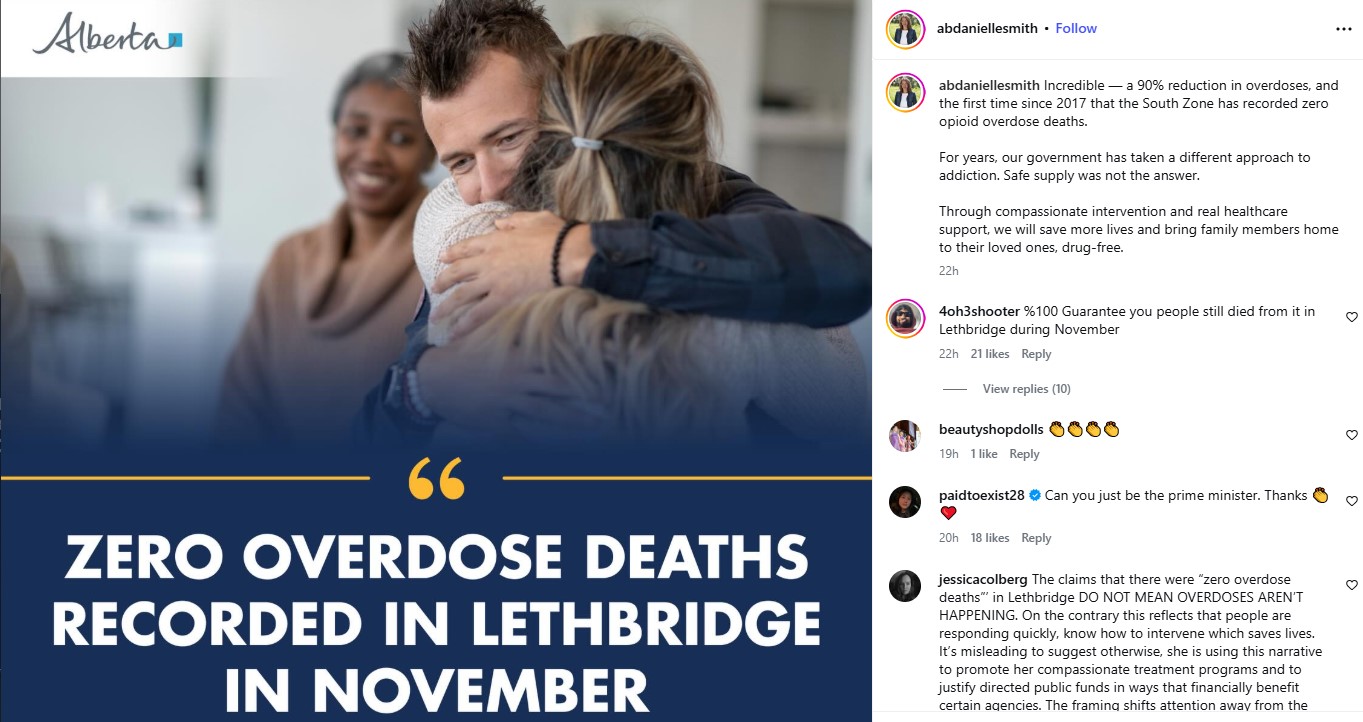
Two years. That's how long it took Lethbridge to go from its worst overdose crisis on record to something nobody expected to be saying: four months in 2025 with zero deaths.
In 2023, 113 people died of drug overdoses in the city between January and November. This past November was the fourth month in 2025 where nobody died joining March, April, and July. The full Jan-to-November 2025 toll sits at 11, according to the Alberta Substance Use Surveillance System. The only comparable year in the last decade was 2016, when 10 people died in the same stretch.
That's a 90 per cent drop in two years.

What the numbers show
Lethbridge now sits at 10.9 overdose deaths per 100,000 people virtually tied with Medicine Hat and Fort McMurray for the lowest rate among Alberta's seven largest cities. The provincial average is 22.7.
Fentanyl was detected in 93 per cent of fatal overdose cases where toxicology data was available. Carfentanil and methamphetamine each showed up in roughly two thirds. Provincially, more than three quarters of fatal overdose victims were men, and the most common age group was 35 to 39.
The province says its approach is working
Premier Danielle Smith pointed to the figures on Instagram, calling the drop "incredible" and crediting what her government calls "compassionate intervention" a treatment-focused model that has moved away from harm reduction, closed supervised consumption sites, and redirected funding toward residential recovery. "Safe supply was not the answer," she wrote.
The Ministry of Mental Health and Addictions said the Lethbridge numbers reflect a broader provincial trend, noting about a 39 per cent decline in opioid-related overdose deaths across Alberta since the 2023 peak.
But advocates say there's more to the story
Here's what the death count doesn't tell you: nobody is tracking how many overdoses are actually happening.
Amber Jensen, a Lethbridge representative with Moms Stop the Harm, said the drop in deaths is genuinely encouraging but stressed it's not the same thing as fewer people using drugs.
"There still is a lot of overdoses occurring that maybe aren't resulting in deaths," Jensen said, "and that's because we've really increased our community capacity to react to overdoses."
Narcan kits have become more widely available in public spaces and through outreach teams across the city. More people are carrying them. The number of overdoses being reversed isn't recorded anywhere. And someone who survives a reversed overdose can still be left with serious health complications.
The death toll is falling. Whether the crisis itself is that's a harder question to answer.
Source: Alberta Substance Use Surveillance System alberta.ca/substance-use-surveillance-data








Comments
Conversation