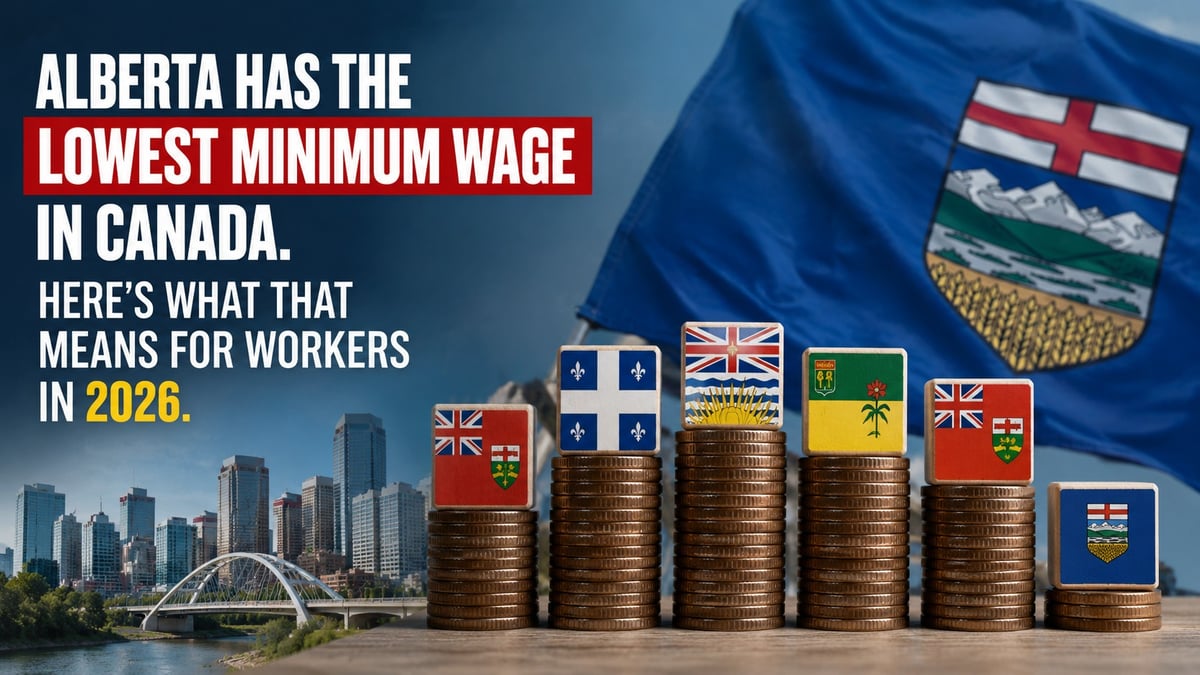
In October 2018, Alberta hit $15 an hour and became the first province in Canada to reach that number. It was a fight — three years of NDP government pushing against business lobbies, recession fears, and a province still shaky from the oil crash. They got there.
Then nothing happened for eight years.
Every other province kept moving. Alberta didn't adjust for inflation, didn't tie the wage to any index, didn't pass a single increase. In October 2025, Saskatchewan raised its rate to $15.35. That was the moment Alberta went from tied-for-last to definitively last the lowest minimum wage in the country, full stop.
It's still there today.
What the Law Actually Says
According to the Government of Alberta's Employment Standards rules, the current general minimum wage is $15 per hour for most employees. There is also a separate student wage of $13 per hour for workers under 18, which applies during the first 28 hours worked per week while school is in session, or during school breaks like summer.
That's it. No scheduled increases. No indexing to inflation or cost of living. No announced changes for 2026.
The government's stated rationale has been economic competitiveness that keeping employer costs lower protects jobs, particularly in small businesses and industries like hospitality and retail.
Where Alberta Sits Against Every Other Province
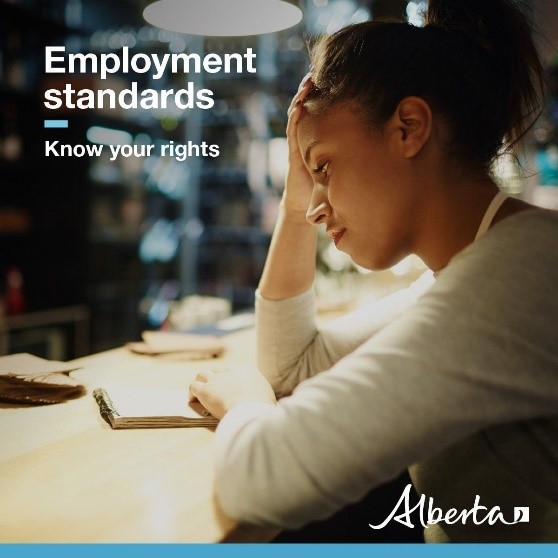
As of May 2026:
Province / Jurisdiction | Minimum Wage |
|---|---|
Nunavut | $19.75/hr |
Yukon | $18.51/hr |
Federal rate | $18.15/hr |
BC | $18.25/hr |
Ontario | $17.60/hr |
Nova Scotia | $16.50/hr |
PEI | $16.50/hr |
Quebec | $16.10/hr |
Manitoba | $15.80/hr |
Saskatchewan | $15.35/hr |
Alberta | $15.00/hr |
Worth noting on the federal rate: it applies to workers in federally regulated industries banks, airlines, telecom companies, interprovincial trucking. An Albertan working at a bank branch earns $18.15 minimum. Someone working at the restaurant next door earns $15. Same city. Same rent. Different rules.
Who's Actually at $15
The picture of a minimum wage earner as a teenager picking up weekend shifts hasn't been accurate for years.
According to the Alberta Living Wage Network's 2025 data, nearly 6 in 10 minimum wage earners in Alberta are women. More than 1 in 3 is an immigrant. Over 16,000 are supporting a child under 18. Three in ten are the primary earner in their household.
These are adults running households in a province where rent, insurance, groceries, and childcare have all climbed considerably since 2018. The wage they're earning hasn't.
The Gap Between $15 and What Things Actually Cost
Minimum wage is the legal floor. Living wage is different it's the hourly rate a person actually needs to cover basic expenses and participate in community life, calculated annually by the Alberta Living Wage Network based on real costs in each city.
The 2025 figures:
City | Living Wage | Min. Wage | Gap |
|---|---|---|---|
Jasper | $31.80 | $15.00 | $16.80 |
Airdrie | $29.00 | $15.00 | $14.00 |
Calgary | $26.50 | $15.00 | $11.50 |
St. Albert | $25.60 | $15.00 | $10.60 |
Fort McMurray | $23.00 | $15.00 | $8.00 |
Edmonton | $22.30 | $15.00 | $7.30 |
Lethbridge | $22.30 | $15.00 | $7.30 |
Red Deer | $20.65 | $15.00 | $5.65 |
Medicine Hat | $18.15 | $15.00 | $3.15 |
Even in Medicine Hat the most affordable city on the list the living wage sits $3.15 above what employers are legally required to pay. In Calgary, that gap is $11.50 an hour. Working full-time at minimum wage in Calgary, you gross roughly $31,200 a year. The living wage calculation implies you need closer to $55,000 to cover your costs without chronic financial stress.
The Alberta Living Wage Network noted in its 2025 report that the gap between minimum and living wage "reflects structural problems in the economy and is hurting everyone workers by reducing what they can spend, businesses through lower productivity and higher turnover."
The Bill That Didn't Pass
In October 2025, the NDP tabled Bill 201 the Protect Workers' Pay Act which proposed raising the minimum wage to $16 in December 2025, $17 in 2026, and $18 by October 2027, then tying it to the Consumer Price Index going forward. It also would have eliminated the lower student wage.
The UCP voted it down at second reading. The minimum wage stayed at $15.
Stat Holidays: The Pay Many Workers Don't Know They're Owed
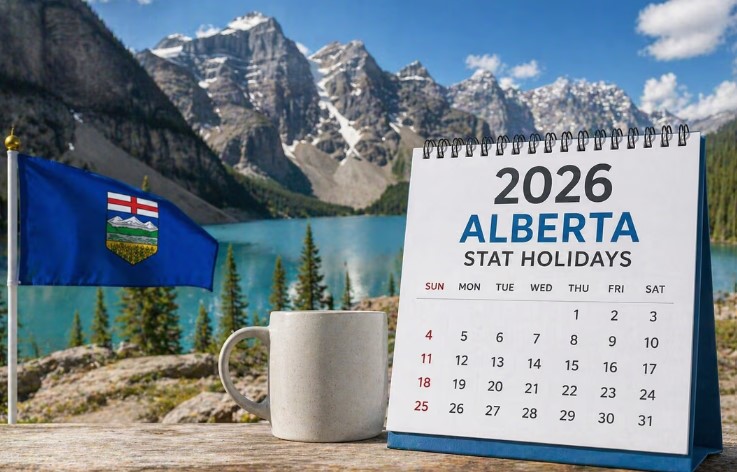
One area where minimum wage workers regularly leave money behind is stat holiday pay. Alberta has nine general holidays per year under the Employment Standards Code the official provincial term for what most people call stat holidays:
New Year's Day, Alberta Family Day, Good Friday, Victoria Day, Canada Day, Labour Day, Thanksgiving, Remembrance Day, and Christmas Day.
Per the Government of Alberta's Employment Standards rules, if you've worked for the same employer for at least 30 workdays in the past 12 months, and you worked your last scheduled shift before the holiday and your first shift after it, you're entitled to general holiday pay whether you work the holiday or not.
If you don't work the holiday: you're owed your average daily wage, calculated as total wages from the four weeks before the holiday divided by days worked in that period.
If you do work the holiday: your employer must either pay you 1.5 times your hourly rate for hours worked plus your average daily wage, or pay your regular rate for hours worked and give you a paid substitute day off at your average daily wage.
Many workers especially in retail, hospitality, and food service don't realize this is mandatory, not optional. Many employers, particularly small ones, get it wrong.
Use the free Alberta Stat Holiday Pay Calculator at culturealberta.com/tools to calculate exactly what you're owed. It uses the Employment Standards Code formula directly and takes about a minute.
If You Think You're Being Underpaid
Three things worth knowing:
Check your industry. If you work at a bank, airline, telecom company, or in interprovincial trucking, the federal minimum wage of $18.15 may apply to you regardless of what the province says. Many workers in these industries are unaware.
You can file a complaint. Alberta Employment Standards accepts complaints from workers who believe they haven't been paid correctly including for wages, overtime, and stat holiday pay. Complaints can be filed while you're still employed or up to six months after your last day. It's free. Employers found in violation can be ordered to pay back wages.
Know your employer's obligations on stat holidays. The rules apply equally to full-time, part-time, and casual employees. Hours, not employment type, determine what you're owed.
Where This Goes
The provincial government has made no announcement about raising the minimum wage. With a provincial election due in 2027, wage policy will almost certainly return as a campaign issue it always does in Alberta.
What's harder to argue about is the math. A wage frozen since 2018 in a province where the cost of living hasn't stood still is, by definition, a wage that buys less each year. Whether that's the government's responsibility to fix, the market's job to correct, or a cost workers are expected to absorb — that argument in Alberta is far from finished.
Know your rights. Use the free Alberta Stat Holiday Pay Calculator at culturealberta.com/tools — and check back for our Alberta take-home pay calculator, coming soon.
Sources
Government of Alberta — Employment Standards Rules: Minimum Wage — alberta.ca/minimum-wage
Government of Alberta — Employment Standards: Alberta General Holidays — alberta.ca/alberta-general-holidays
Government of Alberta — Employment Standards — alberta.ca/employment-standards
Alberta Living Wage Network — 2025 Living Wage Rates (November 13, 2025) — livingwagealberta.ca
Alberta Living Wage Network — What Is a Living Wage? — livingwagealberta.ca/what-is-a-living-wage
Alberta Federation of Labour — Press Release: AFL calls for $20/hour minimum wage (October 1, 2025) — afl.org
Alberta NDP Caucus — Bill 201, Protect Workers' Pay Act (October 30, 2025) — albertandpcaucus.ca
Government of Canada — Federal Minimum Wage — canada.ca/employment-social-development






Comments
Conversation