British Columbia is done with it. Done with the groggy Monday after the clocks change, done with 4:30 p.m. sunsets, done waiting for the Americans to get their act together.
Premier David Eby made it official Monday: when B.C. springs forward this Sunday, March 8, that's the last clock change the province will ever do. Come November 1, 2026 when everyone else falls back B.C. isn't budging.
What's Actually Happening
B.C. is locking in at UTC-7 permanently, under a new time zone they're simply calling "Pacific Time." The legal groundwork was laid back in 2019. They've been waiting six years for U.S. West Coast states to move at the same time.
They're done waiting.
"We waited for Congress in the United States, and we waited, and we waited, and they never changed it," Eby said at Monday's announcement held, wonderfully, in front of a group of elementary school kids who then celebrated by dancing to Daft Punk.

What This Means If You're in Alberta
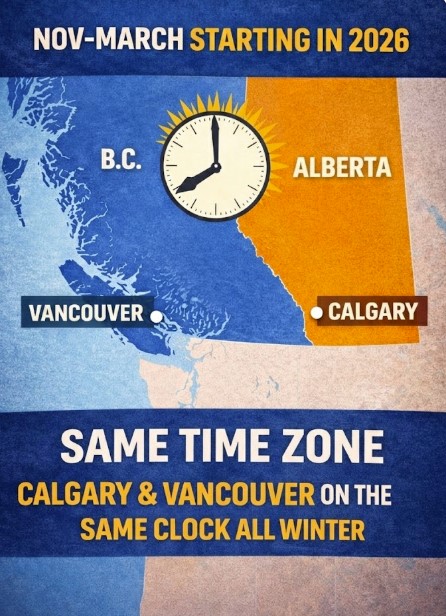
Starting November 2026, Calgary and Vancouver will be on the same clock all winter. That's new. Right now there's a one-hour gap between the two cities from November through March B.C.'s change eliminates it.
Summer stays the same. B.C. will still be one hour behind Alberta from March through November, same as always.
For anyone with family in Vancouver, clients on the West Coast, or just a habit of checking what time a Canucks game starts winter scheduling just got simpler.
Should Alberta Just Do the Same Thing?
Here's the honest case for it: Alberta winters are brutal enough without the sun setting at 4:30. Permanent daylight saving time would push that closer to 5:30 through the darkest months. You'd actually see daylight after work. Your kids wouldn't be walking home from school in the dark.
The argument against it is the mornings. In the dead of winter, Calgary wouldn't see sunrise until around 9:30 a.m. under permanent DST. That's late. Commuters, school kids, and anyone who functions before 10 a.m. would feel it.
There's also the science some researchers actually argue permanent standard time is healthier for sleep and circadian rhythms than permanent DST. B.C. chose the option that gives more evening light. Not everyone agrees that's the right call.
Alberta hasn't tabled anything. No legislation, no formal consultation, no timeline. But B.C. just moved, Washington and Oregon are working on it, and the conversation is getting louder across the country. At some point, Alberta has to decide whether it's going to lead this or just be the last province still changing clocks twice a year.

What You Need to Do This Sunday
If you're in Alberta: change your clocks as normal this weekend and again in November. Nothing is different for you yet.
If you're in B.C.: spring forward Sunday and enjoy never thinking about this again.
Source: Government of British Columbia — news.gov.bc.ca/releases/2026AG0013-000209
https://news.gov.bc.ca/releases/2026AG0013-000209








Comments
Conversation