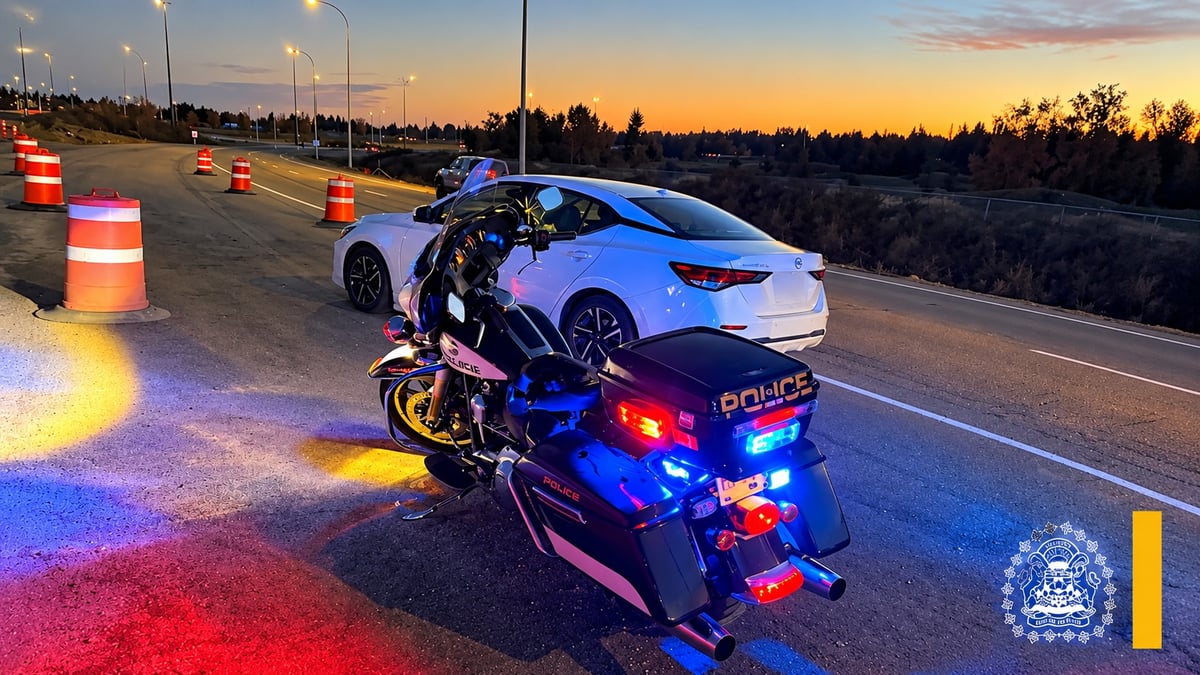
Calgary police stopped a driver doing 90 km/h in a 50 km/h construction zone on Sunday, Oct. 4, with road crews on site.
Then officers determined the driver was impaired by cannabis.
The stop happened shortly before 7 p.m. Police didn’t name the driver or say where in the city it happened.
Here’s what it cost:
Penalty | Consequence |
|---|---|
Impaired driving | $1,200 |
Construction zone speeding | $1,120 |
Licence suspension | Up to 15 months |
Vehicle seizure | 30 days |
Total fines | $2,320 |
That’s before towing, impound storage and the cost of getting back on the road.
“Impaired driving puts everyone at risk,” police said in a post on X.
Why the speeding fine was $1,120
Going 40 km/h over the limit in Alberta normally carries a $560 fine.
When construction workers are present, the province doubles it. That’s how the driver got to $1,120.
The rule exists because workers often stand a few feet from moving traffic, sometimes with their backs to it. At 90 km/h, a car covers about 25 metres every second. There’s almost no time to react to someone stepping out from behind a barrier.
Why the suspension could last 15 months
The impaired driving penalties match Alberta’s Immediate Roadside Sanction: Fail, the penalty for drivers police believe are impaired by alcohol or drugs at a criminal level.
For a first offence, it works like this:
The first 90 days: an immediate licence suspension, starting at the roadside. No driving at all.
The next 12 months: the suspension continues. The only way to drive legally during that year is to join Alberta’s Ignition Interlock Program and drive a vehicle fitted with an approved device.
Together, that’s 15 months.
The first-offence penalty also includes the 30-day vehicle seizure, a mandatory education course, and a $1,000 fine plus a 20 per cent victim surcharge. That’s the $1,200.
A second offence raises the fine to $2,000 and the extra suspension period to three years.
The penalties take effect on the spot, not after a court date. Drivers have seven days to request a review through SafeRoads Alberta, but asking for a review doesn’t pause the suspension or get the car back.
A roadside sanction isn’t a criminal conviction. Police haven’t said whether the driver was also charged under the Criminal Code.
How police test for cannabis
There’s no breathalyzer for cannabis.
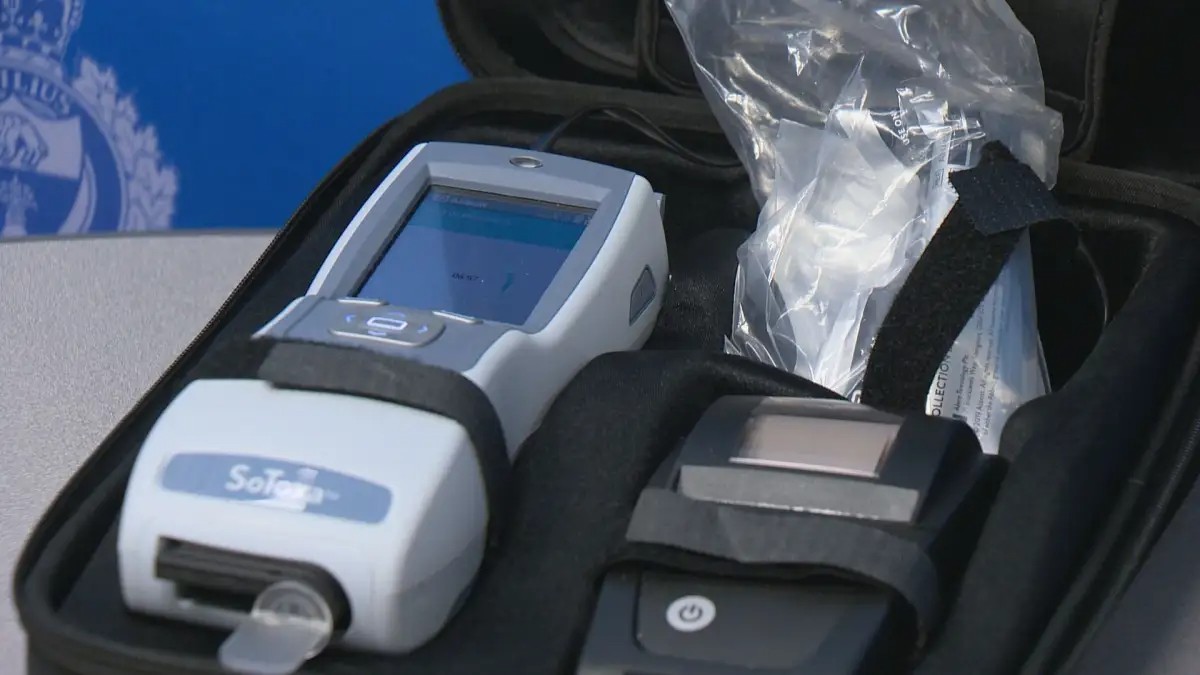
Officers can use an approved saliva screening device that detects THC, the main active ingredient in cannabis. They can also run field sobriety tests or call in a trained drug recognition expert.
Under federal law, having between 2 and 5 nanograms of THC per millilitre of blood within two hours of driving is a lesser offence. Five nanograms or more is a more serious one. Police can also lay charges based on how impaired a driver is, regardless of the THC level.
Police didn’t say which test they used in this case, or what the driver’s THC level was.
Not the first this fall
Calgary police have reported a run of extreme speeding cases this year.
One driver was caught going 118 km/h in a 50 km/h construction zone. Here’s what happened.
Another was clocked at 204 km/h on Stoney Trail, more than double the 100 km/h limit. Read that story.
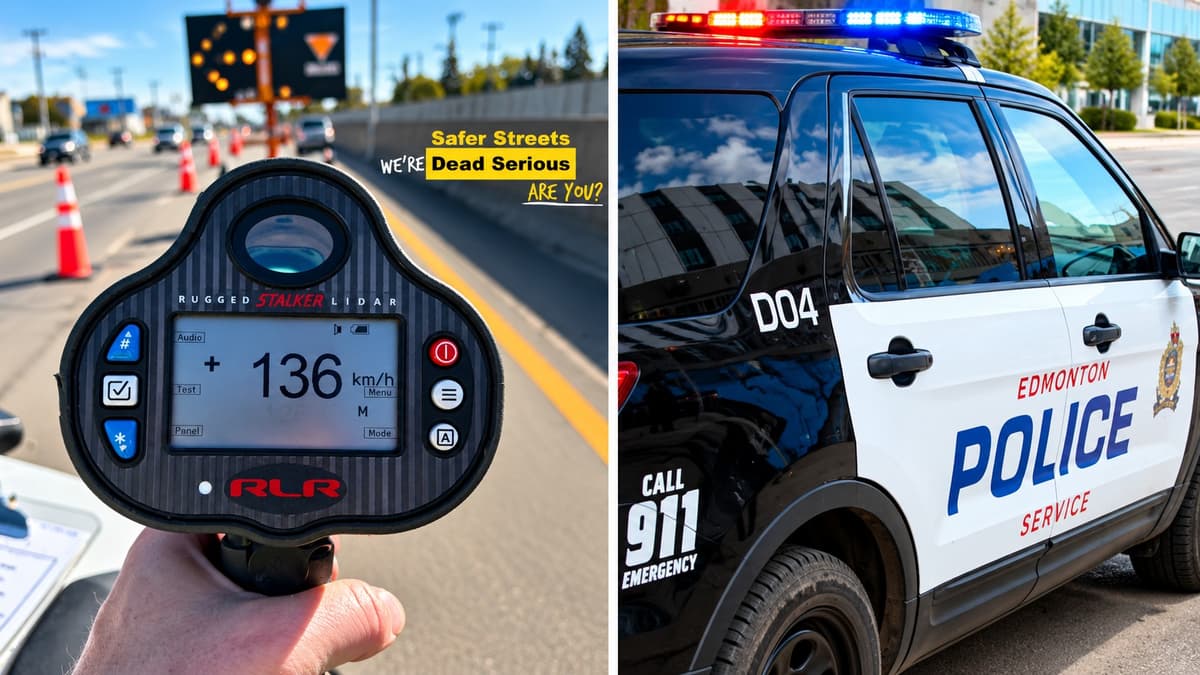
And on the same Sunday as this stop, Edmonton police caught a 17-year-old going 136 km/h through a 50 km/h construction zone on the Yellowhead. There’s no indication that driver was impaired. Here’s what the teen faces.
Calgary’s Vision Zero push
The police post was part of Calgary’s Vision Zero campaign, which aims to eliminate deaths and serious injuries on city roads.
Police urged drivers to plan ahead. If you’ve used cannabis, take transit, a cab, a rideshare, or get a sober ride.
Sources
Calgary Police Service, post on X, October 2026
Impaired driving penalties, Government of Alberta
Fines for speeding, Government of Alberta
Impaired Driving Laws, Department of Justice Canada
Calgary Vision Zero, City of Calgary







Comments
Conversation