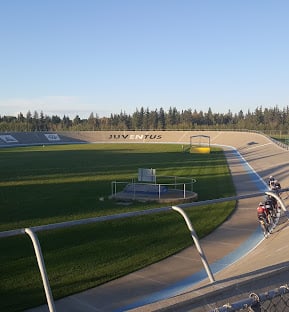
On December 2nd, Edmonton City Council voted 8-5 to demolish the Argyll Velodrome. The $3.2 million decision raises questions about how Edmonton chooses which community infrastructure is worth saving.
The vote happened at 11:54 AM, tucked between dozens of budget amendments. Five councillors Karen Principe, Anne Stevenson, Michael Elliott, Anne Salvador, and Kien Tang voted to remove the demolition funding. Eight voted to keep it.
Just like that, the velodrome's fate was sealed.
What's Being Demolished
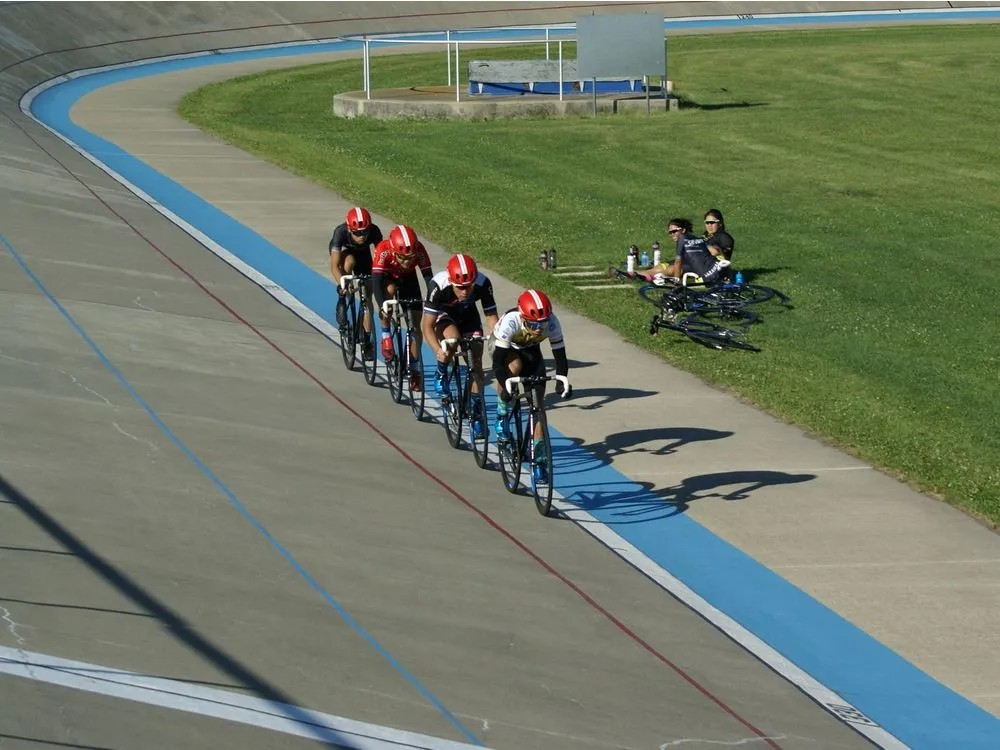
A velodrome is a banked oval cycling track where competitive cyclists train and race. The curves can bank at 45 degrees or steeper steep enough that stopping mid-turn means sliding down. These facilities require precise engineering and serve a specialized community: track cyclists, racing enthusiasts, athletes training for competitions.
They're also expensive to maintain and nearly impossible to patch when they deteriorate.
The $3.2 Million Price Tag
Edmonton isn't spending $3.2 million to build something new. This money is purely for demolition designing the teardown, hiring contractors, removing debris, and restoring the site.
For perspective: the same budget session included $270,000 for designing three new playgrounds. The velodrome demolition costs twelve times that amount and produces nothing but cleared land.
Councillor Principe saw those numbers and moved to strip the funding. Three other councillors joined her. They lost.
What Council Protected (And What It Didn't)
Look at what else happened that morning:
Remove $7.3M for Transit Control Centre: LOST 12-1
Remove $2M for Transit Bike Racks: LOST 11-2
Remove $1.2M for LRV Passenger Counters: LOST 10-3
Remove $3.2M for Velodrome Demolition: LOST 8-5
Council overwhelmingly protected transit infrastructure. But the velodrome got five votes for preservation still not enough, but significantly more opposition than the transit cuts received.
The message: Edmonton prioritizes mass transit serving thousands over specialized facilities serving smaller communities. It's defensible, but it's also a choice about what kind of city Edmonton wants to be.
The Information Gap
Here's what's frustrating: we don't know why the velodrome is being demolished.
Budget documents reference Financial and Corporate Services Report FCS03159, which presumably contains administration's rationale. But the public-facing tracker just lists the line item and dollar amount.
Is the facility structurally unsafe? Has the surface deteriorated beyond repair? Would renovation cost $10 million, making demolition the cheaper option?
These questions determine whether this represents sound fiscal management or elimination of community infrastructure without adequate transparency.
WHAT WE KNOW:
8-5 vote to proceed
$3.2M for demolition
Timeline: 2026
Category: "Infrastructure Delivery - Growth"
WHAT WE DON'T KNOW:
Why demolition vs. renovation
Specific facility deficiencies
What replaces it
Community consultation
Renovation cost comparison
Who This Affects
Velodromes serve small, specialized communities. That's reality. Canada has fewer than a dozen permanent tracks for an Olympic sport.
When cities eliminate these facilities, Edmonton's track cyclists suddenly face driving hours to alternatives or giving up competitive cycling entirely. For the broader public, the removal might be invisible. For athletes who depend on it, this is the end of local training and competition.
The question: does a city maintain specialized facilities for smaller communities when cost-per-user is high? Or prioritize facilities serving the masses?
What "Growth" Means
The demolition falls under "Infrastructure Delivery - Growth." That suggests this isn't just removing a deteriorating facility the land has a different strategic purpose.
Housing? Commercial development? Different recreation? The documents don't specify. But "growth" capital profiles typically mean redevelopment follows.
For some, that's progress using scarce land for housing rather than facilities serving dozens. For others, it's gradual erosion of recreational diversity.
Both perspectives have merit. The challenge is transparent decision-making with full public information.
What Happens Next
If the budget passes final approval December 16-17, demolition proceeds in 2026:
Early 2026: Design and planning
Spring 2026: Contractor tender
Summer/Fall 2026: Likely demolition
By next year, the Argyll Velodrome will probably be gone.
What do you think about this decision?
Should Edmonton have pursued renovation?
Does the city need specialized sports facilities?
Is $3.2M for demolition well spent?
What should happen to the land?
There's no obviously right answer. Transit serves thousands daily. A velodrome serves dozens. But both have value, and both say something about a city's character.
We have the vote: 8-5 for demolition. We have the price: $3.2 million. We have the timeline: 2026.
The conversation about whether this was the right call? That's just getting started.
━━━━━━━━━━━━━━━━━━━━━━━━
Source: City of Edmonton Amendment Tracker - Fall 2025 SCBA/SOBA (Version: 5:18 PM, Dec 2, 2025). Velodrome demolition funding in Attachment 4 of Financial and Corporate Services Report FCS03159, November 24, 2025.








Comments
Conversation