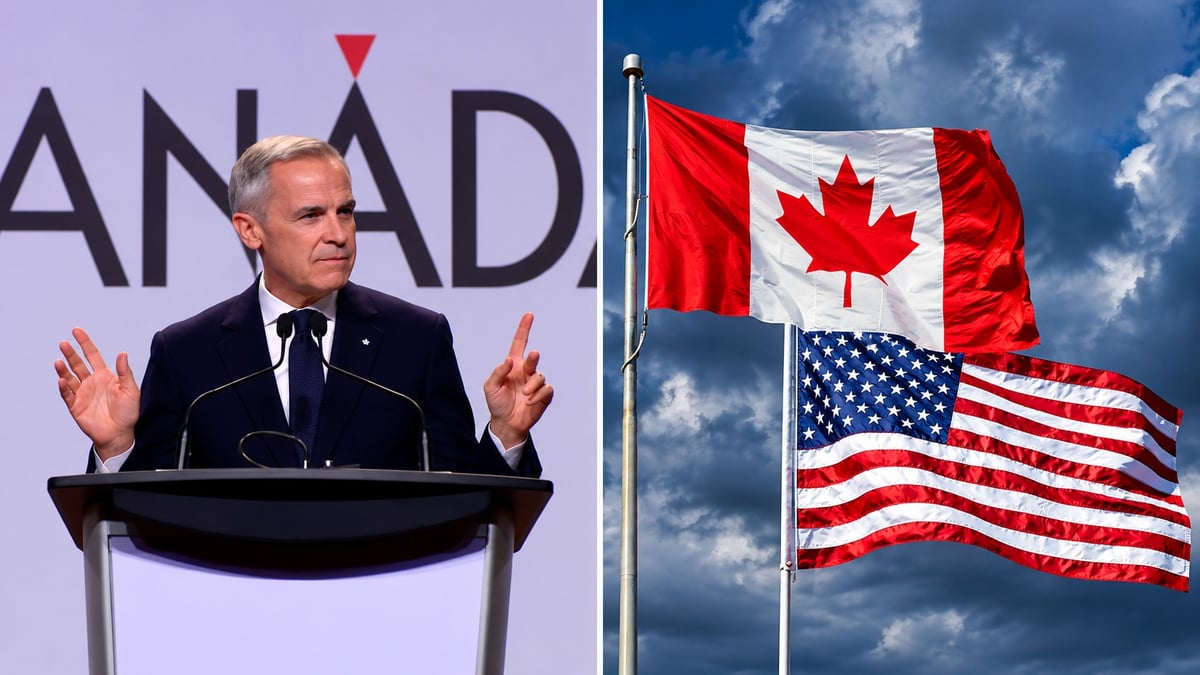
Prime Minister Mark Carney had barely finished his sentence when the crowd erupted.
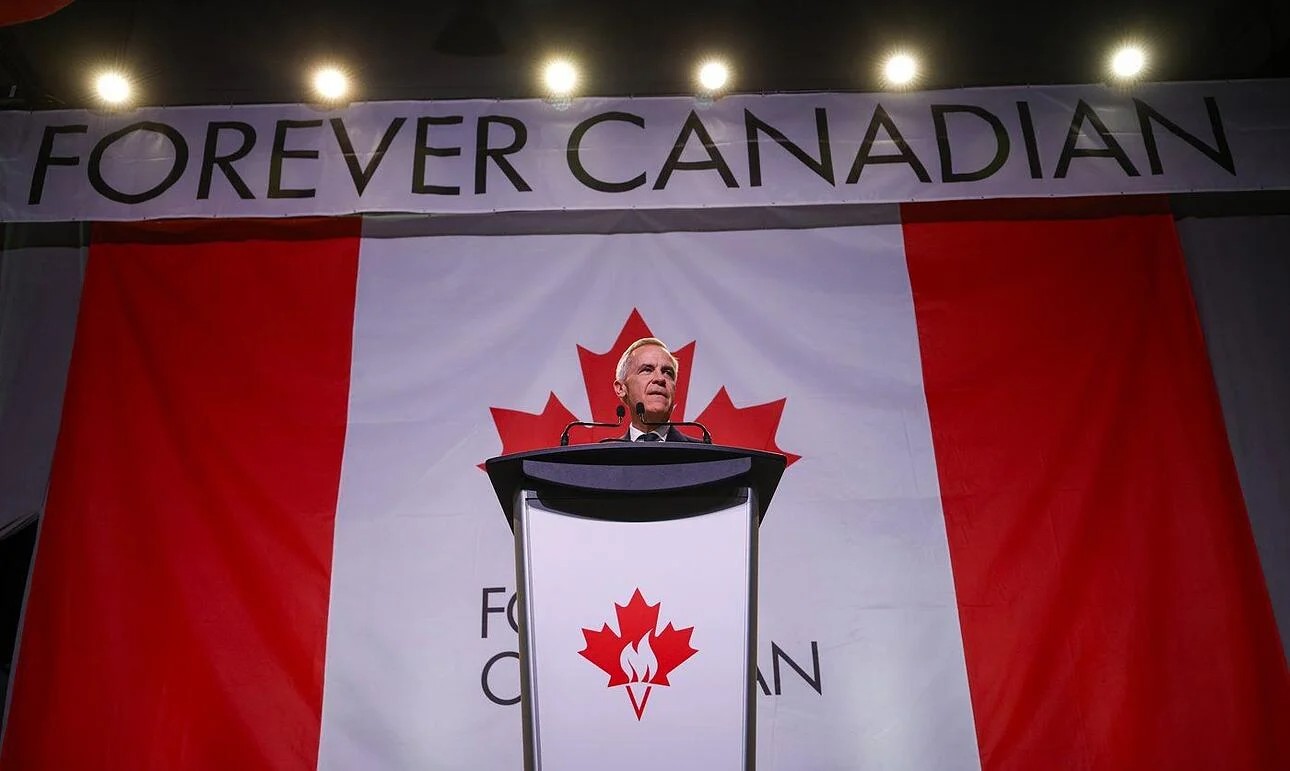
He was talking about the proposed Pacific Link oil pipeline at Thursday’s Forever Canadian rally at Calgary’s BMO Centre, where his office estimated about 5,000 people were in the room.
“It will create more than 140,000 jobs,” Carney said. “It will reduce our dependence on the United States.”
The cheering was loud enough that Carney had to stop.
He waited, smiled, and then gave a warning.
“Careful, careful. They might think that’s election interference.”
The crowd laughed.
“I’m just saying. They’re a little touchy down there,” he went on. “We’re not. We’re getting on with it.”
It was a joke, but the timing wasn’t random. Two days earlier, the U.S. ambassador to Canada had warned Canadian politicians to stay out of American elections.
The ambassador behind the joke
Carney didn’t name U.S. Ambassador Pete Hoekstra, but his remarks followed Hoekstra’s warning closely.
On a podcast earlier in the week, Hoekstra said some Canadian political activity “could be inferred to be election interference” ahead of the U.S. midterms.
“We see all of that. We are monitoring it. We are evaluating it,” he said. “And if some of it becomes election interference, America will respond to it.”
He pointed to three examples:
Industry Minister Mélanie Joly describing her August counter-tariffs as political pressure
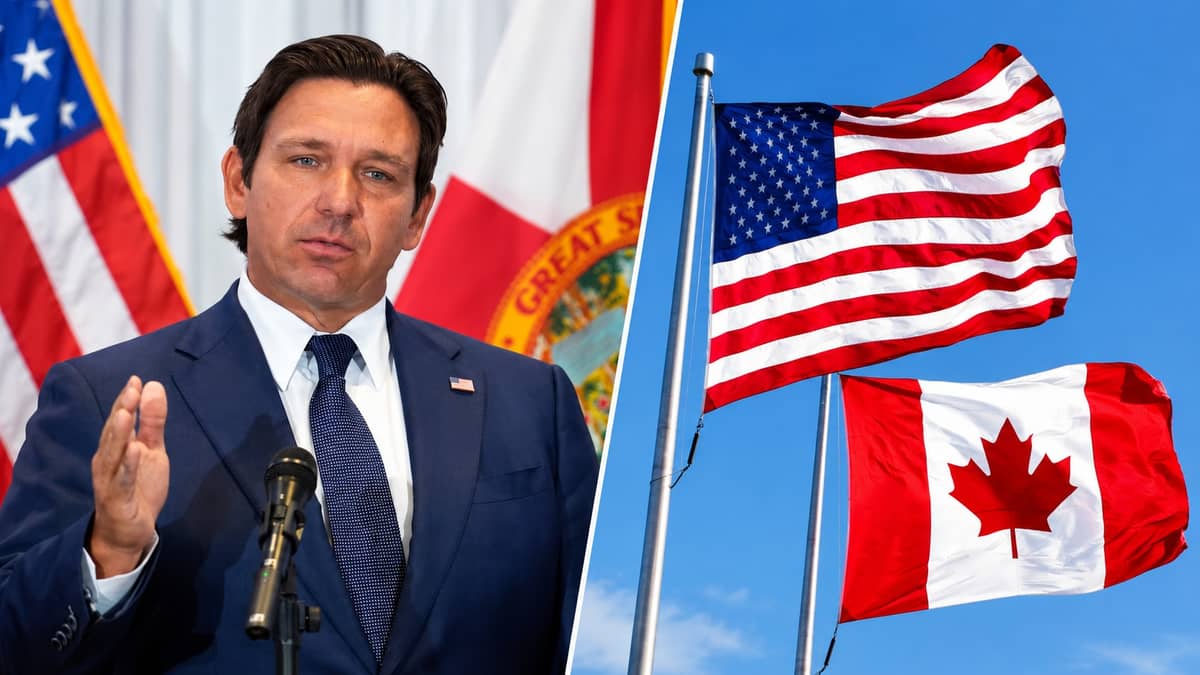
Liberal MP Anthony Housefather campaigning for a Democratic congresswoman in Florida
A past Ontario government ad that used Ronald Reagan’s voice to criticize tariffs
Two days later, Carney stood in front of thousands of Albertans, praising a pipeline he says will make Canada less reliant on the U.S. He turned Hoekstra’s warning into a punchline.
Why the pipeline matters
The bigger story behind the cheering is where Canada sells its oil.
For decades, the United States has been by far the biggest buyer of Canadian crude. That built Alberta’s energy industry, but it also leaves producers exposed to whatever Washington decides on trade.
Pacific Link is meant to change that. It would give Alberta oil another route to the Pacific coast and to buyers in Asia.
On Oct. 1, Carney named it a project of national interest, which puts it on a fast track. According to the federal government, it could:
Add about 1 million barrels a day of export capacity
Support an estimated 140,000 jobs across Canada
Add more than $20 billion a year to GDP
Bring in an estimated $100 billion in government revenue by 2060
Those are federal projections, not guarantees. The project still has to go through regulatory review, Indigenous consultation and public hearings. The government’s goal is to set its conditions by Sept. 1, 2027.
Read more: Alberta-to-B.C. Pacific Link Pipeline Named Canada’s First Project of National Interest
From “51st state” to “getting on with it”
The cheers also reflect how strained Canada-U.S. relations have been.
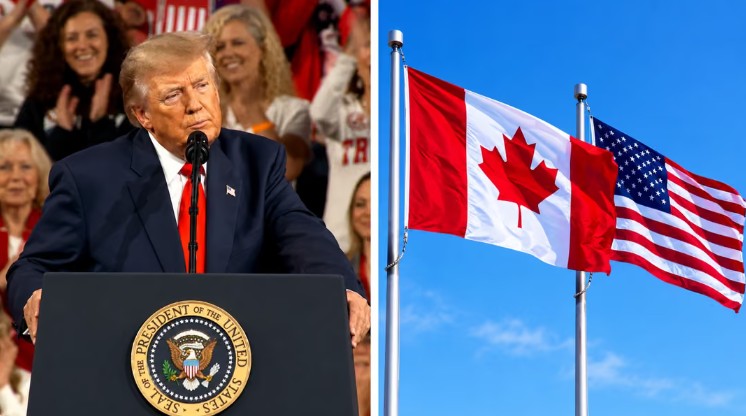
U.S. President Donald Trump has repeatedly said Canada should become America’s 51st state. He has also argued the U.S. doesn’t need Canada as much as Canada needs the U.S.
“We don’t need them, but they need us,” Trump said.
American tariffs and trade threats have pushed economic independence to the front of Canadian politics. Pacific Link fits right into that debate.
A new route to Asia wouldn’t end Canada’s reliance on the U.S., since American refineries would still be major buyers. But it would give producers more options and less exposure to decisions made in Washington.
Related: Trump Says Canada Will Become 51st State: ‘We Don’t Need Them, But They Need Us’
A message aimed at Monday’s referendum
The rally came four days before Albertans vote in a referendum with 10 questions. Question 10 asks whether Alberta should remain a province of Canada, or whether the government should start the legal process toward a binding referendum on separating. Elections Alberta says the results are not binding, so a yes vote wouldn’t take Alberta out of Canada on its own.
The Forever Canadian rally was part of a wider push to keep Alberta in Canada ahead of the vote. Carney spent the day in Calgary urging Albertans to vote to stay and to reject the referendum’s nine other questions. His message was that Alberta can gain more by building within Canada than by pulling away from it.
On stage, he warned about outside pressure.
“There are some outside our borders who are working to break us so they can own us,” he said. He didn’t name Trump or the United States in that line.
He called a vote to leave “a dangerous bluff that could lead to years of lost opportunities.” His case was that Canada should answer outside pressure by building, trading and growing, not by splitting apart. For Alberta, Pacific Link was his clearest example.
Carney and Smith agree on one question, not the other nine
“No to the Nine” is Carney’s position on Questions 1 to 9, which cover immigration and changes to the Constitution. He wants Albertans to vote no on all of them.
Premier Danielle Smith wants a yes. She says it would give Alberta a stronger hand in talks with Ottawa.
Both leaders oppose separation, and both want Albertans to vote to stay. Where they split is how hard Alberta should push the federal government. Smith has praised the progress on Pacific Link, and she shared a beer with Carney at a Red Deer County brewery on Friday.
Albertans vote Monday, Oct. 19, from 9 a.m. to 8 p.m. Advance polls are open until Saturday, 9 a.m. to 8 p.m. Find your voting place at map.elections.ab.ca.
Sources
Prime Minister of Canada: Pacific Link listed as a project of national interest (Oct. 1, 2026)
Elections Alberta: 2026 Referendum



Comments
Conversation