Alberta's proposed oil pipeline to the West Coast has a name, and a much clearer path forward.
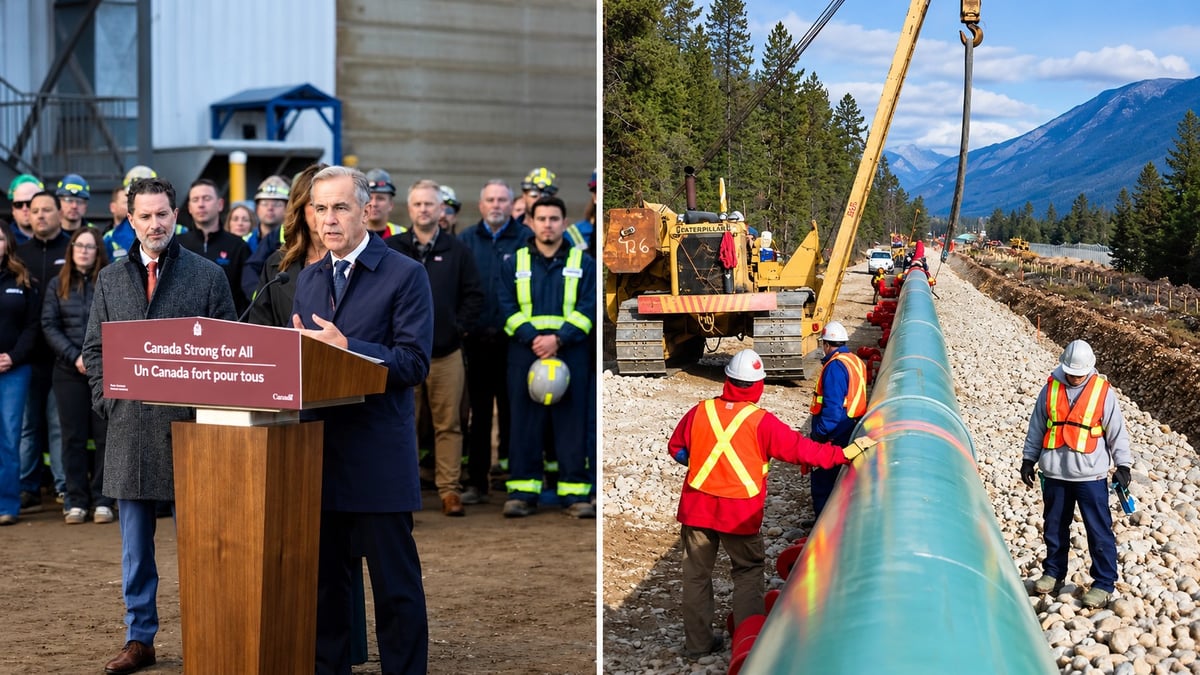
Standing in Fort McMurray on Thursday, Prime Minister Mark Carney and Premier Danielle Smith announced that the pipeline, now called Pacific Link, is the first project listed as being in the national interest under the Building Canada Act.
That's a big step. It isn't a green light to start digging.
The designation puts Pacific Link through one streamlined federal review, and Ottawa wants the project's conditions finalized by Sept. 1, 2027.
"Today marks a significant victory for Alberta's and Canada's energy future," Smith said.
What Pacific Link is
Until Thursday, it was known as the West Coast Oil Pipeline.
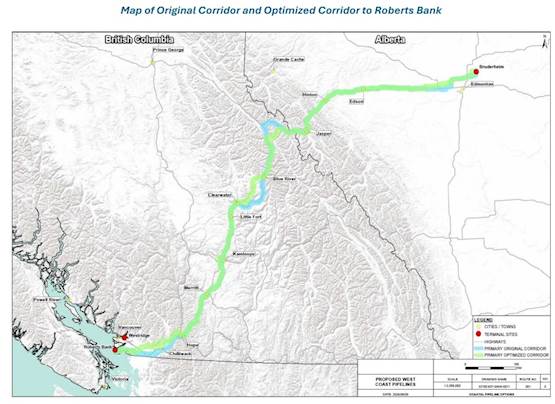
It would carry about one million barrels of crude a day from Bruderheim, northeast of Edmonton, to a deepwater port near Delta, B.C., where oil would be loaded onto tankers for overseas markets.
It would largely follow the existing Trans Mountain corridor. Ottawa says that southern route keeps it away from B.C.'s North Coast, where the federal tanker ban stays in place.
The goal is to sell more Canadian oil to Asia, and depend less on the U.S.
It's a new pipeline, not another Trans Mountain expansion
Pacific Link would be a separate pipeline, but Trans Mountain Corp. is at the centre of it.
The federal Crown corporation, which just finished building the Trans Mountain expansion, is responsible for Pacific Link's regulatory work, Indigenous and public engagement, construction and eventual operation.
Pembina Pipeline has joined as a private investor and is contributing development and construction expertise.
Who would own it
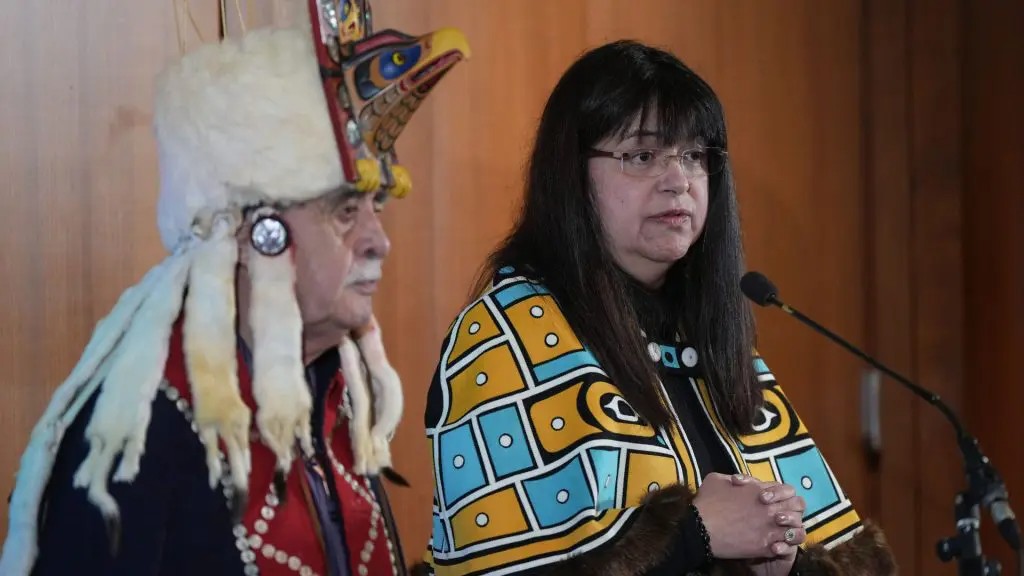
Ottawa says Canada and Alberta will share equal ownership, and Indigenous communities will be offered at least 10 per cent, financed through federal and Alberta loan guarantee programs.
The Canadian Press reports the starting structure as 45 per cent federal, 45 per cent Alberta and 10 per cent Pembina, with the Indigenous stake offered after that.
That isn't final. Ottawa lists ownership as one of the issues to be settled during the review.
What 'national interest' actually means
Pacific Link doesn't have every approval it needs to build.
The designation means the federal Major Projects Office, working with the Canada Energy Regulator, will run one combined review instead of a series of separate ones. It will cover environmental protections, Indigenous rights and consultation, ownership, benefits, local hiring and oversight, and will include public hearings.
The result will be one conditions document that replaces permits that would normally need sign-off from several different ministers.
Could construction start next year?
Possibly.
Alberta says early construction could begin as soon as Sept. 1, 2027, but only once Indigenous consultation is complete and the approvals and permits are in place.
Before then, the builders still have to finalize the route, finish ecological surveys, refine cost estimates, and plan procurement and hiring.
What Ottawa says it's worth
According to the federal government:
Up to 140,000 jobs at the peak of construction, including about 45,000 in Alberta and 70,000 in B.C.
More than $20 billion added to the economy every year.
$100 billion in government revenue by 2060.
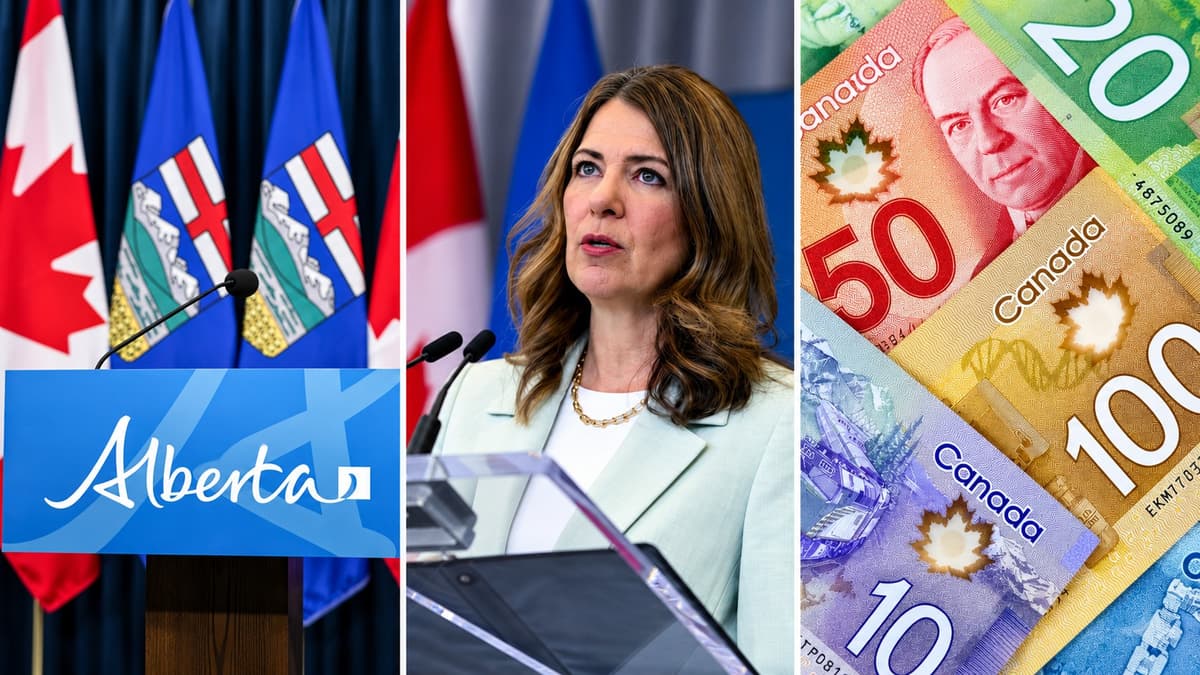
Those are government projections. When Alberta submitted the proposal in July, it put the preliminary cost at $35.2 billion to $43.7 billion.
"It must be Canada"
Carney used Fort McMurray as a backdrop, opening with the history of the oilsands, once written off as too costly to develop.
"Generations of researchers, of engineers, workers, entrepreneurs kept pushing forward," he said.
Then he made his case for more oil exports.
"Global oil demand is around 100 million barrels a day," Carney said. "Oil demand will continue to be significant for decades to come."
"So the question is, who will emerge as the world's trusted suppliers? It should be us. It must be Canada."
Former Alberta premier Jason Kenney celebrated on X. "Take a bow, Alberta. WE WON!!!" he wrote, calling Carney's speech a repudiation of the previous federal government's energy policy.
Indigenous ownership and consultation
The Major Projects Office says it consulted more than 130 Indigenous communities near possible routes in Alberta and B.C. before the designation.
Consultation continues through the next year, and Ottawa says Indigenous Peoples will be involved from the start of the review.
The ownership offer and the duty to consult are separate things. An equity stake gives communities that choose to join a share in the project. It doesn't mean every affected First Nation supports it, and some have said the consultation so far has been too short.
The environmental questions
The southern route avoids B.C.'s North Coast, but a new oil terminal near Delta still raises questions about tanker traffic and the marine environment that the review will have to address.
Alberta says the proposal includes vessel tracking, double-hulled tankers, marine pilots, tug escorts and navigation controls.
Environmental groups have long opposed new oil pipelines and tanker traffic on the coast, citing climate and spill risks.
Filling a million-barrel pipeline
A pipeline this size only makes sense if there's enough oil to fill it, which ties Pacific Link to future oilsands growth.
That's why Ottawa and Alberta are also advancing Pathways, one of the world's largest proposed carbon capture projects, meant to cut emissions from oilsands production as it grows. Alberta describes Pathways as supporting Pacific Link.
Ottawa is also working to expand the Roberts Bank terminal near Delta to ship the crude.
How we got here
November 2025: Ottawa and Alberta sign an energy agreement, committing to declare a West Coast oil pipeline in the national interest.
July 2, 2026: Alberta submits its proposal, choosing a southern route along Trans Mountain.
Oct. 1, 2026: Pacific Link becomes Canada's first project of national interest.
Sept. 1, 2027: Target date for final federal conditions.
What happens next
Over the next year, the route will be refined, environmental work and Indigenous consultation will continue, and the costs and financing will come into focus.
The proponents will also have to show there's enough demand from oil producers to fill a million barrels a day.
If all of that lines up, Sept. 1, 2027 is the date when shovels could go in the ground.
Sources
Prime Minister Carney lists the West Coast Oil Pipeline, now known as Pacific Link, as a project of national interest, Prime Minister of Canada, October 1, 2026
Pacific Link, Government of Alberta
West Coast Oil Pipeline, Major Projects Office
Order in Council: Explanatory Note, Government of Canada
Pacific Link announcement, Pembina Pipeline Corporation
Jason Kenney, post on X, October 1, 2026



Comments
Conversation