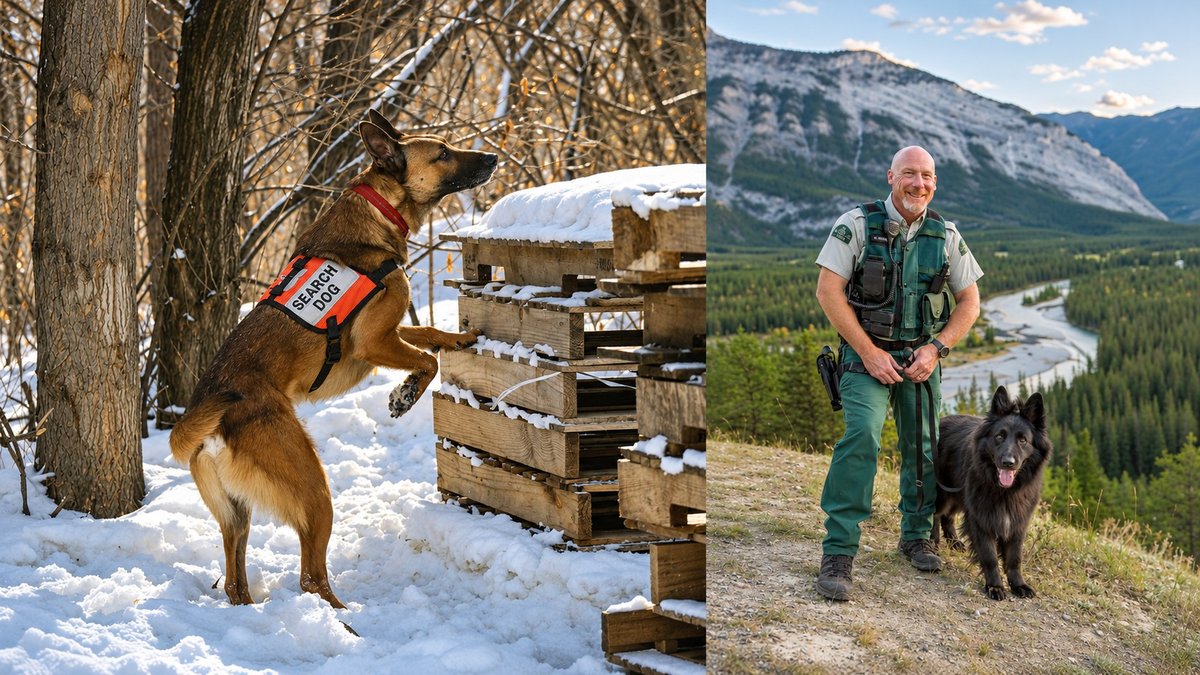
For 55 years, Parks Canada kept a search and rescue dog in the mountain parks. Now it doesn’t.
The agency has ended its search and rescue dog program, which was based in Banff National Park. The cut eliminated its only dog handler position. Parks Canada called it a “difficult decision” and says search and rescue will continue in other ways.
Two avalanche rescue groups are asking for it back before winter.
The dog who found 57 people
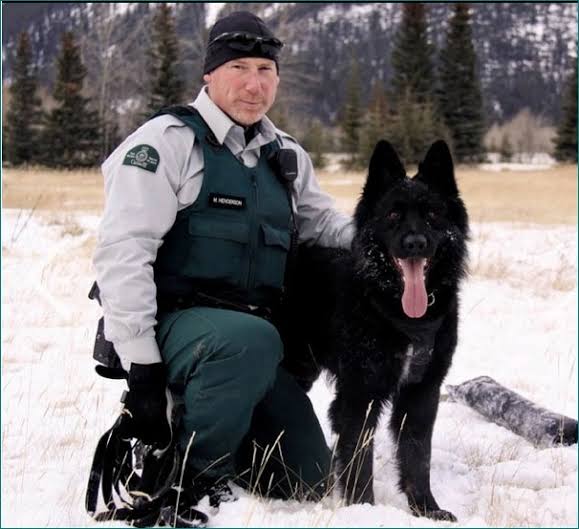
The program’s last working dog was Leroy, a German shepherd who finished his service in August.
Over seven years, Leroy helped track 156 people and find 57 who were lost in the wilderness. He also helped police solve two murders in Banff.
A replacement dog had already been trained before the program ended. According to Mike Henderson, a former Parks Canada handler, the program’s last handler, Logan Bennett, had to return that dog to the kennel.
What the dogs did
The dogs searched avalanche debris for buried skiers and climbers, tracked lost hikers and children through the forest, helped recover remains, and supported warden law enforcement.
Former handler Scott Ward, who spent 17 years in the Rockies, said a dog can search avalanche debris much faster than people can. Without one, rescuers probe the snow by hand, which keeps them out on dangerous slopes longer.
Avalanche groups want it reversed
The Canadian Avalanche Rescue Dog Association (CARDA) and the British Columbia Search Dog Association are calling on Parks Canada to restore the program right away.
CARDA president Kyle Hale told CBC that trained dogs can find buried people faster, which cuts the time rescuers spend exposed to another slide. He said the Parks Canada program also helped train civilian dog handlers.
The groups say that, based on talks with Parks Canada staff, they expect volunteers to fill the gap for now. Parks Canada hasn’t announced a plan to replace the dog team.
Why Parks Canada cut it
The cut is part of $145 million in spending reductions at Parks Canada. The agency also plans to eliminate about 500 full-time positions across the country.
Parks Canada says it’s changing how it delivers services and modernizing its law enforcement unit. It told CBC that wardens can enforce the Canada National Parks Act without dogs.
Ryan Turnbull, a parliamentary secretary in the federal government, said the government is “focused on reducing the deficit.”

A petition with thousands of signatures
Conservative MP William Stevenson, who represents Yellowhead, started a petition to restore the program. It drew more than 5,500 signatures in its first two days.
Stevenson said he supports limiting government spending, but called the cut a “risk to public safety.”
The petition says Leroy also helped with avalanche searches and recovering remains. It asks the federal government to restore dedicated search dog capacity in the mountain national parks.
What winter visitors should know
Whatever happens with the program, Parks Canada’s advice for avalanche terrain stays the same: don’t count on rescue arriving in time.
The agency says mountain rescuers rarely reach avalanche victims within the short window when a buried person can survive. Your best chance is the people you’re with.
That goes for snowshoers and winter hikers, not just skiers. At Lake Louise, Parks Canada says popular summer trails like Lake Agnes and the Plain of Six Glaciers cross avalanche terrain. It warns that they’re unsafe in winter without avalanche training and gear, and that tracks left by other people don’t mean a route is safe.
Before you head into avalanche terrain:
Check the avalanche forecast and Parks Canada trail reports
Make sure everyone has a transceiver, probe and shovel, and knows how to use them
Pick terrain that matches the conditions and your group’s training
After a deadly summer in Banff and Kananaskis, Parks Canada’s rescue teams are heading into winter without a dog for the first time since the program started.
Sources:






Comments