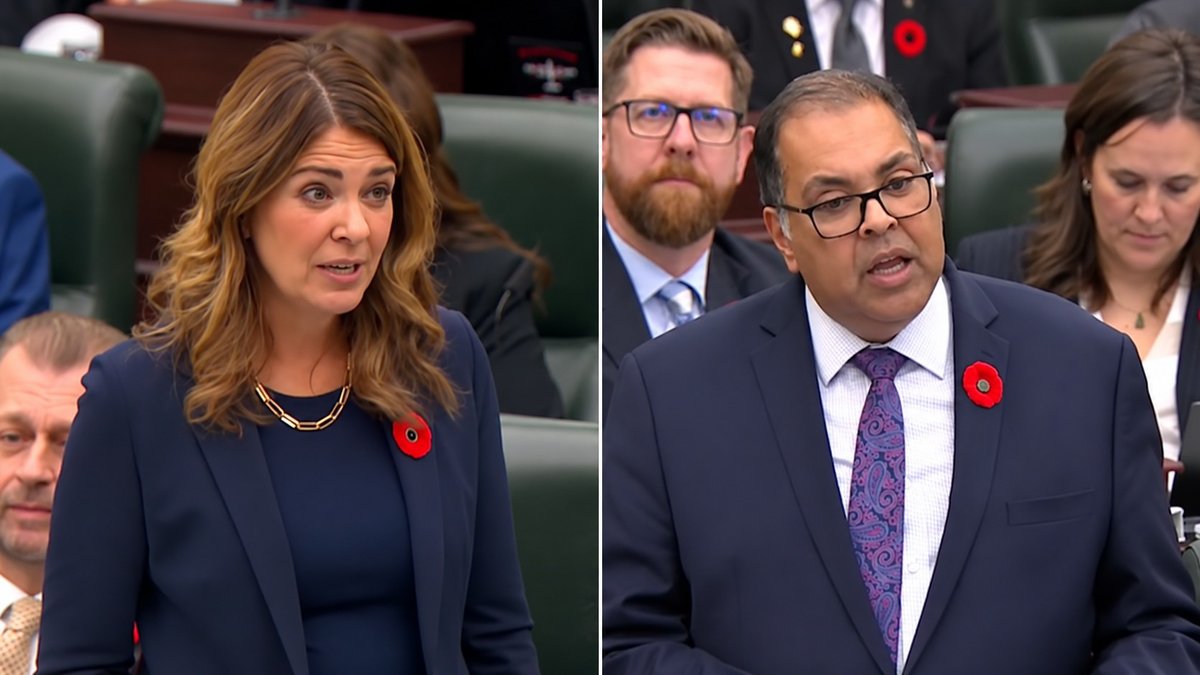
“Mr. Speaker, wokeism is dead in Alberta. Cancel culture is dead in Alberta.”
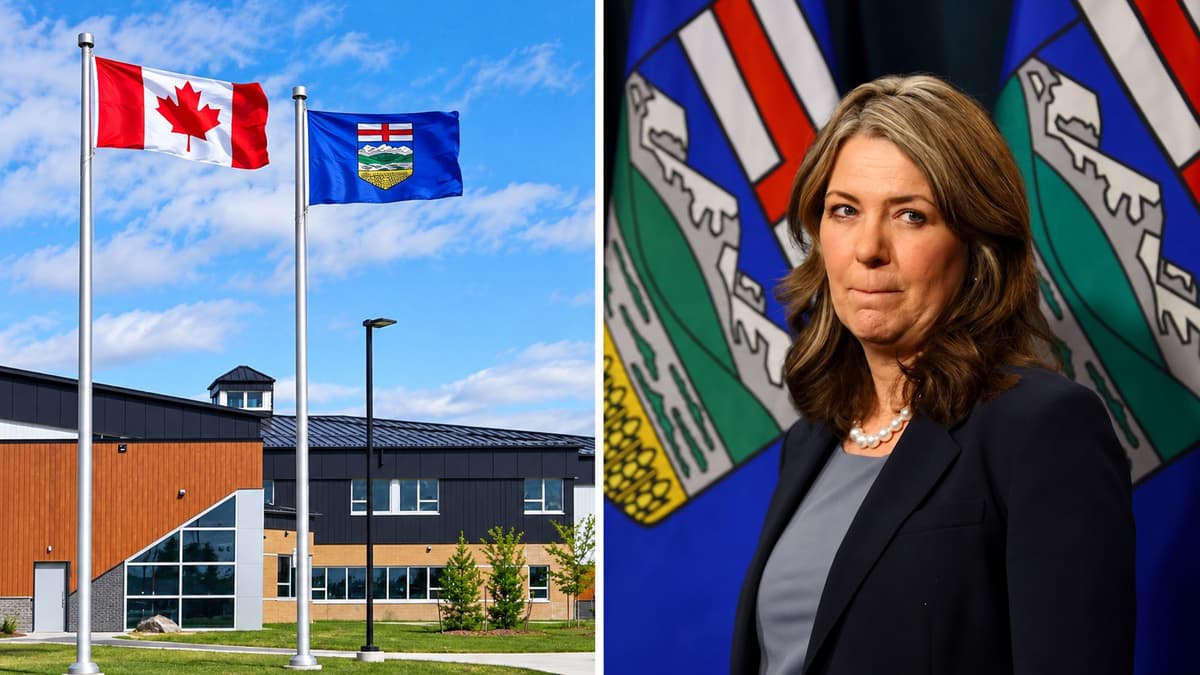
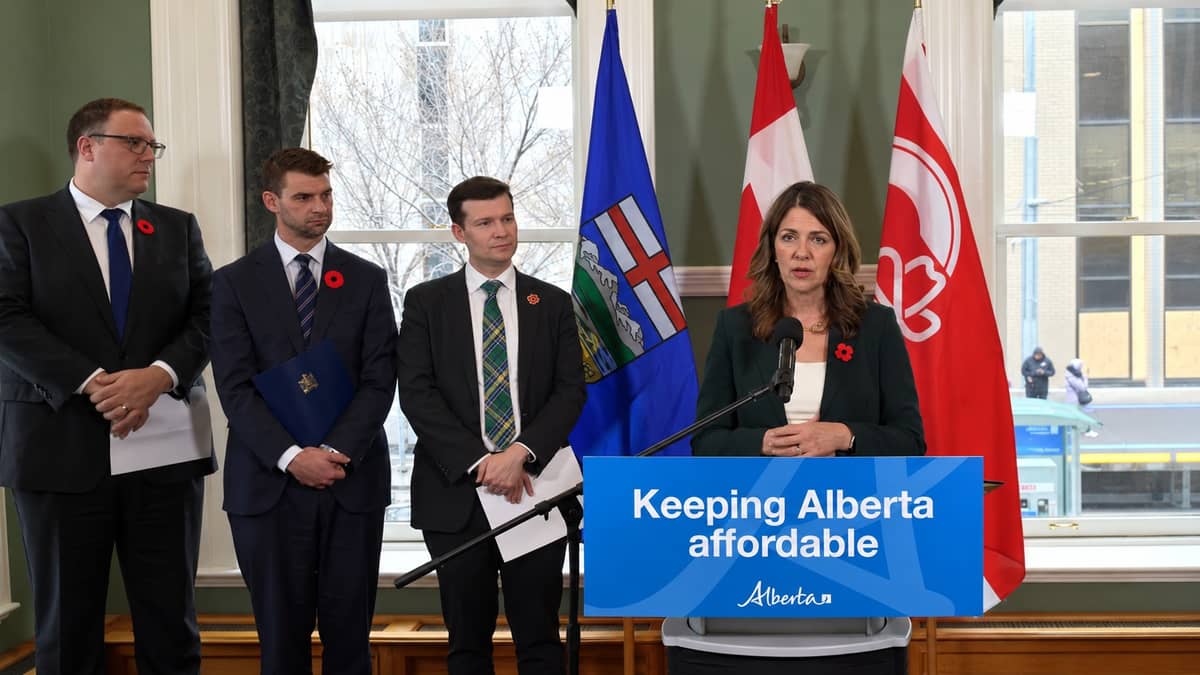
Premier Danielle Smith said it in the legislature on Thursday, Nov. 5, during question period.
She said it eight days after her government introduced a bill to restrict DEI hiring across Alberta’s public sector, and two days after it introduced another making universities stay officially neutral on political issues.
Bill 33 would cover cities, universities, school boards and other public bodies. Bill 38 would cover what colleges and universities can say, and how much they can charge.
Neither has become law. But Smith’s line was a pretty clear summary of where her government is heading.
What Smith said
The exchange lasted about 40 seconds. After declaring wokeism and cancel culture dead, she went after the NDP.
“We don’t want to have university students have to show an equity card to be able to stand up and speak at Speaker’s Corner like they have to at an NDP convention,” she said.
Then she turned to the economy.
“Mr. Speaker, I’ll tell you what we spent the last year doing,” she said. “We spent the last year getting approval for the [Pacific Link] pipeline, which is going to deliver a million barrels a day of additional crude to our friends and allies in Asia, add $20 billion to GDP, create tens of thousands of new jobs, create billions of dollars to be able to support health care and education. That’s what people want to see.”
It isn’t the first time she’s used the phrase. In May, Smith told a conservative conference that Alberta was ending the era of “wokeism.”
The “equity card”
The jab was aimed at something real, though not at the party sitting across from her.
At the federal NDP’s leadership convention in Manitoba, delegates used colour-coded “equity cards” that gave people from marginalized groups priority at the microphones. It sparked arguments on the floor over speaking order, and conservative media picked it up.
That was the federal party. The Alberta NDP voted in 2025 to end automatic membership in the federal NDP. Smith said “an NDP convention.” She didn’t say which one.
Bill 33: DEI in public-sector hiring
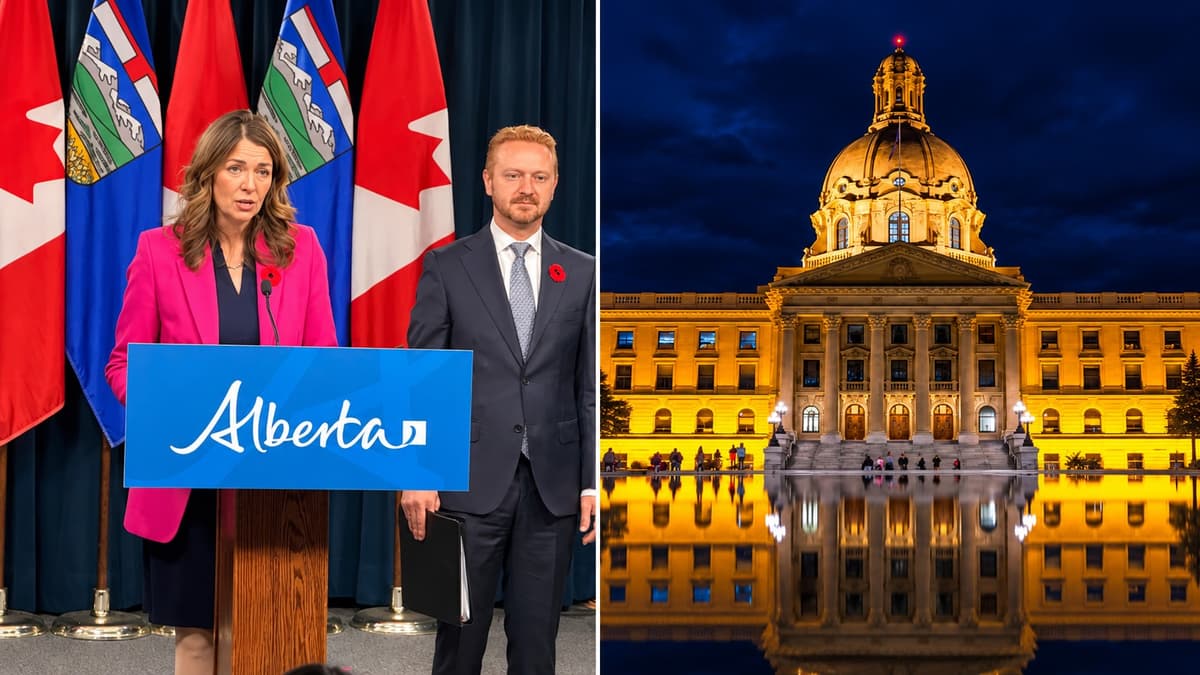
Justice Minister Mickey Amery introduced Bill 33 on Oct. 27, the first bill of the fall sitting. It amends the Alberta Human Rights Act.
If it passes, public bodies couldn’t base hiring or promotion decisions on DEI policies or protected personal characteristics, unless a characteristic is genuinely required for the job. Mandatory DEI, cultural competency and unconscious bias training would be banned, except where it’s needed to do the work.
It would cover:
Municipalities, including Edmonton and Calgary
Public universities and colleges
School boards
Provincial agencies and Crown corporations
Officials said it could also reach nonprofits that get provincial grants, through regulations.
“Hiring decisions should be about who is best qualified for the job, and these changes will help ensure that fairness is at the heart of hiring,” Smith said.
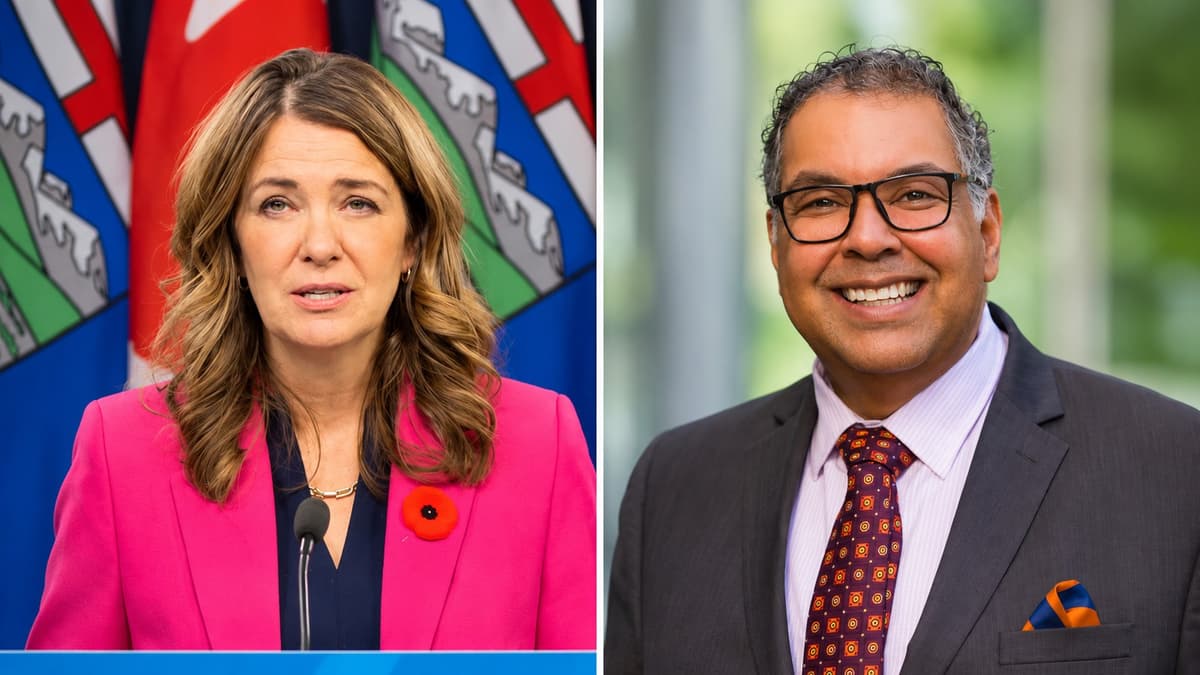
Critics question what it fixes. Officials acknowledged provincial government employees are already hired on merit. The government hasn’t said how many other public bodies use demographic preferences in hiring, or how often. NDP Leader Naheed Nenshi accused the government of playing culture-war politics. Sandra Azocar, president of the Alberta Union of Provincial Employees, said public hiring already picks qualified candidates and asked what problem the bill solves.
Existing human rights protections and the duty to accommodate stay in place. And outreach isn’t the same as a preference. The City of Edmonton, for example, runs recruitment programs aimed at Indigenous peoples, newcomers and racialized residents. Encouraging more people to apply is different from deciding who gets the job. Where Bill 33 draws that line will come down to the final wording and the regulations.
Bill 38: what universities can say
Advanced Education Minister Myles McDougall introduced Bill 38, the Advanced Education Statutes Amendment Act, 2026, on Nov. 3.
Neutrality. Public universities and colleges would have to adopt policies on “institutional neutrality” and freedom of expression. In plain terms, the school can’t take official positions on political, social or ideological issues outside its academic work.
It covers what the institution says, not what people say. Students, professors and staff can still say what they want. A university president can speak as an individual, McDougall said, but not for the school.
“When an institution speaks officially, we expect it to stay neutral,” he said.
Universities could still respond to provincial budgets and express sympathy after a tragedy. But McDougall drew a line at the Israel-Palestine conflict, calling it “obviously political.” Institutions should “stay away from that,” he said.
Who decides. The minister could review each school’s neutrality and free expression policies and order changes. McDougall said there “will have to be consequences” for schools that don’t comply. Those penalties haven’t been written yet and are expected in regulations next year.
Student conduct. The province reviewed nearly 200 student conduct policies last year and says it found them inconsistent. Bill 38 would set provincewide minimum standards.
Private and First Nations institutions are exempt.
“Our universities and colleges should teach students how to think, not what to think,” Smith said when the bill was introduced.
NDP advanced education critic David Eggen called it “culture war garbage.” “The government has not had a coherent policy for advanced education for seven years,” he said. “We can do better. We must do better.”
Supporters of neutrality argue that when an administration takes an official side, it tells students and professors who disagree their view isn’t welcome. Critics point to the irony: a bill meant to keep politics off campus gives a provincial politician the final say on the rules.
The tuition change could matter more
The speech rules got the headlines. The tuition change could cost students more.
Alberta currently caps annual tuition increases at 2 per cent, with ministry-approved exceptions. Bill 38 would scrap that. Instead, the minister would set a maximum for each program or group of programs by ministerial order, and schools could charge anything up to it.
The province hasn’t said which programs would go up. Students already enrolled would be held to a 2 per cent increase in 2027–28. After that, there’s no promise.
It applies to domestic students. Alberta’s domestic tuition rose 35 per cent from 2020 to 2027, the biggest jump of any province, according to Statistics Canada. The average is now $8,260 a year.
Both bills could hit the University of Alberta
The U of A sits in both bills. Bill 33 covers how it hires and trains staff. Bill 38 covers what it says, what it charges and how it disciplines students.
It had already moved. In March, the university revised its recruitment policy, removing specific equity, diversity and inclusion wording while keeping its commitment to merit-based hiring and removing barriers. How the new provincial rules sit alongside the equity requirements attached to federal research funding is still an open question.
What “wokeism” means here
Smith didn’t define it. It’s a political label, not a policy term.
Conservatives generally use it for DEI programs, identity-based hiring preferences and institutional politics they say put ideology ahead of merit. Supporters of DEI say those programs help qualified people from under-represented groups get a fair look.
The two sides often aren’t arguing about the same thing. Posting a job more widely isn’t the same as hiring someone because of their background. That’s the line both bills will eventually have to draw.
Alberta isn’t alone. U.S. President Donald Trump signed orders in January 2025 shutting down DEI programs in federal agencies and ending affirmative action rules for federal contractors. Alberta’s bills are different in scope, and the province hasn’t said the U.S. changes shaped them. But the arguments about merit and neutrality are the same.
What she said about the pipeline
Smith said her government spent the last year “getting approval” for Pacific Link.
Here’s where that stands. On Oct. 1, Ottawa listed Pacific Link as the first project of national interest under the Building Canada Act. That fast-tracks it into a single federal review. It isn’t a construction permit.
The federal Major Projects Office and the Canada Energy Regulator still have to run that review, including Indigenous consultation and public hearings, and produce a conditions document by a target date of Sept. 1, 2027. Ottawa says that’s the step that “would clear the way for construction.” The route, costs and design are still being finalized.
The million-barrels-a-day figure matches Ottawa’s. The $20 billion in GDP and tens of thousands of jobs are projections.
What happens next
Both bills still have to make it through the legislature. Then the regulations will settle the parts that matter most: what counts as a DEI preference, what counts as political, what happens to institutions that break the rules, and what each program costs.
Until then, nothing changes at city hall or on campus.
Smith’s line on Thursday told you where the government wants to go. The bills, and the regulations behind them, will decide how far it gets.
Sources
Government of Alberta: Bill 33, merit-based hiring and justice reforms
Government of Alberta: Bill 38, strengthening higher education and professional governance
University of Alberta: Statement on revised recruitment policy
Prime Minister of Canada: Pacific Link listed as a project of national interest (Oct. 1, 2026)

Comments