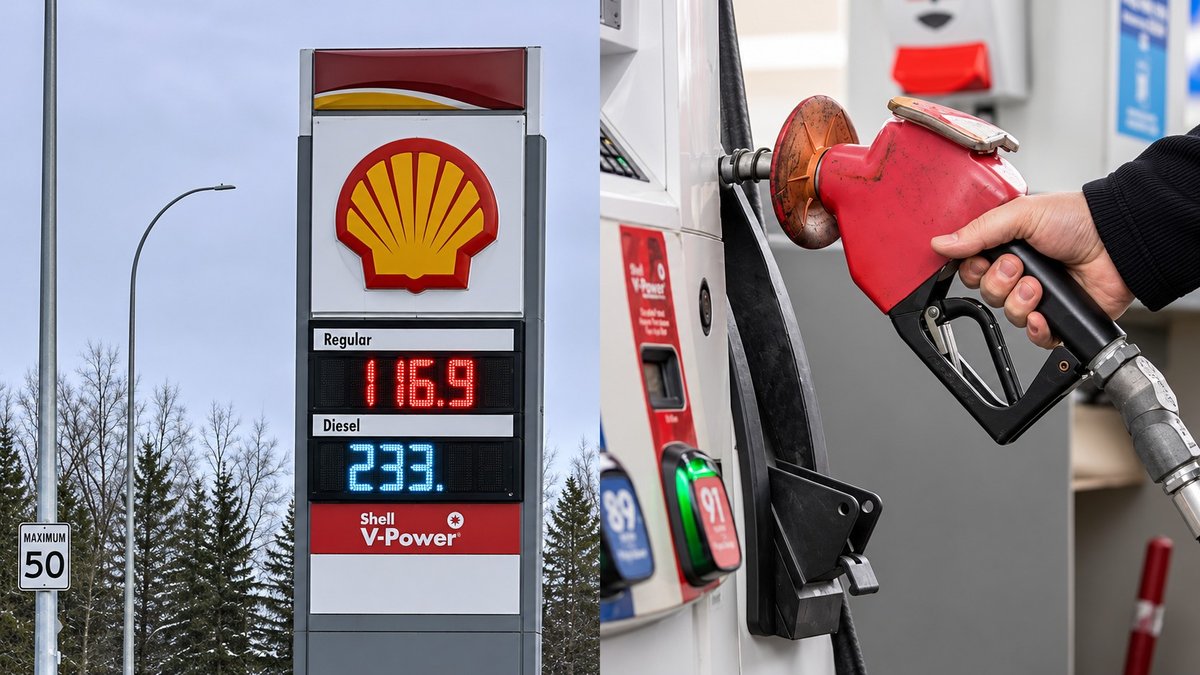
Fill a 60-litre tank in Alberta and you’ll pay about $78. In British Columbia, the same tank costs more than $103.
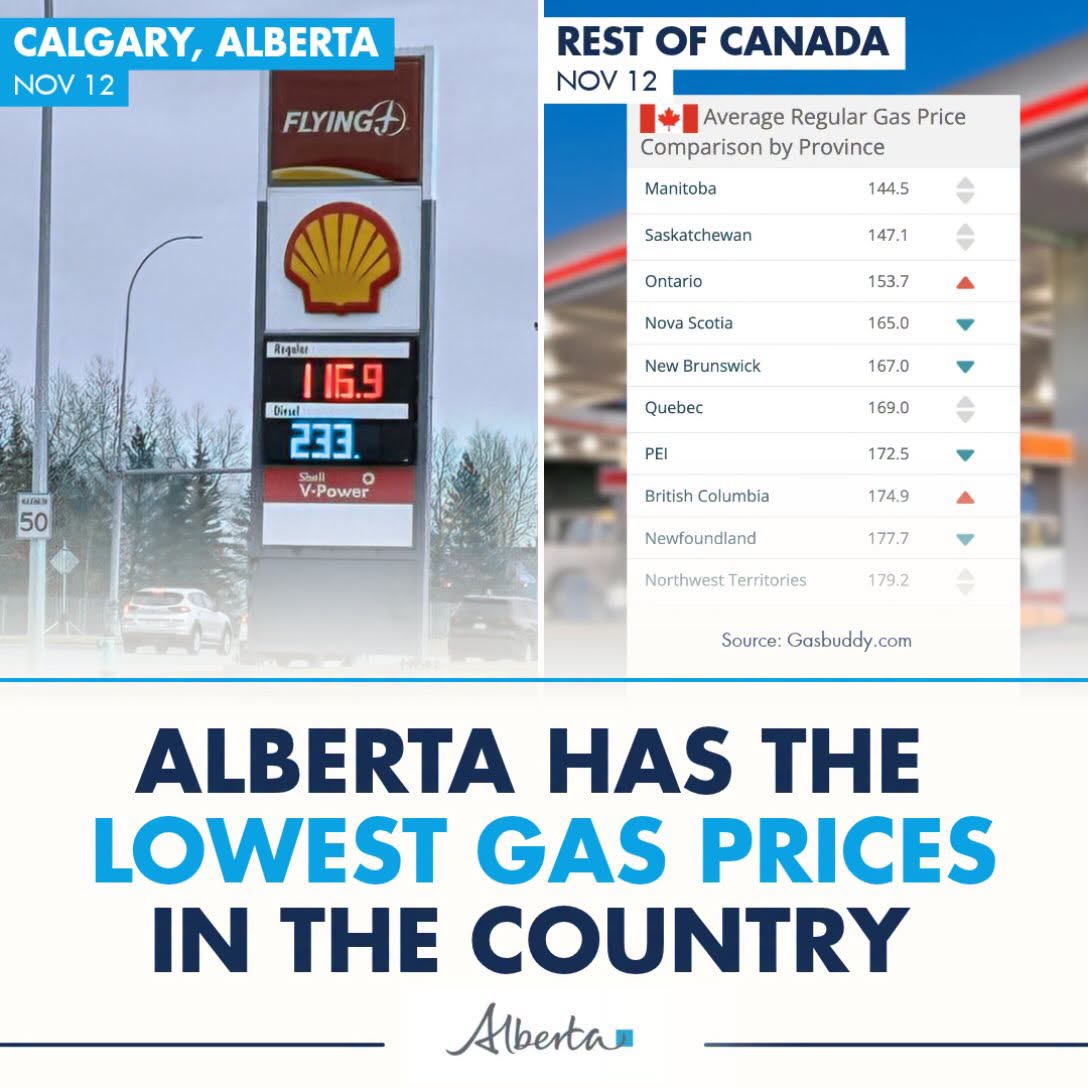
Alberta has the cheapest regular gas of any province in Canada. GasBuddy’s provincial averages on Nov. 13 put Alberta at 129.8 cents a litre. Manitoba is next at 143.7. B.C. sits at 172.3, a gap of 42.5 cents on every litre.
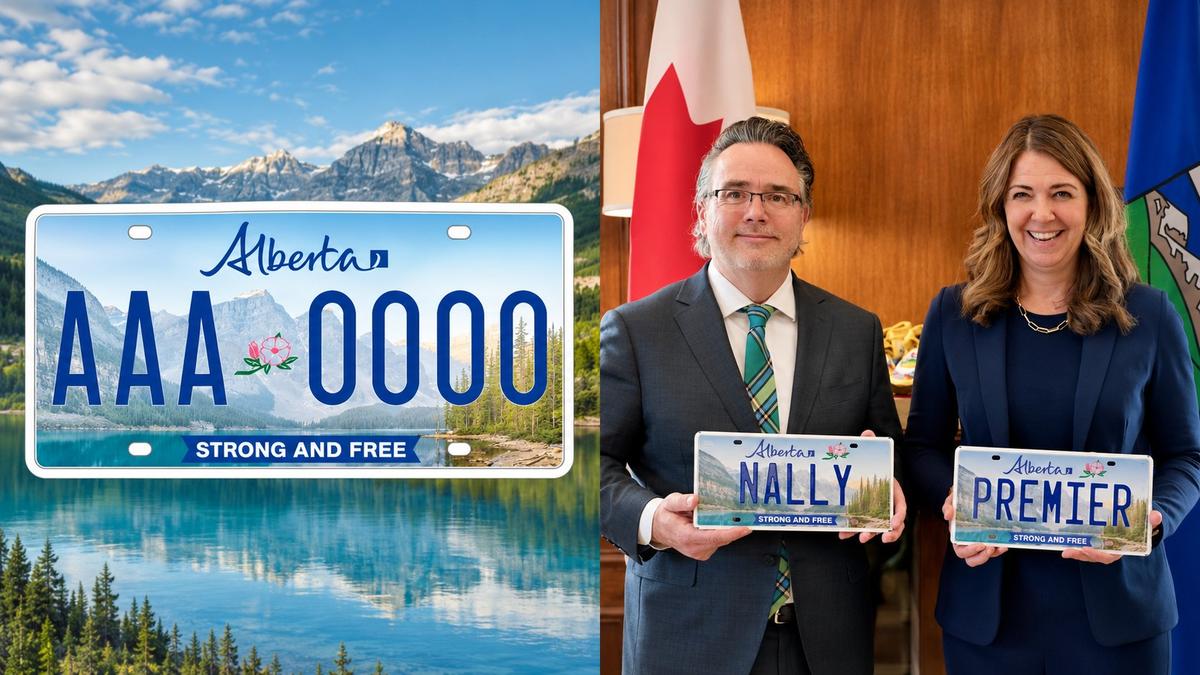
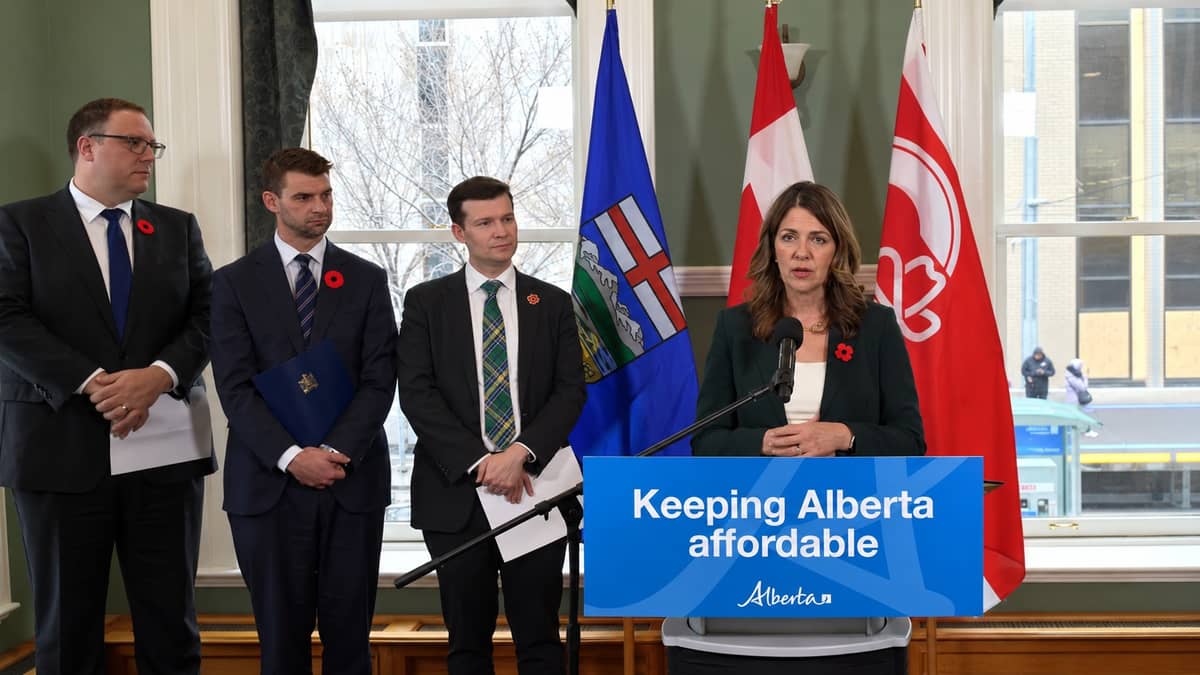
Premier Danielle Smith pointed to the numbers on social media on Nov. 12. “Alberta continues to have the lowest fuel prices in the country,” she wrote, crediting income tax cuts, energy rebates and the pause on the 13-cent provincial fuel tax “through the end of the year.”
“Every dollar saved at the pump is a dollar back in the pockets of hardworking Albertans,” she said.
How Alberta compares
Average price of regular gas, Nov. 13 (GasBuddy):
| Province | ¢/L | Above Alberta | 60 L fill-up |
|---|---|---|---|
| Alberta | 129.8 | — | $77.88 |
| Manitoba | 143.7 | +13.9 | $86.22 |
| Saskatchewan | 145.9 | +16.1 | $87.54 |
| Ontario | 149.3 | +19.5 | $89.58 |
| New Brunswick | 164.9 | +35.1 | $98.94 |
| Nova Scotia | 165.2 | +35.4 | $99.12 |
| Quebec | 166.2 | +36.4 | $99.72 |
| P.E.I. | 170.5 | +40.7 | $102.30 |
| British Columbia | 172.3 | +42.5 | $103.38 |
| Newfoundland and Labrador | 177.3 | +47.5 | $106.38 |
| Northwest Territories | 178.0 | +48.2 | $106.80 |
A driver who fills up once a week in Alberta pays about $1,300 a year less than one in B.C.
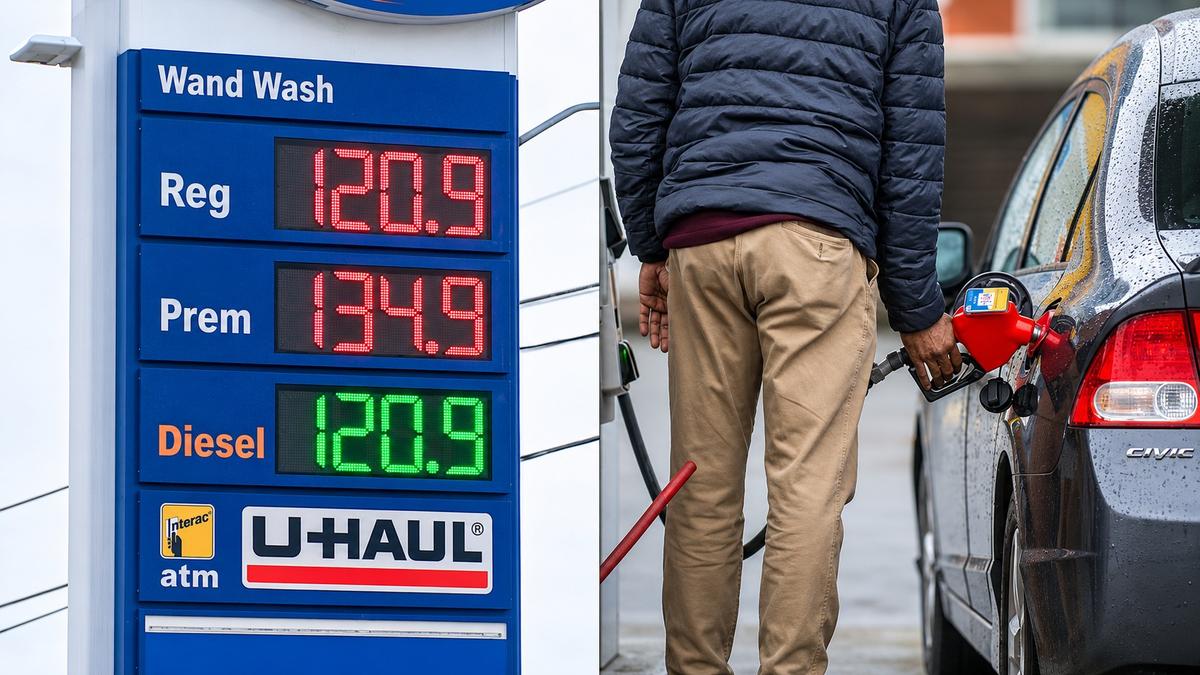
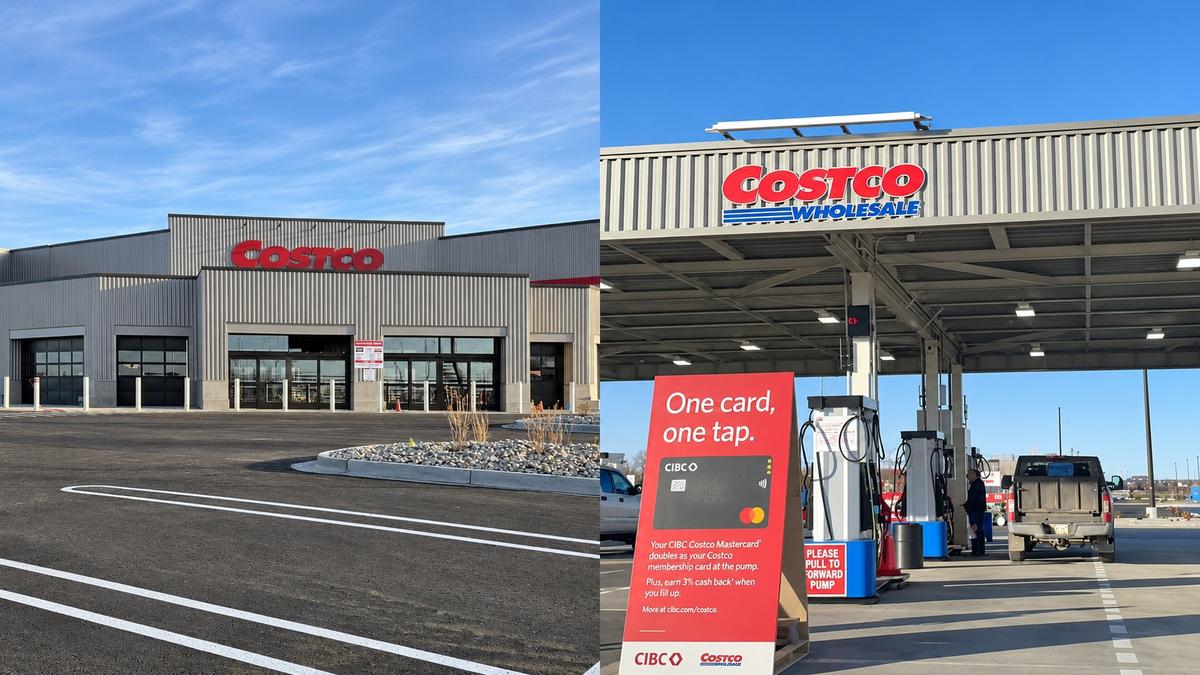
Calgary averaged 124.5 cents and Edmonton 129.9. Last weekend, Costco stations dropped to $1.18 in Calgary and $1.22 in Edmonton.
The graphic Smith shared compared one Calgary Shell, at 116.9 cents, against other provinces’ averages. Comparing averages to averages, Alberta still comes out cheapest.
Why Alberta pays less
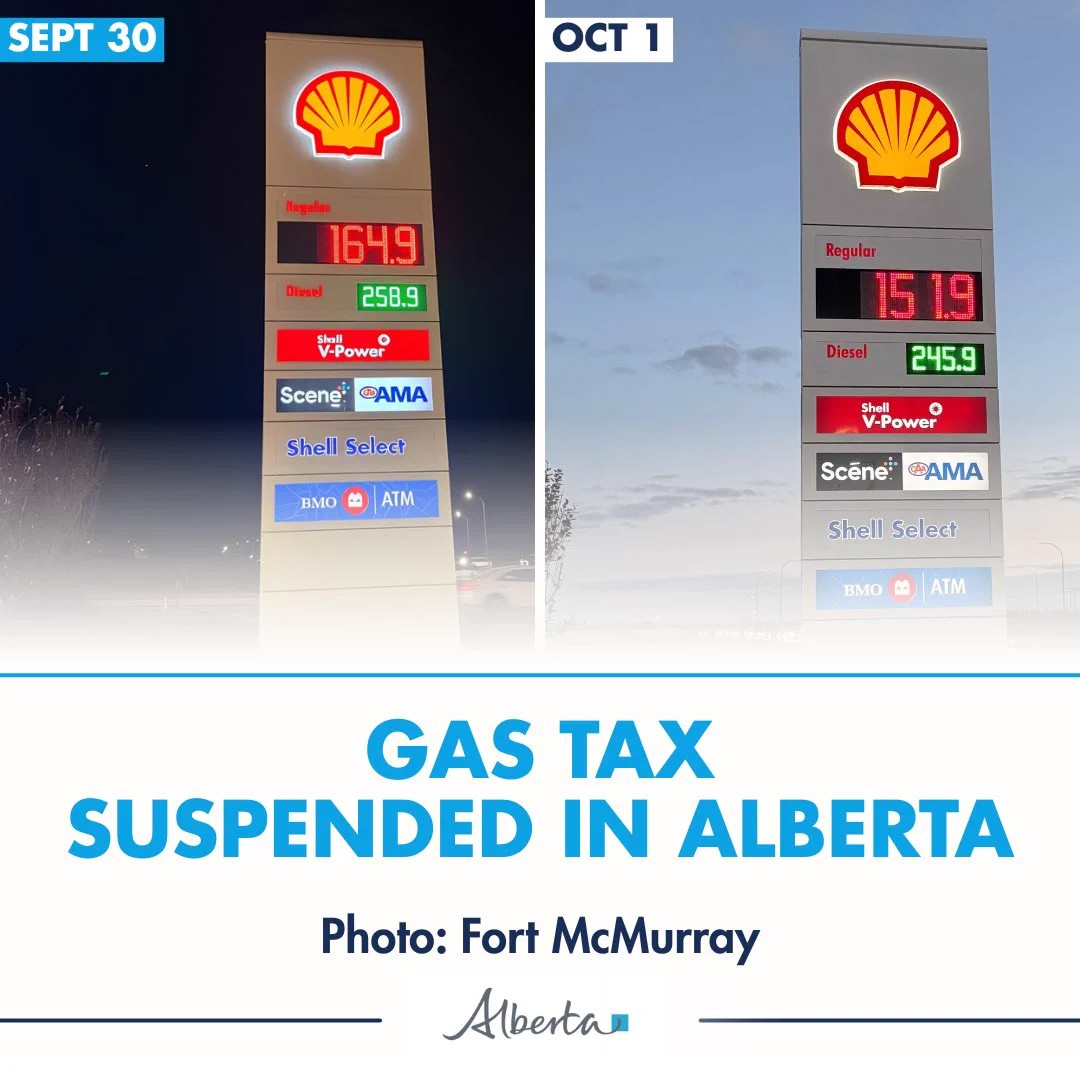
The fuel tax is paused. Alberta stopped collecting its 13-cent-a-litre tax on gasoline and diesel on Oct. 1. Oil had crossed the trigger in the province’s fuel tax relief program. On a 60-litre fill, that’s $7.80 saved before GST.
No sales tax at the pump. Albertans pay only the 5 per cent GST. Ontario and the Atlantic provinces charge 13 to 15 per cent HST, and it’s calculated on top of the fuel taxes.
Refineries close by. Edmonton’s refineries sit beside the oil supply. B.C. relies on fuel moved in from Alberta by the Trans Mountain pipeline and shipped up from the United States, and it pays for the distance.
Ottawa’s break applies everywhere. The federal government suspended its 10-cent-a-litre excise tax on gasoline in April and extended the suspension in September. That lowers prices in every province, but it doesn’t explain Alberta’s lead.
Drivers welcome the relief, but question local prices and diesel
The response to Smith’s post was a mix of relief and pointed questions.
Some drivers said filling the tank feels affordable again. Others welcomed the tax pause but noted that governments control only part of the price at the pump.
Many asked why prices jump from one community to the next. One commenter described seeing very different prices on a Nov. 11 drive from Edmonton to Fort McMurray. We haven’t independently verified individual reports like that one.
Others asked the question diesel drivers keep asking: where’s our break?
These are reactions to one post, not a survey of Albertans. But they get at something a provincial ranking hides.
Why prices change from town to town
Being the cheapest province doesn’t mean every station is cheap.
Natural Resources Canada says stations farther from their fuel supply pay more to truck it in and “may pass on” that cost to customers. Stations that sell less fuel “may have to charge a higher price to cover its fixed operating costs.” Price wars among nearby competitors can push big-city prices below cost for a while, until they snap back.
That’s why a busy Costco in south Edmonton can sit 20 cents below a lone station on Highway 63. It’s also why the province’s average can hide wide swings along a single road trip.
Diesel tells a different story
Diesel buyers aren’t seeing the same deal. Diesel in Edmonton is forecast at 198.9 cents a litre on Nov. 13, 72 cents above regular, according to Canadians for Affordable Energy.
The provincial tax pause covers both fuels. The gap comes from somewhere else. The Bank of Canada says damage to Russian refineries and Middle East export disruptions have squeezed global diesel supply. It expects refining margins to stay high “until the end of 2026.”
Federal relief favours gasoline too. Ottawa’s pause takes 10 cents off a litre of gas but only 4 cents off diesel.
Diesel matters even if you drive a gas car. The Bank of Canada says high diesel costs raise freight and operating costs in food processing, agriculture, mining and construction. Over time, those costs can show up at the checkout.
What happens after Dec. 31
The provincial pause is set to end with the year. After that, Alberta’s oil-price formula decides the rate. It’s based on the average West Texas Intermediate (WTI) price over the 20 trading days ending Dec. 16.
| Average WTI (US$) | Alberta fuel tax |
|---|---|
| $90 or more | 0¢ |
| $85 to $89.99 | 4.5¢ |
| $80 to $84.99 | 9¢ |
| Under $80 | 13¢ |
Under the program’s published rules, the tax can rise by no more than 9 cents a litre in a single quarter. WTI was trading under US$87.50 earlier this month. If it stays there, the tax would return at 4.5 cents on Jan. 1.
The federal break ends in stages. The full pause runs to Jan. 31. The federal tax comes back at half on Feb. 1 and in full on April 1.
The politics
The government counts the pause as part of a wider affordability push, alongside a new 8 per cent income tax bracket and energy rebates. Our Alberta energy rebate checker shows what you may qualify for.
NDP Leader Naheed Nenshi has said the relief “should have been done months ago when families needed it.” He was pointing to the spring, when pump prices were higher and the province stuck to its formula.
Last December, with the full 13-cent tax in place, Alberta gas dropped below a dollar a litre. Taxes move the price. Oil moves it more.
Have lower gas prices made a difference to your budget? Tell us what you’re paying in your community in the comments.
Prices are GasBuddy provincial averages for regular gasoline on Nov. 13, 2026, and change daily.
Sources
Premier Danielle Smith, social media post, Nov. 12, 2026
Department of Finance Canada: Extension of federal fuel excise tax relief
Natural Resources Canada: Why gasoline prices vary across Canada
Bank of Canada: Refinery margins and the persistence of energy inflation, October 2026


Comments