
For years, a major pipeline, transmission line, or industrial facility in Alberta could trigger two separate environmental reviews one from the province, one from Ottawa covering much of the same ground, on overlapping timelines, with no requirement that either government pay attention to what the other one already decided. On Friday, both governments agreed that's done.
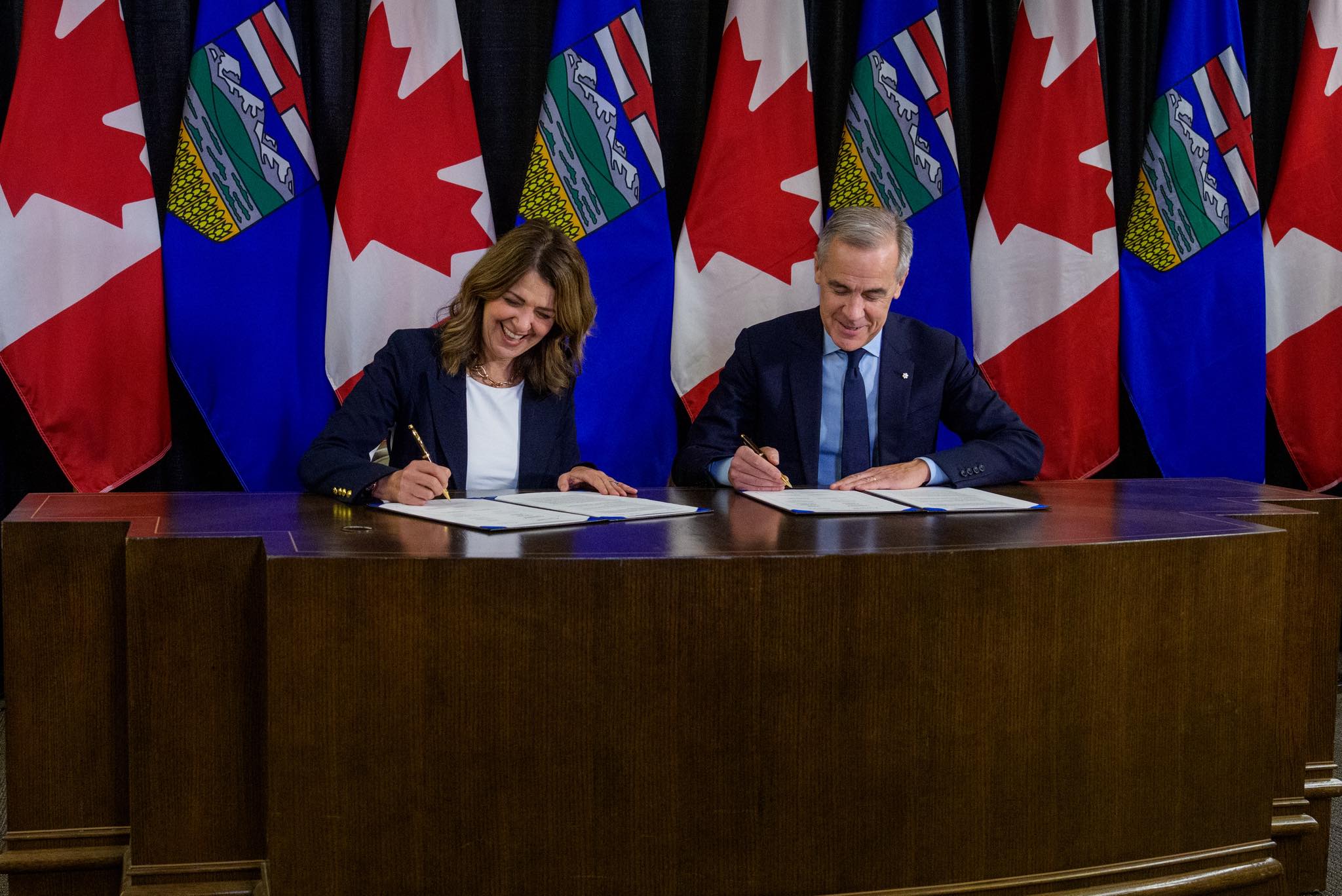
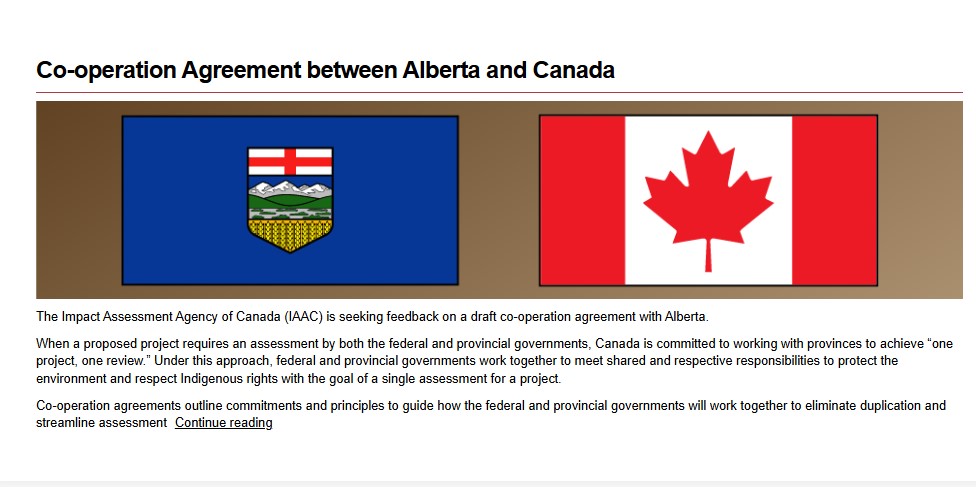
Prime Minister Mark Carney and Premier Danielle Smith released a draft Co-operation Agreement on Environmental and Impact Assessment that lays out how federal and provincial reviews will work together going forward or in many cases, how the federal review will step aside entirely.
What the Agreement Actually Says
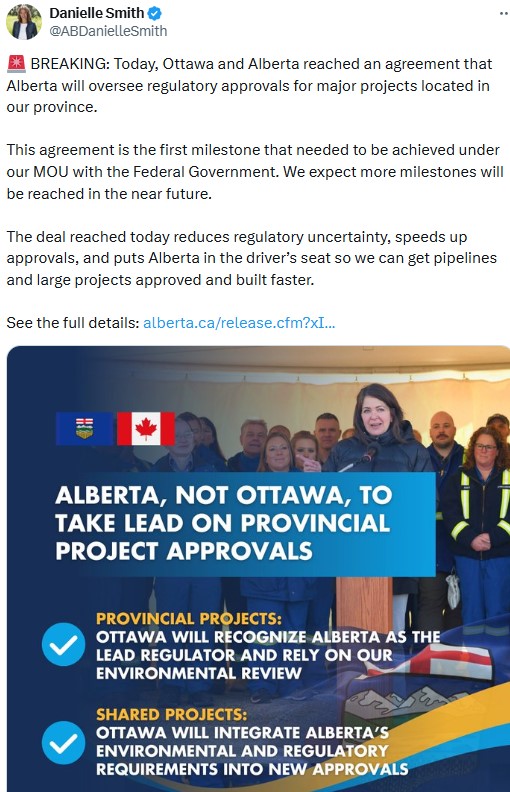
Alberta's government release breaks the deal into four tiers depending on the nature of the project.
For projects that fall primarily under provincial jurisdiction most oil and gas work, for example Ottawa will recognize Alberta "as best positioned to lead environmental assessments" and will rely on the province's existing regulatory process rather than running its own in parallel.
For projects involving federal land or federal jurisdiction, Alberta's assessment process gets integrated into the federal review rather than running separately.
Where both levels of government have a legitimate stake, they'll coordinate timelines, requirements, and reporting to cut the duplication. And critically where both governments would have imposed similar conditions on a project, federal requirements will defer to Alberta's when "provincial legislation, regulations, or processes are in place."
That last part is new. Coordinating timelines is one thing. Explicitly saying Ottawa won't stack an identical requirement on top of something Alberta already required is another.
Smith put it plainly: the agreement "removes the need for federal approvals of projects that are squarely within the province's jurisdiction."
This Was Coming Since November
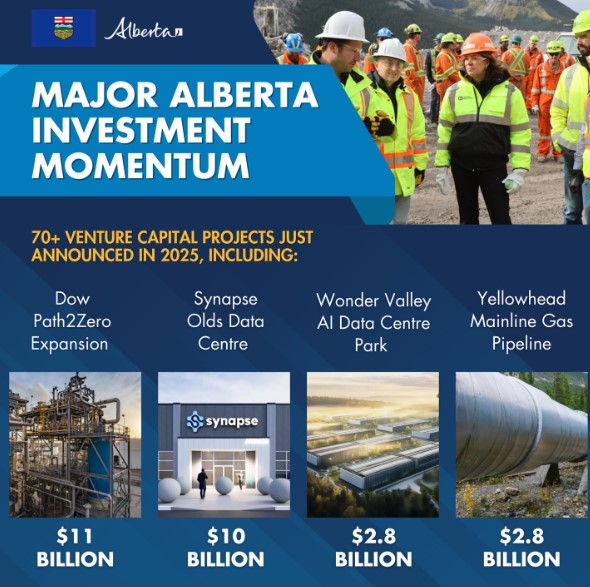
Friday's announcement is the first concrete deliverable from the Canada-Alberta Memorandum of Understanding signed last November. That MOU committed both governments to a wide list of shared priorities a new bitumen pipeline to Asian markets, the Pathways carbon capture project, nuclear generation strategy, AI data centre policy, and more. But threading all of it required first sorting out how project approvals actually work.
The MOU set an explicit deadline: a co-operation agreement on impact assessments by April 1, 2026. Both governments delivered it a month early.
Alberta has also been actively challenging the constitutionality of the federal Impact Assessment Act in court a fact the draft agreement itself acknowledges. The Supreme Court sided with Alberta's position in 2023, ruling Ottawa had overstepped its legislative authority. This agreement doesn't resolve that legal fight, but it makes the day-to-day dispute less relevant by redesigning how decisions get made before a court ever has to weigh in.
Alberta's Environment Minister Grant Hunter framed it as a win for investment certainty: "By reducing duplication and relying on Alberta's proven assessment process, we can move projects forward faster and give investors the certainty they need."
Adam Legge, president of the Business Council of Alberta, called it "an important change" that "puts decision-making squarely where it belongs with the Government of Alberta."

What's Still Not Done
The agreement is still a draft. Public comments are open March 6–27 at letstalkimpactassessment.ca, after which both governments finalize the document.
Three other files from the November MOU are still outstanding, all with April 1 deadlines: a carbon pricing agreement through Alberta's TIER system, a methane emissions equivalency agreement targeting a 75% reduction from 2014 levels by 2035, and a trilateral MOU with the Pathways carbon capture consortium. Alberta has also committed to submitting its pipeline application to Ottawa's Major Projects Office by July 1.
Whether those deadlines hold especially the carbon pricing file, which has been contentious for years will determine how durable this new partnership actually is.
Sources:
Government of Alberta: Faster approvals. Faster projects. — March 6, 2026
Prime Minister's Office: Canada and Alberta reach agreement-in-principle to accelerate the construction of major projects in Alberta — March 6, 2026
Prime Minister's Office: Canada-Alberta Memorandum of Understanding — November 27, 2025
Impact Assessment Agency of Canada: Draft Co-operation Agreement between Alberta and Canada — Public comment period March 6–27, 2026





Comments
Conversation