The same ground that launched Alberta's oil boom in 1947 may be about to kick off a second one.
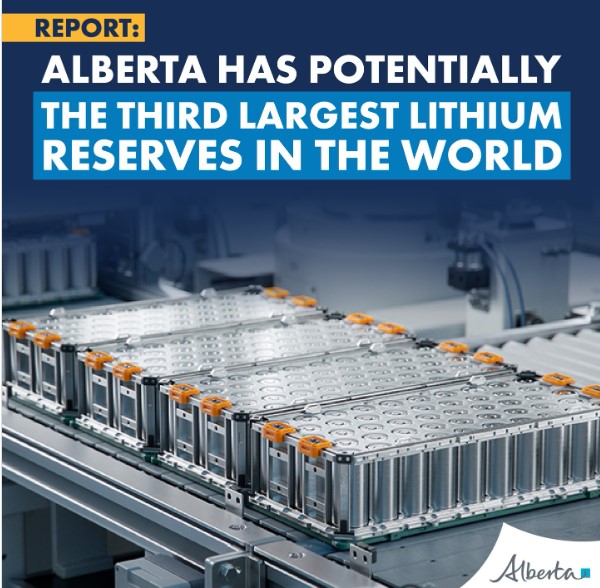
A new report published by the Alberta Geological Survey (AGS) in March 2026 has quantified, for the first time, the full scale of lithium locked inside Alberta's deep underground formations. The number is staggering: 82.5 million tonnes of lithium carbonate equivalent, concentrated primarily in the Devonian Leduc Formation the same geological layer that gave rise to the Leduc No. 1 oil discovery nearly 80 years ago. The estimate positions Alberta as potentially holding the third-largest lithium resource in the world, behind only Chile and Australia, two countries that currently dominate global supply. To put that figure in context: the AGS assessment found Alberta's underground lithium could theoretically supply enough material for more than 10 billion electric vehicle battery packs, and could generate upward of US$1 trillion in revenue over time.
The Metal the Modern Economy Runs On
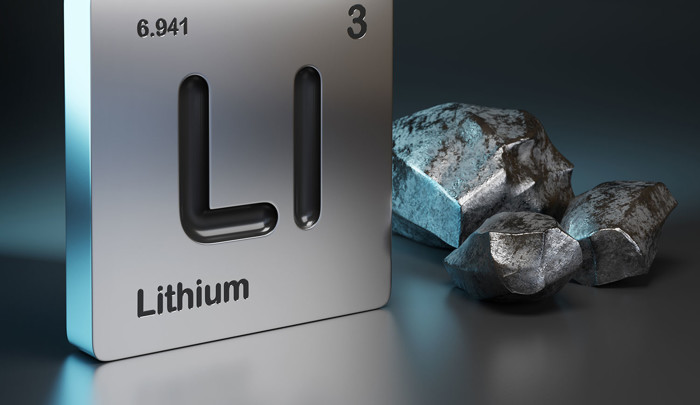
Every EV battery, smartphone, laptop, and grid-scale energy storage system runs on lithium-ion chemistry. There is no commercially viable substitute at scale. Global demand has tripled over the last decade and is still climbing. A single EV battery pack requires up to 17 kilograms of lithium carbonate equivalent. Multiply that across millions of vehicles, plus grid storage and consumer electronics, and the supply math gets uncomfortable fast. Right now, Chile, Australia, and Argentina control most of global production. China refines the majority of it. North America is almost entirely dependent on imports for a mineral its own economy increasingly can't function without. That's the gap Alberta is now positioned to help close.
The Lithium Has Always Been There
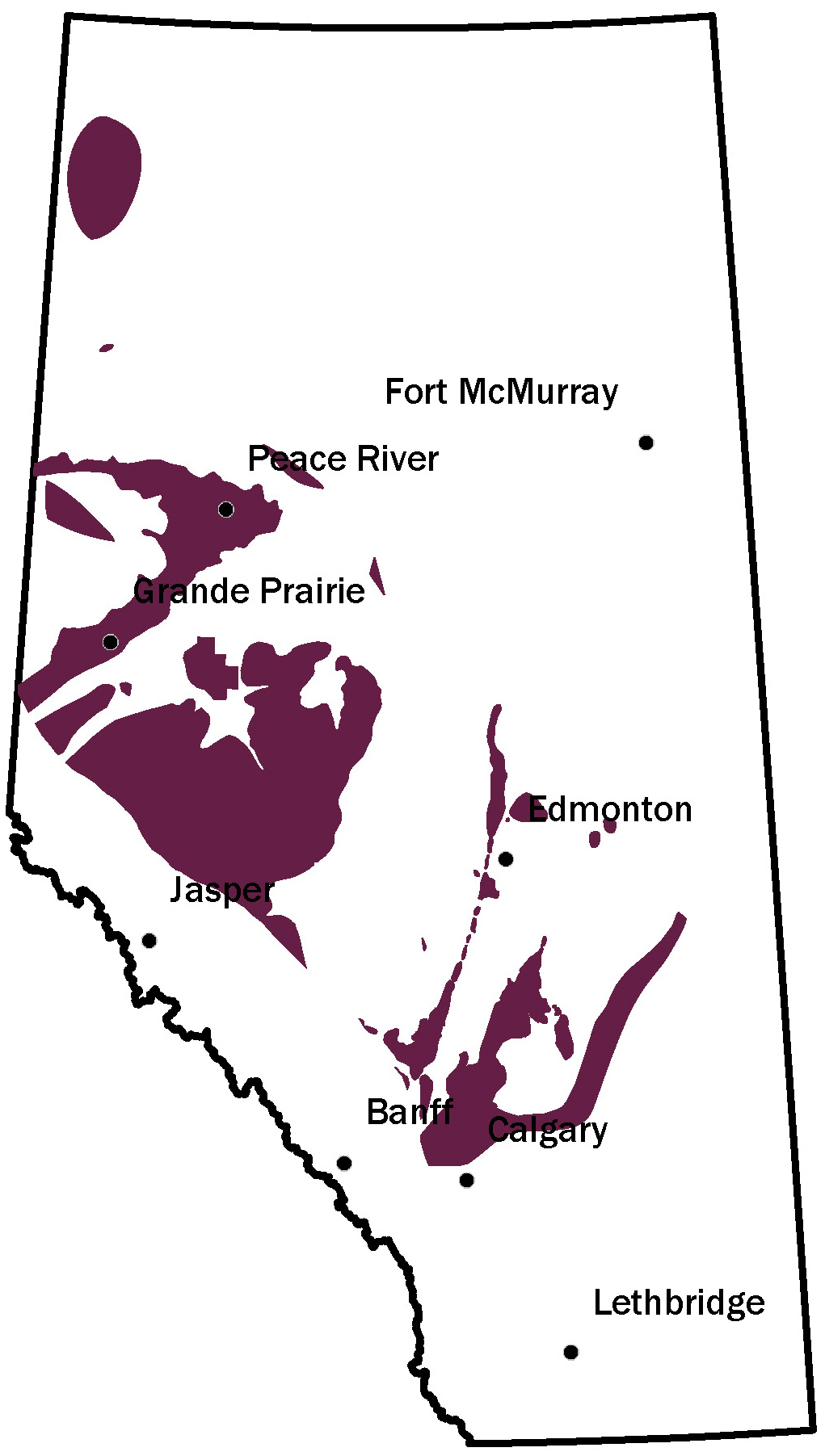
This isn't a discovery in the traditional sense. Scientists and oil companies have known about dissolved lithium in Alberta's underground brine salty water deep in the earth, often a byproduct of oil and gas operations since at least the early 1990s. The economics and technology to measure it, let alone extract it, simply weren't there. That's changed. The AGS spent the last five years building what it calls the most comprehensive dataset on brine-hosted lithium resources of any Canadian jurisdiction, under its Mineral Mapping Program funded by the provincial government. The methodology was independently validated by McDaniel & Associates Consultants Ltd. in January 2026. Roughly 95 per cent of the resource is concentrated in the Leduc Formation, but elevated concentrations have also been found in the Swan Hills and Nisku formations. The Peace River region, northeast of Grande Prairie, is flagged as an area of elevated potential.
How You Get It Out
Alberta's lithium isn't mined from rock like hard-rock operations in Australia, and it doesn't sit in shallow evaporation ponds like the salt flats of Chile and Argentina. It lives in deep formation water brine at depths of roughly 1,500 to 3,000 metres below the surface. Extracting it requires a process called direct lithium extraction, or DLE. Specialized solvents pull lithium out of the brine, and the spent water gets pumped back underground. Compared to conventional lithium mining, the land disturbance is minimal and water loss is dramatically reduced.
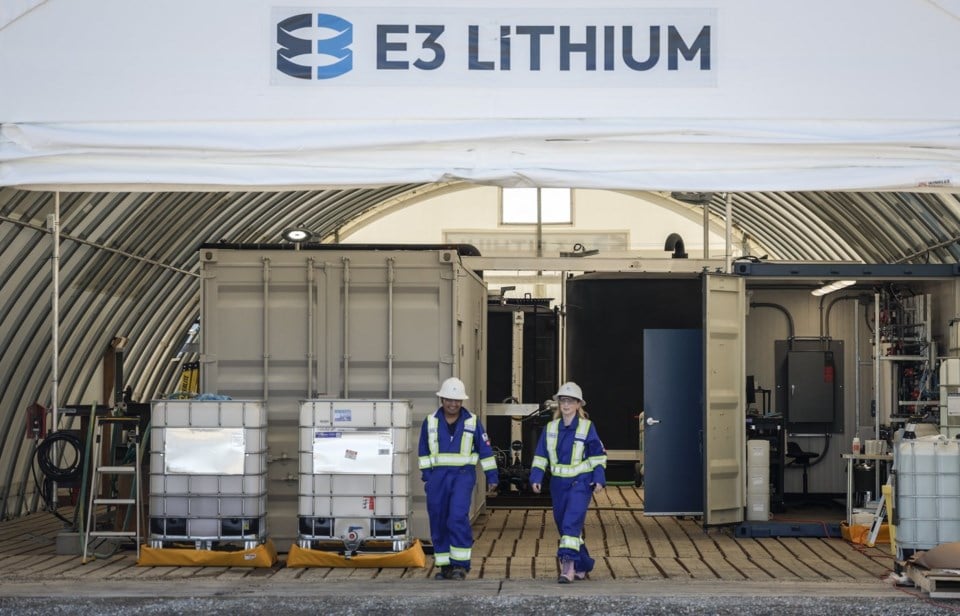
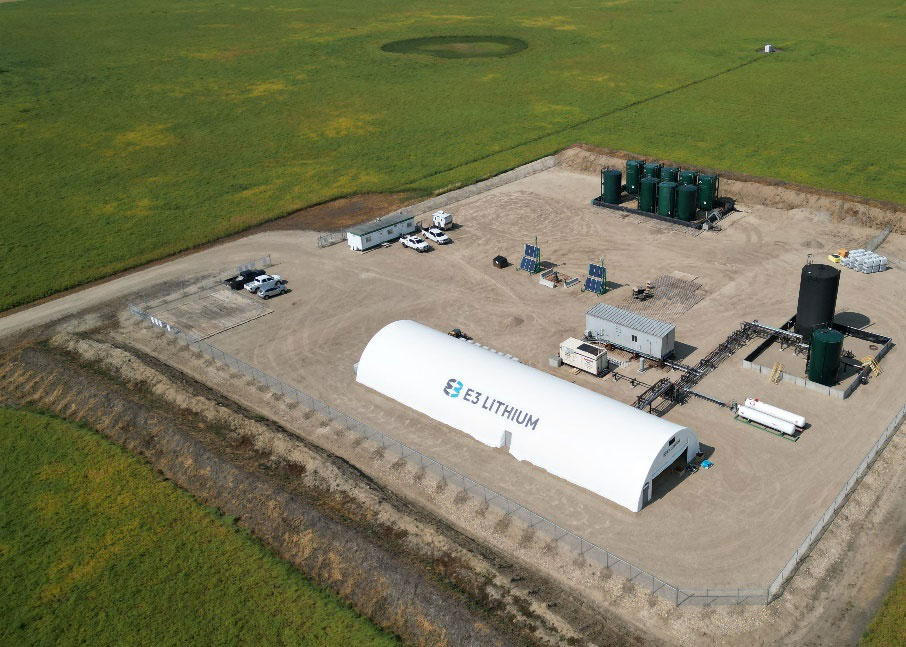
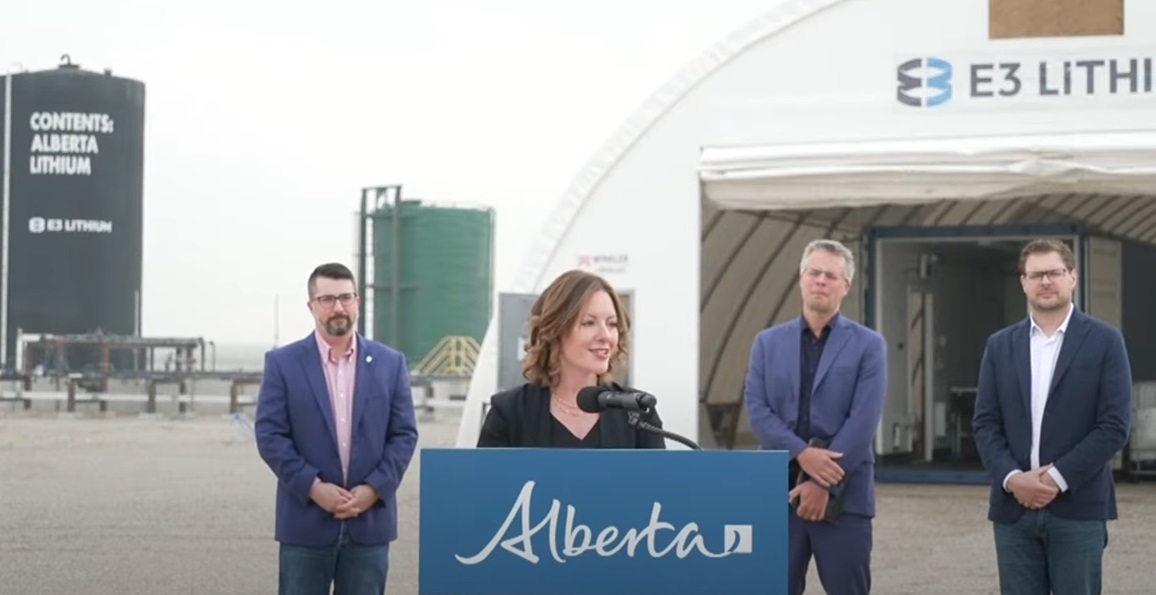
The technology draws directly on Alberta's oil and gas expertise. The wells, pipelines, roads, and power infrastructure already built across the province's petroleum fields reduce the startup costs significantly for any company looking to produce lithium here. Calgary-based E3 Lithium is the furthest along. The company has been developing its DLE technology since 2016, piloted it in 2023, and in September 2025 commissioned a demonstration facility near Olds that produced Alberta's first battery-grade lithium carbonate. E3 is targeting initial commercial production between 2028 and 2029, starting at roughly 12,000 tonnes annually. LithiumBank is also advancing projects in the province, including its Boardwalk project, where brine testing began in 2024.
The catch: no company has proven DLE at full commercial scale yet, anywhere in the world. Alberta could be first. It also might not be.
Why It Matters for Albertans
The province is already moving. The government has announced plans to expand access to Crown land for exploration and to introduce new critical minerals incentives, with a targeted program launch in 2027. About two million hectares are currently under lithium exploration leases across Alberta. The broader economic case isn't subtle. North America currently produces a tiny fraction of global lithium supply Canada contributed roughly 5,983 tonnes in 2024, about 2.5 per cent of continental output, against worldwide production of 1.28 million tonnes. U.S. demand alone is projected to jump roughly 74 per cent annually by decade's end, with Canadian demand rising approximately 40 per cent, according to S&P Global forecasts. The continent needs lithium. Alberta has it. For Alberta workers, a functioning lithium industry would mean jobs in drilling and extraction, chemical processing, pipeline and infrastructure operations, and eventually refining mirroring the multi-stage employment structure of the oil sands. The province's existing oilfield workforce brings skills directly transferable to DLE operations.
None of this is guaranteed. Financing large-scale DLE remains a hurdle. Lithium prices have been volatile. And while the resource is enormous, not all of it will be economically recoverable. But for a province that has spent years wrestling with energy transition conversations, the confirmation of a world-scale lithium resource sitting under the same fields that built modern Alberta is a rare piece of economic news that lands squarely in the province's favour.
Sources
Alberta Geological Survey (2026): In-Place Lithium Resource Estimate for Alberta; Alberta Energy Regulator / Alberta Geological Survey, AER/AGS Information Series 159. https://ags.aer.ca/publications/all-publications/inf-159
Alberta Energy Regulator — Emerging Resources: Lithium. https://www.aer.ca/data-and-performance-reports/statistical-reports/alberta-energy-outlook-st98/emerging-resources/emerging-resources-lithium



Comments
Conversation