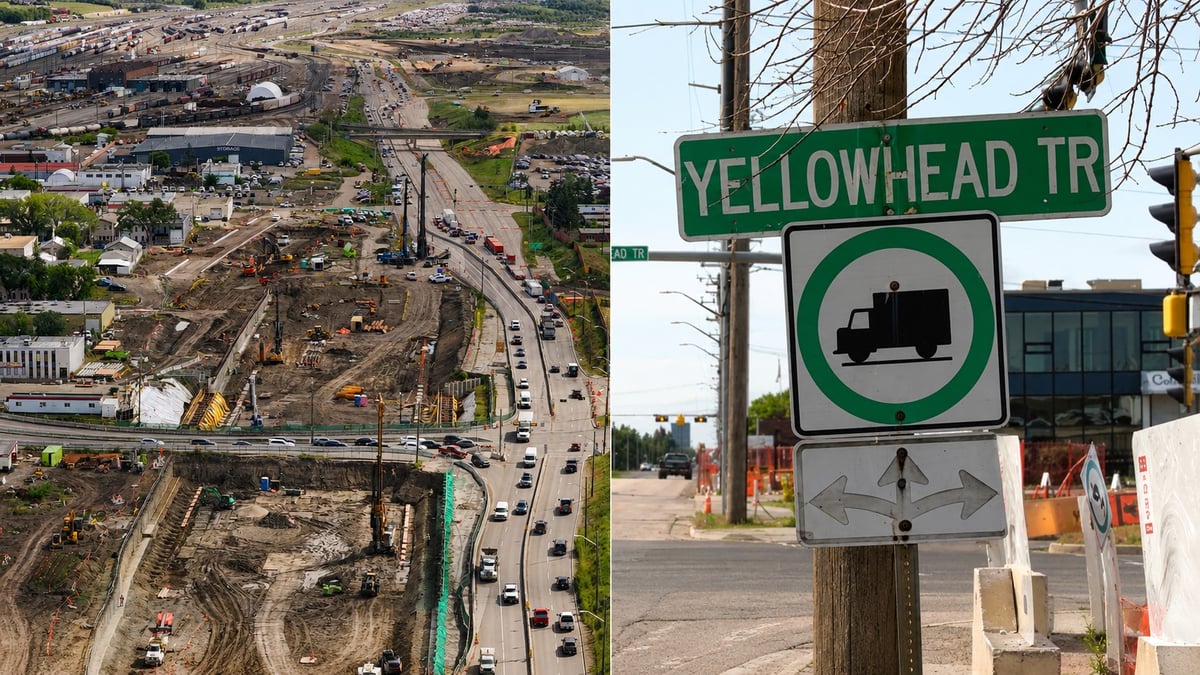
121 Street is fully closed from Yellowhead Trail to the VIA Rail station from September 1 to the end of November, weather permitting.
The traffic signal there is one of four being removed permanently as part of the St. Albert Trail to 97 Street project, alongside 127 Street, 124 Street and 107 Street. Once Yellowhead Trail is a freeway, none of them will have a signalized intersection.
The City says the closure will allow crews to work more efficiently following significant rainfall earlier this summer. Two lanes of traffic remain open in each direction on Yellowhead Trail.
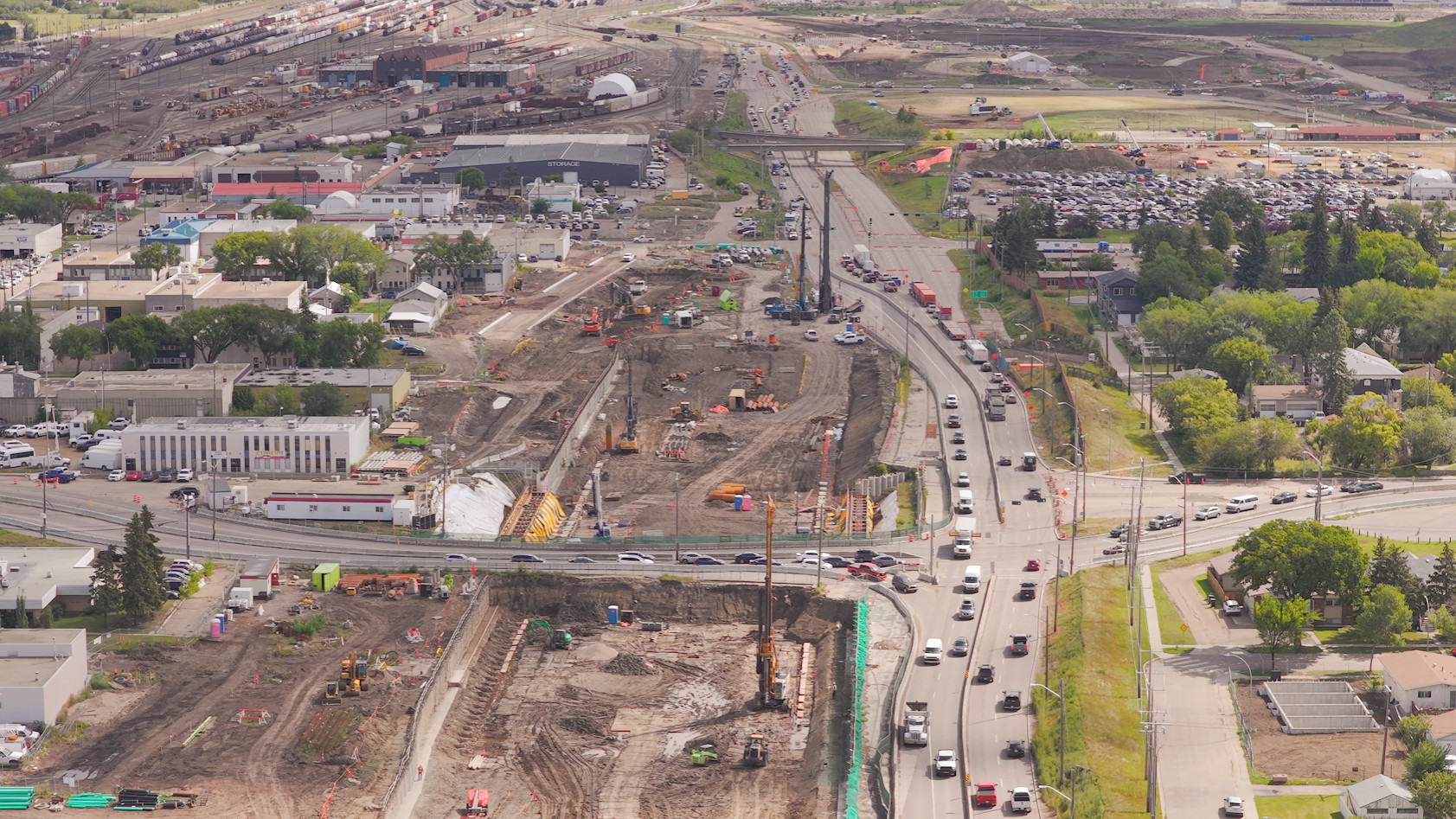
What's changed on the ground
Local traffic only is permitted from 118 Avenue to the VIA Rail access. If you're going to the station, that's still your route.
CN Walker Yard access is reduced to right-in and right-out only. No left turns. That's the change that matters most for truck traffic.
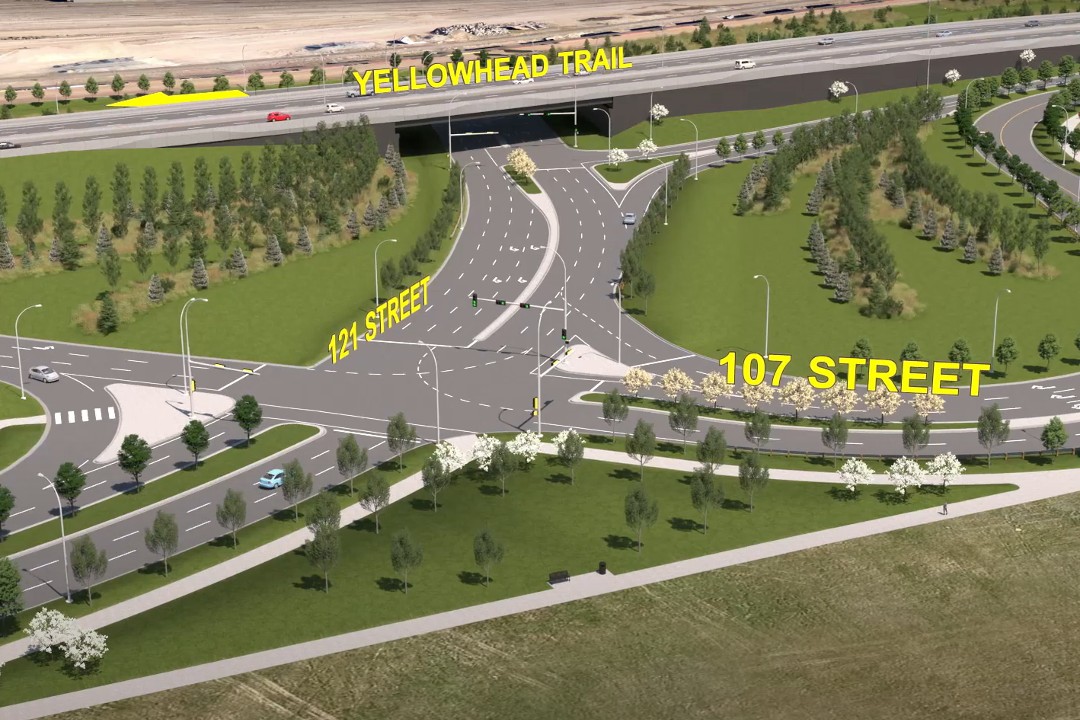
The 107 Street intersection has been reconfigured
Three changes at Yellowhead Trail and 107 Street absorb the redirected traffic.
A single left-turn lane from westbound Yellowhead Trail to southbound 107 Street, the new temporary turn for drivers heading toward NAIT, EPCOR and the Kingsway area.
Dual left-turns re-established from northbound 107 Street to westbound Yellowhead Trail.
The right turn from eastbound Yellowhead Trail to southbound 107 Street is maintained.
Detour routes
The City is directing drivers to 97 Street, 107 Street, 127 Street and St. Albert Trail as alternatives. 118 Avenue also remains open.
Worth knowing if you're new to this stretch: Yellowhead Trail between St. Albert Trail and 97 Street has been restricted to two lanes in each direction at 50 km/h since June 2025, and the City expects that to hold until the project is finished.
What this project actually does
The St. Albert Trail to 97 Street section is 4.3 kilometres long and is the largest and most technically complex piece of the whole conversion. It's expected to take roughly half of the program's $1-billion budget.
PCL is the contractor. Beyond removing the four signals, the project builds new interchanges at 127 Street and 118 Street, adds service roads to manage traffic into residential and business areas on the west side, and straightens Yellowhead Trail to remove the curve between 121 Street and 107 Street, which also makes room for a future LRT bridge.
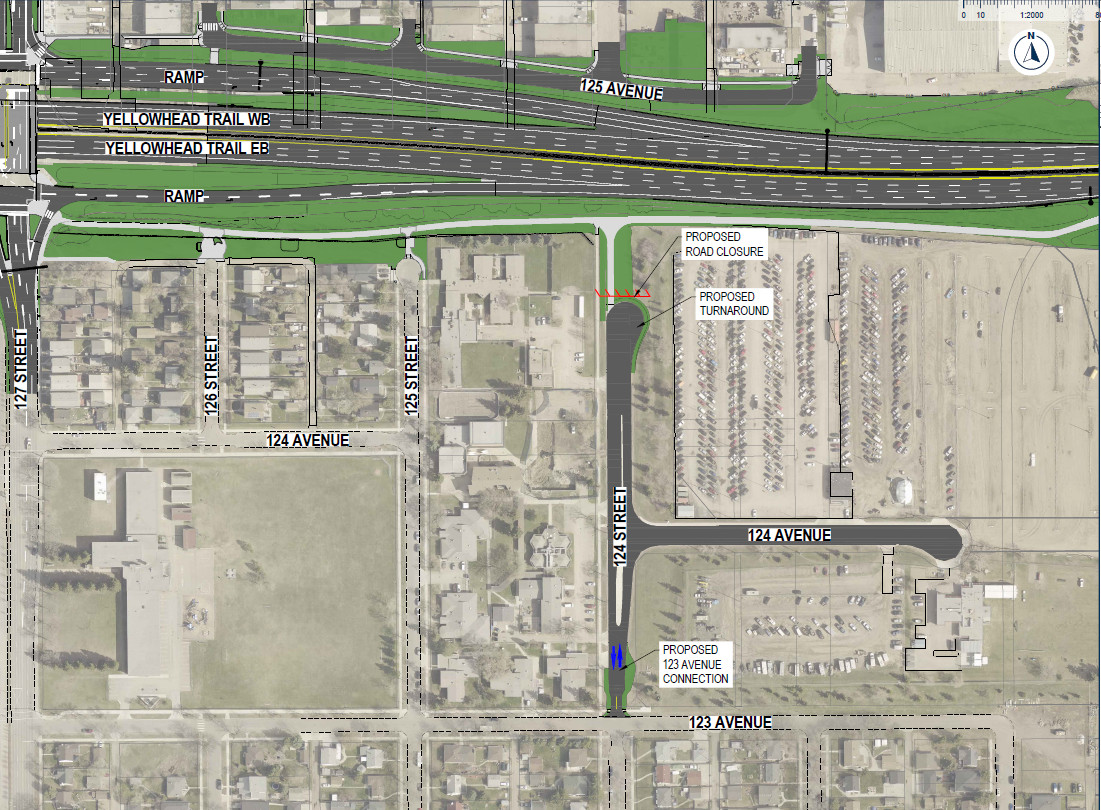
Properties along 124 Street, including the Yellowhead Youth Centre, the K-9 facility and the City impound lot, get alternative access between 123 Avenue and Yellowhead once the 124 Street signal goes. The City says the new configuration also prevents short-cutting through the Prince Charles neighbourhood.
How far along it is
The City describes the segment as nearly halfway complete.
Tunnelling for a new two-kilometre drainage storm trunk is nearly done. Concrete substructures for both new interchanges are complete and the precast girders have been placed. The mechanically stabilized earth wall supporting the 118 Street interchange is more than 90 per cent installed.
Roughly 9,000 metres of storm and sanitary sewer went in during 2025.
The project is scheduled to be complete by the end of 2027, along with the rest of the conversion.
The rain is part of why
Edmonton came off its wettest June on record at 262 millimetres, breaking a mark that had stood since 1914, and had taken more than 655 millimetres of precipitation since January by the end of July.
The damage from that summer is still landing. TELUS World of Science Edmonton remains closed until November after flooding, and has laid off 147 staff. Our coverage is here.
The July 25 storm that flooded streets across the city and cut short a Post Malone show at Commonwealth Stadium was one of four severe systems to hit the region since July 10. That coverage is here.
The City's stated reason for the Yellowhead closure connects to the same weather. A full closure is what lets a crew work continuously rather than around traffic.
What a freeway means for your drive
Yellowhead Trail opened in 1970. When the conversion is done it will have three lanes of free-flowing traffic in each direction at a target speed of roughly 80 km/h, with no traffic signals and no direct access from side streets.
Drivers will enter and exit only at interchanges. The existing ones are at 156 Street, St. Albert Trail, 97 Street, 82 Street, Fort Road/Wayne Gretzky Drive, 50 Street and Victoria Trail. None will close, though some will be modified.
All private accesses that currently go directly onto Yellowhead Trail will be closed. New parallel roads between interchanges serve the areas that lose them.
The 66 Street intersection, being designed now, is scheduled for removal in early 2027 and will be the last signalized intersection to go.
The number behind the whole project
The City's stated reason for the conversion is worth reading directly.
"On average, almost 1,000 vehicle collisions have occurred annually on Yellowhead Trail over the past decade."
A thousand collisions a year, every year, for ten years, on one road.
Between 63,000 and 81,000 vehicles use Yellowhead Trail daily. By 2047 that's projected to reach 87,000 to 155,000 vehicles a day, even with Anthony Henday Drive open.
It costs about a billion dollars
The federal and provincial governments each committed up to $241.6 million, with the City covering the remainder, for a total of more than $1 billion. The funding was announced December 16, 2016.
Construction began in 2019 on connecting roadways, with the larger projects on Yellowhead itself starting in 2020. The strategic plan dates to 2011.
Where to check before you drive
The City's Yellowhead Trail Freeway Conversion page carries the program map and schedule.
Questions go to yellowhead@edmonton.ca or 311. Live road conditions are at 511.alberta.ca.
Sources
St. Albert Trail to 97 Street — City of Edmonton
Yellowhead Trail Freeway Conversion — City of Edmonton
Yellowhead Trail Freeway Conversion Program History — City of Edmonton
City of Edmonton traffic update, 121 Street closure, September 1, 2026
The 50 km/h restriction since June 2025 and the 66 Street removal timing as reported by CBC News.




Comments
Conversation