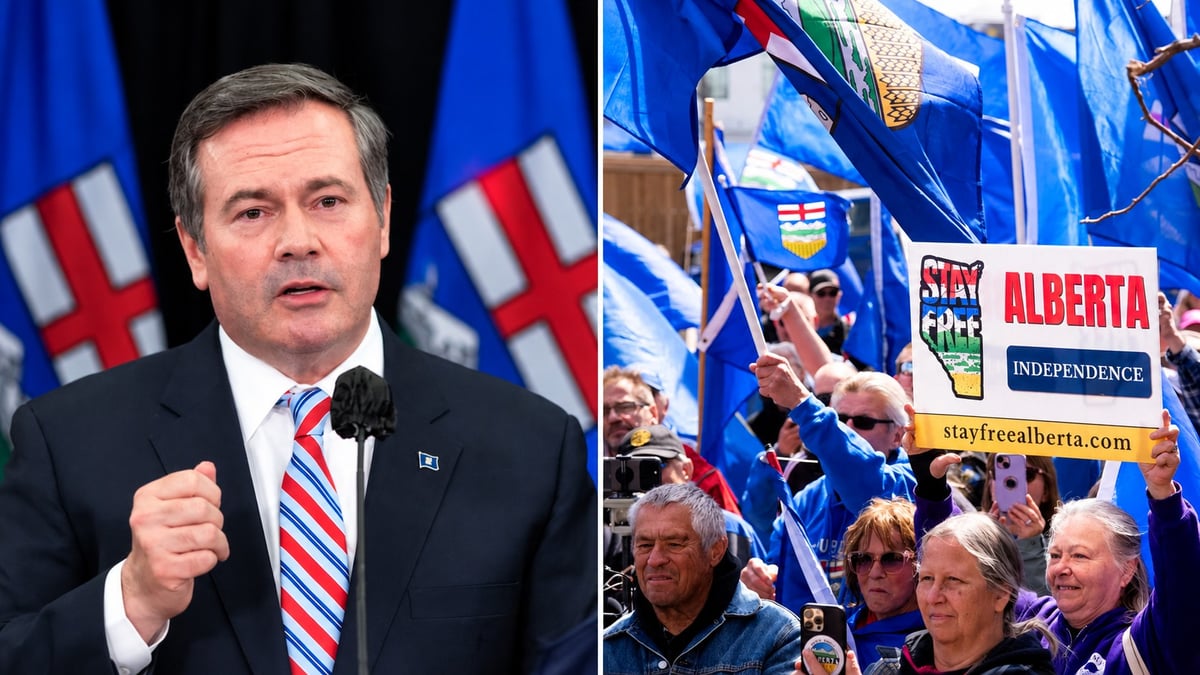
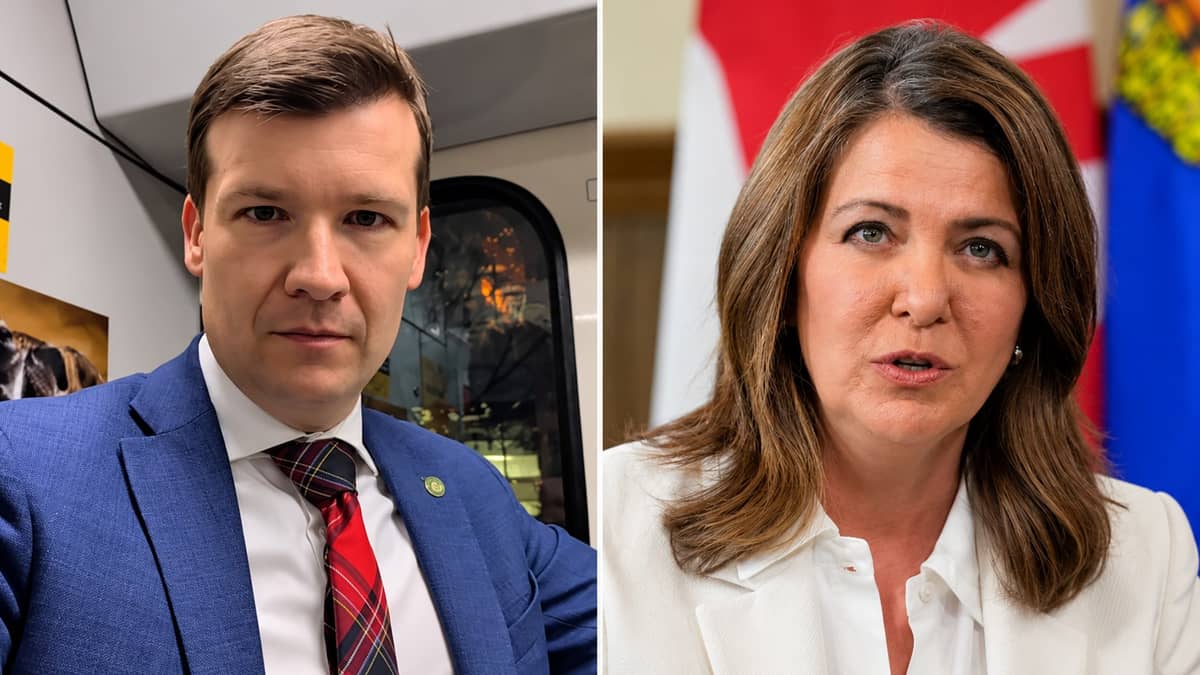
Recent polls consistently show most Albertans want to stay in Canada. Former Alberta premier Jason Kenney says that might not matter.
Kenney, who led Alberta’s United Conservative government from 2019 to 2022, has long argued for a stronger Alberta inside Canada rather than independence. In an interview with CTV’s Question Period host Vassy Kapelos, airing Sunday, he warned that federalists who assume the Oct. 19 referendum is already won could lose it by staying home.
“If turnout is 40 per cent or below, I think they could actually win,” Kenney told CTV News.
That number isn’t hypothetical in Alberta. The last provincewide referendum, held in 2021 while Kenney was premier, drew about 39 per cent turnout.
What’s on the ballot
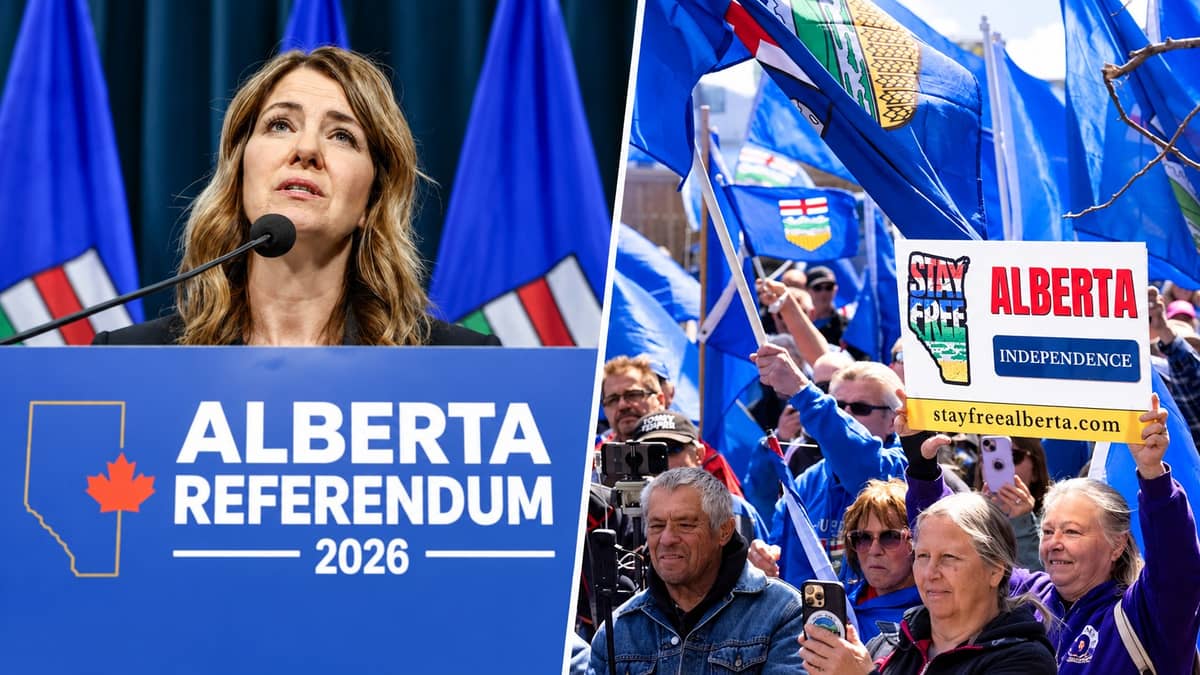
Question 10 asks whether Alberta should remain a province of Canada, or whether the government should begin the legal process under the Constitution to hold a second, binding referendum on separating.
A vote to start that process wouldn’t take Alberta out of Canada. It would start a long legal and constitutional fight over whether, and how, to hold a binding vote.
It’s one of 10 questions on the ballot. The other nine deal mostly with immigration and constitutional reform.
What the polls say
Every major poll since spring has the stay side ahead. How far ahead depends on who you ask.
Ipsos, Sept. 18 to 22: 70% stay, 20% separation process
Research Co., Aug. 24 to 26: 74% stay, 22% separation process
Leger, Aug. 21 to 23: 65% stay, 23% separation process
Angus Reid, Aug. 10 to 13: 61% stay, 33% separation process
Support for starting the separation process runs from about one in five Albertans to one in three. That gap is where Kenney’s worry lives.
How 40% turnout could change the result
Picture 100 eligible voters. Using Angus Reid’s numbers, about 61 want to stay and about 33 want the separation process.
Now say only 40 of them vote. If 25 separation supporters show up and just 15 people who want to stay do, separation wins, even though its supporters are a much smaller share of the electorate.
That’s a hypothetical, and it would take a huge enthusiasm gap. There’s no evidence one that size is coming. But it’s Kenney’s point: polls measure opinion, not who actually votes.
Kenney described the leave vote as a mix of hardcore separatists who will “crawl over broken glass” to vote and “frustrated federalists” who want to send Ottawa a message.
He also said the 10-question ballot could mean long lines in the cities, where federalist support is strongest, and shorter ones in rural areas, where separatist support is concentrated.
Kenney’s own 2021 referendum
On Oct. 18, 2021, Kenney’s government put two questions to Albertans alongside the municipal elections.
Equalization: 61.7% voted to remove the principle of equalization payments from the Constitution.
Daylight saving time: Albertans narrowly rejected permanent daylight time, 536,874 votes to 531,782.
Turnout was about 39 per cent. At the time, Kenney said the equalization result, on that turnout, was a strong enough message to send Ottawa.
Five years later, he’s warning that turnout in the same range could decide whether Alberta starts down the road to leaving Canada.
Alberta doesn’t usually turn out like Quebec did
When Quebec voted on sovereignty in 1995, more than 93 per cent of eligible voters cast a ballot, and the No side still won by fewer than 55,000 votes. Alberta has never come close to that. About 60 per cent voted in the 2023 provincial election, and about 39 per cent in the 2021 referendum.
There are signs this vote could be bigger. More than 650,000 Albertans requested mail-in ballots, more than 10 times as many as in the 2023 election. Because each of the 10 questions has its own ballot paper, Elections Alberta is printing 45 million of them. It’s also hiring at least 60,000 workers, the biggest hiring push in its history.
But requesting a ballot isn’t voting. It only counts if it comes back.
‘Send a message’
Kenney said the separatists’ most persuasive pitch is that voting to leave is a way to send Ottawa a message.
His response: send one, but make it that Alberta is a stable place to invest. He said the province should fight for a better deal inside Canada rather than spend decades debating whether to stay, which he argued hasn’t served Quebec well.
Kenney on the separatist movement
Kenney told CTV he believes the most committed separatists are already preparing to call a loss “rigged,” and will keep going regardless of the result. He described their grievances as reaching well beyond Ottawa, to globalization, immigration and vaccines.
Those are Kenney’s characterizations. Separatist leaders frame their case around economic grievances with Ottawa, and Alberta Prosperity Project CEO Mitch Sylvestre has said the movement will continue whatever the outcome.
The movement is also under scrutiny after a Globe and Mail investigation into separatist leaders’ contacts with U.S. Republican operatives. Here’s what the Globe reported.
Kenney is a polarizing messenger, too. In Research Co.’s August poll, 32 per cent of likely voters said they trusted him on the separation issue, fewer than trusted Danielle Smith or Rachel Notley.
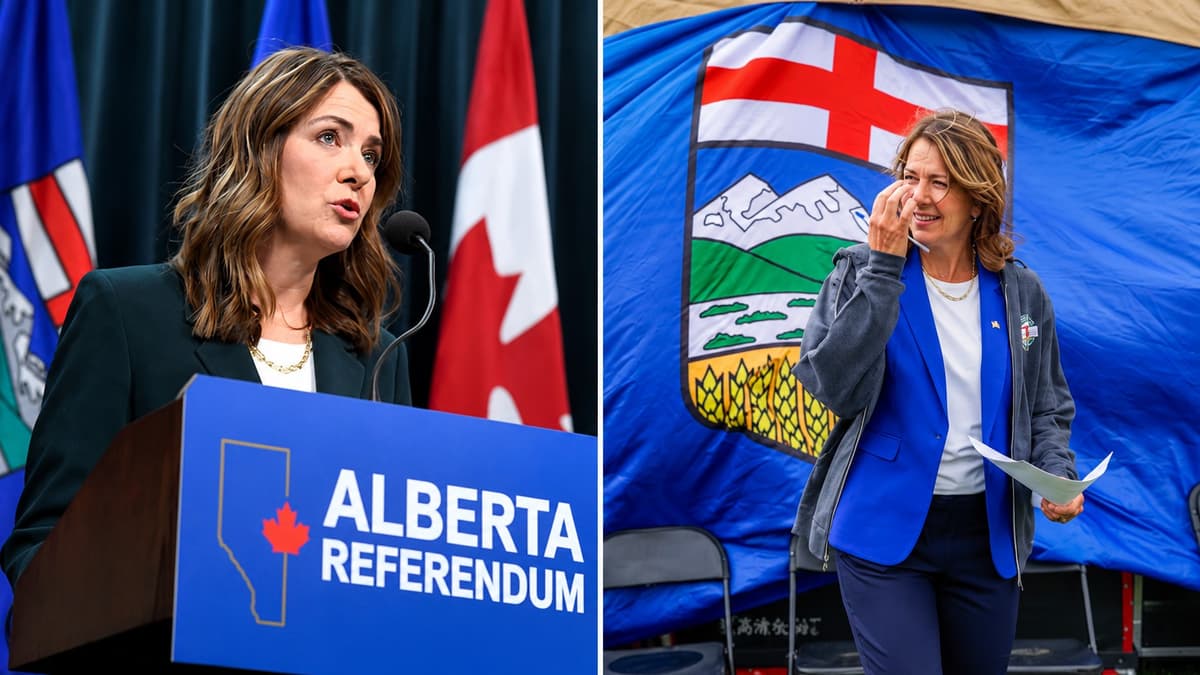
Where Danielle Smith stands
Premier Danielle Smith says she supports staying in Canada, but has faced criticism for not campaigning for that side.
She has promised there won’t be another separation referendum while she’s premier if Albertans vote to stay. Here’s what Smith promised.
How and when to vote
Advance voting: Tuesday, Oct. 13, to Saturday, Oct. 17, at any advance voting location in your electoral division.
Referendum day: Monday, Oct. 19, 9 a.m. to 8 p.m., at your assigned voting location.
Mail-in ballots: must be received by Elections Alberta, by mail, before 5 p.m. on Friday, Oct. 16. Check Elections Alberta’s instructions before relying on the mail this close to the deadline.
You don’t have to answer every question. Each one is on its own colour-coded ballot.
Ballots are counted by hand, and Question 10 is counted first. Results are expected to start coming in overnight.
Find your voting location at elections.ab.ca.
Sources
Special Ballot Requests Now Open for October 19 Referendum, Elections Alberta
Referendum Results, Elections Alberta
Separation in Alberta poll, Research Co., August 31, 2026
Jason Kenney interview, CTV Question Period, October 11, 2026

Comments
Conversation