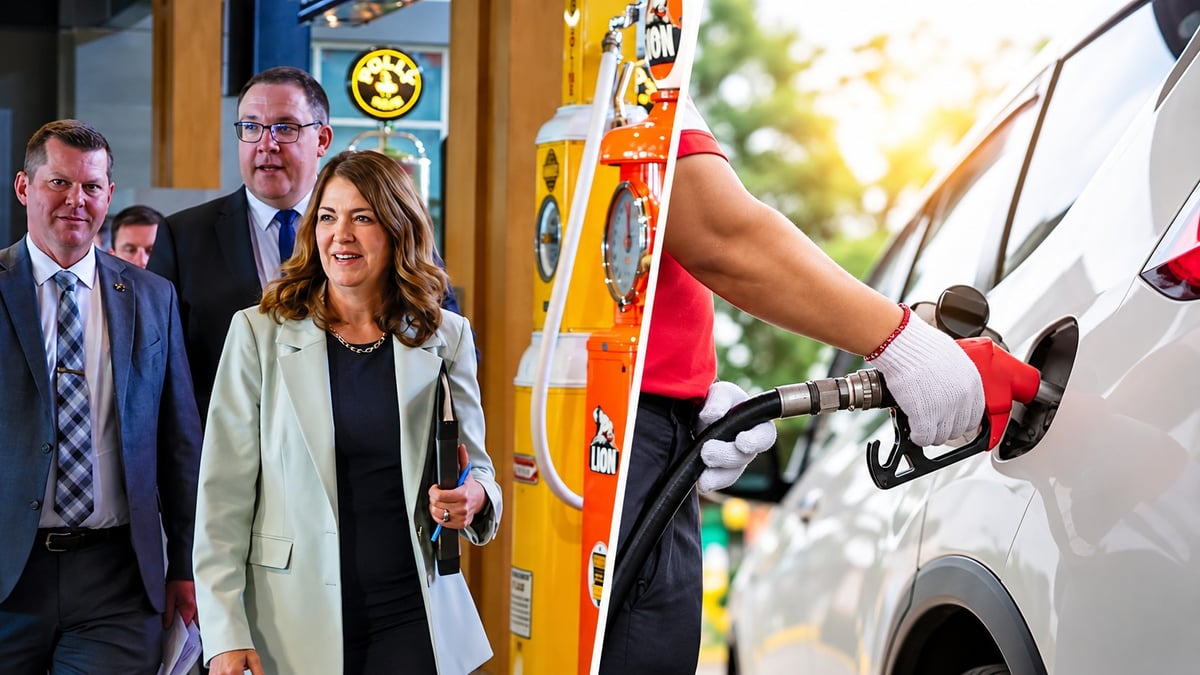
Alberta drivers are getting 13 cents a litre in provincial fuel-tax relief starting Oct. 1.
But before that happens, there's another deadline worth knowing.
Sept. 30 is the last day to apply for Alberta's $100 Energy Rebate.
Premier Danielle Smith announced Tuesday that Alberta will suspend its provincial tax on gasoline and diesel for the final three months of 2026.
What you'll save
At 13 cents per litre:
40 litres: $5.20.
60 litres: $7.80.
80 litres: $10.40.
Over 13 weeks, someone buying 60 litres a week would avoid about $101.40 in provincial fuel tax. At 40 litres a week it's $67.60. At 80 litres a week it's $135.20.
Those figures are the tax itself, not a guarantee that pump prices will fall exactly 13 cents.
You can still claim the $100 before Sept. 30
Tuesday's announcement doesn't cancel the rebate. Applications remain open until Sept. 30, 2026.
To qualify, you must be:
At least 18 as of July 1, 2026.
An Alberta resident.
Someone who filed a 2025 income tax return.
Part of a household with total income of $225,000 or less.
People receiving the Alberta Seniors Benefit, AISH, ADAP or Income Support are automatically enrolled. New clients enrolled in those programs after July 1 need to apply.
For everyone else who qualifies, the deadline is Sept. 30.
Our full guide to eligibility, applications and payments is here.
And our breakdown of what changed when applications opened is here.
How Alberta's fuel tax works
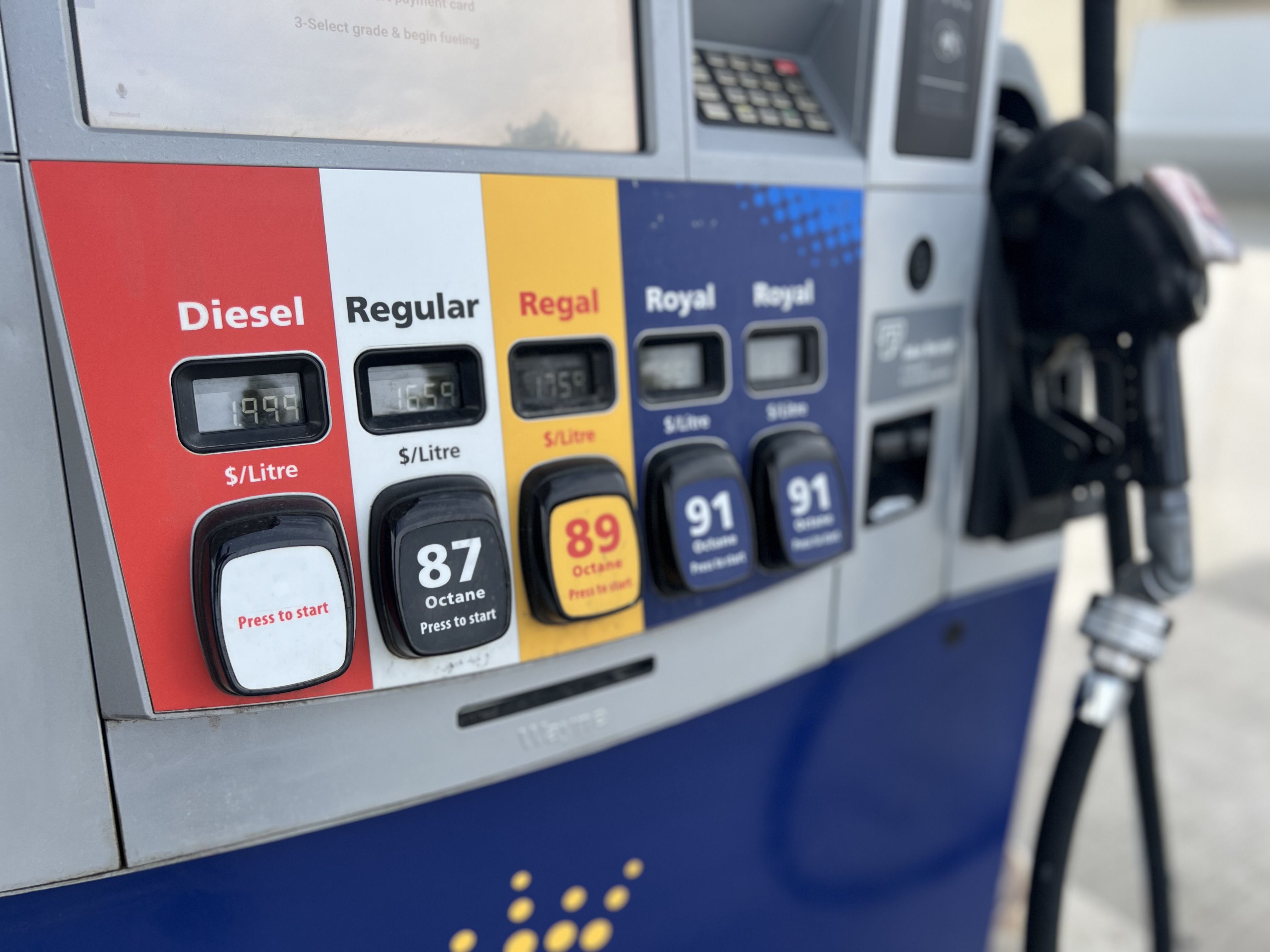
Alberta normally charges 13 cents per litre in provincial tax on gasoline and diesel.
The province's Fuel Tax Relief Program ties the rate to the price of West Texas Intermediate oil. As oil prices rise, the tax falls.
Below US$80 a barrel, Alberta collects the full 13 cents.
Between US$80 and US$84.99, the rate is nine cents.
Between US$85 and US$89.99, it drops to 4.5 cents.
At US$90 or higher, the tax is suspended entirely.
The rate is normally reviewed quarterly.
Smith said global uncertainty and higher energy prices are putting additional pressure on Albertans' wallets.
Why there was a $100 rebate instead
Three months ago, Alberta was heading into another period of fuel-tax relief.
Instead the government sent eligible Albertans $100 each. The Alberta Energy Rebate replaced the Fuel Tax Relief Program that otherwise would have taken effect July 1.
The province argued the payment was worth about 50 per cent more per person than the average Albertan would have received through three months of fuel-tax relief, based on an estimated 2,000 litres of annual fuel use.
There was another difference. You didn't need to drive to benefit. The $100 could go toward groceries, utilities, fuel or anything else.
That creates an unusual year. For July through September, eligible Albertans got cash instead of fuel-tax relief. For October through December, the cash isn't being repeated and the tax is suspended instead.
$100 versus 13 cents
You need to buy about 769 litres of fuel before 13 cents a litre adds up to $100.
Across 13 weeks, that works out to roughly 59 litres a week.
So a household with two vehicles and high fuel use could save considerably more than $100 this quarter. Someone who doesn't drive gets no direct benefit from a fuel-tax suspension at all.
Neither approach is worth the same to everyone, which is the argument the province was making in June.
What else is in the price at the pump
The provincial tax is one piece of what you pay.
Every litre of gasoline in Canada also carries the federal excise tax of 10 cents per litre, which is unaffected by Tuesday's announcement.
GST at 5 per cent applies on top, calculated on the pump price including the other taxes.
The rest is the wholesale cost of the fuel itself, transportation, and the retailer's margin. Those three move constantly and account for most of the swings you see week to week.
So even with the provincial tax at zero, Albertans are still paying federal excise tax and GST on every fill.
What Alberta's suspension does is remove the one component the province controls.
Don't expect every sign to drop 13 cents overnight
There's a difference between removing 13 cents of tax and gasoline being 13 cents cheaper.
The tax component disappears Oct. 1. The underlying price of gasoline can move at the same time.
If wholesale prices rise, part of the tax reduction gets absorbed. If they fall, the drop at the pump could look larger.
Comparing a station's Sept. 30 price to its Oct. 1 price won't tell the whole story. What's certain is that Alberta won't be collecting its 13 cents.
This is a suspension, not an end
The fuel tax isn't gone permanently.
The province reviews the rate quarterly using the WTI formula. If the relevant oil-price average falls below US$90, the tax can start coming back. Below US$80, the full 13-cent rate applies.
What Albertans pay starting Jan. 1, 2027 depends on that next calculation and on whatever the government decides.
Sources
Fuel Tax Relief Program — Government of Alberta
Alberta Energy Rebate — Government of Alberta
Government of Alberta announcement, September 22, 2026





Comments
Conversation