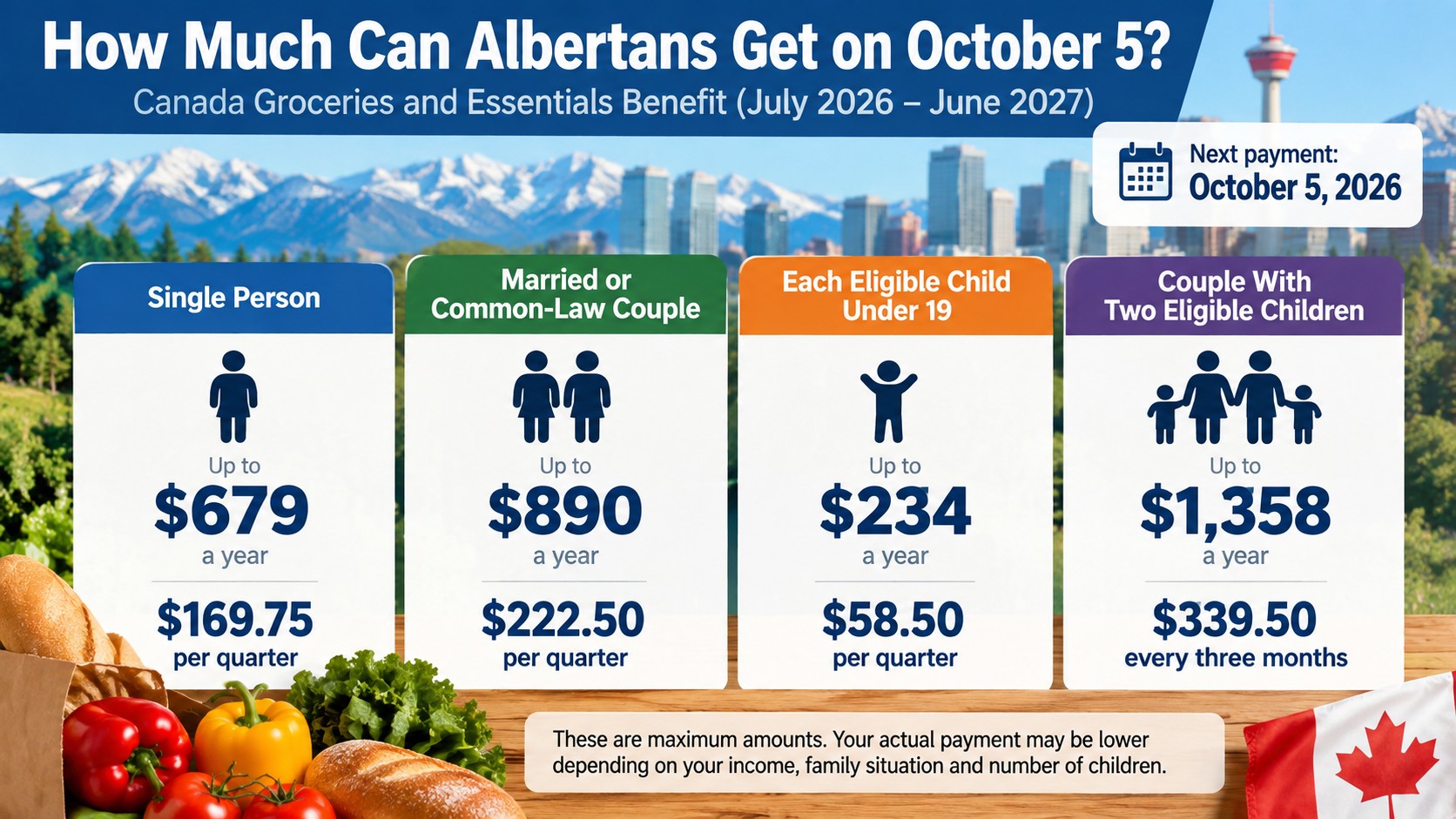
The next Canada Groceries and Essentials Benefit payment is coming Monday, October 5, 2026.
For eligible Albertans, it's the second quarterly payment since the benefit replaced the GST/HST credit in July.
The maximum for the current year is $679 for a single person, $890 for a married or common-law couple, plus $234 for each eligible child under 19.
But that doesn't mean everyone gets the maximum. Your October deposit depends on your 2025 adjusted family net income, marital status and number of children.
And if you're comparing your deposit with someone in Saskatchewan, there's another wrinkle. Some provinces pay a provincial benefit together with the federal one.
Alberta doesn't.
How much can Albertans get on October 5
For the benefit year running July 2026 through June 2027, the maximum amounts are:
Single person: up to $679 a year, or $169.75 per quarter.
Married or common-law couple: up to $890 a year, or $222.50 per quarter.
Each eligible child under 19: up to $234 a year, or $58.50 per quarter.
A couple with two eligible children could receive as much as $1,358 a year, or $339.50 every three months.
What it looks like at different incomes
The CRA's 2026-27 payment table gives a clearer picture than the maximums.
A single Albertan with no children, by adjusted family net income:
Under $11,564: $445 a year.
$25,000 to $45,000: $679 a year, or about $169.75 per quarter.
$50,000: $500.60 a year, or about $125.15 per quarter.
$55,000: $250.60 a year, or about $62.65 per quarter.
$60,000: 60 cents a year.
$65,000: nothing.
That first line surprises people. The lowest-income single people don't get the maximum. Part of the single-person amount phases in as income rises, reaching the full $679 at $25,000.
A married or common-law couple with two children:
Under $46,432: $1,358 a year, or $339.50 per quarter.
$50,000: $1,179.60 a year, or about $294.90 per quarter.
$60,000: $679.60 a year, or about $169.90 per quarter.
$70,000: $179.60 a year. Because that's under $50 per quarter, it would have been paid as one amount in July.
Above the $46,432 threshold, the benefit generally declines as income rises. Families with children continue qualifying at considerably higher incomes than single people, because their starting amount is larger. A couple with four or more eligible children still shows a partial entitlement at $80,000.
These are examples rather than guarantees. Your CRA account shows the amount calculated specifically for you.
Why payments look different between Alberta and other provinces
This is where comparing deposits gets confusing.
The federal benefit uses the same rules across Canada. But the CRA also administers several provincial programs related to it, and some of those are combined with the federal quarterly payment.
Saskatchewan is the clearest example. Its Saskatchewan Low-Income Tax Credit provides up to $460 for an individual, another $460 for a spouse or common-law partner, and $181 per child for up to two children for the July 2026 to June 2027 period.
The CRA pays that alongside the federal benefit, in the same deposit.
So an eligible Saskatchewan resident could see a larger deposit than an otherwise similar Albertan. Not because Saskatchewan gets a larger federal benefit, but because a provincial benefit is added to the payment.
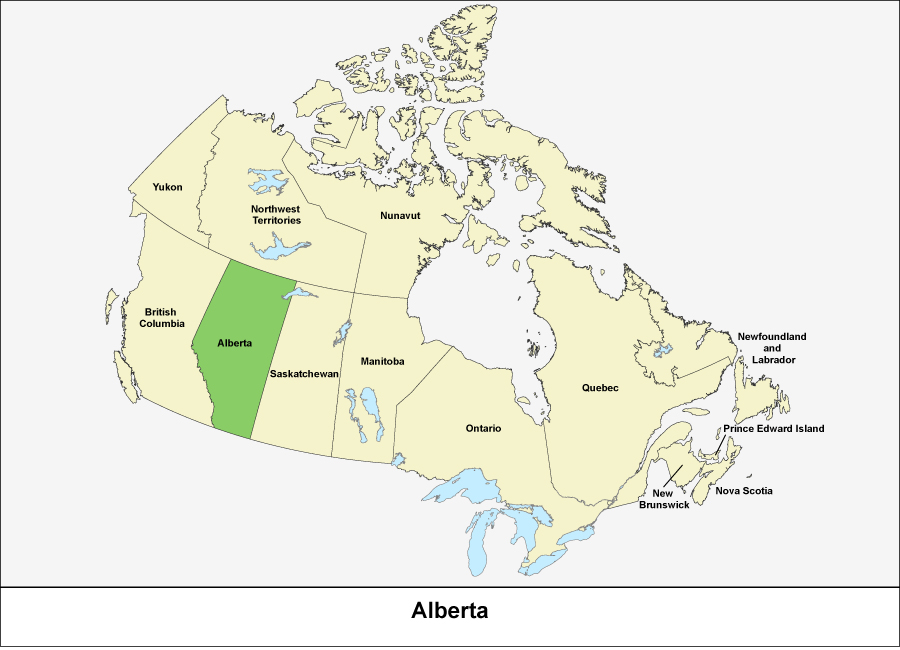
Alberta has no provincial program attached to this benefit. Albertans receive the federal amount only.
But Alberta also has no provincial sales tax
There's an important piece of context on the other side.
Alberta is the only province without a provincial sales tax. Albertans generally pay the 5 per cent federal GST on taxable purchases and nothing more.
Saskatchewan charges a provincial sales tax on top of GST. Ontario and the Atlantic provinces use harmonized sales taxes that combine federal and provincial components.
That doesn't change how Ottawa calculates an Albertan's benefit. But it explains why comparing the size of two deposits doesn't tell the whole story about the taxes paid or provincial benefits available where each person lives.
It's 25 per cent larger than the old GST/HST credit
The benefit replaced the GST/HST credit in July 2026, and it wasn't just a name change.
Ottawa increased the amount by 25 per cent for five years, from 2026 through 2031. The eligibility rules, calculation and basic structure stayed the same.
The federal government estimates the increase will provide an additional $8.6 billion between 2026-27 and 2030-31, and extend payments to roughly 500,000 additional individuals and families.
What was the extra payment in June
That was separate.
On June 5, 2026, Ottawa issued a one-time GST/HST credit top-up equal to 50 per cent of the annual value of the 2025-26 credit. The government said it would deliver about $3.1 billion to 12 million Canadians.
If you received it by direct deposit, it may have shown on your bank statement as a GST/HST credit rather than under the new name.
It doesn't replace your regular October payment.
Payment dates
July 3, 2026: first payment.
October 5, 2026: second payment.
January 5, 2027: third payment.
April 5, 2027: fourth payment.
The regular date is the fifth of the month. When the fifth falls on a weekend or federal holiday, the CRA pays on the last business day before. That's why July's arrived on the 3rd.
Why you might not get anything on October 5
Getting a payment in July doesn't guarantee one in October.
Your quarterly amount is under $50. The CRA doesn't issue tiny quarterly payments. If you're entitled to less than $50 per quarter, you got the whole year in July.
Your income increased. Payments through June 2027 are based on your 2025 return.
You haven't filed your 2025 return. You need to file to be assessed, even with no income.
Your marital or family situation changed. Marriage, becoming common-law, separation, divorce, or a change in the number of children in your care can all change your entitlement.
The CRA reassessed a return. If your adjusted family net income changed, so can your benefit.
What "adjusted family net income" means
If you're single, it generally starts with the net income on your tax return.
If you have a spouse or common-law partner, the CRA combines both partners' net incomes. A couple isn't assessed on the income of the person receiving the payment alone.
Who qualifies
You generally need to be a Canadian resident for tax purposes and at least 19.
People under 19 can qualify if they have or previously had a spouse or common-law partner, or are a parent living with their child.
For most people there's no application. Filing your tax return puts you in consideration automatically. New residents of Canada follow a different process and may need to provide information to the CRA directly.
If your household changed, tell the CRA
Getting married or becoming common-law, separating, having a child, a change in shared custody, or a child leaving your care can all change your benefit.
The CRA recalculates after these changes. That can mean a higher payment, a lower one, or an amount owing if you were overpaid.
Shared custody
Parents with shared custody shouldn't expect one parent to receive the full amount for a child.
If the CRA considers it a shared-custody situation, each parent may receive 50 per cent of the amount they'd get if the child lived with them full time, based on their own household circumstances.
That's why two families with similar incomes can appear to receive different amounts.
Is it taxable
No. It's tax-free, and you don't report it as income.
If the October 5 payment doesn't arrive
Don't panic if it isn't visible first thing Monday. Banks display deposits differently.
The CRA says to first check your CRA account, make sure your information is current, and look for any reason your payment changed or stopped.
If you still can't work it out, wait 10 business days after the expected date before contacting the CRA.
Alberta's separate provincial benefit
Alberta doesn't add a credit to this payment. But eligible Alberta families with children may receive the Alberta Child and Family Benefit, which is a separate program paid on its own schedule.
Its remaining 2026 payment is November 27.
The fall benefits calendar for Albertans
October 5: Canada Groceries and Essentials Benefit.
October 9: Advanced Canada Workers Benefit.
October 20: Canada Child Benefit.
November 20: Canada Child Benefit.
November 27: Alberta Child and Family Benefit.
These don't arrive together, so seeing one payment doesn't mean another was missed.
AISH recipients should also be aware of the changes introduced with ADAP in July. Our ADAP calculator can help you work out where you land.
How to check your exact amount
Log into CRA My Account and look under Benefits and credits for Canada Groceries and Essentials Benefit (formerly the GST/HST credit).
It shows your next payment date and amount, payments already issued this benefit year, your benefit statement, and details about your entitlement.
Sources
Canada Groceries and Essentials Benefit — Canada Revenue Agency
Canada Groceries and Essentials Benefit, RC4210 — Canada Revenue Agency
CRA 2026-27 CGEB payment table
CRA 2026 benefit payment dates calendar
Saskatchewan Low-Income Tax Credit — Canada Revenue Agency








Comments
Conversation