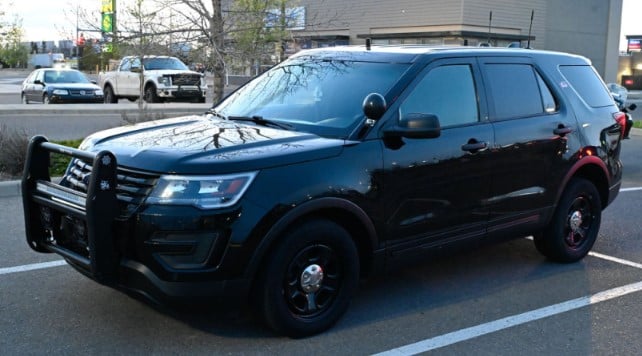
A Lethbridge man is facing a criminal charge after police say he was driving a civilian SUV that had been outfitted to closely resemble a law enforcement vehicle.
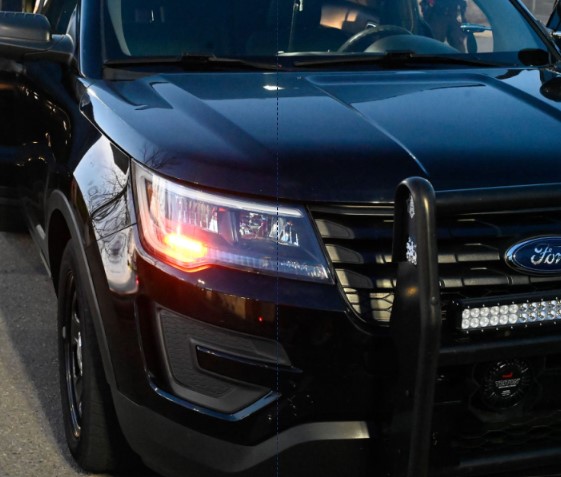
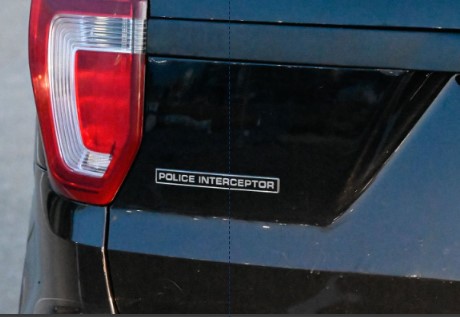
Lethbridge Police Service said a member of its Traffic Response Unit spotted a black Ford Explorer travelling along Mayor Magrath Drive South on May 9. At first glance, police say the vehicle appeared similar to a law enforcement SUV, with a push bar, light bar, LED lights, siren speakers, roof antennas, and a “Police Interceptor” sticker on the back. That was enough for police to pull it over.
Once the officer spoke with the driver, police say more equipment was found inside and outside the vehicle, including an ignition override switch on the dash, toggle bars mounted to the centre console, a driver-side search light, and bars on the blacked-out rear passenger windows.
Police Say The Driver Had Already Been Warned
According to Lethbridge police, this was not the first time the driver had been stopped over the vehicle. Police say the man had previously been pulled over, warned, ticketed, and directed to remove the equipment. After the latest traffic stop, he was arrested and criminally charged. The vehicle was seized and towed to the police compound.
Who Was Charged?
Police identified the accused as Will Nicholas Waddell, 20, of Lethbridge. He has been charged with personating a police officer and was released from custody on an undertaking. His next scheduled court appearance is July 8. The charge has not been tested in court.
Why This Kind Of Vehicle Setup Is A Problem
Buying an old police vehicle is not illegal in Canada. Some decommissioned police vehicles are sold after they are taken out of service. The issue, police say, is what remains on the vehicle after it is privately owned. Lethbridge police said civilian vehicles cannot be operated on public roads with equipment that could cause the public to mistake them for an active police vehicle. That includes red and blue lights, sirens, push bars, spotlights, decals, police markings, or any official police crest. In this case, police allege the Ford Explorer had multiple features that made it look like a law enforcement vehicle, including both exterior equipment and interior controls capable of operating emergency-style equipment.
The Public Trust Issue
The concern is not just about vehicle modifications. It is about public trust. Drivers are expected to respond when they believe they are being stopped by police. That trust depends on people being able to clearly tell the difference between a real police vehicle and a civilian vehicle made to look like one. Police impersonation cases can create confusion and risk, especially if a person believes they are dealing with an officer when they are not. That is why police agencies are strict about decommissioned police vehicles. If someone buys one, the police-style decals, lights, sirens, and specialized equipment need to be removed before it is driven on public roads.
For Lethbridge police, the message is clear: owning a former police vehicle may be legal, but making it look operational is not.
Source:
Lethbridge Police Service — “Male charged with impersonating a police officer,” May 12, 2026.





Comments
Conversation