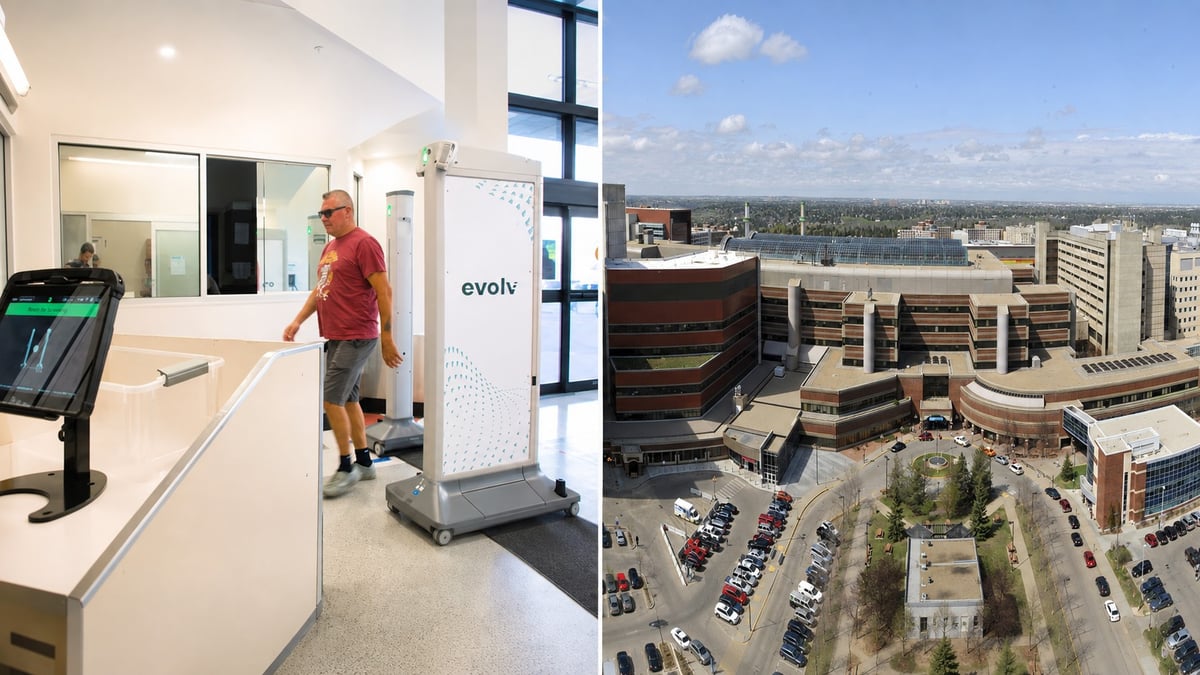
Everyone entering the University of Alberta Hospital emergency department is now asked to pass through a weapons detection system.
The screening applies to patients, visitors and support people. The U of A Hospital is the second Alberta Health Services hospital to introduce the technology, following the Royal Alexandra Hospital in May.
Here's what patients, including U of A students, and visitors should know before arriving.
How the screening works
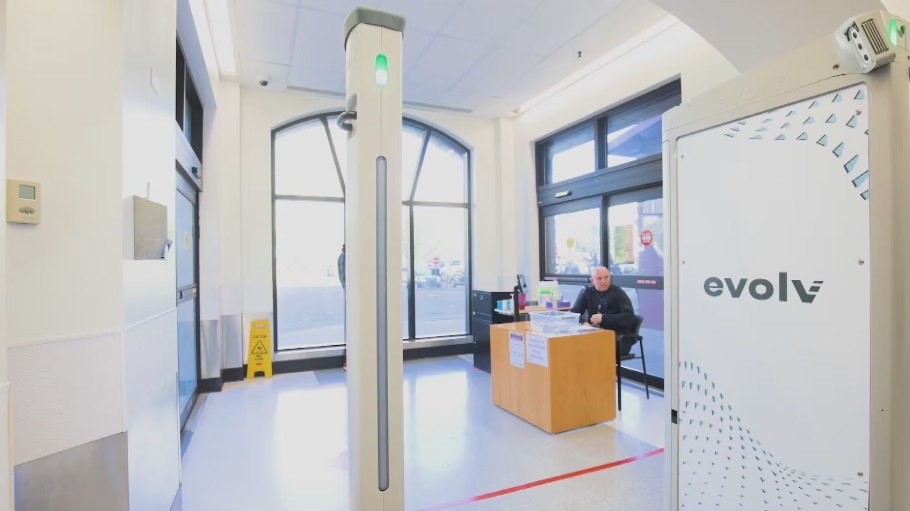
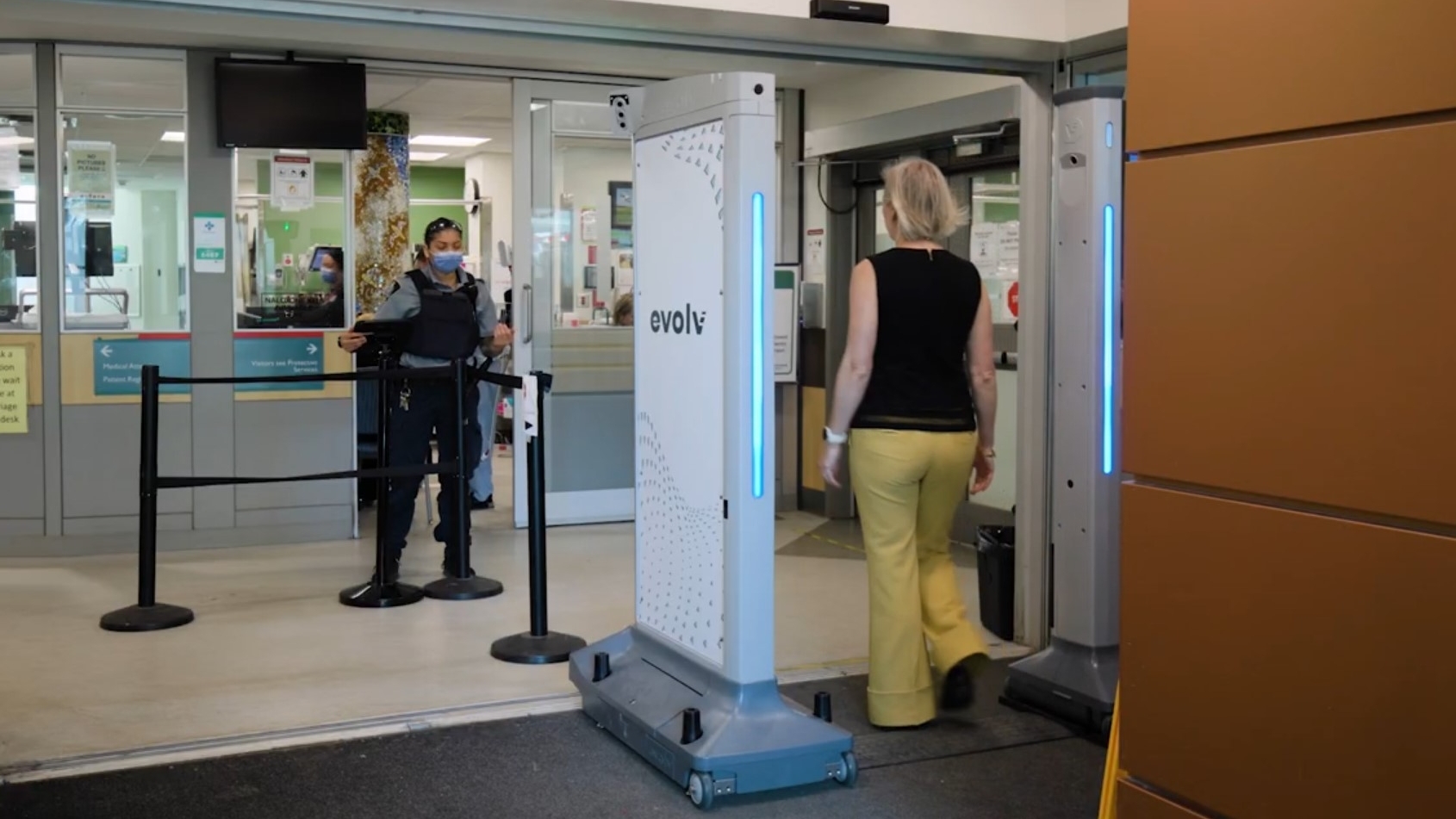
Patients and visitors walk through the system before entering the emergency department. AHS compares the process to screening used at concerts and sporting events.
Unlike an airport, you don't empty your pockets or put bags on a belt. You walk through at a normal pace.
If the system flags an item on someone or in their belongings, protective services will request a secondary screening. Prohibited items can be voluntarily stored in a locker until the person leaves or is discharged, returned to a vehicle, or left with someone not entering the emergency department.
AHS says the technology does not use harmful radiation.
What happens if a patient refuses
Refusing does not automatically prevent a patient from receiving emergency care.
Protective services can connect the patient with Health Link 811, where a nurse assesses how urgent the medical problem is. The nurse can refer the person to a virtual physician or an on-site healthcare professional when necessary.
The assessment takes place at the hospital, while the patient remains within sight of protective services.
If the person still requires emergency treatment and continues to refuse, they will be allowed into the department under protective services oversight.
Visitors can be denied entry
The rules are different for visitors and support people.
A visitor who refuses screening will generally not be permitted into the emergency department.
AHS lists three exceptions: the patient is a minor, the patient requires help communicating, or the care team determines the support person needs to be present.
The numbers from the Royal Alex
The same system has been running at the Royal Alexandra emergency department since May, and AHS released figures alongside the U of A announcement.
More than 56,000 screenings have been completed there.
About 12 people refused, and were given access to a phone to call Health Link. Only one was assessed as requiring emergency care. That person entered the department under protective services oversight before later completing the screening.
Twelve refusals out of 56,000 is the number that answers most of the objections people raise about this. Whatever the system is doing, it isn't turning people away in any meaningful volume.
Prohibited items identified and secured rose from roughly 120 to 140 per month to 359 per month after installation.
Overnight visitor traffic fell from roughly 80 to 100 people per night to between 30 and 50.
That last figure is worth reading twice. Overnight ER traffic dropped by more than half once screening went in, which tells you something about who was in the waiting room at 3 a.m. and why.
"Weapons detection technology can be an effective additional layer of protection, helping prevent weapons and items that could be used as weapons from entering our sites," said Ryan Cammidge, AHS director of protective services for the Edmonton Corridor.
Why the U of A Hospital introduced it
The screening follows one-bag and one-visitor restrictions introduced at the U of A Hospital emergency department in May.
Since those rules took effect, AHS says more than 300 bags have been stored after verbal screening identified prohibited items. That's without any technology involved, just staff asking.
The Royal Alex installed its system after an April stabbing inside its emergency department left a man with life-threatening injuries.
The wider picture
Health-care workers face workplace violence at rates higher than almost any other industry.
A Canadian Federation of Nurses Unions report found lost-time injuries related to violence among health-care workers rose 66 per cent between 2006 and 2015. A United Nurses of Alberta survey last year found four in 10 nurses in the province reported experiencing physical violence.
The Health Sciences Association of Alberta has said it hears about violence against clinical staff at the Royal Alex monthly.
Cammidge said the scanners are one of several measures, alongside increases in protective services staffing, peace officers and trained healthcare security guards assigned specifically to emergency departments.
Questions about the technology
The system shown in images released by AHS carries branding from Evolv Technology, a Massachusetts security-technology company.
In November 2024, the U.S. Federal Trade Commission took action against Evolv over claims made while marketing its AI-powered Evolv Express scanners.
The FTC alleged Evolv made unsupported claims about the system's ability to detect weapons, ignore harmless objects, reduce false alarms and outperform traditional metal detectors.
One example cited in the complaint involved a seven-inch knife that passed through an Evolv scanner at a school and was later used in a stabbing. When the school increased the scanner's sensitivity, its false-alarm rate reached 50 per cent, according to the FTC.
The resulting order prohibits Evolv from making unsupported claims about its technology and allowed certain American school customers to cancel their contracts.
The case concerned Evolv's marketing claims, primarily involving U.S. schools. It was not a finding that every Evolv system is ineffective, and it did not examine the installations at Edmonton hospitals.
AHS did not address the FTC action in its announcement, or disclose what independent testing was conducted before the U of A Hospital system was installed.
Before you go
Leave knives, multi-tools and other objects that could be considered weapons at home or in your vehicle. The things that get flagged are usually not what people picture, and a work multi-tool in a jacket pocket is a common example.
The one-bag and one-visitor restrictions remain in effect at both hospitals, so bring as little as possible.
Other options exist. Health Link is 811, free and around the clock. Urgent care centres and family physicians handle a great deal of what people bring to an ER. U of A students also have access to health services on campus.
Anyone with questions or concerns can contact AHS Patient Relations at 1-855-550-2555 or online.
Sources
Royal Alexandra Hospital emergency department installs a weapons detection system to enhance safety — Alberta Health Services
Alberta Health Services announcement, September 2, 2026
FTC Takes Action Against Evolv Technologies for Deceiving Users About Its AI-Powered Security Screening — U.S. Federal Trade Commission
Canadian Federation of Nurses Unions
United Nurses of Alberta









Comments
Conversation