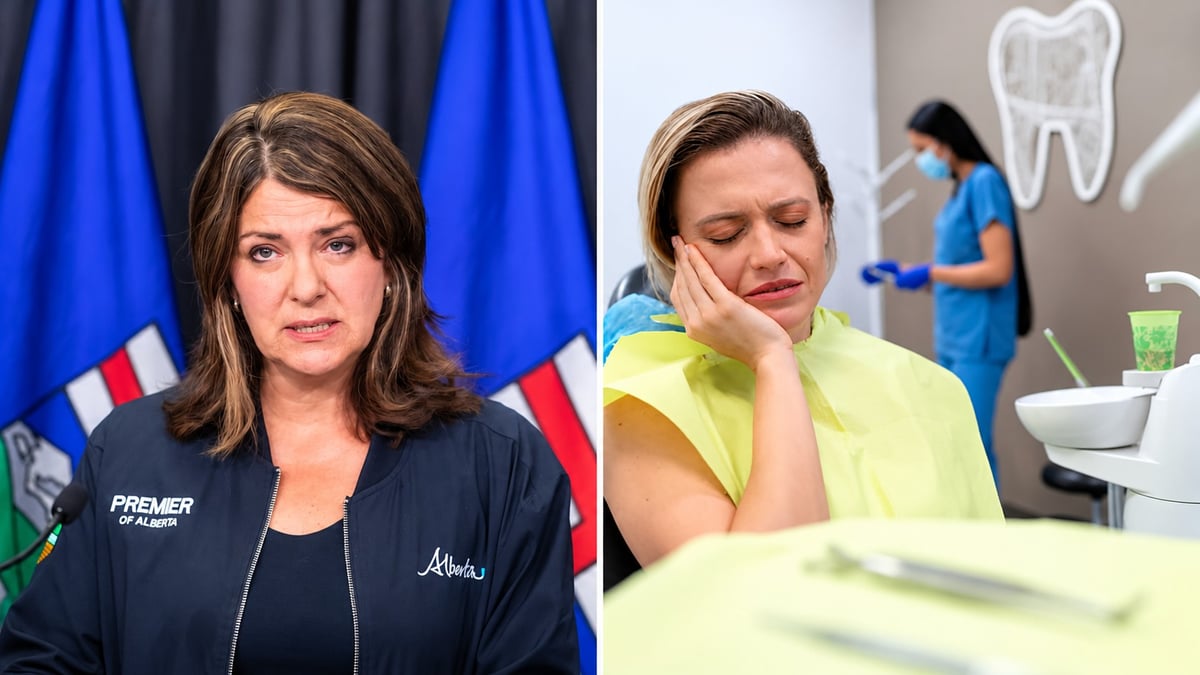
Albertans were asked whether the province should be able to opt out of federal programs and keep the money. They said no, 57.6 per cent to 42.4 per cent.
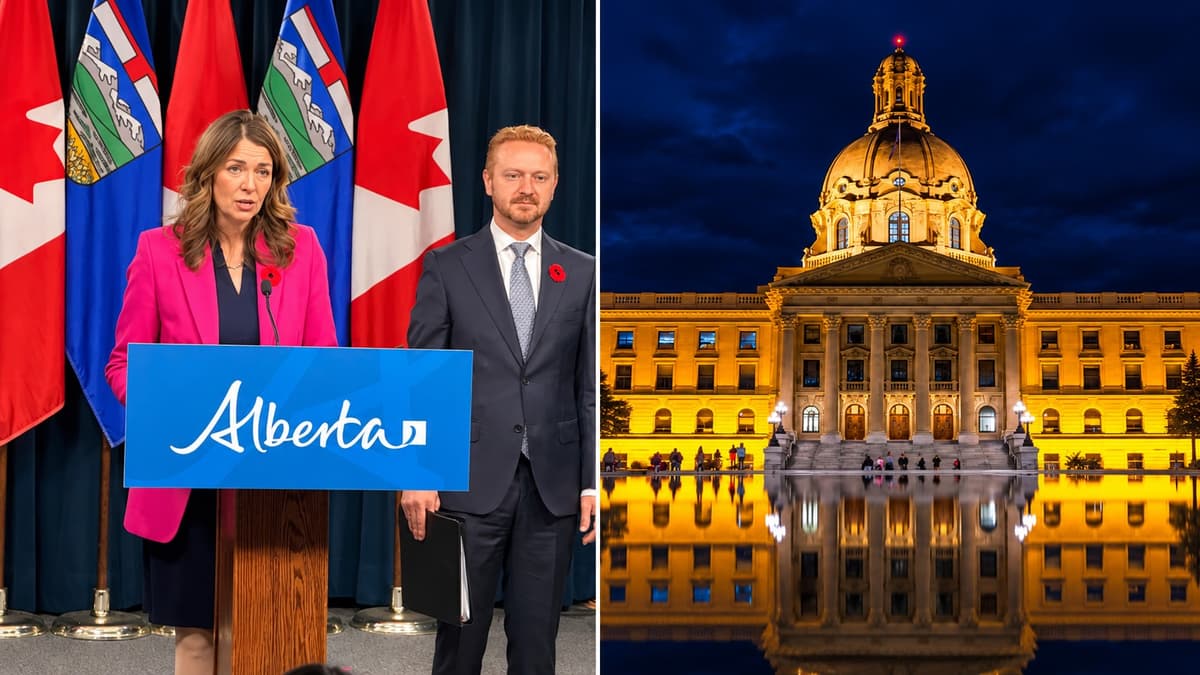
Danielle Smith’s government still wants out of the Canadian Dental Care Plan.
That has health advocates accusing the premier of ignoring her own referendum, and it leaves 349,164 Albertans enrolled in the federal plan without a clear answer about what replaces it.
The vote
Elections Alberta certified the results Thursday. Turnout was about 70 per cent, the highest in years.
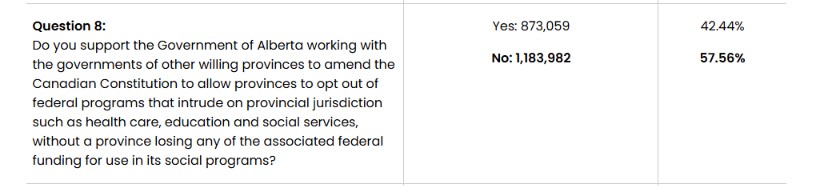
Question 8 asked whether Alberta should push to amend the Constitution so provinces could opt out of federal programs “that intrude on provincial jurisdiction” without losing the funding attached.
No: 1,183,982 votes (57.56%)
Yes: 873,059 votes (42.44%)
It was one of three questions the government lost, along with provincial control over judicial appointments and provincial laws overriding federal ones. Three in four voters also said Alberta should stay in Canada.
Smith said she would honour the results.
“At the end of it all, the people of Alberta cast their votes in an open and democratic referendum,” she said in a statement on Oct. 20. “I will honour this mandate from Albertans and listen to the will of the people.”
The province hasn’t budged on dental care
The question didn’t name the dental plan. But the dental plan is the clearest example of what the province was asking for: federal money, no federal conditions.
In June 2024, Smith called the Canadian Dental Care Plan “inferior, wasteful” and said Alberta would leave it by 2026. The province gave Health Canada formal notice that December.
This week, the government’s position came from a press secretary rather than the premier or the health minister.
“Alberta will continue to call on the federal government for predictable, sustainable, unconditional health funding,” said Maddison McKee of the Ministry of Hospital and Surgical Health Services. “Our government will continue advocating for Alberta’s fair share of federal funding.”
What the province hasn’t released, two months before its own 2026 deadline, is a replacement plan: who would qualify, what it would cover and what patients would pay. It didn’t answer a request for an updated timeline.
“Absolutely absurd”
Friends of Medicare didn’t hold back.
“The fact the premier is still attempting to rip dental care coverage away from Albertans is absolutely absurd,” executive director Chris Gallaway said in a statement. “Dental care is health care. Yet far too many Albertans have been left living in pain or forced to forego necessary dental procedures due to cost-related barriers to access.”
Gallaway said the federal plan has “meant tens of thousands of Alberta children got to see a dentist for the very first time, tens of thousands of seniors got their teeth fixed or were able to get dentures,” along with many low-income Albertans and people with disabilities.
The group wants Ottawa to refuse any Alberta opt-out.
“To the premier, we say listen to the results of your own referendum,” Gallaway said. “Enough with picking endless fights with Ottawa when you should be doing your job protecting public health care for Albertans.”
Who’s using the plan in Alberta
The Canadian Dental Care Plan covers people with no private dental insurance and a family income under $90,000. Health Canada’s figures as of Sept. 30 show how many Albertans that is:
| Enrolled for 2026-27 | 349,164 |
| Had care paid for so far this year | 90,971 |
| Enrolled for 2025-26 | 449,471 |
| Had care paid for in 2025-26 | 262,266 |
| Alberta dentists, denturists and hygienists in the plan | 3,691 |
Alberta’s enrolment rate is roughly 80 per cent of the eligible population, second only to British Columbia.
How much the plan pays depends on income:
| Family income | What you pay |
|---|---|
| Under $70,000 | 0% of covered fees |
| $70,000 to $79,999 | 40% |
| $80,000 to $89,999 | 60% |
| $90,000 and up | Not eligible |
Patients can still owe money if a dentist charges more than the plan’s fee guide.
Alberta already has dental programs. Here’s why that isn’t the same thing
The province runs its own income-tested dental benefits, including the Alberta Adult Health Benefit, the Alberta Child Health Benefit, and coverage for seniors and people on Income Support or AISH. The province says those programs serve about 500,000 low-income Albertans.
But they have lower income cutoffs than the federal plan. A family earning $75,000 with no insurance qualifies for the federal plan and would likely not qualify for the provincial ones.
The province’s own website also tells Albertans on provincial dental benefits that they may qualify for the federal plan too, and that eligible costs should be submitted to the federal plan first. Replacing it means working out what happens to people who use both.
The auditor general’s finding
The province does have a point about cost.
On Oct. 29, Auditor General Karen Hogan reported that the federal plan ran about $1.1 billion over budget in its first two years. Demand outran what Ottawa had planned for.
That’s a real problem for the federal government. It’s also a sign of how many people are using the plan, which is the opposite of what a province would want to argue if it plans to replace it with something smaller.
Does the referendum change anything?
Legally, no. The dental plan is something a province can leave regardless of the vote, and Ottawa has said it’s open to talks with Alberta as long as people keep comparable coverage.
Politically, it’s harder for the province. University of Alberta law professor Gerard Kennedy said the No vote likely leaves Ottawa feeling it has the stronger hand. University of Ottawa political scientist André Lecours said the question is whether the federal government uses the result against Alberta’s demands.
What this means for you
If you’re enrolled, nothing has changed. Your coverage continues until the two governments agree on a transition, and there’s no agreement.
If you haven’t applied and you qualify, apply. The plan pays for care now.
What to watch for is an actual provincial plan with eligibility rules and a start date. Until one exists, “opting out by 2026” is a letter from two years ago, not a policy.
Sources
Elections Alberta: Referendum official results (Oct. 29, 2026)
Health Canada: Canadian Dental Care Plan statistics (as of Sept. 30, 2026)
Government of Canada: Canadian Dental Care Plan, who qualifies
Government of Alberta: Dental fees and federal dental coverage
Office of the Auditor General of Canada: Canadian Dental Care Plan (Oct. 29, 2026)
Friends of Medicare: Premier Smith must not remove Albertans’ access to dental care
Premier Danielle Smith, statement on referendum results, Oct. 20, 2026
Ministry of Hospital and Surgical Health Services, statement, Oct. 28, 2026


Comments
Conversation