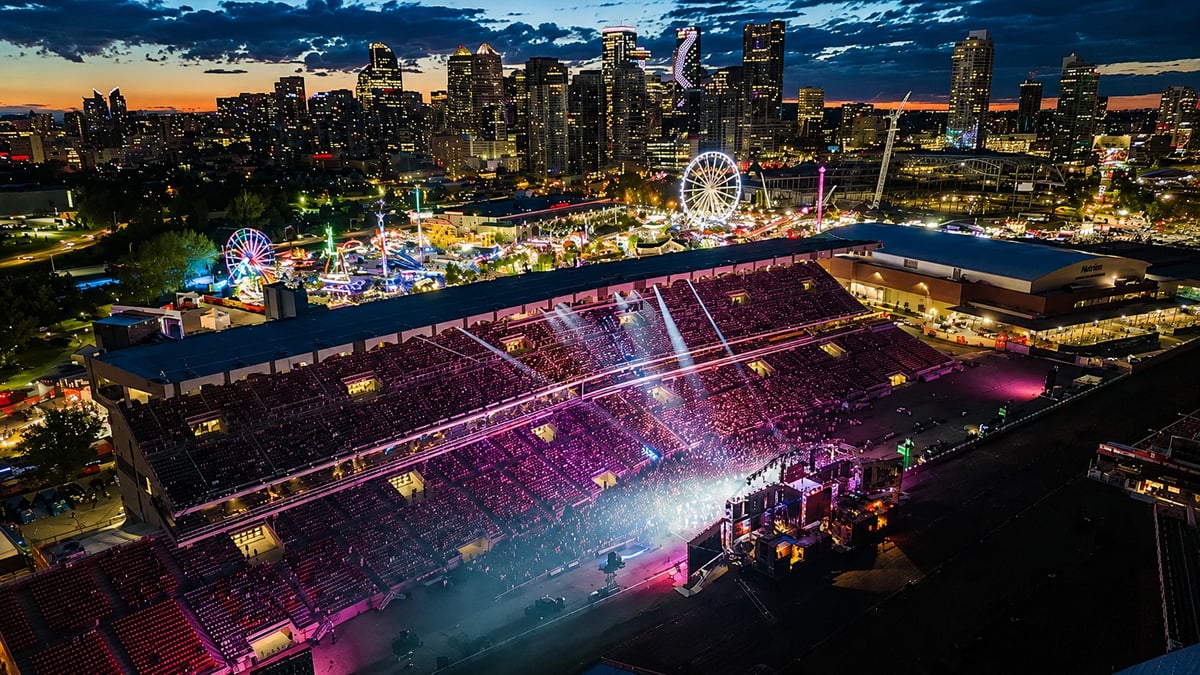
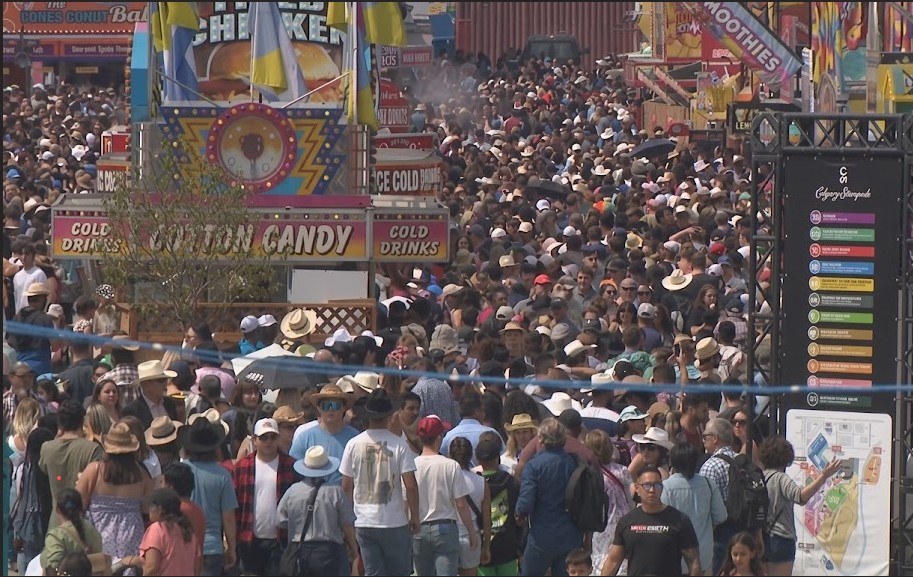
The Calgary Stampede drew 1,411,954 guests over its ten-day run, the organization confirmed Monday morning.
That is the third-highest attendance in the event's 114-year history. It is also a step down from the last two years, both of which set records.
Sunday's closing day brought 122,559 people through the gates.
Where they came from
The Stampede is, overwhelmingly, a Calgary event. About 70 per cent of guests came from the Calgary area.
Of the remaining 30 per cent, 11 per cent came from elsewhere in Alberta, 12 per cent from other parts of Canada, and seven per cent from outside the country, including two per cent from the United States and five per cent from everywhere else.
CEO Joel Cowley says that out-of-town 30 per cent is the part that actually matters to the province's bottom line. "It's that 30 per cent of outside visitation that generates the economic impact of the Calgary Stampede," he said, pointing to the $389 million in economic activity last year's event generated across Alberta.
Roughly one in four guests were attending the Stampede for the first time.
The CEO spent the wrap-up arguing attendance isn't the point
The framing from the top of the organization is worth paying attention to.
"We're coming off two record years in 2024 and 2025, and so surpassing 1.4 million guests in 2026 is quite the achievement," Cowley said. "Given the ongoing economic uncertainty, the affordability concerns of Canadians that have persisted for quite some time, we are absolutely honoured that 1.4 million guests chose to come to Calgary Stampede."
Then he went further.
"Attendance isn't the sole measure of success, and in fact, I would argue that it's not the most important measure of success."
That is a notable thing for a CEO to say after a year that fell short of the previous two, particularly given the weather. Cowley acknowledged that attendance swings with conditions, and 2026's were exceptionally good. A strong number in a good-weather year, coming in below two records, is a more complicated result than the headline figure suggests.
He pointed instead to guest satisfaction surveys taken mid-Stampede: 91 per cent said the event met or exceeded expectations, 86 per cent said they would return, and 94 per cent said they would recommend it.
Affordability was the subtext all week
The Stampede leaned harder than usual on free access this year, offering four free-admission days out of ten.
Cowley was direct about the limits of that. "That does not buy you food, certainly, or beverage, or rides, but that does tend to help those who maybe are struggling a little more financially to have a Stampede experience."
He also acknowledged the trade-off: guests on the free days reported long lineups and heavy crowds.
The organization also pushed people off the grounds and into the city, with pancake breakfasts, the Caravan travelling stage, and community events across Calgary, all of which cost nothing to attend.
What drew the crowds
Stampede president and board chair Stuart O'Connor pointed to a few standouts.
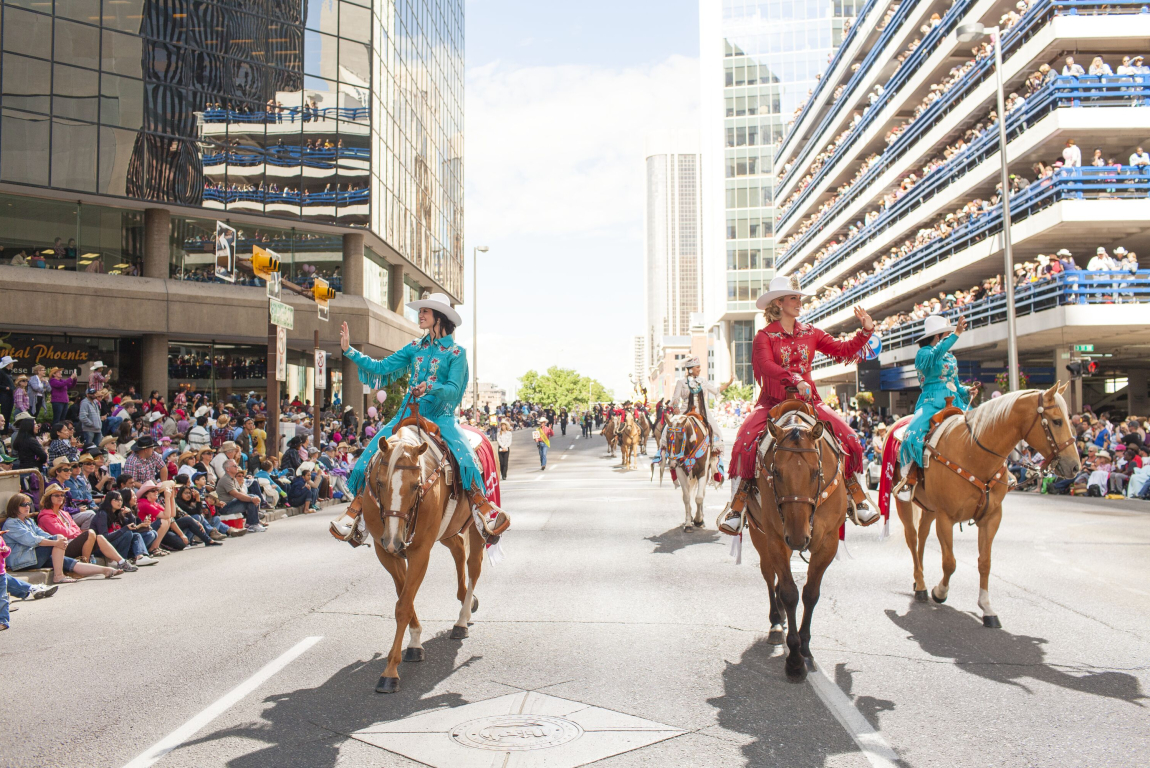
The parade opened the ten days with 125 entries, more than 700 horses and 1,200 participants, which the parade committee called the largest in recent memory.
More than 100 artists performed across the Coca-Cola Stage, Nashville North and the Big Four Roadhouse. A$AP Rocky sold out the Saddledome. Alanis Morissette played the final Saturday.
O'Connor said the rodeo and evening shows at GMC Stadium drew record-setting audiences.
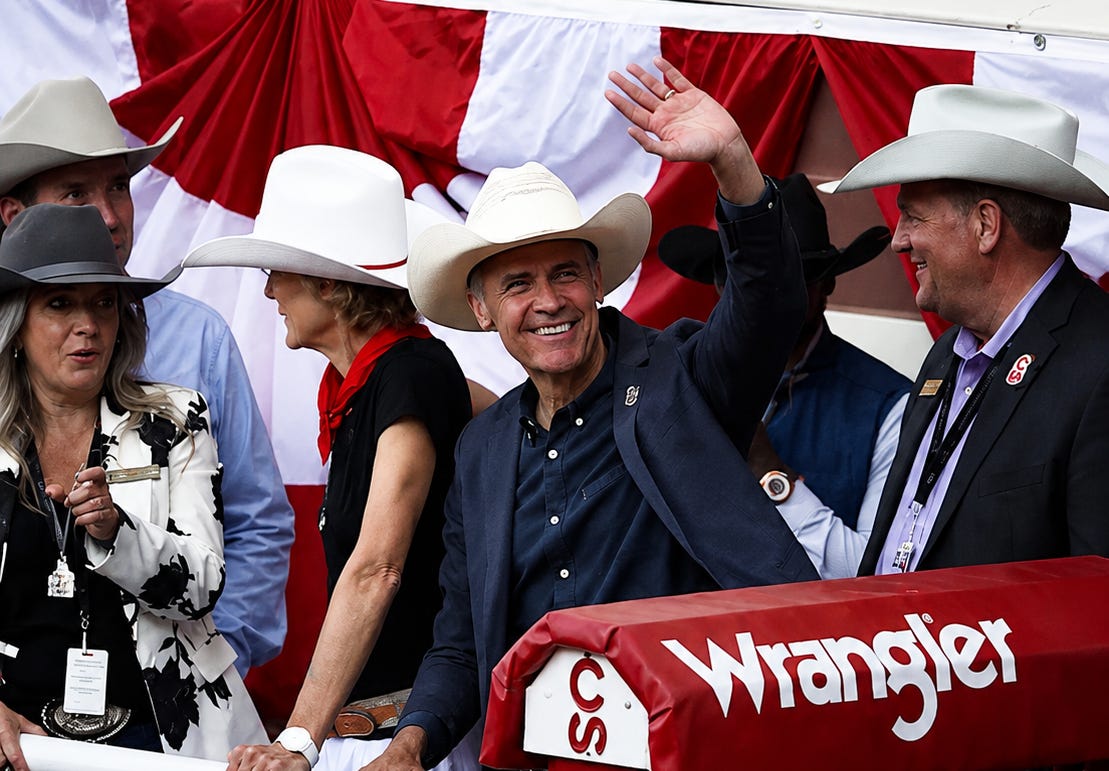
Prime Minister Mark Carney spent the weekend at the Stampede, walking the midway on Saturday and taking in the Rangeland Derby before flipping pancakes on Sunday.
The 2026 champions
Bareback: Bradlee Miller of Huntsville, Texas, with a 92.5-point ride on OLS Tubs Stevie Knicks.
Saddle Bronc: Wyatt Casper, with a 90.5 on Mary Lou.
Bull Riding: Noah Lee.
Steer Wrestling: Riley Duvall, in 3.9 seconds.
Tie-Down Roping: Zach Jongbloed, in 7.2 seconds.
Ladies Barrel Racing: Hailey Kinsell, in 16.802 seconds, her second Stampede title.
Breakaway Roping: Cheyenne McCartney, in 2.7 seconds, worth another $50,000.
Animal welfare was the other story of the week
Two chuckwagon teams collided rounding the barrels on Saturday night. Two horses went down. One walked off. The other was lifted into a trailer behind a privacy tarp. An initial exam found no fractures, Cowley said, "but the injury is considered serious." The horse is at a veterinary clinic.
Earlier in the week, broadcast footage showed a rodeo worker striking a horse named Ice Cube in the head after he collapsed in the bronc chute. Animal Justice filed a complaint and the Calgary Humane Society opened an investigation.
The Vancouver Humane Society, tracking Stampede fatalities since 1986, counts at least 110 animal deaths, 79 of them chuckwagon horses. The Stampede points to its safety program, including heart monitors for horses and shaded pens for bulls.
One thing changed this year: Alberta's new Animal Protection Amendment Act, which takes effect this fall, carves chuckwagon racing and rodeo out of the law's reach.
What's next
With the final numbers in, the organization begins reviewing attendance data and guest feedback ahead of planning the 2027 Stampede.
Sources:
Calgary Stampede, final attendance release, July 13, 2026
Statements from Calgary Stampede CEO Joel Cowley and president and board chair Stuart O'Connor, media availability, July 12, 2026
Calgary Stampede mid-event guest surveys
Calgary Stampede rodeo results





Comments
Conversation