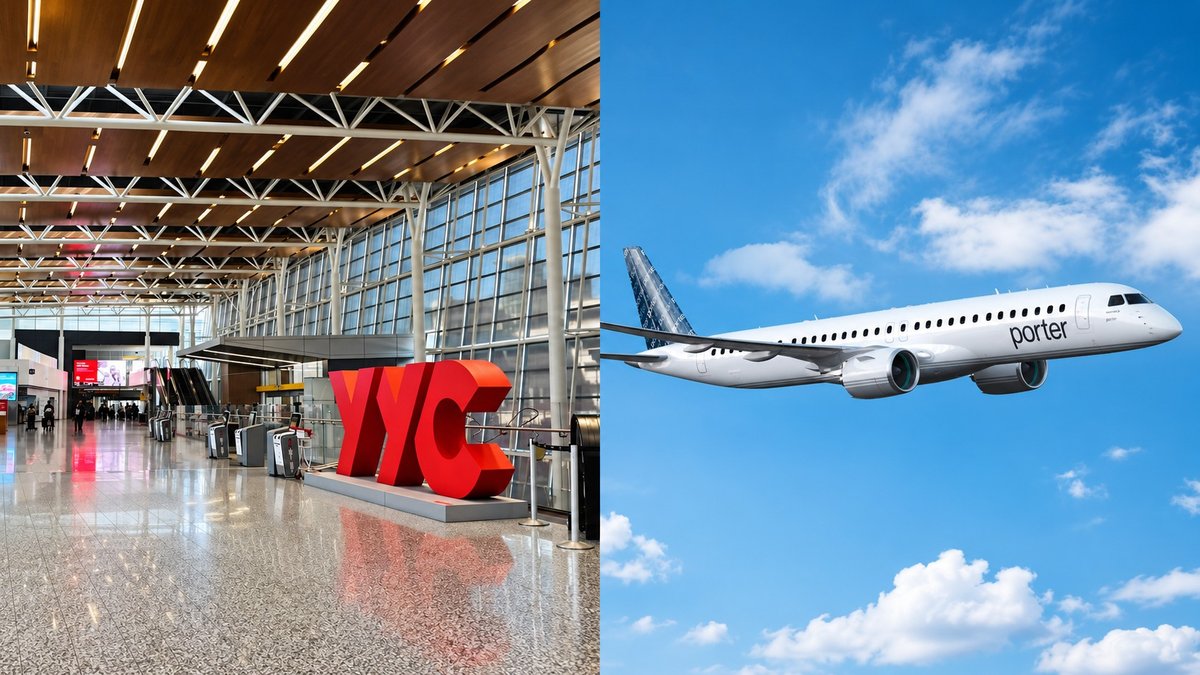
Calgary’s airport just got a world ranking to brag about.
TIME and data firm Statista released their first-ever World’s Best Airports list on Nov. 18. Calgary International placed 8th in the world among mid-sized airports, those handling 10 million to 25 million passengers a year. It’s the only Canadian airport in that group’s top 10.
The same day, TIME released its World’s Best Airlines list for 2027, and Porter Airlines was the top Canadian carrier, at 27th in the world.

How YYC got here
The ranking follows the busiest year in the airport’s history.
YYC handled a record 19.4 million passengers in 2025, up 2.7 per cent. July and August each topped two million travellers, the first time the airport has done that two summer months in a row.
It also spent the year upgrading:
The West Runway reopened after two construction seasons. The four-kilometre runway project finished on time and under its $201 million budget.
Security got simpler. The first phase of centralized security screening combined three domestic checkpoints into one.
More places to fly. YYC ended 2025 with 108 non-stop destinations, with new service to São Paulo and Abu Dhabi announced for 2026.
“In 2025, our focus was simple: keep people moving safely and smoothly while expanding choice for travellers,” said Chris Dinsdale, CEO of Calgary Airports.
How TIME ranked the airports
More than 5,000 travellers on every continent rated up to five airports they’d used in the past three years, across nine areas:
Getting through security
Finding your way around
Cleanliness
Shops, restaurants and facilities
Connections and transit
Family-friendliness, and more
TIME and Statista combined those ratings with data from aviation analytics firm OAG on more than 30 million flights from July 2025 to June 2026, measuring on-time performance and cancellations.
Airports needed at least one million passengers a year to qualify. In all, 226 airports were ranked, split into four size groups.
Canada’s best airports
| Airport | Size group | Rank |
|---|---|---|
| Calgary | Mid-sized (10M to 25M passengers) | 8th |
| Halifax Stanfield | Smaller (under 10M) | 1st |
| Vancouver | Large (25M to 50M) | 8th |
| Québec City | Smaller | 12th |
| Winnipeg | Smaller | 21st |
| Montréal-Trudeau | Large | 23rd |
| Billy Bishop Toronto City | Smaller | 26th |
| Ottawa | Smaller | 29th |
| Toronto Pearson | Major (50M+) | 32nd |
| Edmonton | Smaller | 53rd |
Halifax was named the world’s best small airport. Singapore’s Changi topped the list for major airports.
What about Edmonton?
Edmonton International made the list too, at 53rd among smaller airports. That puts it behind every other Canadian airport in its size group, including Winnipeg, Québec City and Ottawa.
Making the list means YEG is among the 226 airports that qualified, but the gap with Calgary is hard to miss.
Porter is Canada’s top airline
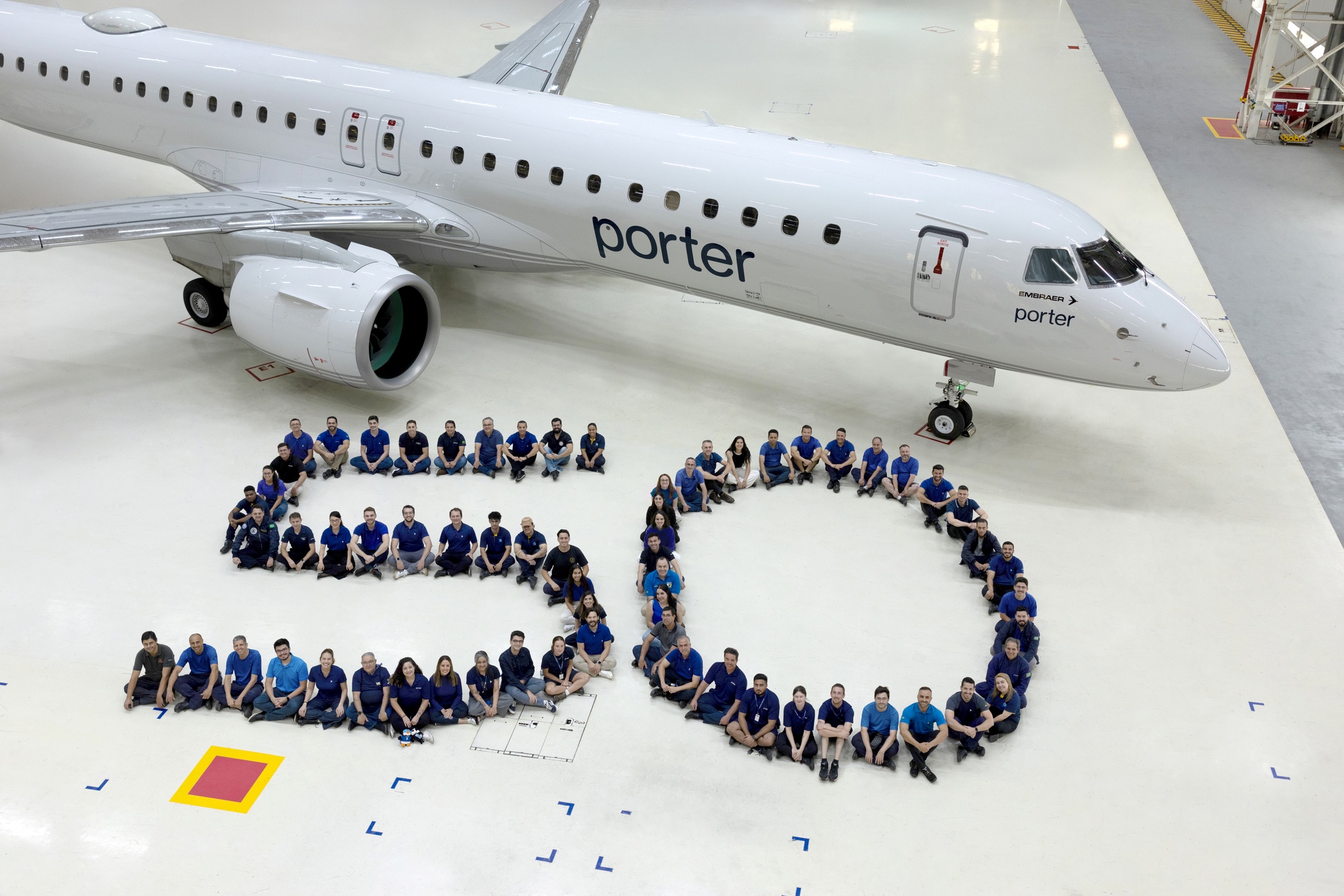
Dubai’s Emirates was named the world’s best airline. Porter finished 27th in the world, with an overall score of 90.68, the highest of any Canadian airline.
Porter also led Canadian airlines in Passengers’ Choice, ranking 25th in the world with a score of 87.24. That category measures how satisfied passengers were and whether they’d recommend the airline.
TIME’s airline ranking was built the same way as the airport list: passenger surveys in 16 countries, including Canada, combined with OAG flight data. Airlines needed at least three million passengers a year to qualify.
Porter is growing in Alberta. It flies nonstop between Calgary and Hamilton, and this month launched four new routes from Edmonton to Puerto Vallarta, Phoenix, Los Cabos and Las Vegas, its first international flights from the province.
Thin margins in the air
TIME’s report notes that even with travel booming, airlines aren’t getting rich. The International Air Transport Association cut its 2026 profit forecast to $23 billion on $1.17 trillion in revenue, a margin of about two per cent.
“Profit per passenger IATA gives is about $4.50,” Seçkin Özkul, a supply chain researcher at the University of South Florida, told TIME.
That’s why airlines keep adding fees for seat selection, bags and lounge access. Those extras now make up nearly 16 per cent of airline revenue worldwide, up from about nine per cent in 2016.
What’s next for YYC
Next up is YYC AeroNex, the airport’s long-term aviation plan. It includes a new Lufthansa Technik engine repair and maintenance facility and a training centre, both meant to bring more aviation jobs to Calgary.
“More travellers through YYC means more opportunity for our city and province,” Dinsdale said earlier this year.
If you’re flying out of YYC over the holidays, at least you’ll be leaving from one of the best in the world.








Comments