Calgary homeowners could pay hundreds of dollars more next year under the City’s proposed budget, even with Alberta cutting its education property tax.
The proposed 2027-2030 budget asks for 15 per cent more municipal property tax revenue in 2027. For a typical home, the City estimates that’s about $37 more a month in municipal property tax, plus about $16 more a month for water, waste and recycling.
That’s about $53 a month, or $636 a year, before you factor in the provincial cut.
The City released the plan on Nov. 10. Council starts debating it the week of Nov. 23, and the numbers can still change.
“This proposed budget is the starting point, not the final word,” Mayor Jeromy Farkas said.
What a typical homeowner would pay
| Monthly cost | 2026 | Proposed 2027 | Increase |
|---|---|---|---|
| Municipal property tax | $229 | $266 | +$37 |
| Water, waste and recycling | $140 | $156 | +$16 |
| Total | $369 | $422 | +$53 |
The City’s estimate is for a typical single-family home, assessed at $706,000 in 2026 and $688,000 in 2027. The water figure assumes 19 cubic metres a month.
That table doesn’t include the provincial education tax, which is the other big part of your bill.
Why your bill won’t go up 15 per cent
Your property tax bill has two parts:
Municipal tax, which pays for City services like roads, transit, police and fire
Provincial education tax, which the City collects for the province
In 2026, about 42 per cent of a Calgary homeowner’s property tax went to the province. The 15 per cent increase only applies to the City’s share.
Your assessment matters too. The City works out its tax rate by dividing the money it needs by the total value of every property in Calgary. So your bill depends on how your home’s value changed compared with everyone else’s, not just whether it went up or down.
The education tax cut takes back about $10 a month
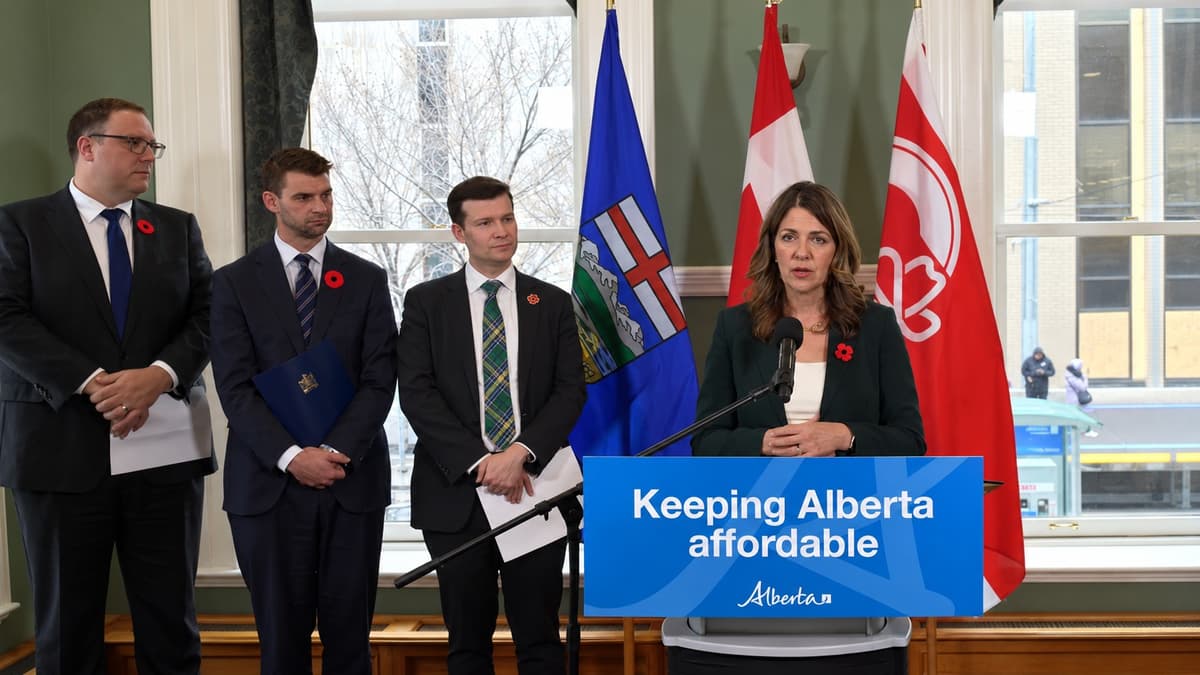
Last month, Alberta announced it would cut its education property tax rate and freeze it for three years, starting in 2027.
According to Alberta Municipalities, the new residential rate is $2.65 per $1,000 of assessment. Calgary’s 2026 rate was $2.7593.
Here’s what that means for the City’s typical home:
| 2026 | 2027 | |
|---|---|---|
| Assessment | $706,000 | $688,000 |
| Education tax rate (per $1,000) | $2.7593 | $2.65 |
| Education tax for the year | $1,948 | $1,823 |
That’s about $125 less a year, or $10 a month.
Put the two together for a typical home:
Municipal tax: +$37 a month
Education tax: about −$10 a month
Water, waste and recycling: +$16 a month
Net: about $43 more a month, or roughly $510 a year
This is an illustration, not a prediction for every home. Your result depends on your own assessment.
A frozen rate also doesn’t freeze what you pay. If your home’s assessment goes up, your education tax goes up with it, even at the same rate.
Last year, it was the other way around
This year’s budget fight is the opposite of last year’s.
For 2026, council kept the City’s increase low. The typical homeowner’s municipal tax rose just 1.8 per cent, about $49 a year. But the provincial education portion jumped 20.5 per cent, about $338 a year. In total, the typical bill went up about $387, and almost 90 per cent of that came from the province.
In 2027, the province is cutting its share, and the City’s share is the one going up.
Where the money would go
The budget includes $6 billion in operating spending next year, and $21 billion in capital projects over four years, including $13 billion in new infrastructure. Operating spending runs day-to-day services. Capital spending builds and fixes things like pipes, roads and stations.
Highlights from the City’s proposal:
$1.7 billion to upgrade the Pine Creek and Fish Creek wastewater treatment plants
$616 million for water infrastructure, including the north and south water feedermains
$420 million to repave roads
$300 million for new buses
$284 million for recreation through GamePLAN, plus $66 million to maintain arenas, pools and the Calgary Soccer Centre
$192 million for police facilities, vehicles and equipment
$142 million for a new interchange at 194 Avenue and Macleod Trail
$102 million for new fire and emergency stations
$94 million for traffic safety and speed management
$71 million to move ahead on the Blue Line extension from Saddletowne to 88 Avenue NE
$59 million to renew Village Square Leisure Centre, and $47 million to redevelop the Forest Lawn Civic Centre
Why the number is so high
City staff have priced Calgary’s long-term infrastructure needs at $54 billion. After two major breaks in the main water line, water and pipes went to the top of the list.
Farkas told CBC that past councils had underfunded essential infrastructure and police, and that putting it off would only make the bill bigger.
It could have been worse. In September, leaked documents showed that funding every department’s request would have taken a 20.2 per cent increase in 2027. After an 8-7 vote, council told staff to bring it down. Council met behind closed doors over the leak.
Council is still split. Ward 10 Coun. Andre Chabot said it’s the biggest increase he’s seen in 17 years on council, though he believes about 10 per cent is needed to start closing the gap.
More increases are planned through 2030
The plan calls for increases every year:
| Year | Proposed increase |
|---|---|
| 2027 | 15% |
| 2028 | 10% |
| 2029 | 7.7% |
| 2030 | 6% |
Because each increase builds on the one before, together they’d raise the City’s property tax revenue by about 44 per cent over four years, more than the 38.7 per cent you’d get by adding them up.
That’s the City’s total revenue, not your bill. Council can change any of these years.
Other costs going up
Water: council gave early approval last month to residential water rates rising 74 per cent over four years, and 86 per cent for businesses, CBC News reported.
Transit: fares would rise every year, adding up to 14.3 per cent by 2030.
How to have your say
Public submissions start Nov. 23, and council debate begins that week. Council is expected to approve the final budget in December.
You can send written comments or register to speak to council on the City of Calgary’s budget page.
To estimate your own bill, try our Alberta property tax calculator. Check which tax year and rates it’s using.
How Edmonton compares
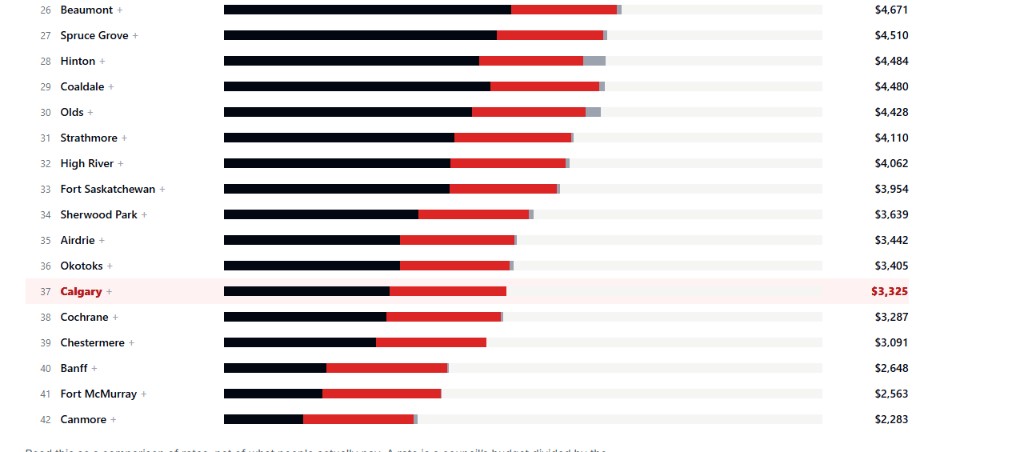
Edmonton is setting its budget too. Its proposed 2027 increase is 4.9 per cent. For how far a paycheque goes in each city, see our story on the 2026 Alberta living wage.
Sources:



Comments