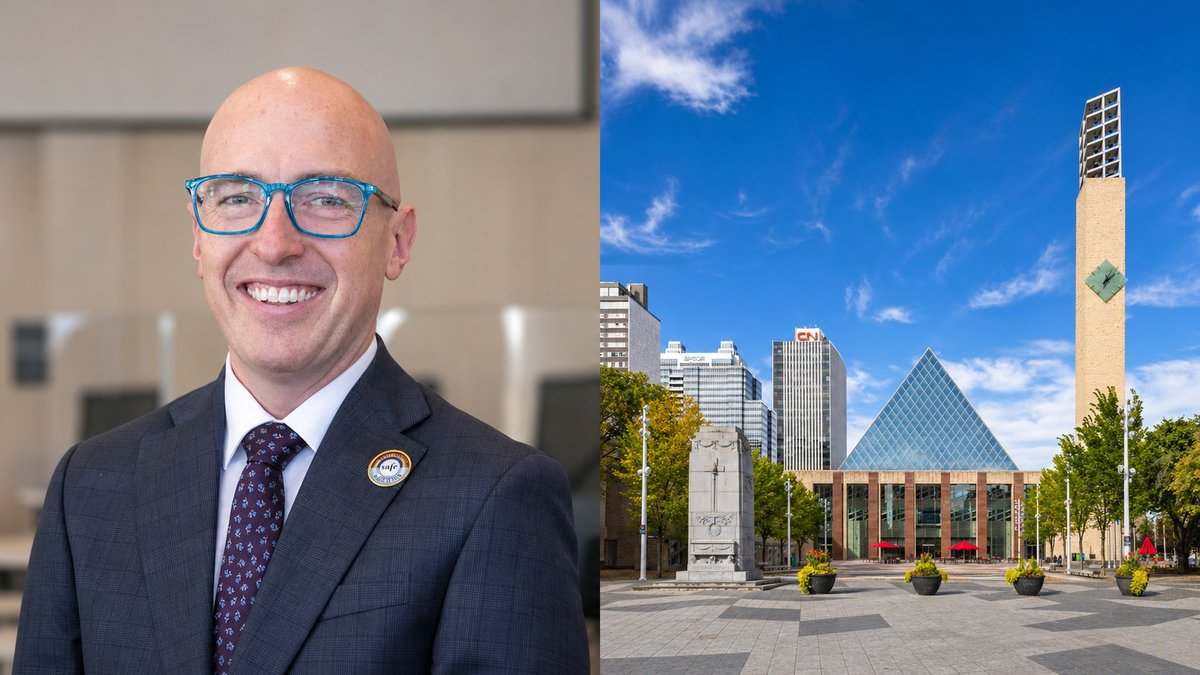
Edmonton homeowners would pay about $18 more a month in city property taxes next year under the proposed 2027 to 2030 budget.
City administration released its draft four-year operating and capital budgets on Monday, Nov. 2. It recommends a 4.9 per cent property tax increase for 2027, then 4.7 per cent in 2028, 4.5 per cent in 2029 and 3.9 per cent in 2030.
None of it is final. Council hears from the public on Nov. 23, debates from Nov. 24 and plans to vote by Dec. 18. Until then, every number below is a proposal.
What the increase costs by home value
In 2027, the city portion of your bill would work out to $68.10 a month for every $100,000 of assessed value, up from $64.52 this year. That is an extra $3.58 a month, or $42.96 a year, per $100,000.
Here is what that looks like by assessment:
$300,000 home: about $11 more a month, or $129 a year
$400,000 home: about $14 more a month, or $172 a year
$492,500 home (the Edmonton median): about $18 more a month, or $212 a year. The city puts the monthly bill at $335.39, up from $317.74.
$500,000 home: about $18 more a month, or $215 a year
$600,000 home: about $21 more a month, or $258 a year
Stack all four years together and the city says a $500,000 home would pay $808.25 more in 2030 than it does today.
Businesses get hit harder. Non-residential properties would pay $124.08 more per $100,000 of assessed value in 2027, nearly three times the residential increase. Mayor Andrew Knack has said businesses carry about 40 per cent of the tax burden and that the share should rise, not fall.
Why your bill could still look different
Two things can push your number off these estimates.
First, assessment. The percentage applies to the total tax levy, not to each house. If your assessment rose more than the city average, your increase will be bigger. If it rose less, smaller. New assessment notices go out in January.
Second, the provincial education tax, which the city collects but does not control. Alberta cut the education property tax rate and froze it for three years, but a frozen rate does not mean a frozen bill, because the rate is applied to your assessed value. Our explainer on the education tax change covers that half of the bill.
What you would get for the money
City manager Eddie Robar called it a "not sexy" budget and said that was the point. "We've heard lots about snow clearing and grass cutting, the stuff you see every single day," he said.
The operating budget sets aside $249.5 million over four years for service improvements. The biggest piece, $96.4 million, goes to more snow removal, turf mowing, graffiti removal and litter pickup. Snow changes include faster windrow removal and more blading in winter. Another $70.4 million is earmarked for local business growth and commercial development.
Police and fire budgets both grow, and the capital plan includes five new fire halls.
Chief financial officer Stacey Padbury said the difference from past budgets is what comes with the increase. "This time around you're getting tax increases, you're also getting service increases alongside these tax increases," she said.
The city had originally projected a 5.6 per cent increase for 2027. Robar said administration brought it down to 4.9. For comparison, council approved 6.9 per cent for 2026, and the last four years had some of the highest increases in more than a decade. Alberta's inflation rate so far this year is 3.1 per cent.
Fees go up too
Taxes are not the only line moving.
Adult transit pass: $102 to $107.10. Youth pass up $3.30 to $69.30. Senior pass $36 to $37.80. Pay-as-you-go fares rise 10 cents to $3.15. Cash fares and the airport fare are unchanged.
Recreation centre single admission: up 25 cents for children, youth and seniors, 50 cents for adults.
Municipal golf: Riverside and Victoria up $1.50 for nine holes and $2 for 18. Rundle up 75 cents.
Fort Edmonton Park: adult admission drops to $24.95 and child to $14.95, while youth and senior tickets rise $1.60.
Municipal electricity rate: 17.65 to 19.4 per cent, starting Jan. 1, 2027.
Low-income access programs are not expected to change.
The $6.3-billion capital plan, and the repairs it can't cover
The capital budget is $6.3 billion over four years. About $3 billion is already committed to projects under construction: the Valley Line West and Capital Line South LRT extensions, the Yellowhead Trail freeway conversion, the Southeast Transit Garage, Terwillegar Drive upgrades and the Lewis Farms (mistahaya wîkihk) recreation centre and library.
Of the $3.3 billion in new money, $2.3 billion goes to renewal: neighbourhood renewal, repaving bridges and major roads, and replacing buses and equipment. The remaining $958 million goes to growth, including $100 million to widen Parsons Road, 215 Street (Winterburn Road) and 41 Avenue.
It is still not enough. City staff say the ideal renewal spend over four years is about $5 billion, roughly $2.8 billion more than the plan funds. "The reality is there is not enough money to do all the things a growing city needs," said Sara Nichols, deputy manager of infrastructure. The city's infrastructure is valued at nearly $40 billion.
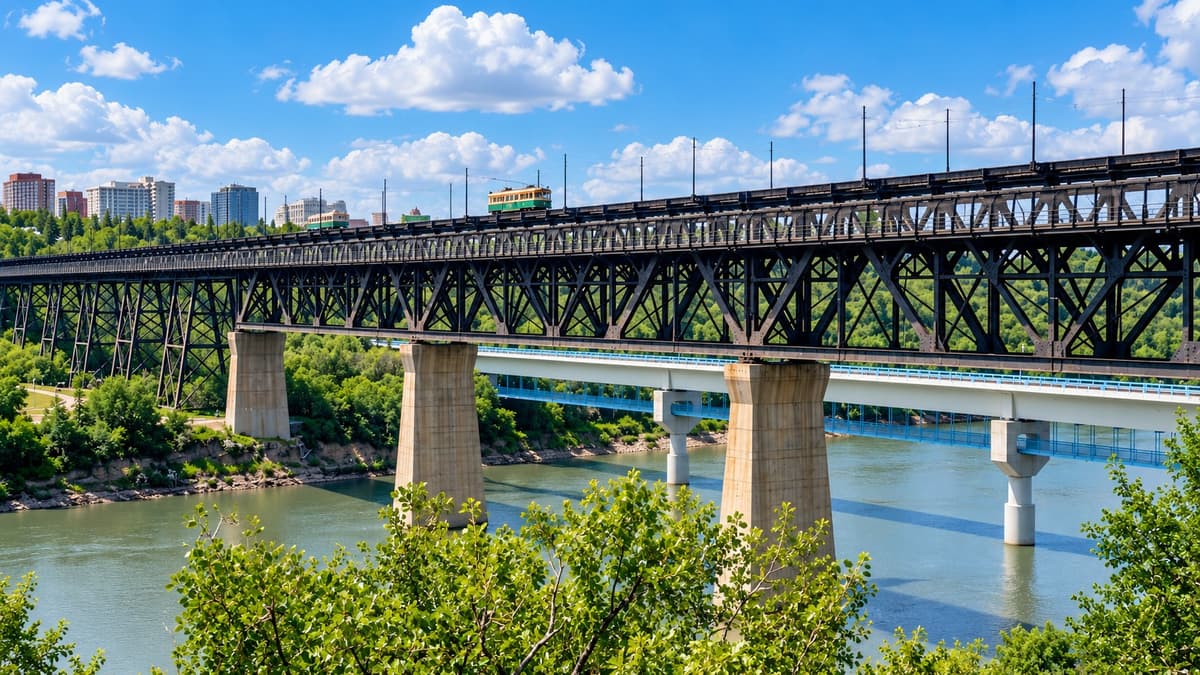
One repair you will feel: the High Level Bridge will close to traffic for the entire 2027 construction season after summer rain eroded the riverbank, and its planned 2028 rehabilitation has been pulled forward to happen at the same time.
What council has to decide
The 4.9 per cent figure is the base. Council can add items by cutting elsewhere or raising taxes, and several big asks are sitting outside the budget.
Road safety: The safe mobility strategy is not funded. Two options are on the table at $161.4 million and $78.7 million.
Bike lanes and paths: Continuing the active transportation network would cost $30 million. Administration recommends against it.
Whyte Avenue: A $31.2-million upgrade plan is recommended against and ranked a low priority.
Bus rapid transit: $44 million for the next design stage of two BRT lines, Castle Downs to Century Park and West Edmonton Mall to Bonnie Doon, is also recommended against.
Arts and sport: Edmonton Arts Council funding stays flat at just under $18 million, where it has sat since 2019. Sport Edmonton's request for about $1.1 million a year is not included.
Reaction around the council table has been mixed. Knack said he wanted increases below the last four years and called $20 a month "a moderate amount" if residents see real service improvements. Coun. Reed Clarke called the hike realistic and wants residents to notice changes by Jan. 1. Coun. Karen Principe wants it lower: "We need to take a stronger stand on focusing on the core services." Coun. Erin Rutherford questioned the $100 million for road widening when arterial roads need renewal.
The Edmonton Chamber of Commerce said the budget is "moving in the right direction" but wants council to ask of every item whether the city should do it, whether the city is the right one to do it, and whether the result is worth the cost. "The City Manager calls this a 'not sexy' budget, and we take that as good news," said president and CEO Doug Griffiths.
What residents told the city
Nearly 12,000 people took part in public engagement last spring. The message, according to the city, was resistance to both tax increases and service cuts, a preference for maintaining what exists over building new, and some openness to user fees instead of taxes. The Chamber says 80 per cent of respondents asked the city to prioritize maintaining existing assets.
Key dates
Nov. 12: Utility budgets (waste, Blatchford energy, district energy) released
Nov. 23: Public hearing. Residents and businesses can register to speak through the city's budget page
Nov. 24 to Dec. 18: Council debates and votes
Nov. 26: Utility budgets go to Utility Committee
Dec. 31: Legal deadline to pass a budget under the Municipal Government Act
Jan. 1, 2027: New rates and fees take effect
The final increase can still move in either direction. Council added and cut items in every recent budget debate, and the unfunded list above is where that fight will happen.
Sources:
City of Edmonton: 2027-2030 Budget
City of Edmonton: Budget public engagement
Edmonton Chamber of Commerce: Response to the proposed city budget (Nov. 2, 2026)



Comments