A quarter of a percentage point doesn’t sound like much. On a $500,000 mortgage, it’s about $70 a month.
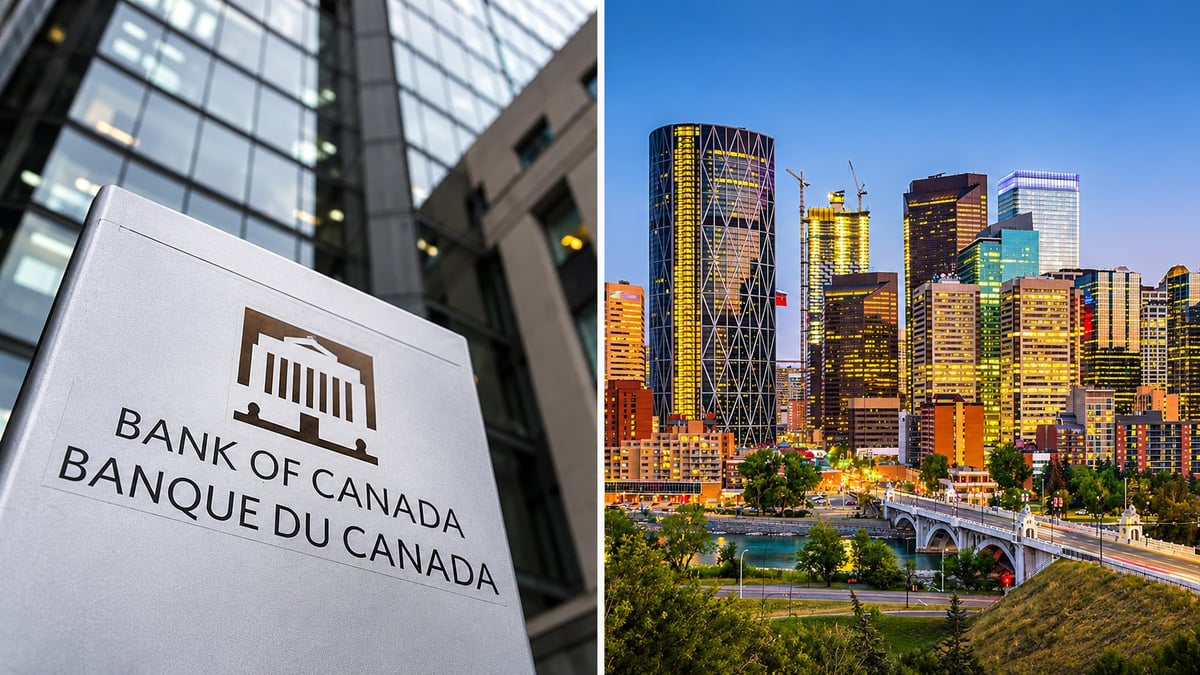
The Bank of Canada raised its key interest rate to 2.5 per cent on Wednesday, Oct. 28. It’s the first increase since July 2023, and it ends a stretch in which borrowers had only seen cuts.
Canada’s big banks followed the same day, raising their prime rate to 4.70 per cent.
Whether you pay more right away depends on what kind of mortgage you have.
What it adds to a variable-rate mortgage
The table below shows how much the monthly payment goes up when a mortgage rate rises from 4.45 to 4.70 per cent, the same quarter-point move prime just made.
| Mortgage balance | Payment before | Payment after | Increase |
|---|---|---|---|
| $300,000 | $1,652 | $1,694 | $42 |
| $400,000 | $2,203 | $2,259 | $56 |
| $500,000 | $2,753 | $2,823 | $70 |
| $600,000 | $3,304 | $3,388 | $84 |
| $750,000 | $4,130 | $4,235 | $105 |
These are our estimates, not lender quotes. They assume 25 years left on the mortgage and standard Canadian semi-annual compounding. Your real rate may be prime minus a discount or prime plus a margin, so your numbers will differ a little.
At $70 a month, a $500,000 mortgage costs about $840 more over a year.
Not everyone with a variable rate will see that increase on their bank statement, though.
Who pays more right away, and who doesn’t
Adjustable-payment variable mortgages. Your payment goes up with prime. Expect a higher payment within a cycle or two. This is the table above.
Fixed-payment variable mortgages. Your payment stays the same, but more of it now goes to interest and less to paying down what you owe. On a $500,000 balance, that’s roughly $104 a month more going to interest, so the mortgage takes longer to pay off even though nothing looks different. If rates keep rising, some lenders will eventually require a higher payment. Your agreement spells out when.
Fixed-rate mortgages. Nothing changes until your term ends. Your rate is locked.
Lines of credit and HELOCs. Most are tied to prime, so they go up right away. On a $25,000 balance, the hike adds about $62.50 a year in interest, or roughly $5 a month. Double that for $50,000.
Credit cards. Most have fixed rates and won’t change because of this decision.
If you don’t know which kind of mortgage you have, it’s on your mortgage statement, or your lender can tell you in one phone call.
If your mortgage renews soon
This is where the hike matters less than you might think, and history matters more.
Fixed mortgage rates don’t move in step with the Bank of Canada. They follow government bond yields, what it costs lenders to borrow, and competition between lenders. A quarter-point change in the policy rate doesn’t mean a quarter-point change in your renewal offer.
The bigger issue for many Albertans is the rate they’re coming off. Anyone who locked in a five-year fixed in 2021, when rates were close to record lows, is renewing now, at rates that are much higher than what they’ve been paying.
If your renewal is in the next six months, it’s worth asking your lender for an early quote and comparing it with other lenders. The lowest advertised rate isn’t always the cheapest once you factor in prepayment limits and penalties.
Why the Bank of Canada raised rates
The short answer is energy prices.
Oil prices have stayed high with a Middle East conflict now in its eighth month, and the bank says “there is no clear path to resolution.” Inflation has been around 3 per cent since April. The bank now expects it to reach about 3.5 per cent by the end of the year, average 3 per cent in 2027, and not get back to its 2 per cent target until the middle of 2028.
The bank also made clear that most of the problem is fuel. Excluding gasoline, inflation was 2.2 per cent in September, and its core measures are still close to 2 per cent.
So why raise rates? Because the bank is worried the fuel costs will spread. Trucking, farming and construction all run on fuel, and businesses have absorbed a lot of those increases so far. The hike is meant to “reduce the risk that continuing high energy prices spread broadly to the prices of other goods and services,” the bank said.
The economy also gave it room. GDP grew 3.3 per cent in the second quarter, stronger than expected, though the bank expects new U.S. tariffs to slow growth in the last three months of the year.
Why it cuts both ways in Alberta
Alberta feels high oil prices differently than the rest of the country.
The same prices driving inflation are good for the province’s oil and gas industry. The bank’s own report says energy activity is helping support business investment across Canada, and much of that activity is in Alberta.
Albertans still pay more at the pump, on groceries that come by truck, and now on variable-rate debt. Whether higher oil prices come out ahead for your household depends a lot on whether your paycheque is tied to the energy sector.
The housing market was already slowing
The hike comes as both of Alberta’s big housing markets are cooling.
Edmonton: Greater Edmonton had 1,959 residential sales in September, down 10.3 per cent from a year earlier, according to the REALTORS® Association of Edmonton. Inventory was up 16.7 per cent. The benchmark price was $423,100, down 0.3 per cent year over year.
Calgary: Home sales fell 3.8 per cent in September compared with last year. The benchmark price for a detached home in the city was $739,400, down about 1 per cent, and townhouse prices were down about 6 per cent.
More listings and fewer sales give buyers more choice. Higher rates also cut how much buyers can qualify for, which matters most for first-time buyers working with a tight budget. Rates are only one piece, though. Jobs, people moving to Alberta and new supply will matter just as much for where prices go.
Could rates go up again?
Possibly. The bank didn’t promise another hike, but it said plainly that “there could be a need to increase the policy rate further.” It also said it would proceed carefully.
The next decision is Tuesday, Dec. 9. The one after that, with a new forecast, is Jan. 27, 2027.
A lot depends on oil. If prices come down, fuel-driven inflation goes with them, and pressure for another increase fades. If they don’t, December is a live meeting.
What to do now
Find out which type of variable mortgage you have. Adjustable or fixed-payment makes all the difference.
Run your numbers at 0.25 and 0.50 points higher. It shows how much room you’d have if rates rise again. Treat it as planning, not a prediction.
If you’re renewing within six months, shop early. Get quotes from more than your current lender.
Look at your line of credit. That’s where the hike shows up first and stays the longest if the balance doesn’t come down.
This article is general information, not personal financial advice. Talk to your lender or a licensed mortgage professional about your situation.




Comments
Conversation