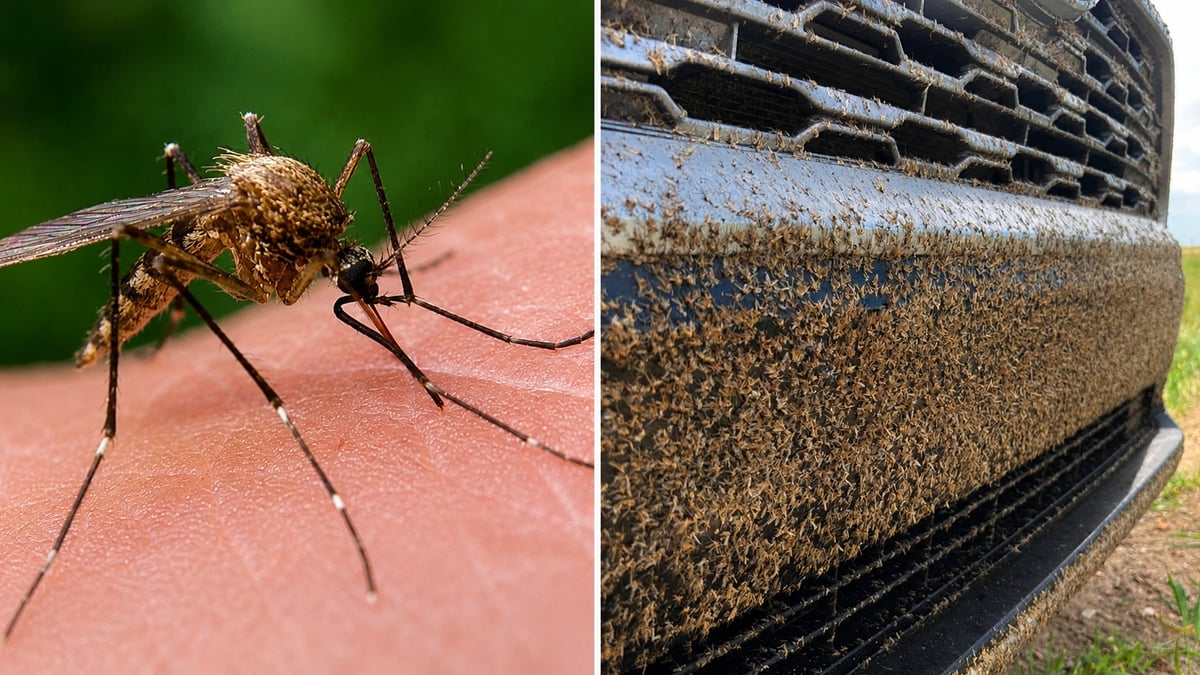
Edmonton's mosquito traps averaged 21 catches each in the first week of June. This past week they averaged 20,000, according to City of Edmonton trap data.
One species is responsible for nearly all of it, and it only needs five days.
Five days from puddle to bite
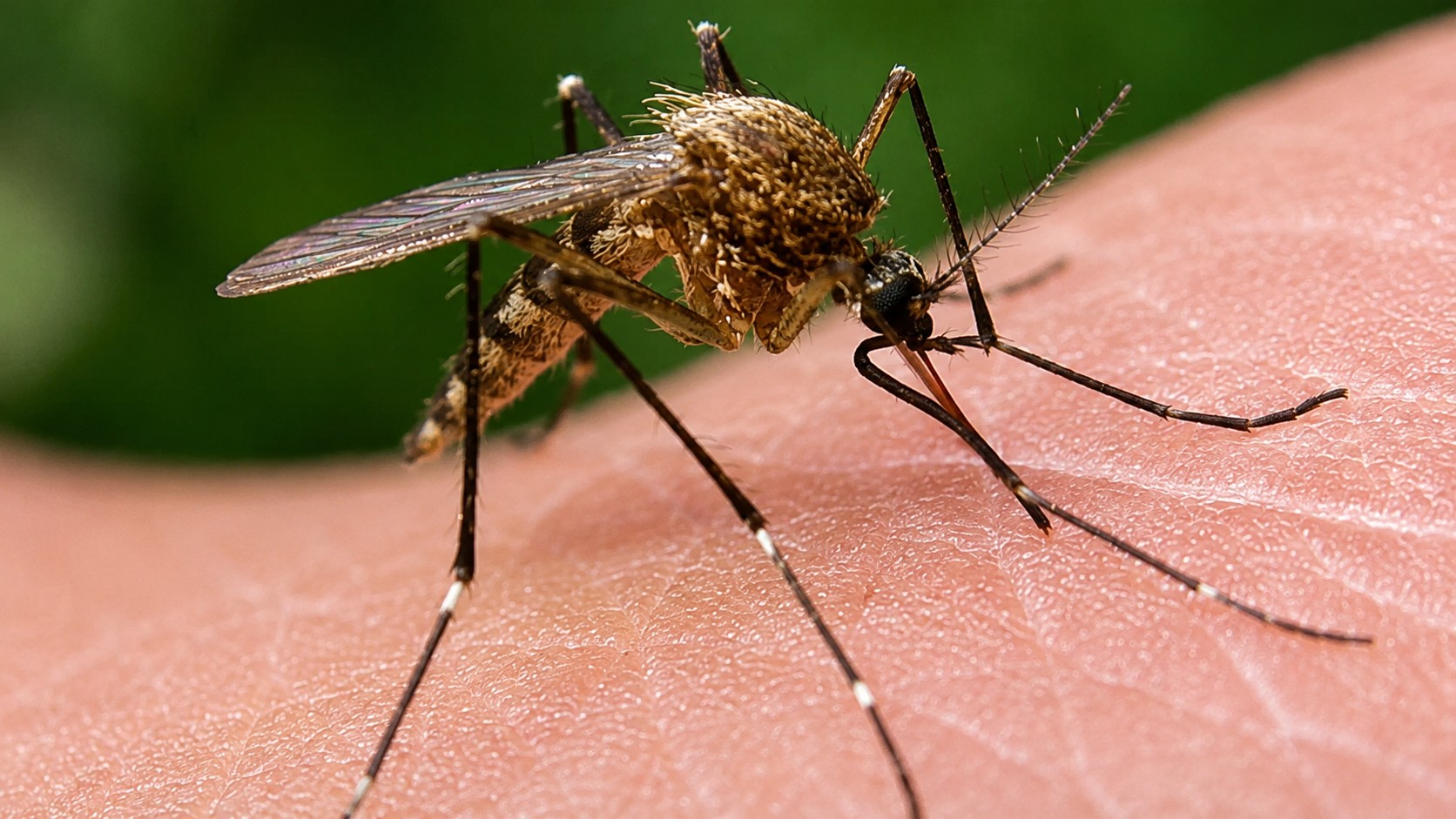
Edmonton has more than 30 mosquito species across six groups. A summer like this belongs to Aedes vexans.
It lays its eggs in dry or damp low-lying ground and leaves them there. They hatch once water temperature clears 10 degrees. From there the insect goes from egg to adult in five days, then travels long distances to find something to bite. The city calls it the typical Edmonton summer nuisance mosquito, active at dawn and dusk, specialized in stealthy bites on large mammals, and says it makes up the majority of the population through the summer months.
Heavy rain is the trigger. Not a wet week, a wet hour. The eggs are already in the ground waiting, and water is the only thing standing between them and a five-day countdown.
The number comes with an asterisk
Edmonton publishes two separate trap records, and they weren't collected with the same equipment.
Light trap data covers 1990 to 2023. CO2 trap data starts in 2023. The city switched from New Jersey light traps to BG-Sentinel CO2 traps in 2020, and it keeps the two datasets apart on its website for that reason.
The instruments don't pull in the same mosquitoes. The city says so directly: traps show population trends but don't capture every species accurately, because species respond differently to light and to CO2. It also warns that weather alone heavily skews daily counts.
None of that makes this a small year. But any comparison running back to the 1980s is putting two different instruments side by side, and that's worth knowing before repeating the number.
Why Edmonton won't spray for adult mosquitoes
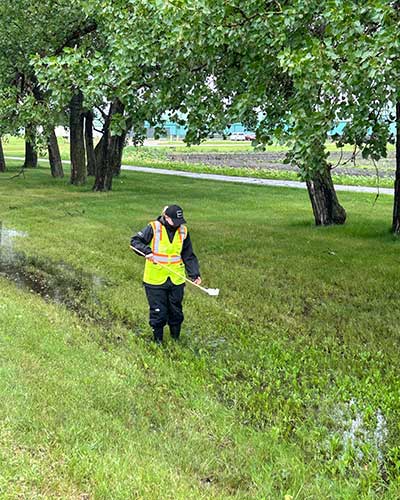
The city runs a ditch and ground control program that kills larvae in roadside ditches and other ground habitat before they hatch, using Health Canada-approved biological pesticides. It starts in early April and runs into August or September depending on conditions.
The city's own page says the program does not reduce adult mosquitoes that migrate into Edmonton from temporary water in the open fields surrounding the city. In a summer where those fields have flooded repeatedly, that's most of what's biting.
The city also states outright that eliminating mosquitoes isn't the goal. Cutting down the big waves that follow major rainfall is.
Edmonton stopped spraying DDT in 1972. It ended fogging for adult mosquitoes in the river valley and ravines in 1993. The helicopter program ended in 2022. What's left is ground crews and larvicide, which works on next week's mosquitoes rather than the ones in the backyard tonight.
Drive the QEII right now and your car fills up
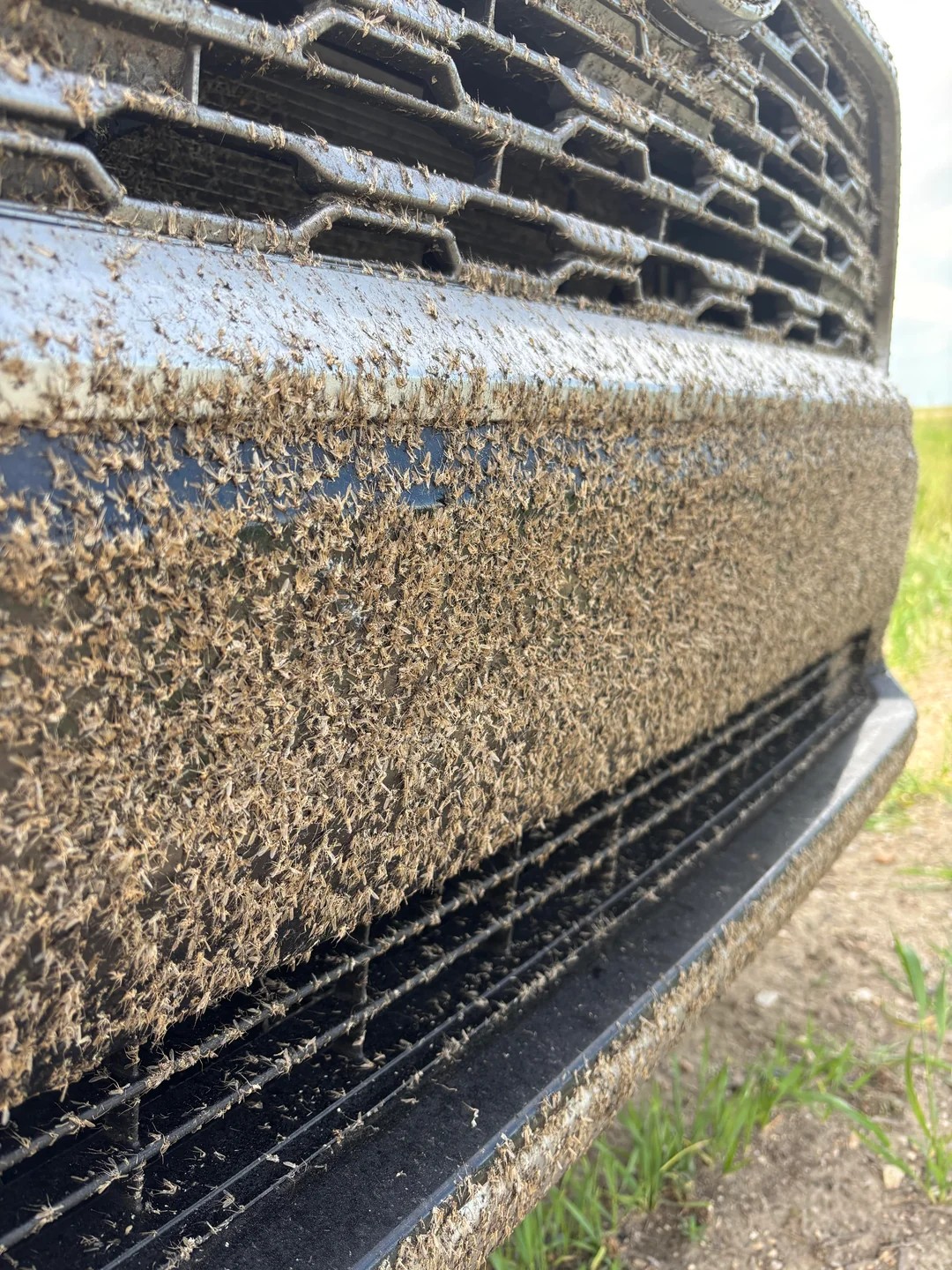
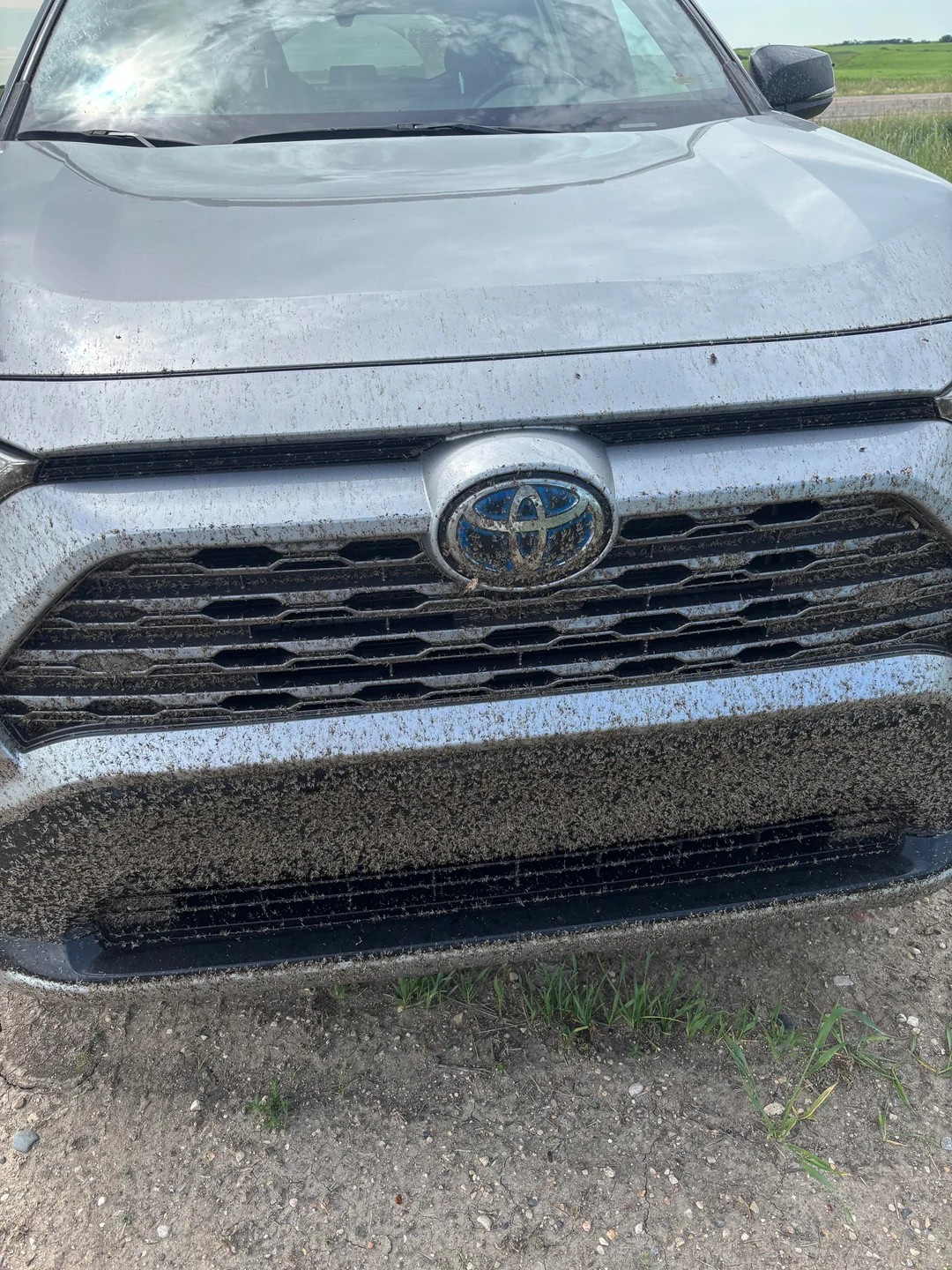
Anyone who's made the Edmonton to Calgary run this month knows what the windshield looks like at the other end. Three hours of open country after a wet summer, and somewhere around Red Deer the glass stops being clear. Washer fluid smears it worse.
The bigger problem is stopping. Pull into a rest area or a gas station at Ponoka or Bowden, open a door for thirty seconds, and you'll be swatting for the rest of the drive. Anyone who's pulled over on a gravel approach off the highway to check a trailer or take a call has had it worse than that.
That corridor is the part of this nobody administers.
Edmonton is the last one in the region still doing this
The 1993 change wasn't only about fogging. That's the year the province eliminated its funding assistance, roughly half the program's budget.
What happened next is in the city's own program history. Every surrounding municipality in the capital region eventually discontinued mosquito control.
So the region works like this now. Edmonton treats larvae inside its boundaries and says openly that it can't touch the adults flying in from temporary water in the fields outside them. Those fields sit in municipalities that stopped treating anything decades ago, and Aedes vexans travels long distances from wherever it hatched.
It also means anyone living outside Edmonton has no municipal program at all. Yard-level control is the entire strategy in St. Albert, Sherwood Park, Spruce Grove, Leduc and Beaumont.
When Edmonton's mosquitoes go away
The city puts adult Aedes vexans from early-to-mid May through the end of August. In a normal year that's the answer.
Rain overrides the calendar. Eggs sitting in low-lying ground need water above 10 degrees to hatch, so a dry stretch drops the numbers as the current adults age out. One more heavy dump restarts the five-day clock.
Which is why the forecast predicts this better than the date does.
The number on the bottle matters more than the brand
The city's repellent guidance is specific about strength, which is the part most people skip at the shelf.
Adults should use concentrations up to 30 per cent DEET. Children between six months and 12 years, up to 10 per cent. For babies under six months, the city says skip repellent entirely and use mosquito netting.
Mosquito coils, propane foggers and spatial repellents come with a caution and belong at the bottom of the list. They work by putting a cloud of insecticide into the air, which lands on pets, other insects and people too.
For clothing, the city recommends loose, light-coloured layers, and in the worst areas, high-top boots with heavy pants and jackets. Dawn and dusk are still the hours to skip.
Your yard is the part you control
Anything holding water for a few days is a nursery, and most of it is stuff people walk past.
The city's list: clean the eavestroughs, dump standing water, screen the rain barrel, change bird baths and ornamental ponds often, store pails and buckets so they can't fill with rain, mow tall grass and underbrush to take away shady resting spots for adults, and check that window and door screens actually seal.
Standing water in a residential area goes to 311. Crews will inspect it and treat it if it needs treating.
West Nile isn't tracking with the swarm
More mosquitoes doesn't automatically mean more West Nile risk, because the species carrying it isn't the one that exploded.
West Nile is primarily vectored by Culex pipiens, first confirmed in Edmonton in 2020. It breeds in containers, rain barrels, bird baths and stormwater catch basins, and the city says its numbers aren't tied to rainfall the way Aedes vexans is. Very few mosquitoes in Edmonton carry the virus at all.
Provincially, most West Nile activity sits in southeastern Alberta grassland. Alberta Health says one in five infected people become ill, that severe neurological illness is rare, and that risk climbs with age. Cases are more common in horses than in people. The virus was first confirmed in Alberta in July 2003, and the province stopped surveying mosquitoes and birds for it in 2009 after concluding the risk is present somewhere in Alberta every year regardless of what the surveys turned up.
Anyone with flu-like symptoms after a summer of bites can call Health Link at 811.
Our earlier coverage: https://www.culturealberta.com/articles/edmonton-got-nearly-200mm-of-rain-in-june-a-new-mosquito-that-carries-west-nile-virus-is-taking-adva
Sources:
City of Edmonton, Mosquitoes program page, control methods, program history, species information and protection guidance, last updated July 14, 2026
City of Edmonton, CO2 Trap Data dashboard, 2023 to present
City of Edmonton, Light Trap Data dashboard, 1990 to 2023
Government of Alberta, West Nile virus and surveillance







Comments
Conversation