
Curtis Wright was returned to Canada a little more than two weeks ago on a removal order, after roughly nine months in U.S. Immigration and Customs Enforcement detention and a legal fight he lost.
His sons, aged eight and 11, remain in Texas.
The Edmonton-born father could have self-deported when he was first detained, but chose to fight to stay and raise them.
"Can it be done from a different country? Sure, but that's going to be holidays and summers," Wright, 40, said in an interview from Kelowna. "It drastically reduces my time and my ability to, you know, connect and be their father."

What happened
Wright moved to Houston in his youth and later found work in the oil and gas industry. He held U.S. permanent residency.
In November, returning from a work trip in Mexico where he'd been meeting oil companies and distributors, he was interviewed by ICE agents at the airport.
An old conviction surfaced. At 17, he said, he was convicted of drug possession and ordered to complete community service and probation after a Xanax tablet was found in his truck.
A permanent resident card isn't citizenship, and old convictions can resurface at the border after international travel even decades later.
"I've been removed for a mistake I made 22 years ago, when I was a 17-year-old kid in high school," Wright said. "And now two American children are going to be left without their father. I'm just one of thousands of others with similar stories."
Immigration agents shackled him and hauled him away in the back of a van. He blames the heightened U.S. focus on deportation under President Donald Trump for why nearly 30 years of life in the country suddenly became a problem.
Immigration arrests in the United States dropped between January and May, but the Trump administration still plans to remove one million people this fiscal year, against roughly 442,000 last year.
Nine months inside
Wright described the shift from unfettered freedom to federal custody as unbelievable.
In the Texas heat, he said, he ended up in freezing intake processing cells.
"The concrete that you're sitting on and laying on is colder than the air itself," he said.
He was held at different ICE facilities in Texas, most recently the South Texas ICE Processing Centre, and has described the general hygiene conditions as awful.
Some of the people he met inside told him about fleeing oppressive governments. One said he'd been detained days after his daughter was born and still hadn't met her.

The first thing he did
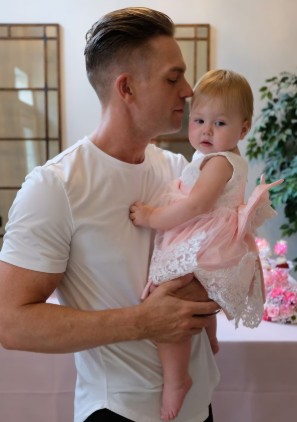
His fiancée, Kayla Thomsen, and their two-year-old daughter travelled to meet him when he arrived in Canada, first in Edmonton and then west.
The first thing he did when he saw them was hug them.
For now the family is staying at his parents' house in Kelowna.
The plan is Edmonton
They intend to head to Edmonton so Wright can try to pick up work with the same energy company he worked for in Texas.
He was born in the city. He'll be returning to it at 40, after most of a life spent somewhere else, to start over in the industry he already knows.
His case drew attention in Canada earlier this year while he was still in custody, when his father Jim told CTV News that agents had gone on the computer and found a misdemeanour from 22 years ago.
What he wants people to understand
Wright's point isn't about himself.
"So when people talk about how this just affects immigrants, it's wrong," he said. "It affects many American families and children as well."
His sons are American citizens. They stay in Texas.
Sources
Interview with Curtis Wright as reported by The Canadian Press
Earlier reporting on Wright's detention by CTV News
U.S. Immigration and Customs Enforcement removal figures






Comments
Conversation