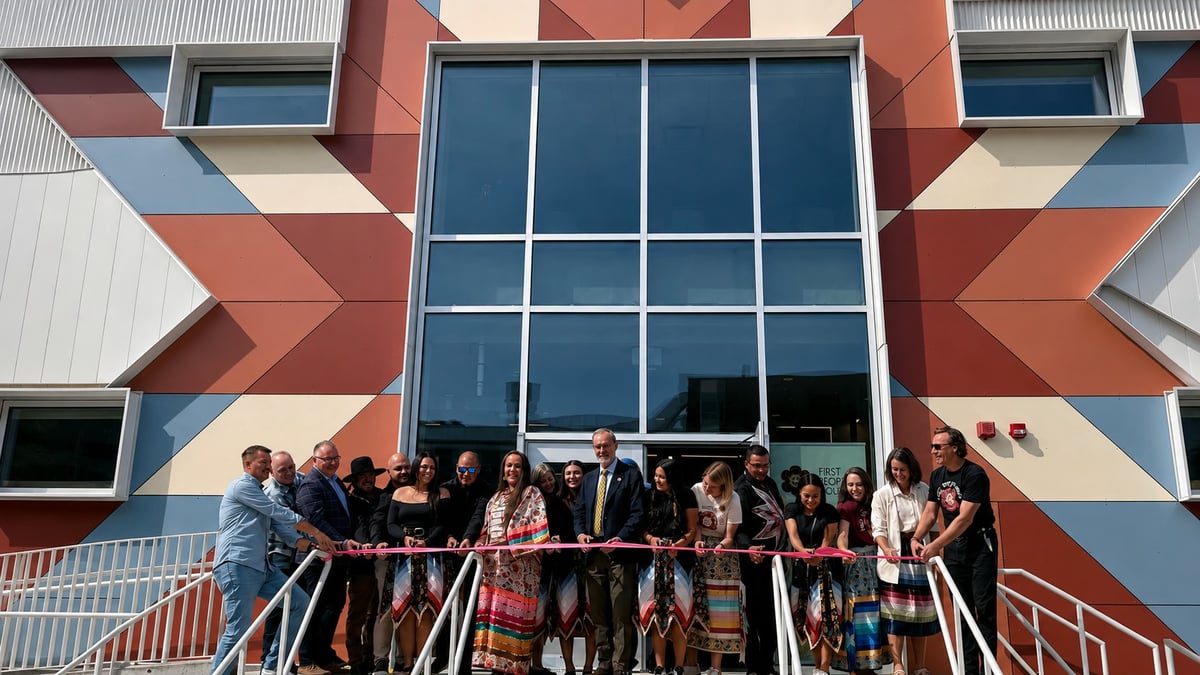
The new First Peoples' House has opened at the University of Alberta.
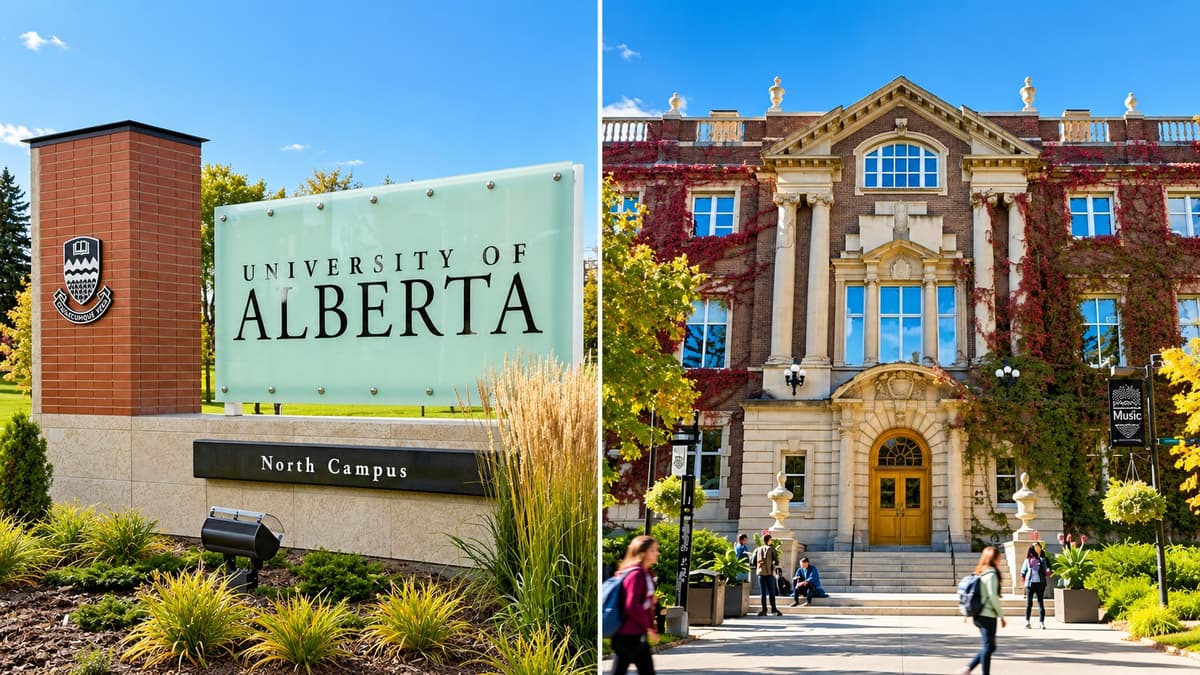
The space runs roughly 40,000 square feet inside Education Centre South on North Campus, carved out of what used to be the Herbert T. Coutts Library. Alberta's Major Projects registry lists the cost at $24 million, with Bird Construction as contractor and Reimagine Architects as designer. Work began with deconstruction of the old library in September 2023.
It's a renovation rather than a new build. What changed is the scale. The previous First Peoples' House was a fraction of this.
The door was the hardest part
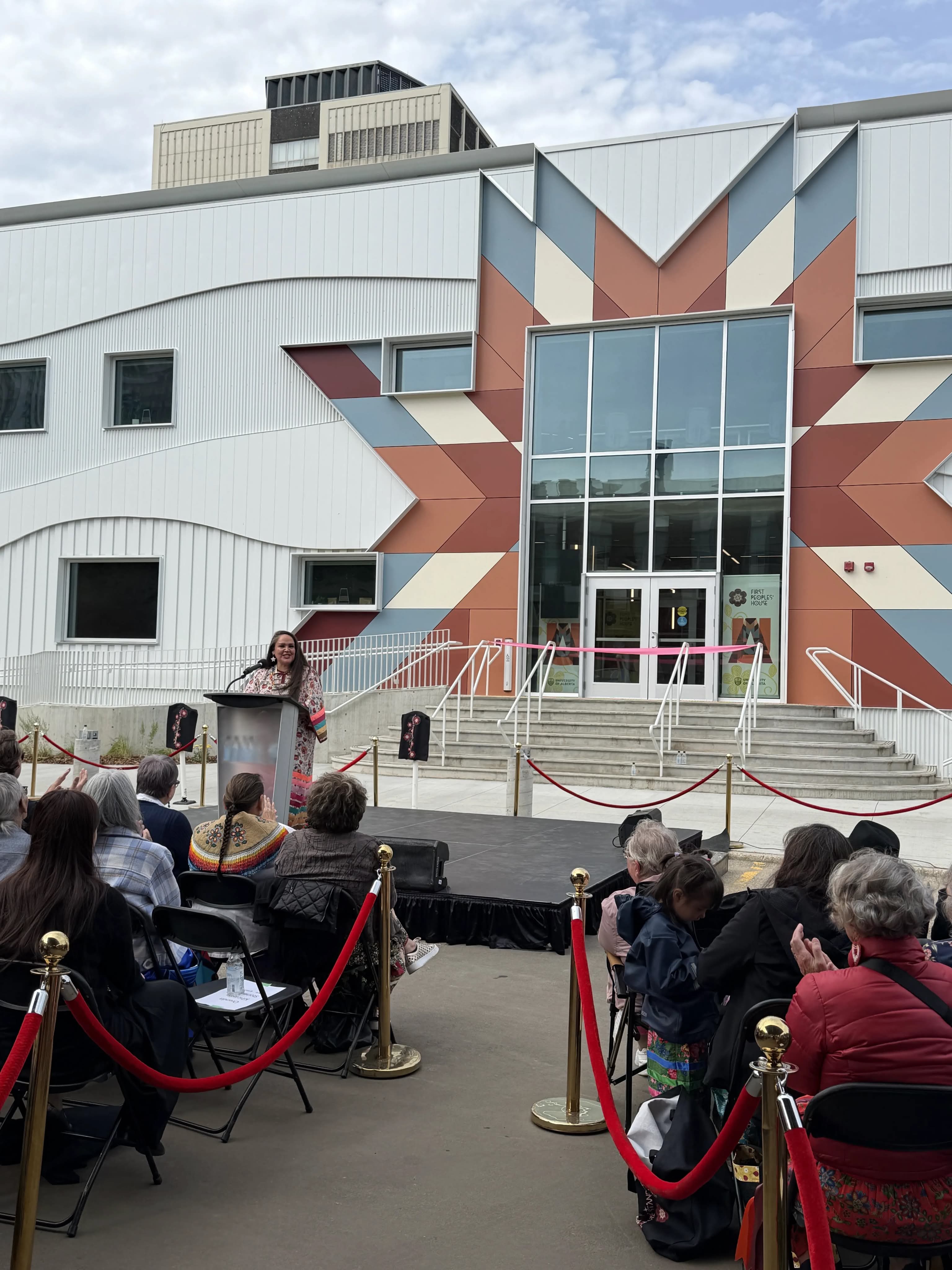
Shana Dion, assistant dean for First Nations, Métis and Inuit students, has spent years on this project. Writing about it in June, she singled out one element above the rest: the doorway.
She described it as the most difficult piece of the entire build to get right, and wrote that it isn't merely a door. She framed it as the release of a decades-old dam built by colonial systems, and said she thinks about the thousands of Indigenous scholars who will walk through it long after she is gone.
The point of the design is that First Peoples' House has a threshold of its own rather than sharing one.
What's inside
First Peoples' House is a student service centre, and the programming it holds is practical.
Learning specialists, writing mentors and tutoring. A university access program for First Nations, Métis and Inuit students who aren't positioned to enter a faculty through regular admissions. Four secured residence options offered jointly with Residence Services. Elders and knowledge keepers on staff.
There's also cultural and language programming, including Cree tutoring. The university has described First Peoples' House as a home away from home for a community of more than 1,400 Indigenous students.
The old space couldn't hold that. This one is meant to let it grow.
Forty years, three names
The university says First Peoples' House has been a gathering place for more than four decades. That's accurate, with a wrinkle.
By the U of A's own account, the service began as the Native Student Services Centre, became the Aboriginal Student Services Centre, and only later became First Peoples' House. Same continuity, three names, tracking how the institution's language about Indigenous students shifted over forty years.
Treaty 6, 150 years on
The opening falls inside the sesquicentennial of Treaty 6.
The first signing was August 23, 1876 at Fort Carlton, about 100 kilometres north of Saskatoon, between the Crown and Plains and Woods Cree bands. More First Nations joined days later at Chief Kamiscowesit's campsite on August 28, and a second major signing followed at Fort Pitt on September 9. Adhesions continued into the 1950s. Roughly 50 First Nations are party to the treaty today, covering almost 315,000 square kilometres of what is now central Alberta and central Saskatchewan.
Edmonton sits on that territory. So does the university.
Treaty 6 carried terms the previous five didn't, including protection against famine and pestilence and the medicine chest clause, which Indigenous leaders have long argued established a treaty right to health care. Whether Canada has honoured that remains a live legal and political question 150 years later.
A student services building doesn't settle any of that. But the timing isn't incidental, and the university has said so directly.
What hasn't been published
The university hasn't released a funding breakdown showing what share of the $24 million came from the province, the institution, and donors. A public fundraising campaign ran through the U of A's giving office, so at least part of it is philanthropic.
Sources
Alberta Major Projects, University of Alberta First Peoples' House — https://majorprojects.alberta.ca/details/University-of-Alberta-First-Peoples-House/11158
University of Alberta, First Peoples' House — https://www.ualberta.ca/en/first-peoples-house/index.html


Comments
Conversation