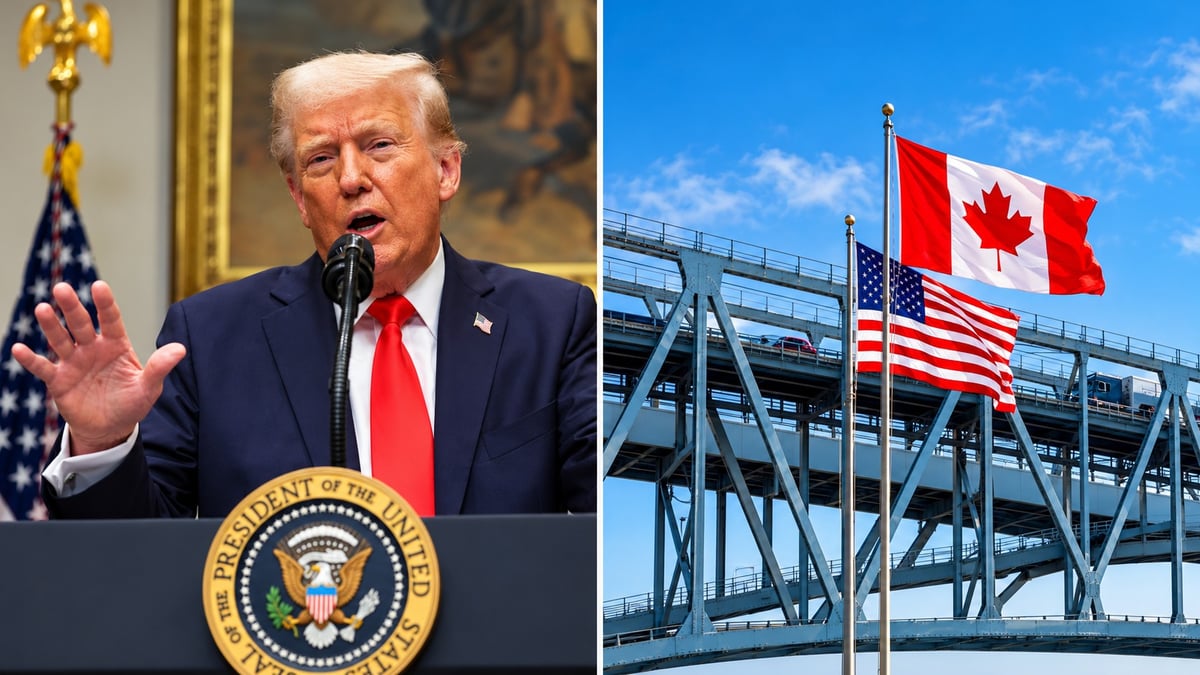
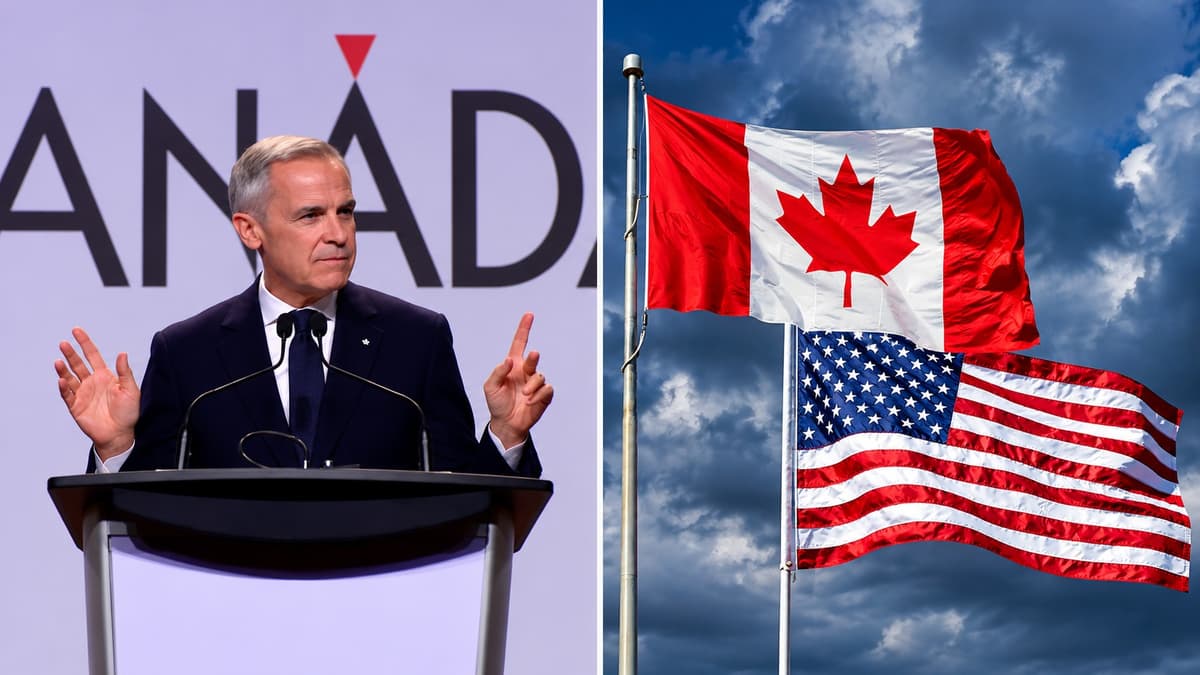
Donald Trump has an offer for Canada. Become the 51st state, and you can keep the hockey and the anthem.
“I do like their national anthem,” Trump told a rally crowd in Park City, Kansas, on Monday night. “And I promised them if they become a 51st state, which is actually what they said. I said, I will let you keep ice hockey, and I will let you keep your O Canada national anthem.”
“I like it,” he said. “So they can have it as a state anthem.”
Then he said he was kidding.
“No, we’re only kidding. We’re having a good time. But they have been screwing us, really. And they’re not doing it anymore. They say, let’s make a deal. How about a deal?”
The next day, the broader trade dispute took another turn. An American food importer filed a lawsuit challenging Trump’s 50% tariffs on certain Canadian goods.
An American company sues over the Canada tariffs
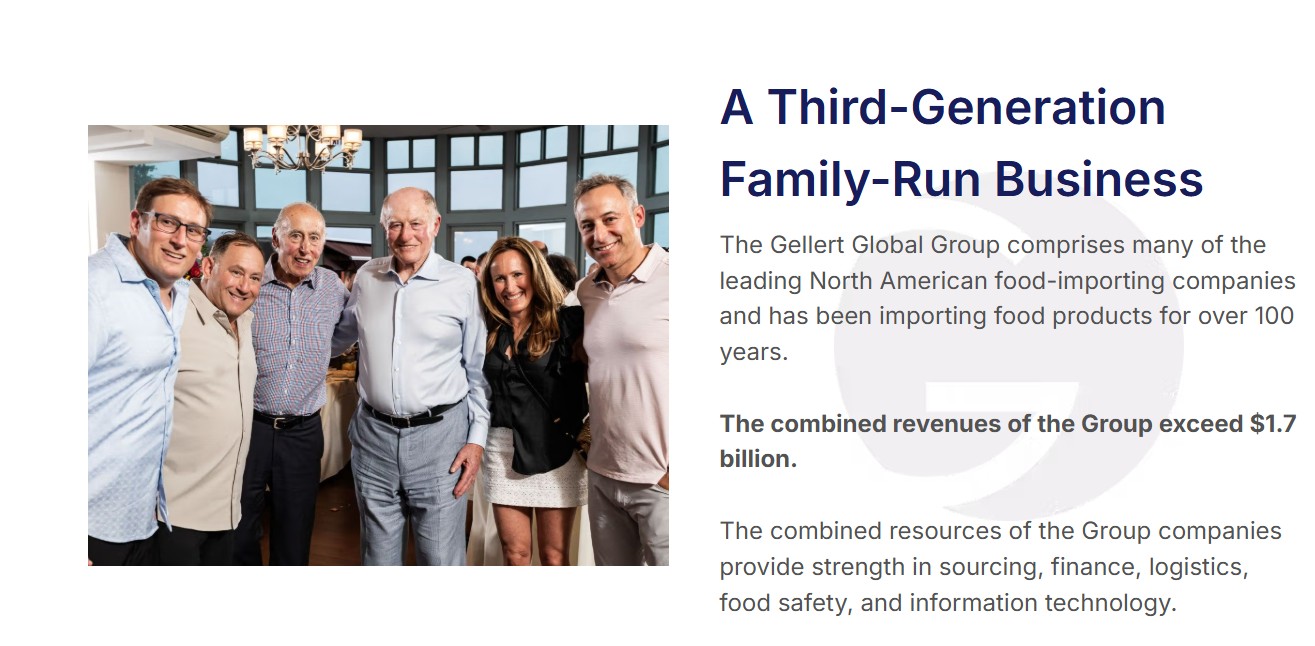
Gellert Global Group filed the lawsuit on Tuesday, Oct. 20, in the U.S. Court of International Trade. The case filing and court documents are posted here.
Gellert is a family-owned food importer based in Elizabeth, New Jersey. It supplies grocery stores, restaurants, hotels and manufacturers across the U.S.
It’s represented by the Liberty Justice Center, the non-profit legal group that helped beat Trump’s earlier tariffs at the U.S. Supreme Court.
“No president should have the power to pull a dormant statute off the shelf and use it to impose sweeping tariffs or import bans without the limits Congress required,” said Liberty Justice Center CEO Sara Albrecht.
The company wants the court to declare the tariffs illegal, stop their collection and order refunds with interest. It’s also asking to represent a wider class of American importers hit by the same duties.
The court hasn’t ruled.
The 1930 law behind the tariffs
The lawsuit targets Section 338 of the Tariff Act of 1930, part of the Depression-era Smoot-Hawley law.
It lets a president add tariffs of up to 50% on a country that discriminates against American commerce. According to the Liberty Justice Center, no president had used it to impose tariffs until this year.
Trump reached for it after the Supreme Court ruled in February that he couldn’t use an emergency powers law to impose tariffs. The court found that the power to tax imports belongs to Congress.
He used Section 338 to put 50% tariffs on a range of Canadian goods after trade talks broke down in August. In September, his administration added bans on other Canadian products, including motorcycles and some alcohol and dairy.
The White House points to provincial bans on U.S. liquor, Canada’s supply-managed dairy system and quotas on some U.S. vehicles.
What the lawsuit argues
Gellert’s lawyers make three main arguments.
First, they say Trump is reading Section 338 far too broadly. Congress later passed Section 301 of the Trade Act of 1974, which requires investigations and public input before the U.S. retaliates against unfair trade. The lawsuit argues a president can’t skip those steps by pulling out an older law.
Second, they say Canada’s policies don’t qualify. The auto quotas and liquor bans were Canada’s response to Trump’s own tariffs. Canada’s dairy system was agreed to under CUSMA, the trade deal Trump signed in his first term.
Third, they say the administration broke the law’s own rules. According to the complaint, Section 338 requires a 30-day wait before tariffs on newly added products can be collected. The administration added more Canadian goods, including cheeses Gellert imports, on Sept. 8. Collection started Sept. 15. That’s seven days.
These are the company’s claims. The government hasn’t filed its response.
American milk, Canadian brie, U.S. tariff
One example in the lawsuit shows how tangled this trade really is.
One of Gellert’s Canadian cheese suppliers buys milk from dairy farmers in upstate New York. The milk goes to Canada, becomes brie, then crosses back into the U.S. to be sold.
On the way back in, it now gets hit with a 50% tariff.
So it’s a tax on a Canadian product made with American milk, paid by an American company.
Why it matters for Canada
This case isn’t coming from Ottawa. It’s coming from an American business that says the tariffs are hurting it.
Trump says tariffs make other countries pay. In practice, the importer pays the duty at the border. On $100 worth of Canadian goods, a 50% tariff adds $50. The importer absorbs it, squeezes the supplier or passes it on to shoppers.
If Gellert wins, the ruling could reach other importers paying the same tariffs, depending on how broadly the court decides. For Canadian exporters, the ruling could determine whether the additional 50% duty remains on products covered by the challenged measures.
The numbers behind “screwing us”
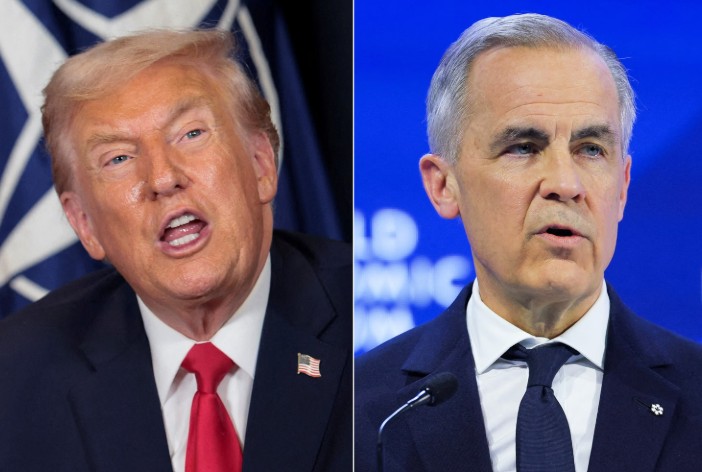
At the Kansas rally, Trump claimed the U.S. loses $90 billion a year on Canada. In Arizona five days earlier, he put it at “80, 90, 100 billion.”
The U.S. Trade Representative’s own figures are much lower. In 2025, the U.S. ran a goods deficit of about US$48.3 billion with Canada and a services surplus of about US$27.7 billion. That’s an overall deficit of about US$20.6 billion.
A trade deficit also isn’t a loss. It’s the gap between what one country buys from another and what it sells to it.
He said it the night Alberta voted
Trump spoke on Oct. 19, which was referendum night in Alberta.
While he talked about Canada joining the U.S., Albertans were voting overwhelmingly to stay in Canada. Preliminary results show about 76% chose to remain. The referendum didn’t ask about joining the United States, and Trump didn’t mention Alberta.
It was his second 51st-state pitch in a week. In Bullhead City, Arizona, on Oct. 14, he said Canada would “end up being the 51st state because it’s the only way it works.”
“We don’t need them, but they need us,” he told that crowd. Read what Trump said in Arizona.
What happens next
Gellert has asked for a preliminary injunction, which could pause collection of the tariffs while the case plays out. It has also asked for summary judgment, which would let the court decide without a full trial.
A win wouldn’t automatically end Trump’s Canada tariffs. Any ruling could be appealed.
For now, the 50% tariffs stay in place. Canada and the U.S. haven’t announced a return to talks since August.
Trump says he wants a deal. A U.S. court will now decide whether the law he used to pressure Canada actually gives him that power.
Sources
Roll Call Factba.se, transcript of Trump’s rally in Park City, Kansas, Oct. 19, 2026: https://rollcall.com/factbase/trump/transcript/donald-trump-speech-midterm-political-rally-park-city-kansas-october-19-2026
Liberty Justice Center, Gellert Global Group Corp. v. Trump (case page and filings): https://libertyjusticecenter.org/cases/gellert-global-group-corp-v-trump/
Liberty Justice Center news release, Oct. 20, 2026: https://libertyjusticecenter.org/pressrelease/ljc-sues-over-trumps-revival-of-1930-tariff-law/
Office of the U.S. Trade Representative, Canada: https://ustr.gov/countries-regions/americas/canada


Comments
Conversation