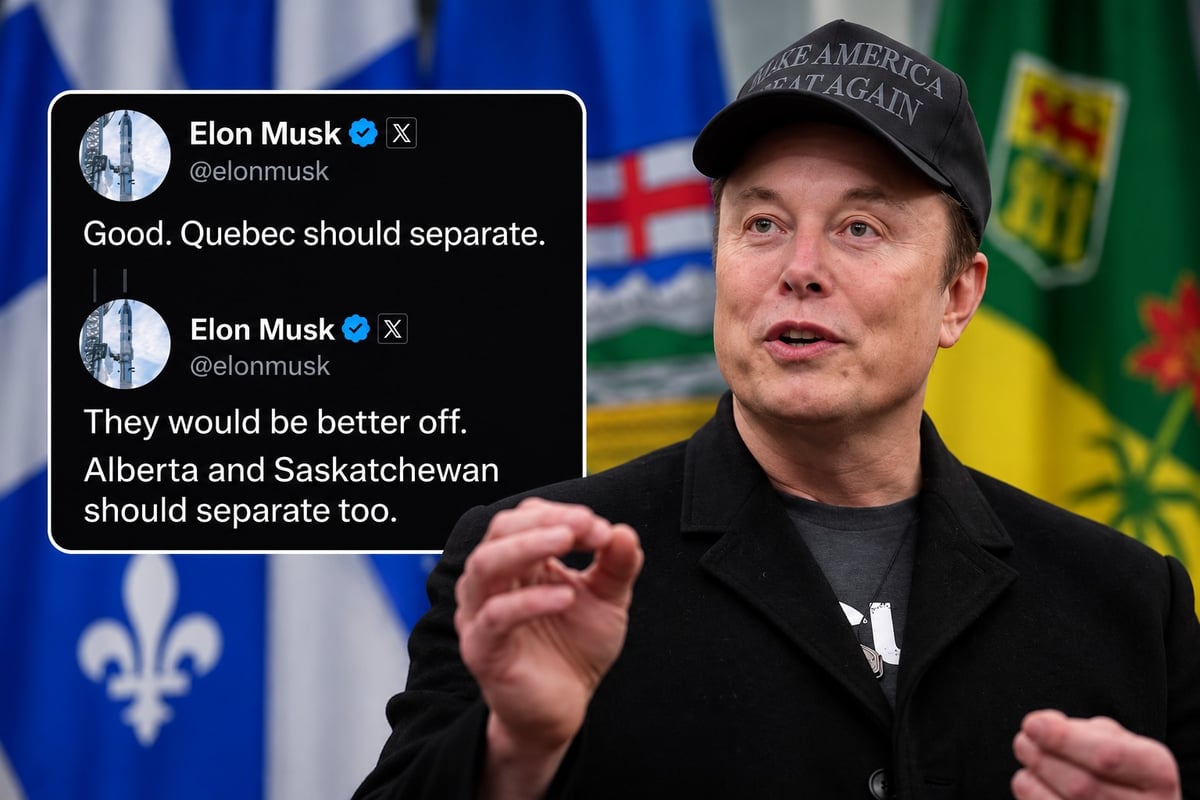
Elon Musk says Alberta, Saskatchewan and Quebec should leave Canada.
"Good. Quebec should separate," the billionaire wrote on X on Wednesday, Oct. 7.
Then he added: "They would be better off. Alberta and Saskatchewan should separate too."
Two premiers answered him the same day.
Saskatchewan Premier Scott Moe posted one word: "No."
Alberta Premier Danielle Smith's office said: "Our government, our Caucus, and our party support Alberta remaining in Canada."
Albertans vote in a referendum on their province's future in 12 days.
It started with Quebec
Musk was replying to a post from Polymarket, an online prediction market, about Quebec's premier-designate, Paul St-Pierre Plamondon.
St-Pierre Plamondon's Parti Québécois, which wants Quebec to become its own country, won Quebec's election on Monday, Oct. 5, with 59 seats, short of a majority. He's said Quebec independence "will be realized one day."
He has promised a referendum on independence, but says he won't hold one while U.S. President Donald Trump is in office, pointing to the uncertainty around Quebec and Canada's relationship with the U.S.
Moe's one-word answer
Moe has called himself a committed Canadian, while also saying he wouldn't stop Saskatchewan residents from seeking a vote on separation if they meet the province's rules.
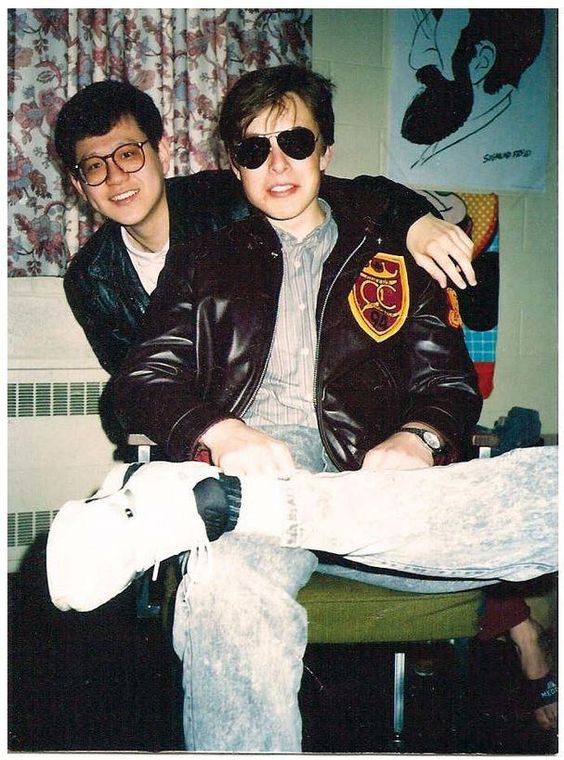
Musk telling Saskatchewan to leave has a personal twist. His mother, Maye Musk, was born in Regina in 1948. Musk is a Canadian citizen through her, and studied at Queen's University in Kingston, Ont., before moving to the U.S.
It's also not the first time he's weighed in on Alberta. In April, he voiced support for Alberta leaving Canada.
Musk's Canadian roots
Musk telling Saskatchewan to leave has a personal twist.
His mother, Maye Musk, was born in Regina in 1948. Musk is a Canadian citizen through her.
He moved to Canada from South Africa in 1989, at 17. Before university, he worked odd jobs, including on a relative's farm in Saskatchewan, according to his biographers.
He then enrolled at Queen's University in Kingston, Ont., in 1990, and studied there for two years before transferring to the University of Pennsylvania in 1992. He's called himself "half Canadian."
It's not the first time he's weighed in on Alberta. In April, he voiced support for Alberta leaving Canada.
What Albertans are voting on
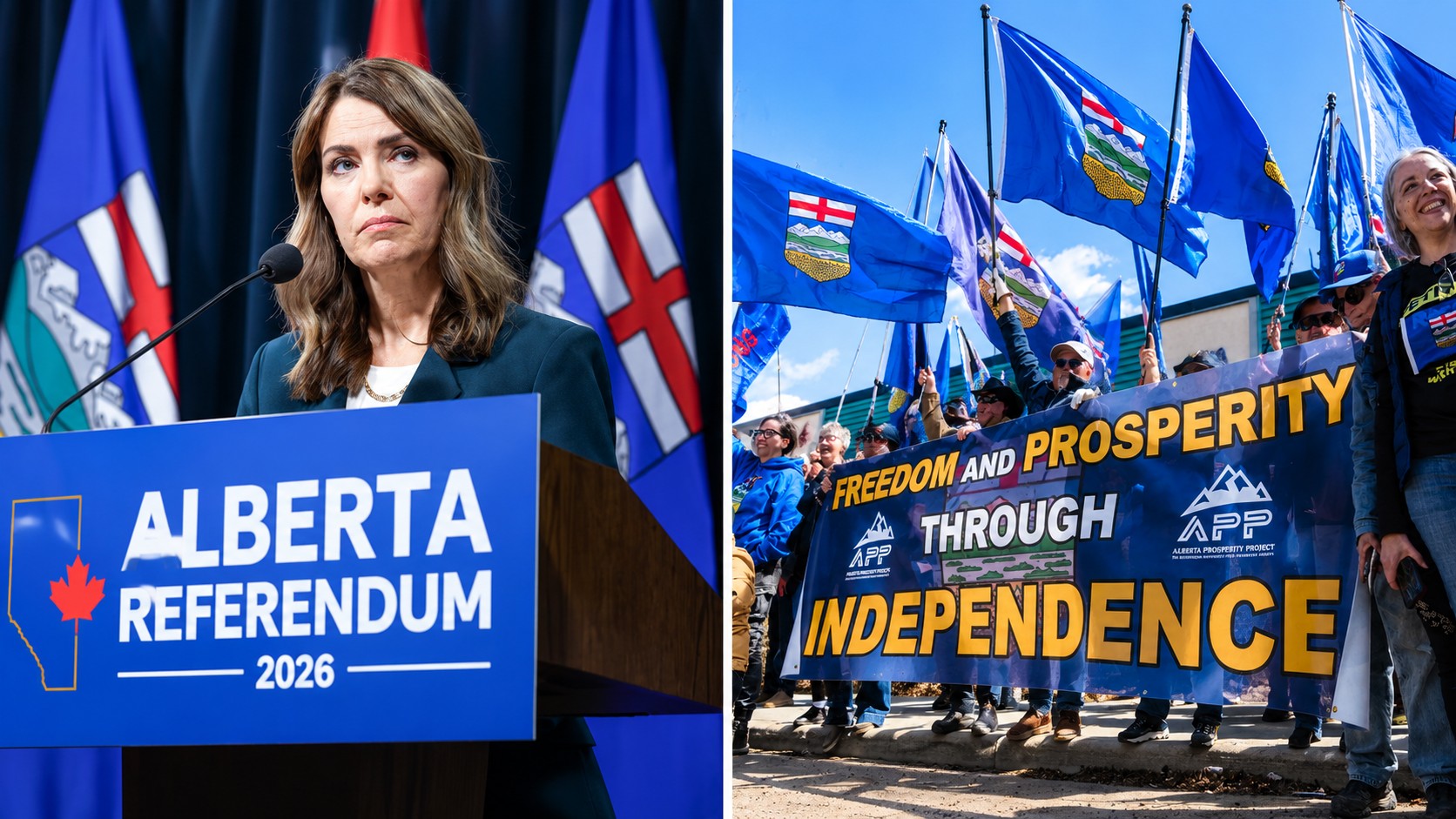
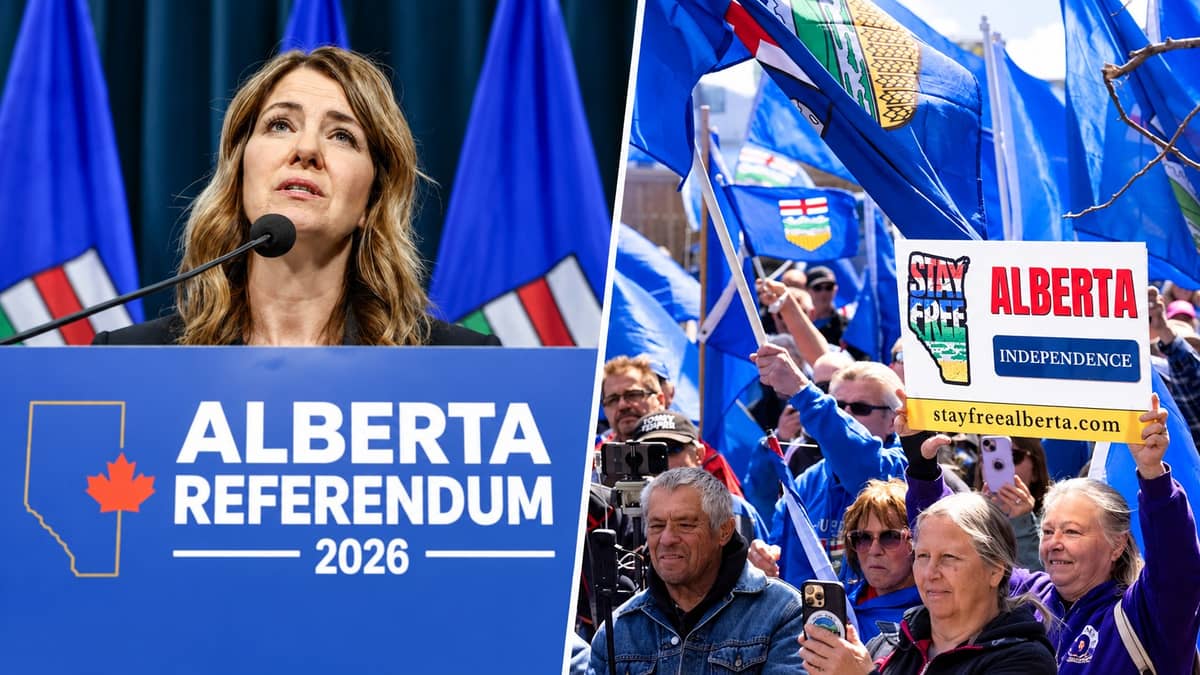
Albertans aren't voting directly on independence on Oct. 19. They're voting on whether to take a step toward that vote.
The referendum has 10 questions. Question 10 asks:
"Should Alberta remain a province of Canada, or should the Government of Alberta commence the legal process required under the Canadian Constitution to hold a binding provincial referendum on whether or not Alberta should separate from Canada?"
Option 1: Alberta remains a province of Canada.
Option 2: Alberta starts the legal process toward a future binding referendum on separation.
The result of Question 10 is not binding. An Option 2 win wouldn't make Alberta independent. It would start a process toward a second vote that asks about separation directly.
Even though it's numbered 10, it will be the first ballot voters get. Each question is on its own colour-coded ballot, according to Elections Alberta.
Smith has said she'll vote for Option 1, to stay in Canada.
What the polls showed
An Ipsos poll conducted May 28 to June 1 found 72 per cent of Albertans would vote to stay in Canada, and 19 per cent would vote to move toward a binding separation referendum. The rest were undecided, wouldn't vote, or didn't answer.
That poll is several months old, and a lot of campaigning has happened since.
Interest is high. Elections Alberta received just over 658,000 special ballot applications, and approved more than 652,000. Our coverage of that is here.
In the middle of a trade fight
Musk is based in the U.S. and was an adviser to Trump, whose administration is in a tariff dispute with Canada. Last week, U.S. Trade Representative Jamieson Greer said some issues with Canada remain "difficult" to resolve.
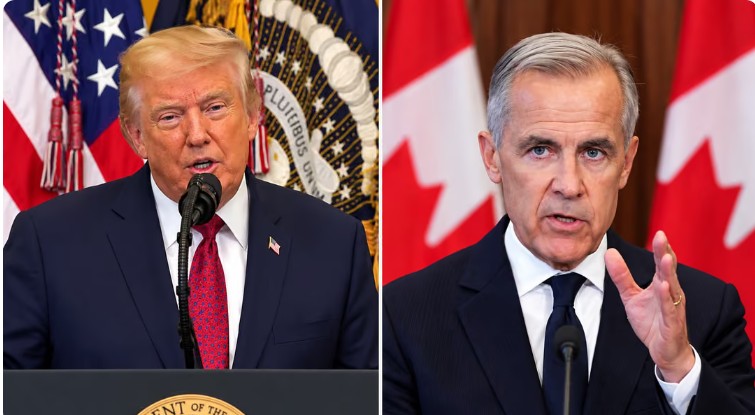
Days before Musk's posts, Prime Minister Mark Carney and Smith announced Pacific Link, a proposed pipeline to carry another one million barrels of Alberta oil a day to the B.C. coast. Ottawa says it will reduce Canada's dependence on the U.S. as an oil customer. Read our coverage here.
Separatists' U.S. contacts under scrutiny
On the weekend, a Globe and Mail investigation reported that Republican operatives from Michigan met Alberta separatists in Calgary earlier this year, and that separatist leaders discussed offering the U.S. access to Alberta water and oil royalties.
Separatist leaders have denied the water and oil claims. A White House official told the Globe "no support or commitments were conveyed." Read our coverage here.
Smith's office later said she knew nothing about the Calgary meeting, which involved Mitch Sylvestre, a UCP riding president who also leads the Alberta Prosperity Project. Read that story here.
There's no indication Musk's posts are connected to those meetings.
Canada has been here before
Quebec has voted on independence twice.
In 1980, about 60 per cent of Quebecers voted no.
In 1995, it was much closer. The no side won with 50.58 per cent, to 49.42 per cent for yes. Fewer than 55,000 votes separated them.
After that near miss, Parliament passed the Clarity Act in 2000. It says Ottawa will only negotiate a province leaving Canada if a referendum asks a clear question and a clear majority votes yes.
The law doesn't set a number for a "clear majority." The House of Commons would weigh the size of the majority, voter turnout and other factors.
Even then, a province can't leave on its own. The Act says it would take a constitutional amendment and negotiations involving Ottawa and the provinces, covering things like debt and assets, borders, minority rights, and the rights and land claims of Indigenous peoples.
The treaty question
That last point has already reached Alberta's courts.
Much of Alberta is covered by Treaties 6, 7 and 8, agreements between First Nations and the Crown. First Nations leaders have argued a provincial vote can't take treaty lands and peoples out of Canada.
Earlier this year, an Alberta judge ruled that a citizen-led separation referendum couldn't go ahead without consulting First Nations, because of its possible effect on treaty rights. The province appealed.
On May 21, Smith announced her government would put its own question on the Oct. 19 ballot. She argued that because it doesn't itself trigger separation, and only asks whether to start the legal process toward a future vote, the court ruling wouldn't stop it.
Smith has said any process involving Alberta's future must respect the rights of First Nations, Métis and Inuit peoples, and uphold Treaties 6, 7 and 8.
Treaty 6 organizers have been running workshops and voter registration drives to get First Nations members to the polls.
When to vote
Advance voting runs Oct. 13 to 17. Voting day is Monday, Oct. 19.
Sources
Elon Musk, posts on X, October 7, 2026
Scott Moe, post on X, October 7, 2026
Referendum, Elections Alberta
Important referendum information, Elections Alberta, May 2026
Premier's address to the province, Government of Alberta, May 21, 2026
Clarity Act, Government of Canada
Ipsos, Alberta referendum polling, June 2026
Danielle Smith's statement as reported by The Globe and Mail. Quebec election results and St-Pierre Plamondon's comments as reported by CTV News and TVA Nouvelles.
Comments
Conversation