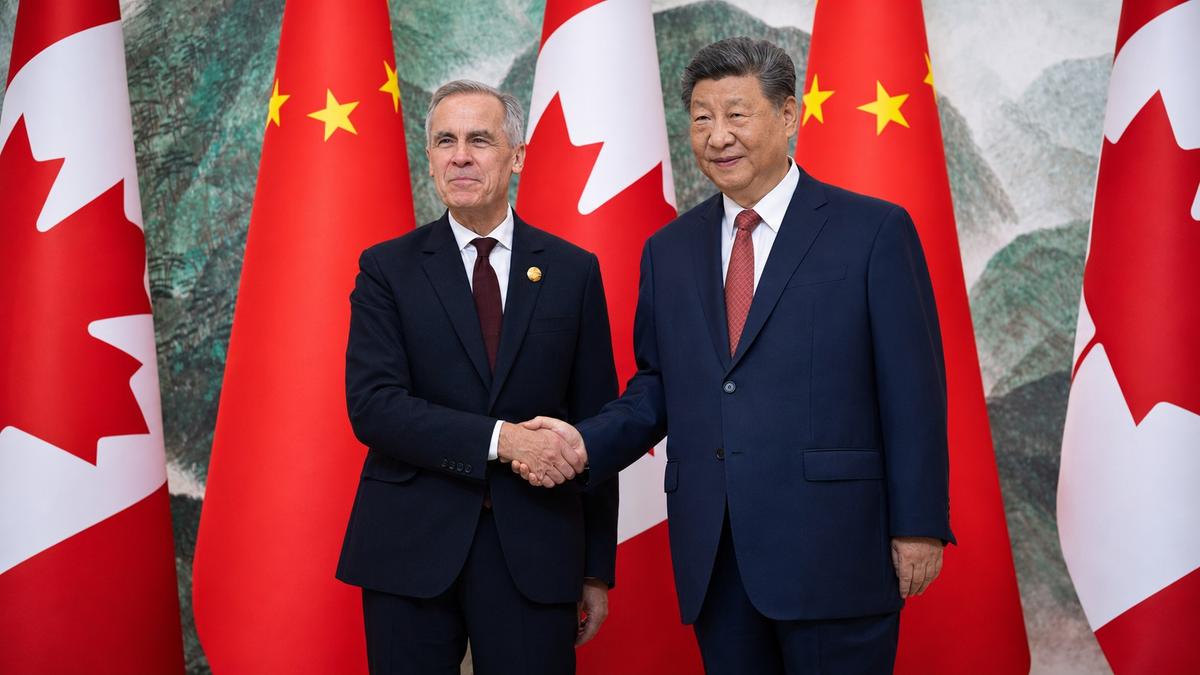
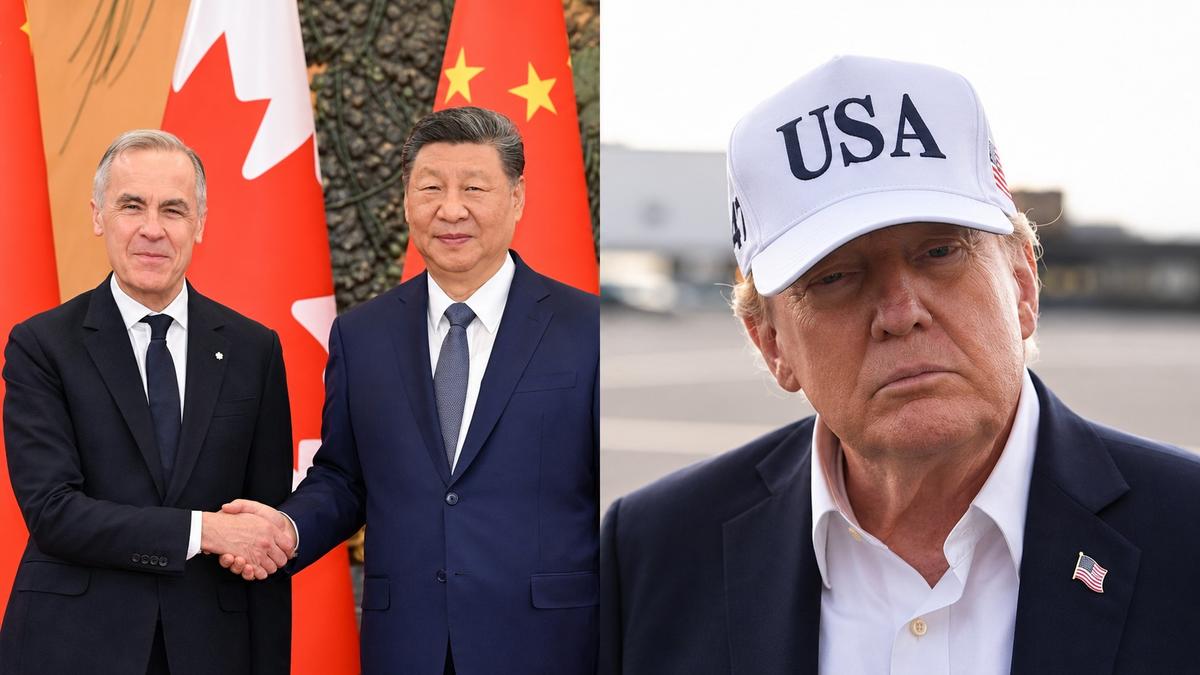
Mark Carney met two presidents in Shenzhen in two days, and came away with two very different results.
On Tuesday, he and Chinese President Xi Jinping agreed to drop tariffs on about $400 million of Canadian pork and seafood.
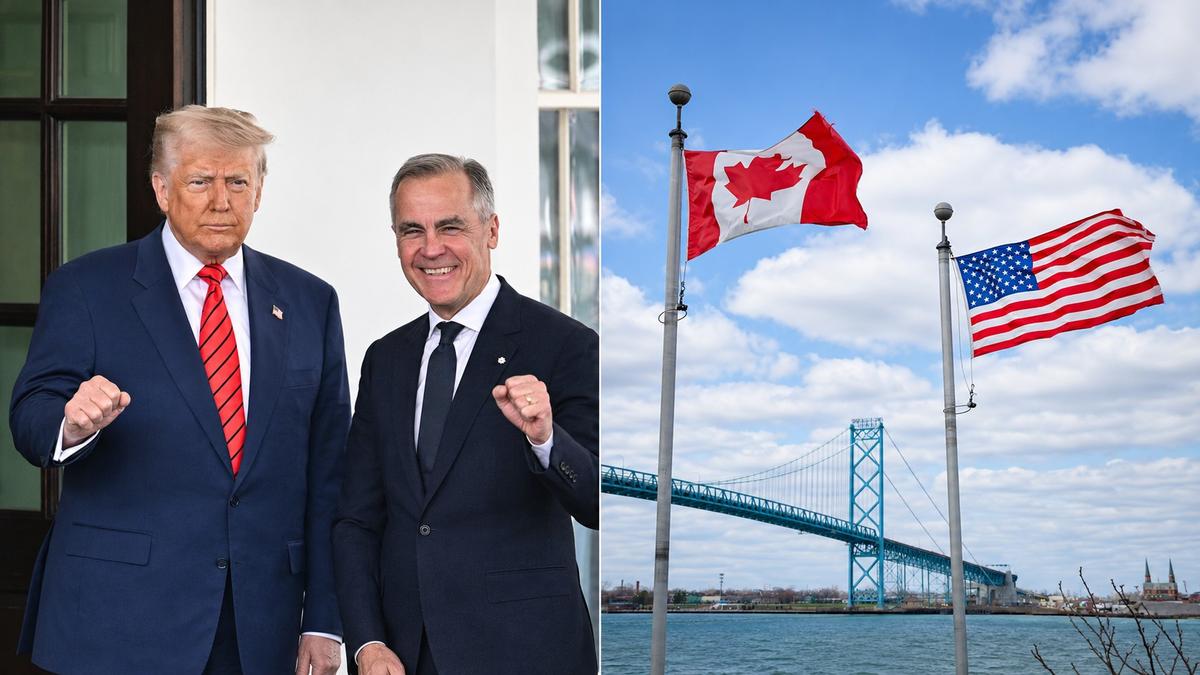
On Wednesday, he and U.S. President Donald Trump agreed to keep talking.
No tariffs were lifted. No timeline was given.
“We would like to do the deal. But if the U.S. doesn’t want to do the deal, we’re busy,” Carney said hours later, speaking remotely to The New York Times’ DealBook Summit, The Canadian Press reported.
Twenty minutes with Trump
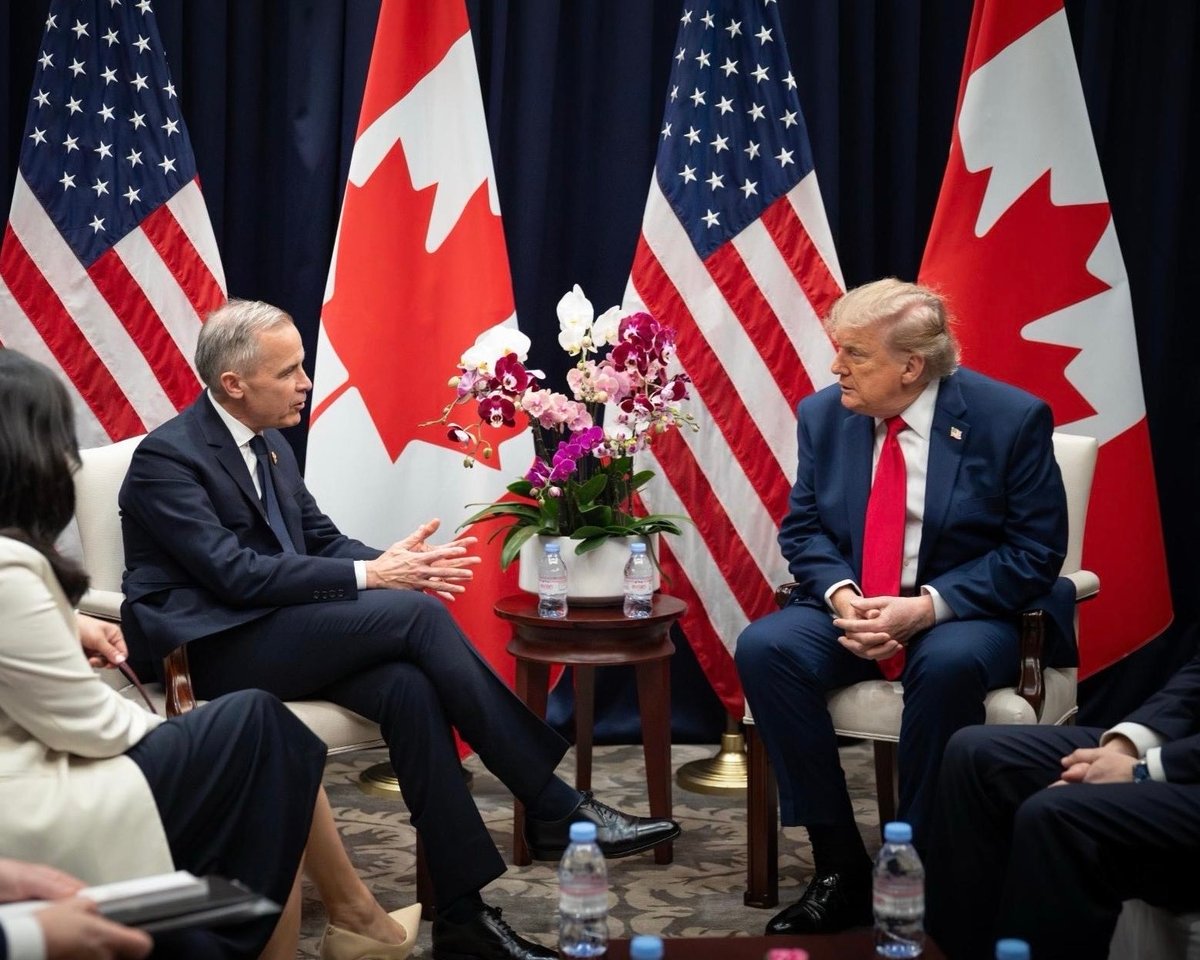
The meeting wasn’t on Carney’s public schedule. The two leaders spoke for just under 20 minutes around dinnertime in Shenzhen, on the sidelines of the Asia-Pacific Economic Cooperation summit, according to Carney’s office.
It was a full table. On the U.S. side were Trade Representative Jamieson Greer, Commerce Secretary Howard Lutnick, Secretary of State Marco Rubio and Stephen Miller, identified by Carney’s office as Trump’s chief of staff. Foreign Affairs Minister Anita Anand and Carney’s chief of staff, Marc-André Blanchard, joined him for Canada.
“The leaders discussed the work underway to reach a mutually beneficial trade agreement that would create good jobs, boost affordability, and fully respect Canada’s languages, culture and sovereignty,” the readout from Carney’s office said. “They agreed to continue the work and to stay in close contact.”
Carney called it a “nice discussion” and “reasonably direct.” He also made clear it didn’t get a deal over the line.
“Look, it should have been done six months ago, but, we’re not going to sign something that doesn’t make sense for Canada,” he said.
What Canada wants lifted
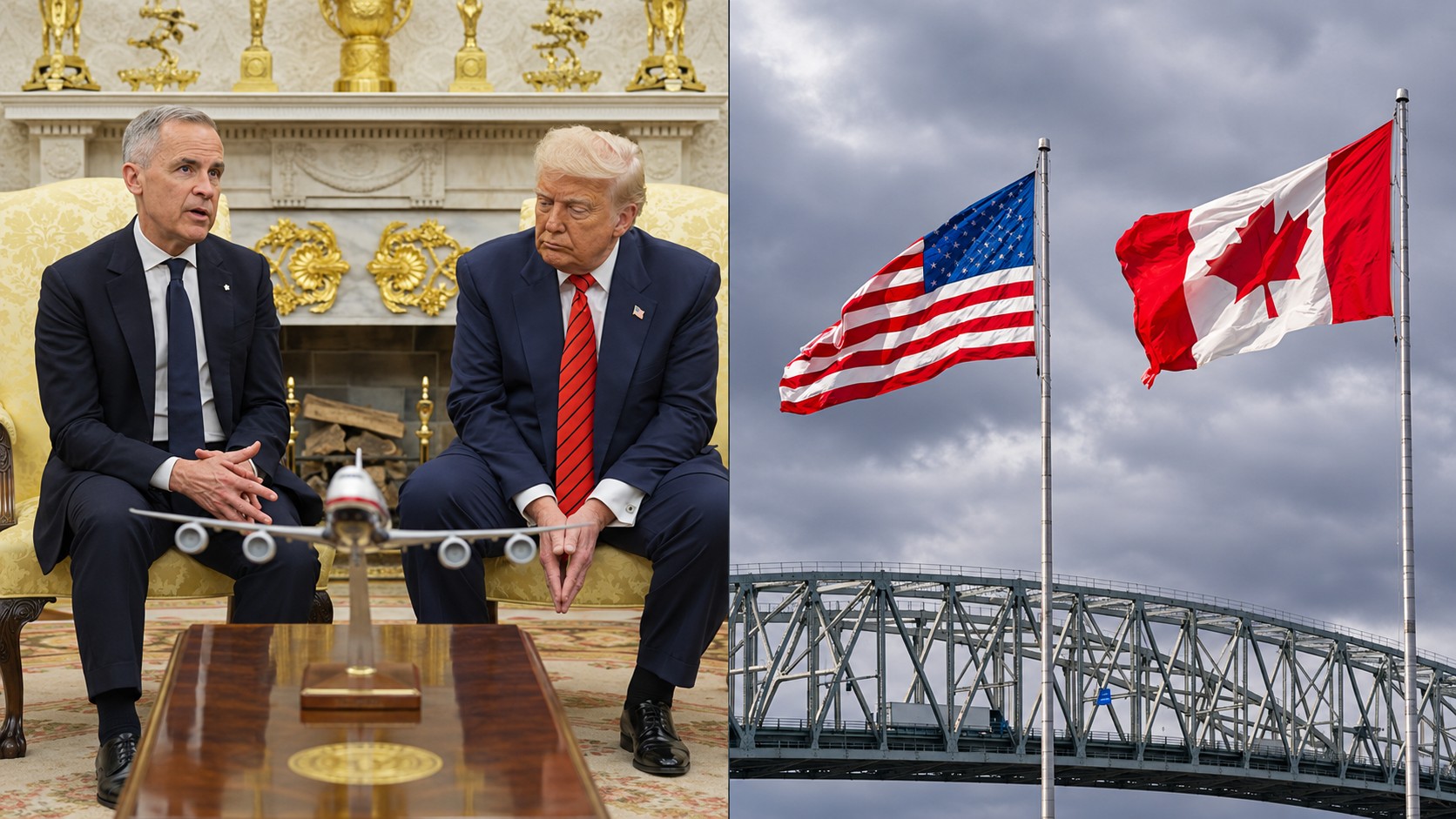
Ottawa is pushing on two sets of tariffs.
The first are Trump’s Section 232 tariffs on autos, steel, aluminum, softwood lumber and other products. Those have cost jobs and closed plants across Canada.
The second are the 50 per cent tariffs the U.S. put on a range of Canadian goods in August, after talks between the two countries collapsed. Canada walked away from those talks, and both sides accused the other of making last-minute changes. Canada answered with its own tariffs on about 700 American products.
“We continue to have a series of issues there,” Carney said. “There is a very, very good trade arrangement that is possible. We had an existing one under (the Canada-U.S.-Mexico Agreement). There is one under the new trade policy that is possible, but we’re not yet there.”
“Exceptionally well” with China
Carney drew a sharp contrast with China.
“I can report that the trade negotiations are going exceptionally well,” he told DealBook. “We reached an agreement, we reduced tariffs and over 90 per cent of trade irritants. And, of course, I’m speaking about our trade negotiations with China.”
On Tuesday, Xi agreed to drop China’s extra 25 per cent tariffs on most frozen pork cuts, shrimp, halibut and other seafood through 2028. Canada extended tariff breaks on some Chinese steel and aluminum in return. We broke down what the China deal means for Canadian farmers and fishers.
Earlier in the day, Carney said he didn’t think Trump was uncomfortable with Canada’s growing trade with China. In the “hierarchy of issues” between the two countries, he said, China is “not the top issue at all.”
He said Canada is focused on selling China commodities like iron and oil, not sensitive advanced technology.
Canada is busy
Carney’s “busy” line comes at the end of a nine-day trade trip through Europe and Asia.
On that trip, Canada wrapped up two free trade deals in a single day: one with the Philippines and one with the 11-member Association of Southeast Asian Nations. Together they’re a $6-trillion market. Both are set to be signed next year.
Carney said a free trade deal with India could come within the next three months. Canada already has free trade access to economies with about two billion people, he said, and that’s set to reach three billion.
Asked about Trump’s claim in October that the U.S. “holds all the cards,” Carney didn’t hesitate.
“Our cards are that everyone else in the world wants to deal with us,” he said. Canada aims to double its trade outside the U.S. within 10 years.
“Deeper integration with one partner is a huge risk,” he said, calling diversification “insurance.”
“I’m not saying the transition is easy. It’s not, there are challenges there.”
The midterms didn’t change Canada’s view
Democrats won both chambers of Congress on Nov. 3, and many have said Trump’s Canada tariffs are near the top of their list. We covered the pressure building on the tariffs in Washington.
Did the results change anything for Canada? “No, is the short answer,” Carney said.
“What will change views is policy decisions that are taken and that will stick,” he said. “It will take action as opposed to intent.”
Even with a deal, Carney said Canada doesn’t want to slide back into ever-deeper dependence on the U.S. He pointed to Trump’s talk of annexing Greenland and making Canada the 51st state.
“You can’t go through Greenland. You can’t go through 51st state. You can’t go through Ukraine and Starlink and responsibly hold that assumption 100 per cent,” he said. “That’s a very difficult reality. But it is reality.”
Conservatives say Canada should lean into the U.S.
The Conservatives aren’t buying the China pivot.
Conservative trade critic Stephanie Kusie said it’s “always concerning” to see the government engage with China, given its human rights record and past tariffs on Canada. She said diversifying trade is good, but accused Carney of using it as a “distraction” from failing to get a U.S. deal.
Canada’s relationship with the U.S. is “far more significant” through “history and geography,” Kusie said, “and we should be leaning into that, not into a nation which does not promote democracy, human rights, the rule of law.”
Conservative industry critic Adam Chambers warned against “playing chicken” with Washington.
“If the prime minister thinks it’s smart to play chicken with a U.S. administration that has a lot of leverage and harm it may choose to impose on Canada, the government should be very careful about doing that,” he said.
Canadians are skeptical of a quick fix too. A recent Nanos poll found most Canadians won’t accept a U.S. deal that keeps tariffs in place.
What it means for Alberta
Alberta has more riding on a U.S. deal than most provinces. The U.S. is by far its biggest customer, and Alberta’s oil, gas and potash have so far been largely spared from Trump’s newest tariffs.
China matters too. Alberta farmers are among the biggest winners of this year’s deals with Beijing, which brought back access for canola and peas. Carney’s focus on selling China commodities like oil also plays to Alberta’s strengths.
For now, the U.S. door stays half open, and Canada keeps knocking on others.
What to watch next
Jan. 1: Trump’s 50 per cent tariffs on Canadian cars, trucks and parts are set to start.
Jan. 3: The new Democratic-controlled Congress is sworn in.
Early 2027: A possible free trade deal with India.
2027: Canada plans to sign its deals with the Philippines and ASEAN, and send a major trade mission to China.


Comments