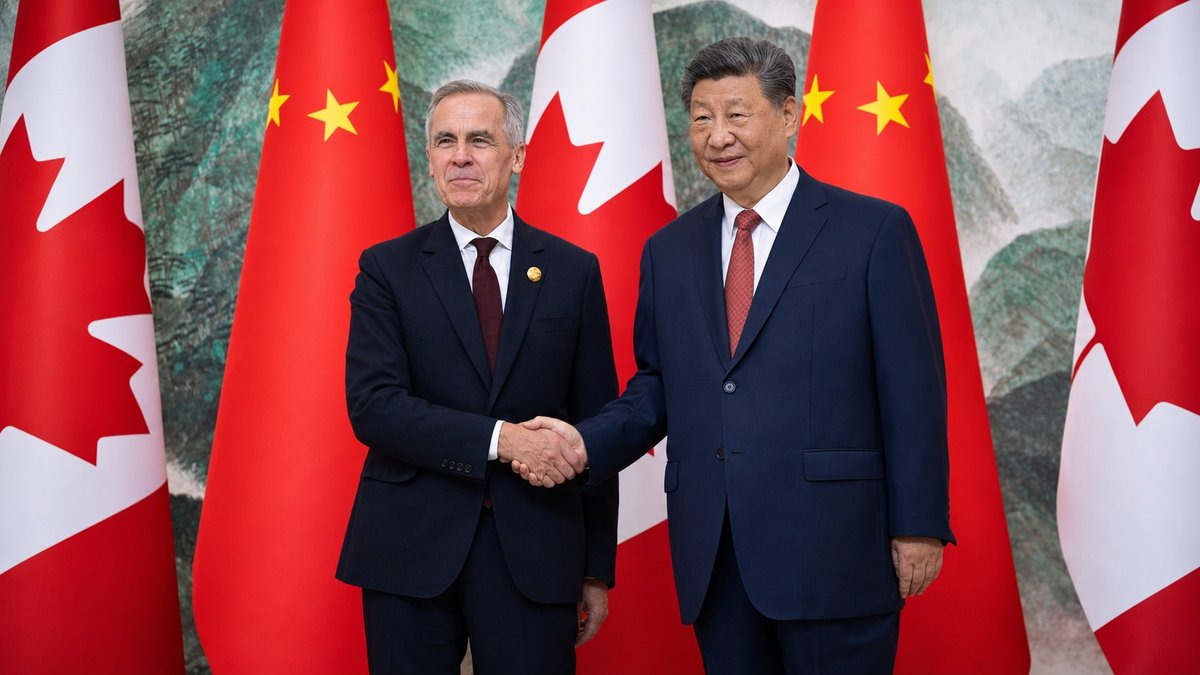
China will drop its extra tariffs on about $400 million worth of Canadian frozen pork and seafood for the next two years, after Prime Minister Mark Carney met Chinese President Xi Jinping in Shenzhen on Tuesday.
Canada is giving something back. Ottawa will extend tariff breaks on 32 Chinese steel and aluminum products through the end of 2028.
“Canada and China have recalibrated our relationship to the benefit of citizens in both countries,” Carney said in a statement. “We have unlocked billions in new export orders for Canadian farmers, ranchers, and fish harvesters.”
Ottawa says that since January, Canada has restored market access for more than 90 per cent of the trade China had hit with tariffs, worth nearly $7.5 billion in Canadian exports.
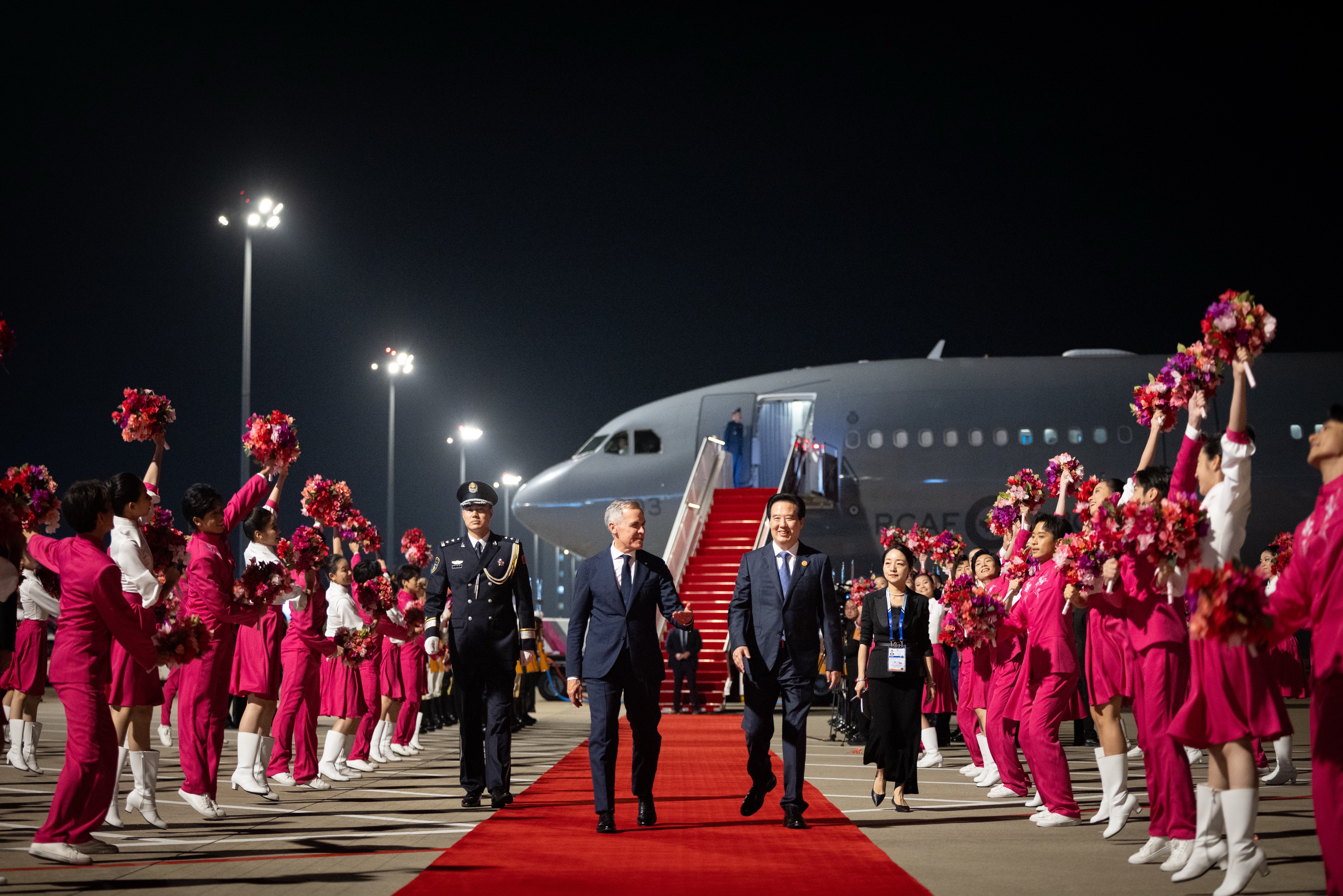
It’s a fast turnaround. Ten months ago, the two leaders hadn’t met officially in more than eight years. Now Carney says he wants Canada’s trade with China to grow 50 per cent by 2030. Foreign Affairs Minister Anita Anand joined him in Shenzhen, where he is attending the APEC leaders’ summit.
What Canada gets
China will suspend its 25 per cent “anti-discrimination” tariffs on these Canadian exports from Jan. 1, 2027 to Dec. 31, 2028:
| Product | 2024 export value |
|---|---|
| Most frozen pork cuts | $116 million |
| Greenland halibut | $96 million |
| Frozen cold-water shrimp and prawns, including B.C. spot prawns | $87.5 million |
| Certain molluscs, including geoduck | $61.4 million |
| Sea cucumber | $39.4 million |
Together, that’s about $400 million in trade: $116 million in pork and $285 million in fish and seafood. That’s the value of the exports covered, not money saved or new sales guaranteed. The relief from January’s deal was set to run out at the end of 2026, so the main thing exporters get is two more years of certainty.
It builds on a separate extension announced earlier this month, which kept tariff relief in place through 2028 for canola meal, peas, lobster and crab.
What Canada gave up
In 2024, Canada put a 25 per cent surtax on Chinese steel and aluminum. A remission program refunds that surtax on certain products.
Ottawa is now extending that program to the end of 2028 and expanding it to 32 more tariff items: 23 steel and nine aluminum. The government says they are all products where Canadian supply is “insufficient or unavailable.”
It’s a narrow exception, not a wholesale tariff cut. But the timing is sensitive. Canadian steelmakers are already under heavy U.S. tariffs, and Washington has long accused China of flooding global markets with cheap steel.
Why Alberta should care
Agriculture is where China matters most to Alberta, and canola shows the stakes.
When China hit Canadian canola with heavy tariffs, Alberta felt it immediately. According to ATB, Alberta’s canola exports to China dropped 59 per cent in 2025, from $1.6 billion to $638 million. China fell from buying 37 per cent of Alberta’s canola to 18 per cent.
That started to turn around after January’s deal. China removed its 25 per cent tariff on canola meal and cut its tariff on canola seed from 75.8 per cent to 15 per cent, effective March 1. A 100 per cent tariff on canola oil stayed in place.
China is also a major buyer of Alberta’s other crops. It was the biggest customer for Alberta wheat last year, and it bought 38 per cent of Alberta’s barley and malt exports.
For farmers, Tuesday’s deal doesn’t open new doors so much as keep existing ones from closing. That matters when you’re deciding what to plant next spring.
How big China is for Canada
China isn’t a side market. According to the federal government:
Trade in goods between Canada and China reached $125.6 billion in 2025, up 5.6 per cent from 2024.
China bought $35.1 billion of Canadian goods in 2025.
China is the fourth-largest foreign investor in Canada, with $43.4 billion invested here. Canadian investment in China is $15 billion.
Ottawa says trade with China adds $6.9 billion to Canada’s GDP and supports hundreds of thousands of jobs, from Prairie farms to Atlantic fisheries.
Exports to China are up 40 per cent this year
The numbers are moving. Canadian exports to China have risen about 40 per cent since January, according to Statistics Canada. Oil, canola and peas have seen big increases.
That’s partly the result of January’s other big trade-off. Carney cut Canada’s 100 per cent tariff on Chinese electric vehicles to 6.1 per cent, for up to 49,000 vehicles a year. China lowered its canola tariffs in return.
Canada has imported more than 16,000 Chinese EVs since March. BYD is already selling here.
What else was announced
More flights: Air Canada will launch Vancouver to Guangzhou flights in May 2027, and Chinese airlines are adding flights too.
A trade mission: Canada will send a major trade delegation to China in 2027, which has been named the Canada-China Year of e-Commerce.
Students: $850,000 for scholarships to send 850 more Canadian students to Chinese universities.
Environment: $8 million to an international council that advises China on environmental policy.
Business: A new Canada-China CEO Roundtable, co-chaired by the Canada-China Business Council and the Bank of China.
Culture: Five Canadian arts companies signed more than $15 million in deals, including Cirque du Soleil’s Kurios in Shanghai.
Narcotics and energy: The leaders discussed recent work on border and customs co-operation against drug trafficking, and on oil and gas, renewables and nuclear.
Washington is watching
Not everyone is happy.
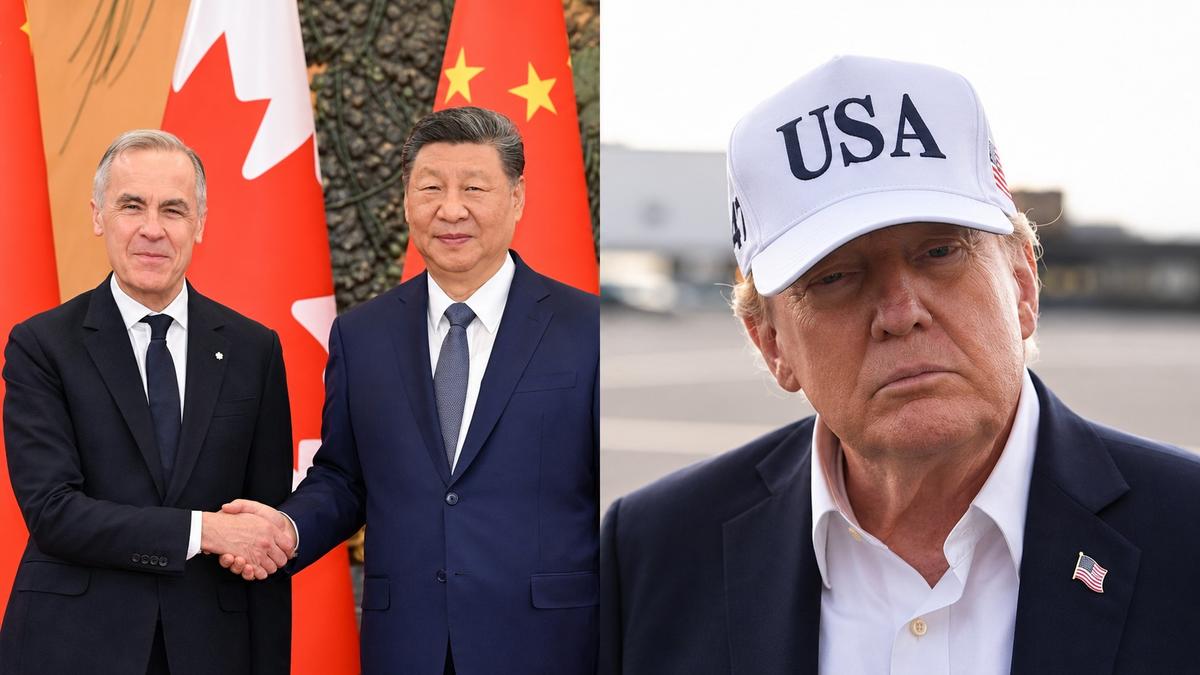
Before the meeting, Peter Navarro, one of Donald Trump’s senior trade advisers, posted a “memo” to Carney on X. “Are u really threatening to play China off the U.S.?” he wrote. “You should be far more worried China is going to eat Canada alive.”
He was responding to Carney’s comments in Asia this week. Carney said that if the future of Canada’s auto sector depends on U.S. trade talks, there are other options, including Chinese automakers. Asked whether that was leverage, he said it wasn’t, calling it “action, reaction.”
Carney has said there are “clear guardrails” around what’s on the table with China. He wants Chinese automakers to build in Canada only if they create real jobs using Canadian workers and materials, not by assembling imported kits.
The shift isn’t new. Earlier this month, Carney said the U.S. poses a bigger security risk than China, comments that drew attention on both sides of the border. Canada has also unveiled a new alliance with EU leaders and started shipping grain to Europe through the Port of Churchill.
The U.S. is still the main customer
China is growing, but it isn’t replacing the United States.
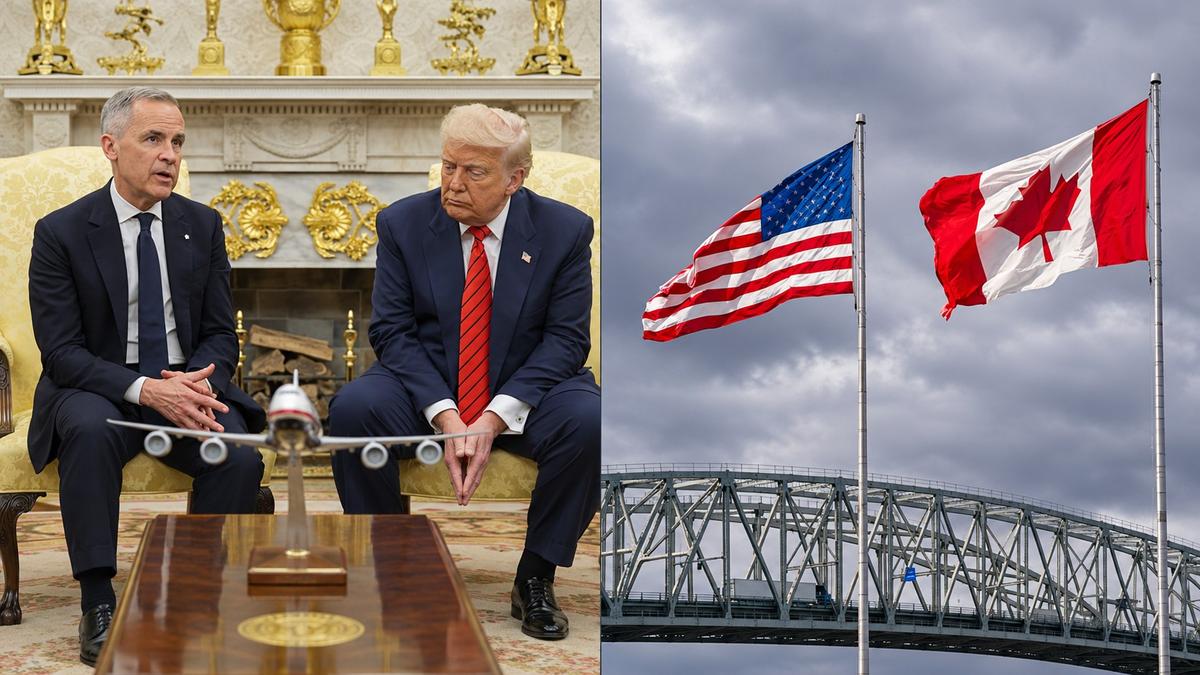
The U.S. still buys about 70 per cent of Canada’s exports, and talks with Washington are ongoing. Trump’s 50 per cent tariffs on Canadian cars, trucks and parts are set to start Jan. 1, two days before Democrats take control of Congress. We broke down the pressure building on those tariffs in Washington and what Democrats say they’ll do.
Canadians are skeptical of a quick fix. A recent Nanos poll found most Canadians won’t accept a U.S. deal that keeps tariffs in place.
For now, Ottawa is betting it can grow trade with China without losing ground in Washington. Tuesday’s deal is small in dollars. The signal it sends is much bigger.



Comments