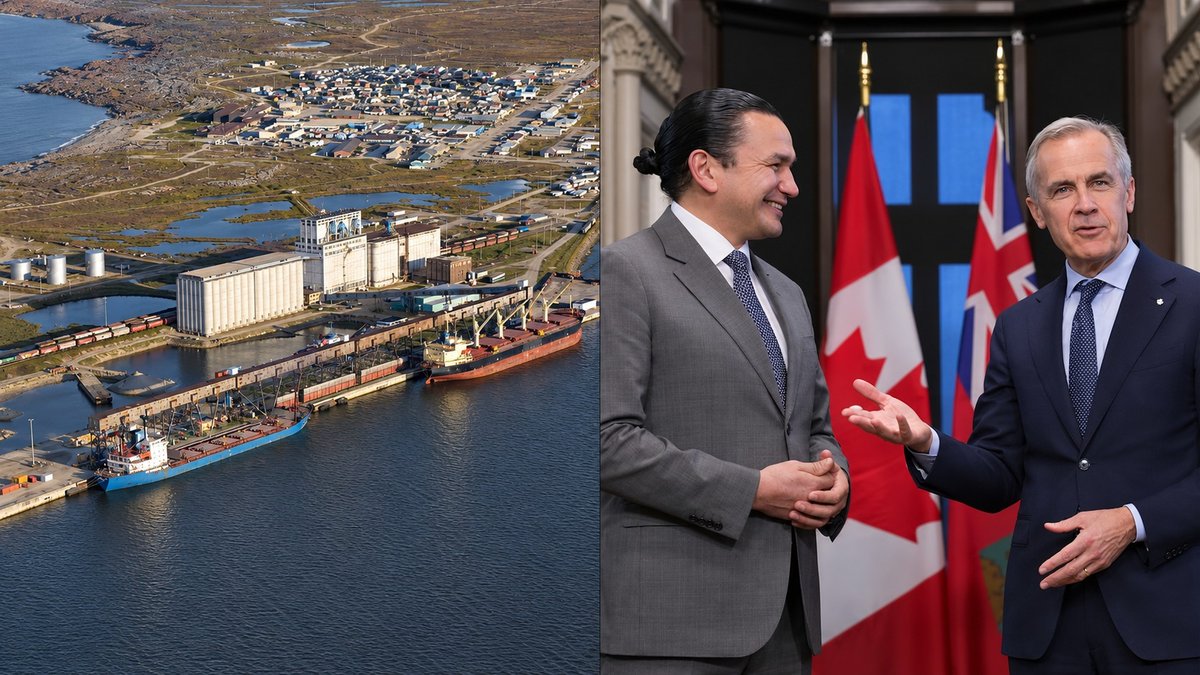
Ten years after it shut down, Manitoba’s Port of Churchill is shipping grain to Europe again.
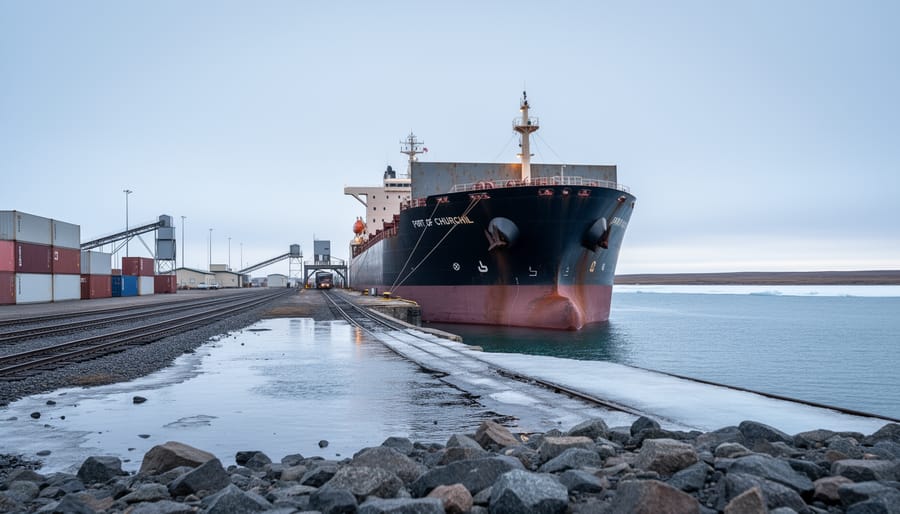
At the end of August, a ship at the Hudson Bay port loaded about 30,000 tonnes of Canadian durum wheat bound for Europe. It was the first grain to leave Churchill since 2020, and more grain ships followed.
This season, the port has also shipped zinc concentrate, potash from Manitoba’s first potash mine, and supplies for communities in Nunavut. Arctic Gateway Group, which runs the port, calls it the most varied shipping season in Churchill’s history.
It’s still a small start. But it comes as Ottawa looks for ways to get Canadian products to the world without going through the United States.
Grain is back
The durum came from AGT Foods, the Regina-based company. It travelled north from The Pas, Manitoba, on the Hudson Bay Railway in July, the corridor’s first grain traffic since 2020. It was the first of three grain ships Arctic Gateway expected this season.
AGT CEO Murad Al-Katib said Churchill gives the company a shorter route to customers in Europe and the Mediterranean.
Arctic Gateway hasn’t said which province the wheat was grown in.
Potash and zinc head to Belgium
A second ship loaded zinc concentrate from Hudbay Minerals, along with the port’s first-ever potash. Both went to the Port of Antwerp-Bruges in Belgium.
The potash came from PADCOM, which runs Manitoba’s first potash mine, near Harrowby, close to the Saskatchewan border. The mine got approval to start commercial production in 2023, and Gambler First Nation planned to take a 20 per cent stake. PADCOM expects to produce 50,000 to 100,000 tonnes a year at first, rising to 250,000 or more.
The first shipment through Churchill was small. It’s an early step, not proof that Churchill can already move fertilizer at scale.
Europe’s biggest ports have signed on
Three major partners have joined Churchill this year.
Port of Antwerp-Bruges (March): Belgium’s port, which handles nearly 300 million tonnes of cargo a year, signed a partnership to look for new cargo between Western Canada and Europe, including critical minerals, energy, fertilizer, containers and farm products.
Port of Rotterdam (Sept. 28): Europe’s largest port signed an agreement to link Canadian producers with European buyers, build supply chains for critical minerals, and support energy supply chains, including liquefied natural gas. Rotterdam’s industrial complex is home to more than 3,000 businesses.
DP World (Oct. 28): one of the world’s biggest port operators signed a two-year memorandum of understanding with Arctic Gateway and Winnipeg’s CentrePort Canada. They’ll study a Winnipeg-to-Churchill trade corridor, and whether DP World could invest in or help run the port. The deal is non-binding.
“This partnership is about turning opportunity into trade,” said Chris Avery, Arctic Gateway’s CEO, about the Rotterdam deal.
None of these agreements guarantees cargo. They’re relationships, not contracts for ships.
How Churchill got here
1997: Ottawa sold the port and railway to U.S. company OmniTRAX for $10.
2016: OmniTRAX shut the port down. Grain traffic had fallen after the Canadian Wheat Board’s monopoly ended.
2017: Flooding washed out the rail line, the town’s only land link. With no road in, Churchill was cut off.
2018: Arctic Gateway bought the port and railway with federal support and repaired the line.
2021: The port and railway came under full Indigenous and community ownership.
Today, Arctic Gateway is owned by OneNorth, a partnership of 41 communities, 29 First Nations and 12 northern communities.
Why it matters for Alberta and the Prairies
Most Prairie grain goes west to Vancouver or east through Thunder Bay and the St. Lawrence. Churchill offers another way out, straight to the North Atlantic.
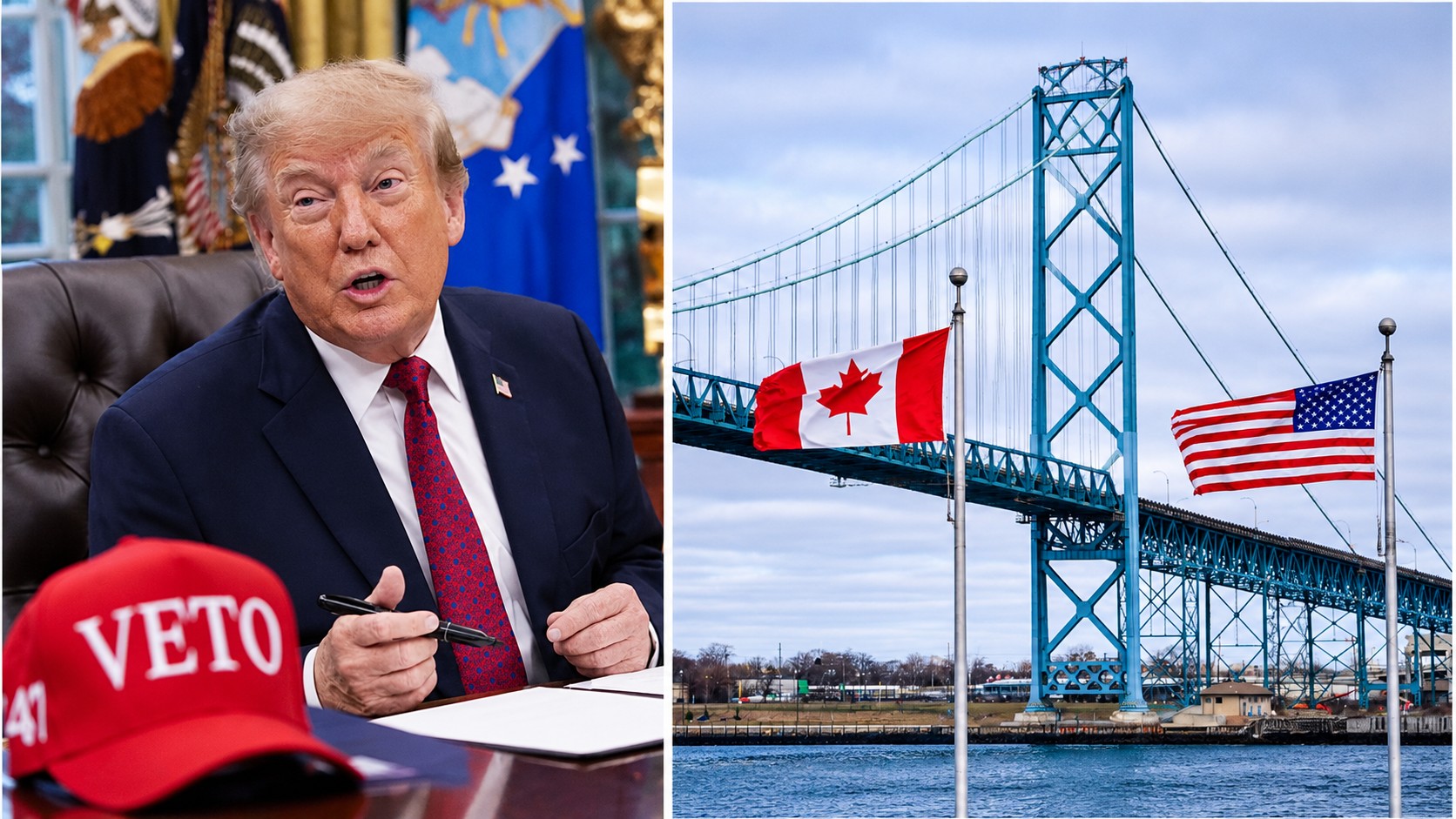
Ottawa has tied it directly to trade, describing this summer’s grain shipment as part of reducing dependence on a single trading partner. With Trump’s trade war dragging on, the federal government has been chasing customers in Europe and Asia.
For Alberta producers, Churchill is one more option to watch. Whether it makes sense for a given shipment depends on the customer, rail costs, port fees and sailing dates. It’s too early to say it’ll be cheaper.
What Ottawa and Manitoba have committed
The expansion plan is called Port of Churchill Plus. In September 2025, Ottawa referred it to the Major Projects Office as one of its “transformative strategies.”
In November 2025, Prime Minister Mark Carney and Manitoba Premier Wab Kinew announced $262.5 million over five years: $175 million from Ottawa and $87.5 million from Manitoba. It covers railway improvements, a new storage facility for critical minerals and a study on icebreaking in Hudson Bay.
The bigger vision goes further, with an all-season road, a stronger railway, an energy corridor and icebreaking capacity. That would cost billions, far more than what’s been committed. In April, Kinew said Ottawa wants natural gas shipping from Churchill by 2030.
Could ships run all winter?
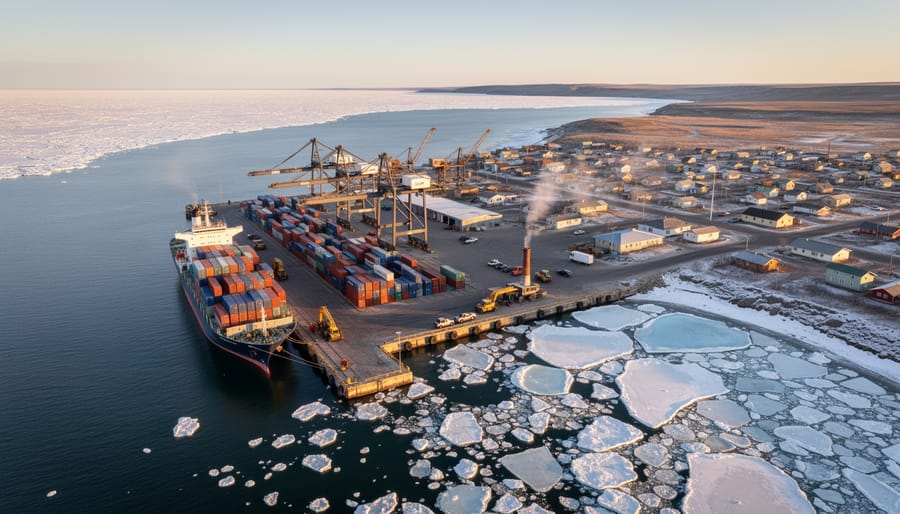
Churchill is frozen in for most of the year. Its shipping season runs from about late July to early November.
In August, three studies suggested that could change:
Fednav, a shipping company commissioned by Arctic Gateway, found existing ice-class ship designs could sail the route year-round without icebreaker escorts.
The University of Manitoba found the shipping season has been getting longer, and is expected to keep growing as sea ice shrinks.
The Arctic Research Foundation released preliminary findings on icebreaking and northern supply chains.
“Year-round shipping out of the Port of Churchill is achievable today,” Kinew said.
There are caveats. The U of M study is a preprint, the foundation’s findings are preliminary, and Fednav’s work was commissioned by the port’s operator. Governments say icebreaking would still matter for reliability, and the big questions about infrastructure, operations and cost haven’t been answered.
The real test
Churchill now has grain coming back, Manitoba potash, and partners in Rotterdam, Antwerp and Dubai. The question is whether that adds up to steady business year after year, enough to justify billions more.
The railway is central. The line runs about 1,000 kilometres over muskeg and permafrost from The Pas, and Arctic Gateway is studying upgrades to modern heavy-freight standards and better links to Canada’s major rail lines.
For a town that was cut off less than ten years ago, this season is already a turnaround.
Sources:
Arctic Gateway Group: First grain export since 2020 loaded at Port of Churchill (Aug. 31, 2026)
Arctic Gateway Group: Port of Churchill and Port of Rotterdam sign agreement (Sept. 28, 2026)
Arctic Gateway Group: Port of Churchill and Port of Antwerp-Bruges sign agreement (March 2026)
DP World: MOU with Arctic Gateway Group and CentrePort Canada (Oct. 28, 2026)
Fednav: Governments welcome new research on year-round shipping (Aug. 21, 2026)
Prime Minister of Canada: Joint statement by Prime Minister Carney and Premier Kinew (Nov. 16, 2025)








Comments