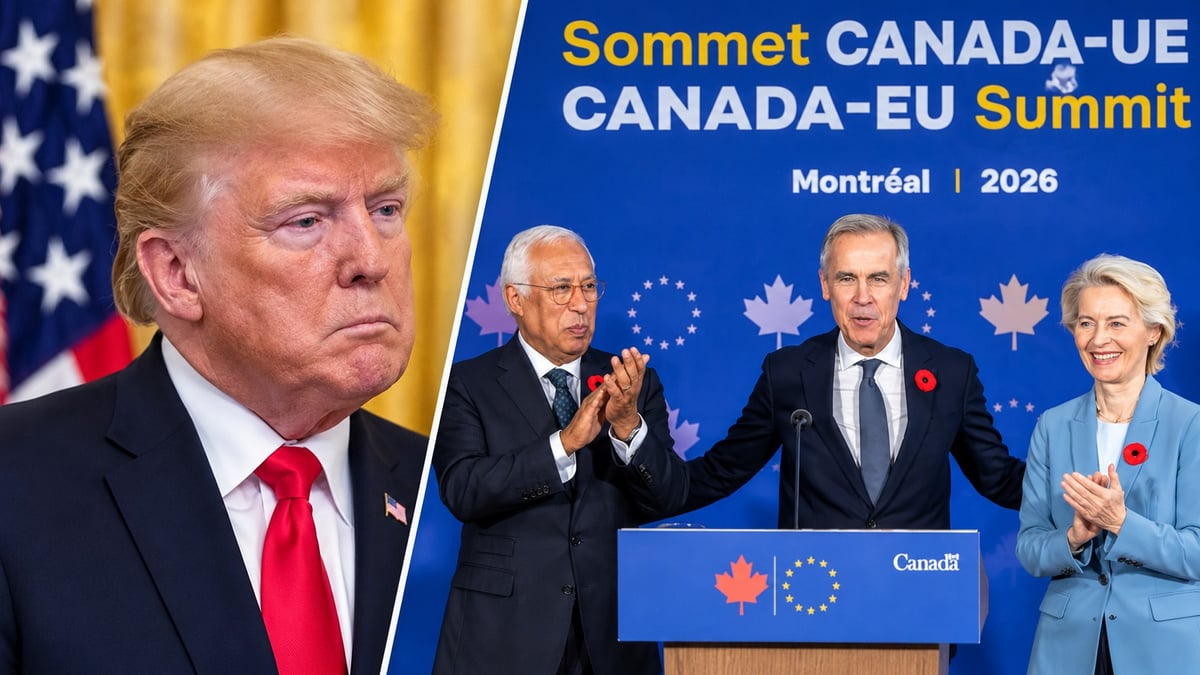
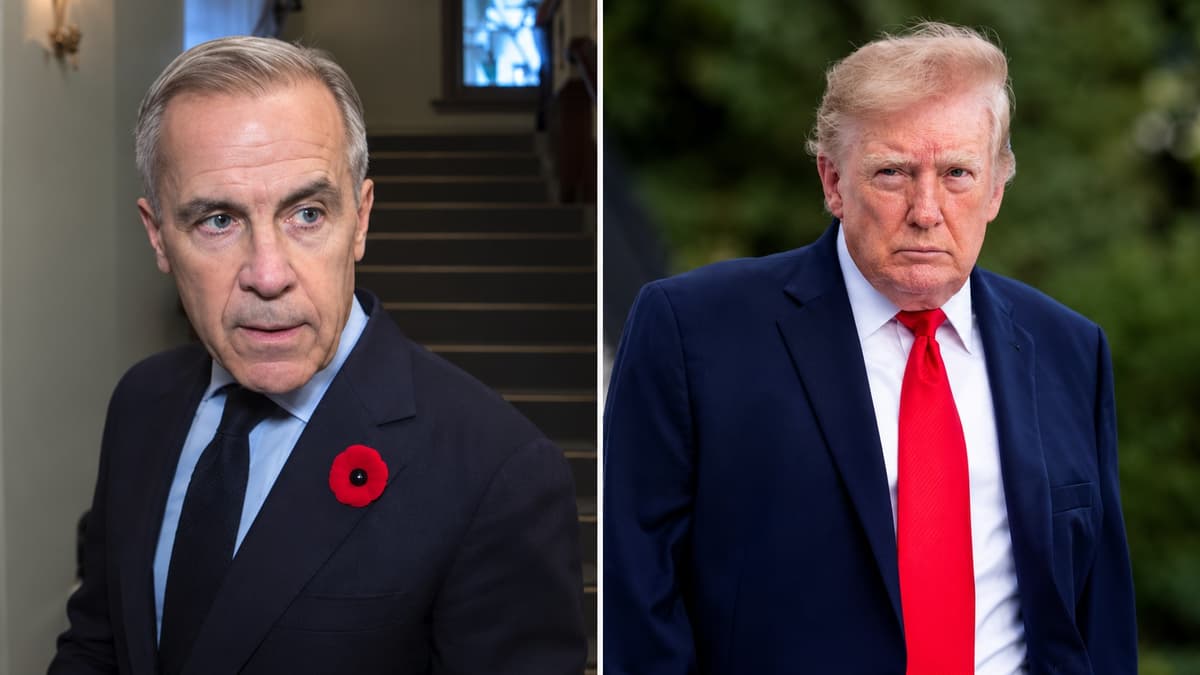
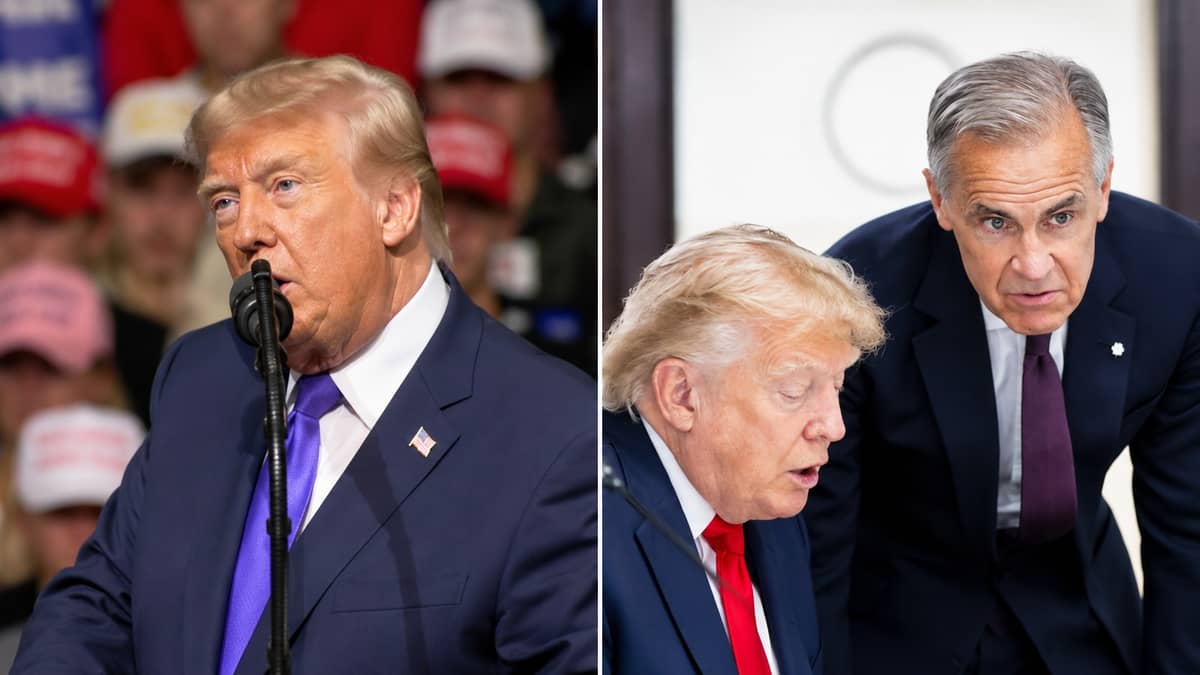
Donald Trump says Canada is finally learning its lesson.
Mark Carney appears to have a different plan.
On Thursday, Trump told a South Carolina rally that his tariffs had Canada “treating us extremely nicely.” By Friday, Carney was in Montreal with European leaders, unveiling an alliance meant to bring Canada closer to the European Union.
The language coming out of that meeting was striking.
“The new international order will also be built from Europe, with Canada as part of it,” European Commission President Ursula von der Leyen said Friday. “In a world of growing rivalries, sovereignty is no longer the freedom to act alone, but it is the capacity to act together.”
“This is why we’re building the Alliance for the Future. And we start with Canada. The European Union and Canada are kind of the nucleus.”
The clip spread fast. Some Canadians cheered it as the country standing up to Washington. Others asked what their government had just signed them up for, and why nobody got a vote.
It’s a fair question. Here’s what the official documents say.
What did Carney actually agree to?
Less than the clip suggests, and more than a typical summit.
Done: Canada and the EU concluded negotiations on two deals. One is a Digital Trade Agreement, Canada’s first deal dedicated entirely to digital trade, covering e-signatures, software and cross-border data. The other is an updated Competition Cooperation Agreement, which lets regulators on both sides work together against anti-competitive behaviour. Both still have to be signed and ratified before they take effect.
Underway: Canada is already the only non-European country in the EU’s SAFE defence procurement program. It also now has access to Europe’s JUPITER supercomputer, and there’s a new framework with the European Investment Bank to finance Canadian critical minerals projects.
Still proposals: linking Canadian and European instant payment systems, wider market access for banks and fintechs, joining the next Horizon Europe research program, more Erasmus+ exchanges, and a study on LNG exports.
The alliance also goes beyond trade. The joint statement commits the two sides to closer cooperation on defence, border security, technology and foreign policy, coordinated through more regular ministerial meetings.
That’s the real question underneath the viral clip. Canada isn’t handing authority to Brussels. But it is choosing to line up its economy and security more closely with Europe’s, and the details haven’t been written yet.
Is Canada joining the EU?
No.
Carney wants Canada to become the EU’s first “associate member,” and nobody knows yet what that means. Von der Leyen said Canada “cannot become a full-fledged member of the EU because of geography,” and called it “partnership without membership.”
The joint statement doesn’t create an associate category. It commits both sides to define “an even closer association” by their 2027 summit, and the word “associate” doesn’t appear in it. The label has no established legal meaning, and some EU governments, including Germany and France, have pushed back on it.
Carney’s response: “This is not a marketing exercise. The name doesn’t matter.”
Nothing announced in Montreal puts Canada under EU institutions, changes the Canadian dollar or gives Canadians the right to live or work in Europe.
Why wasn’t there a vote in Parliament or a referendum?
The viral posts say Canada was committed with no vote in Parliament and no referendum. Here’s how it actually works.
The alliance itself is a political announcement. It sets a direction. It doesn’t create legal obligations on its own, so there’s nothing yet for Parliament to vote on.
Treaties, like the digital trade and competition agreements, are negotiated and ratified by the federal government. Under the federal Policy on Tabling of Treaties in Parliament, they’re tabled in the House of Commons before ratification so MPs can review them.
Implementing legislation is where Parliament has real power. If a treaty requires changes to Canadian law, the House and Senate have to pass that legislation.
The future “closer association” is the big one. Carney has ruled out joining the EU and said any enhanced partnership would require a vote in Parliament.
Trade agreements don’t go to national referendums in Canada. CETA didn’t, and neither did NAFTA.
So the critics are right that Canadians haven’t been asked yet. The deal they’re worried about doesn’t exist yet either.
Why Trump’s trade war is pushing Canada toward Europe
None of this happens without the fight with Washington.
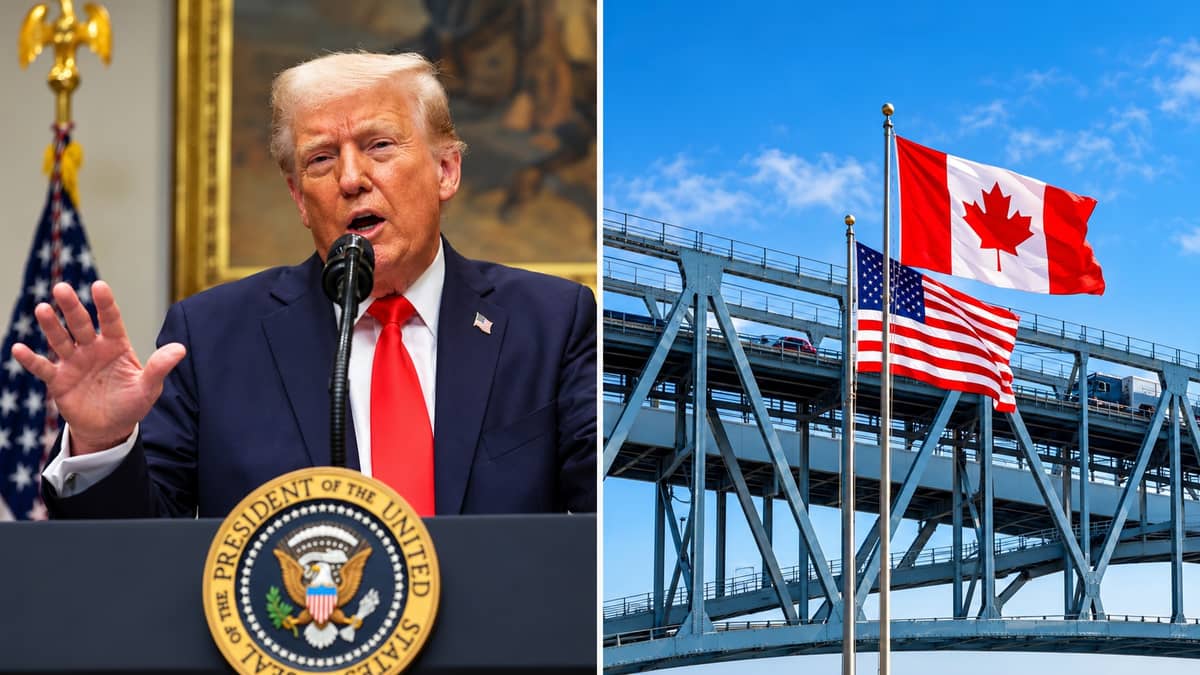
The U.S. bought about 72 per cent of Canada’s merchandise exports in 2025, according to Global Affairs Canada. That dependence gave Trump leverage when his 50 per cent tariffs on a long list of Canadian goods took effect in August. Steel faces up to 50 per cent and autos 25 per cent.
Canada walked away from talks on Aug. 22. Carney said the U.S. had asked “too much” and offered “too little,” including new limits on Canada’s ability to sign trade deals with other countries. That demand matters here, because a Canada-EU alliance is exactly the kind of deal Washington wanted to restrict.
A Canadian official said last week that talks with the U.S. have made only “limited progress.”
Carney’s answer has been to find other buyers. His goal is to double exports to countries other than the U.S. over the next decade. Global Affairs Canada says non-U.S. exports grew 11.1 per cent in 2025, pushing their share to the highest level since 1981.
Europe is the obvious place to start. Canada and the EU have had a free trade agreement, CETA, provisionally in place since 2017, and the EU is already Canada’s second-largest trading partner, at about $178 billion in goods and services last year.
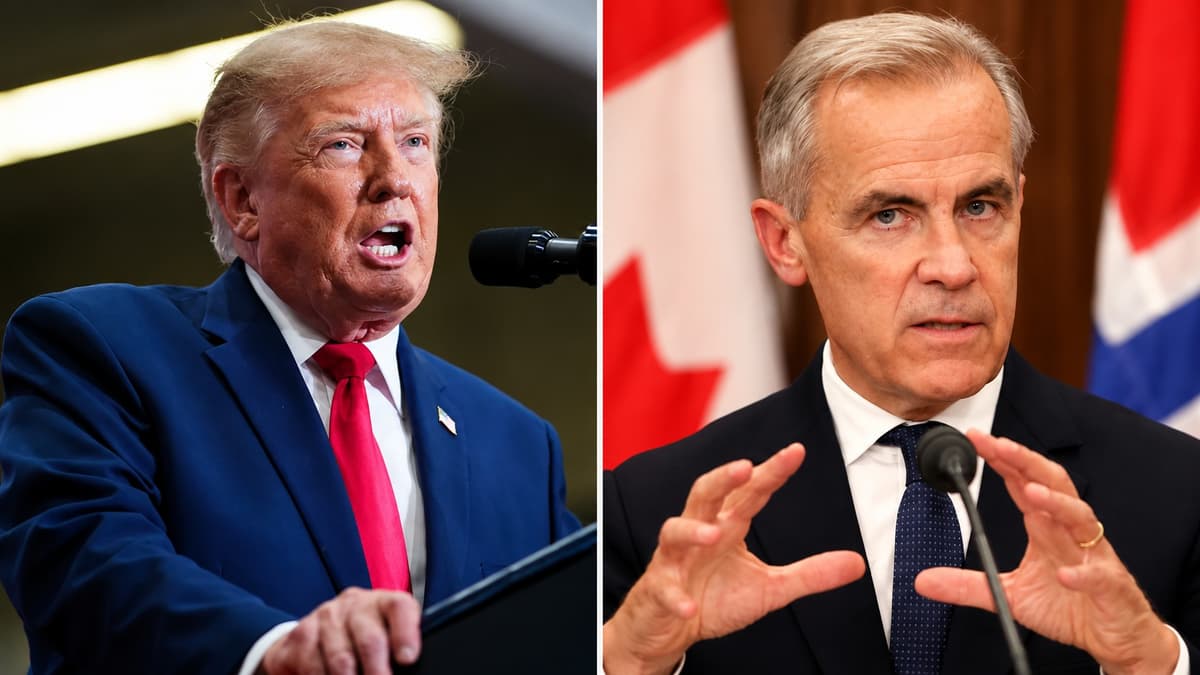
Trump has noticed. He called the associate membership idea “laughable” and threatened to “put very serious tariffs or stop trading with Europe on many things” if it goes ahead. A senior Canadian official said the EU relationship isn’t aimed at the U.S.
What could actually change for Canadians?
Not much right away. Over the next few years, a few things could.
Online business: the digital trade deal would make it easier for Canadian companies to sell software and digital services in Europe. Canadian firms already export nearly $15 billion a year in digitally deliverable services to the EU.
Sending money: linked instant payment systems would make it faster and cheaper to move money between Canada and Europe.
Students and researchers: more Erasmus+ exchanges and access to Horizon Europe would open up European funding and programs.
Working abroad: the joint statement says both sides will explore a next-generation youth mobility arrangement. That’s a study, not a new right.
Jobs: some Canadian manufacturers stand to gain. Ottawa announced up to $2.5 billion in financing, through Export Development Canada, for De Havilland Canada’s firefighting aircraft production in Alberta, where European orders are helping drive demand.

Can Europe really replace the U.S.?
Not anytime soon.
About seven of every 10 dollars of Canadian merchandise exports still go to the U.S. A truck from Ontario reaches American customers in a day. Shipping to Europe takes longer, costs more and comes with different rules. CETA has been in place for nearly a decade, and it hasn’t pulled Canada’s trade away from the U.S. in a big way.
The realistic goal is diversification, not replacement. If more Canadian companies sell to Europe and elsewhere, the next tariff announcement from Washington hurts less, and Canada has more leverage at the table.
Canada and the U.S. are still tied together by pipelines, supply chains, investment and defence. The alliance doesn’t change that.
What happens next
Canadian and EU ministers are set to meet in 2027, and both sides have until the 2027 summit to define what the “closer association” actually involves: market access, regulatory cooperation and any legal commitments. That’s the point where Parliament comes in.
Americans vote in the midterms Tuesday. Canada-U.S. trade talks continue, with no deal announced.
Canada hasn’t joined the EU, and it hasn’t stopped trading with the U.S. What Montreal shows is the direction Carney has picked: keep the American relationship, and build alternatives so Canada isn’t stuck with only one buyer.
How much that’s worth will depend on what gets negotiated, not on what the alliance is called.




Comments