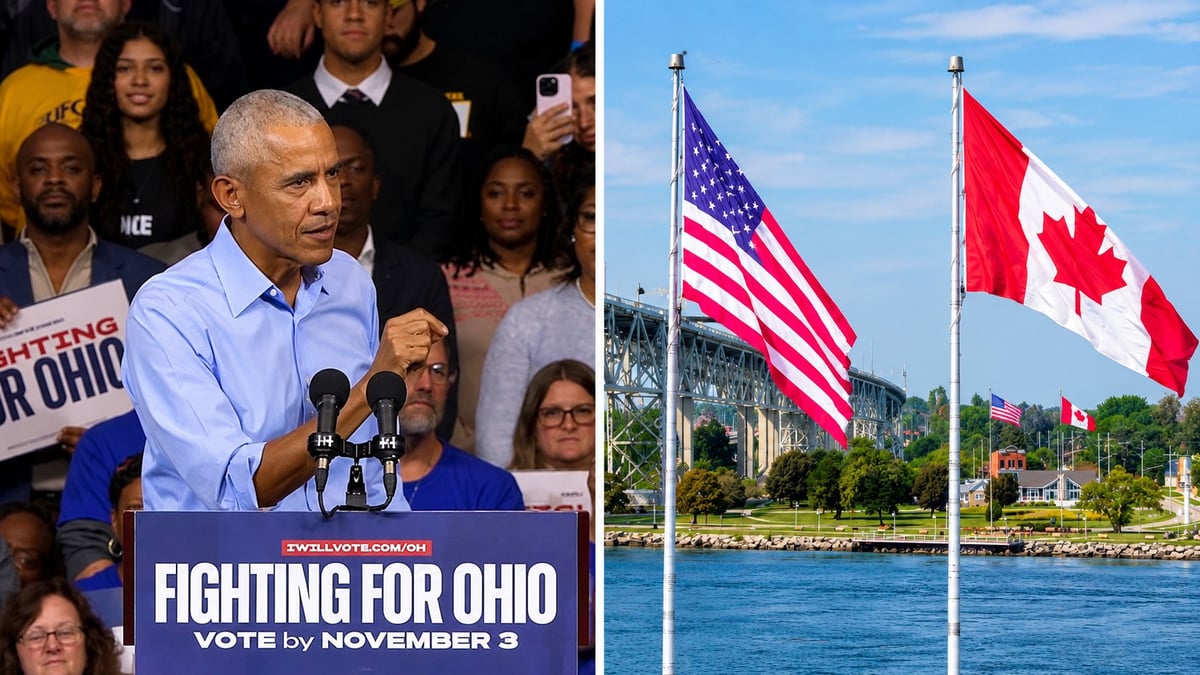
Barack Obama has a question for Americans: how did the U.S. make Canada this mad?
At a campaign rally in Detroit on Saturday, the former U.S. president mocked Donald Trump's trade war with Canada and the idea that America's northern neighbour should be treated like an enemy.
"He's the toughest when it comes to tariffs and trade wars," Obama said, "on that well-known evil empire, Canada."
He paused, then added: "That historical adversary of ours."
"That well-known evil empire, Canada"
Obama was at Cass Technical High School, campaigning for Democratic Senate candidate Abdul El-Sayed and gubernatorial candidate Jocelyn Benson ahead of the Nov. 3 U.S. midterm elections.
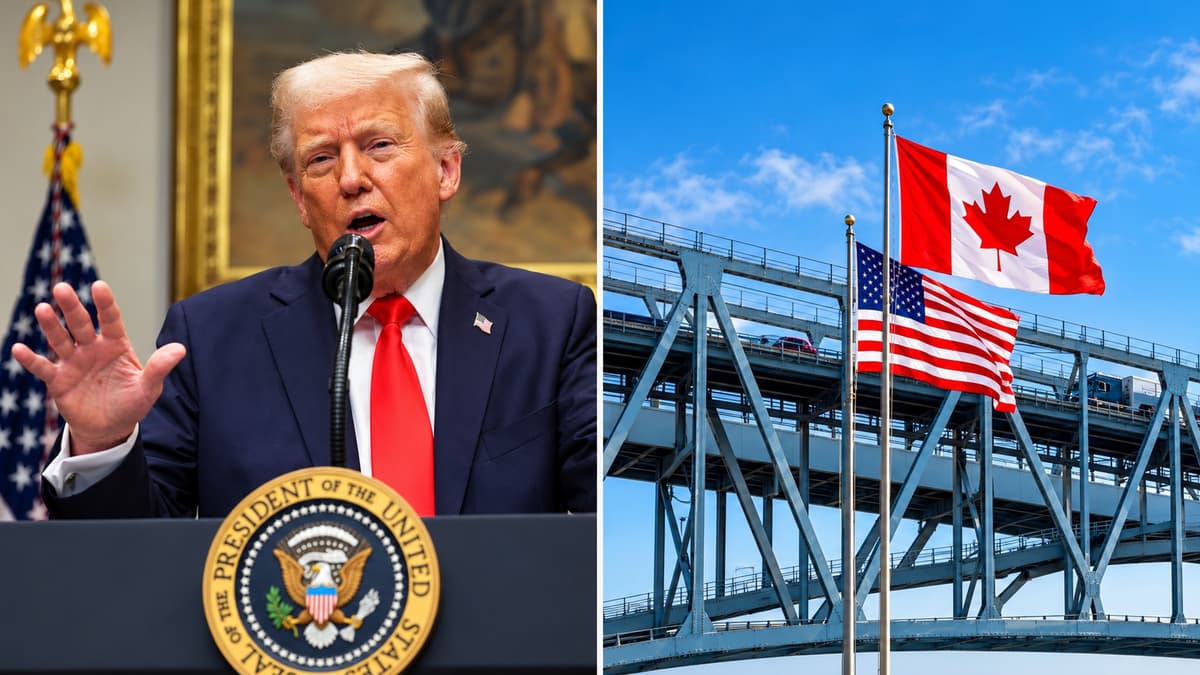
He reminded the crowd that Canada isn't far away. From downtown Detroit, you can see Windsor across the river.
"Canada, Canada, it's your neighbour," he said. "It's a few minutes' drive over the bridge."
Then he got to Canada's best-known exports.
"These are the people who gave us Martin Short and maple syrup," Obama said.
"They're so nice. And somehow we've gotten them so mad"
Obama called Canadians "the nicest people."
"Like, they're so nice," he said. "And somehow we've gotten them so mad."
He said the anger comes from how Canada has been treated. Canadians, he said, are "constantly being abused and talked about," including talk of "making it a 51st state."
"They're driving up your prices"
From there, Obama turned to what tariffs cost.
He said Trump promised tariffs would bring down deficits. Instead, Obama told the crowd, "they're driving up your prices."
"He was warned," he said. "This will drive prices up. This does not lower prices."
He argued that tariffs raise costs for American manufacturers and the people who buy what they make. Michigan is where that argument lands hardest. Automakers there rely on parts and materials that cross the Canadian border, sometimes more than once, before a vehicle rolls off the line.
Even Michigan Republicans are uneasy. Mike Rogers, the party's Senate candidate, has called for an end to the tariff fight with Canada, breaking with Trump.
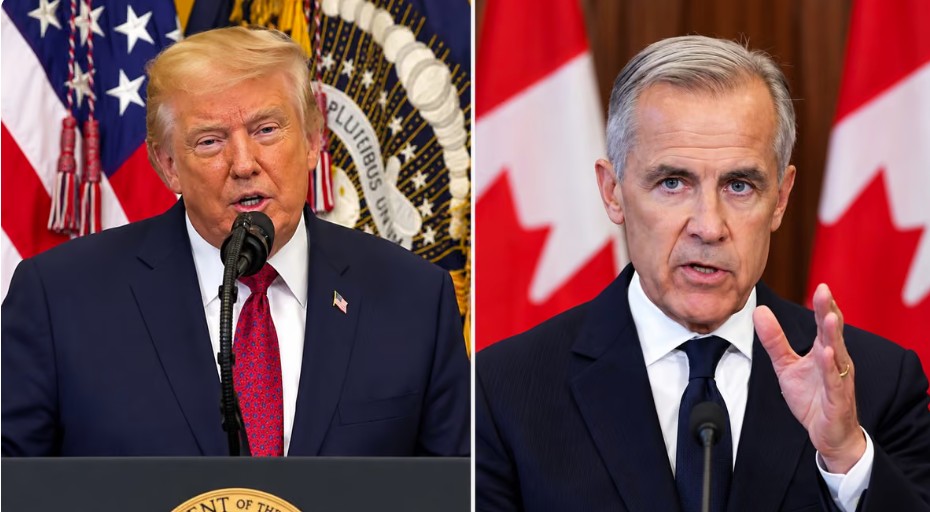
Bill Clinton said something similar four days earlier
Obama is the second former president in a week to speak up for Canada.
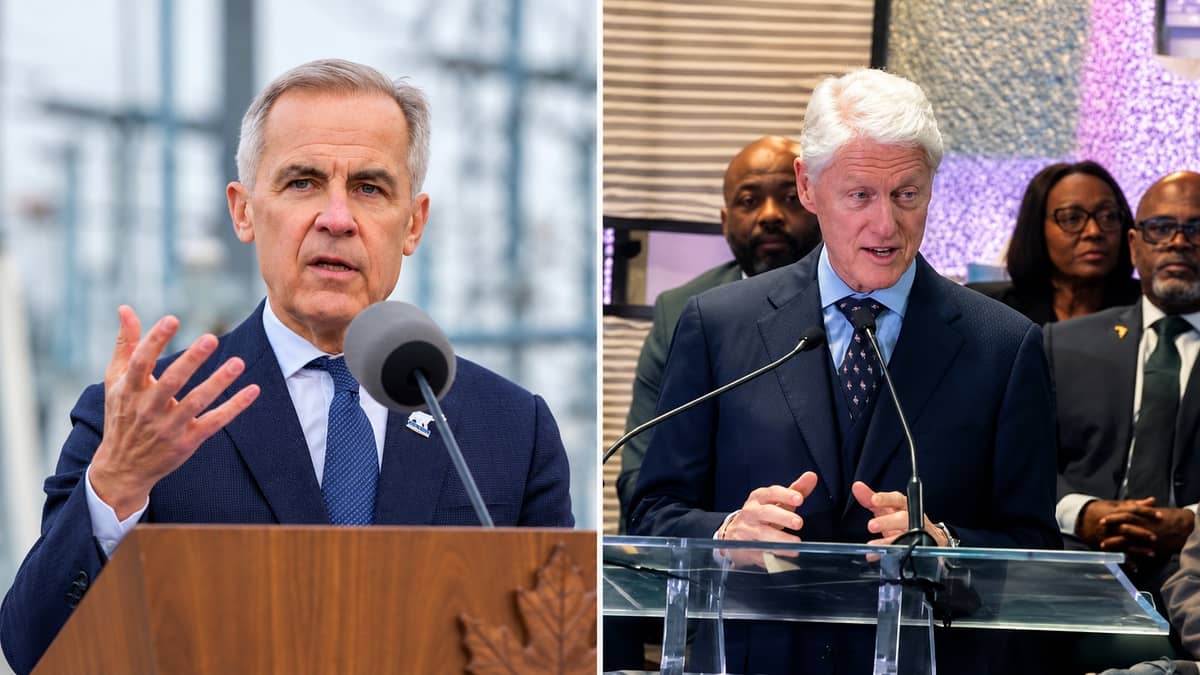
On Oct. 20, Bill Clinton told a church crowd in Hollywood, Florida, that he is "tired of treating our allies like they're dirt." He called Prime Minister Mark Carney "a friend of mine for a long time" and "about the most well-qualified leader in the world," pointing to Carney's time running both the Bank of Canada and the Bank of England.
"Do we have the gall to suggest that they should become the 51st state?" Clinton asked.
He never said Trump's name. Obama did.
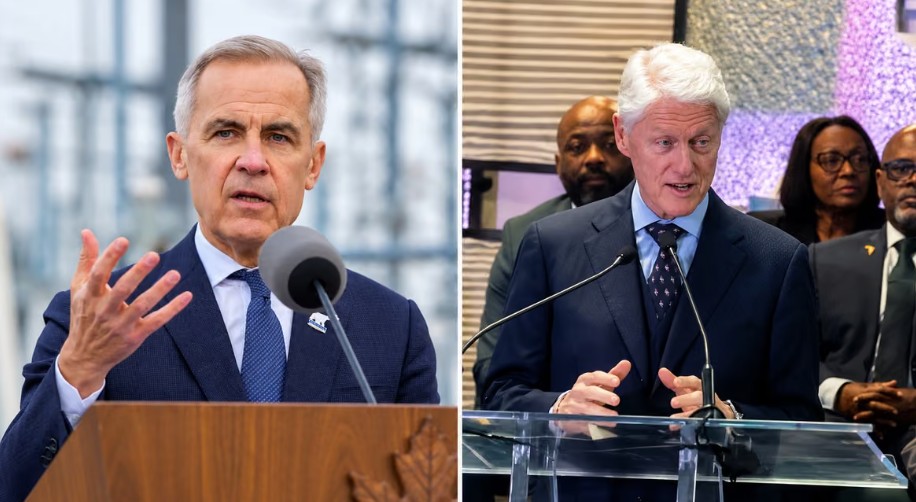
Trump's hockey offer and "a little lesson"
Both former presidents spoke after Trump spent a week back on the 51st-state talk.
On Oct. 14 in Bullhead City, Arizona, Trump said Canada would "end up being the 51st state because it's the only way it works."
Five days later, at a rally in Park City, Kansas, he said Canada could keep hockey and its national anthem if it joined the U.S. "I do like their national anthem," he said. He then said he was "only kidding," while still accusing Canada of "screwing us."
The tone had been set weeks earlier. On Sept. 30, at a Hispanic Heritage Month event at the White House, Trump said Canada's leaders had taken advantage of the U.S. for years.
"They were very bad," he said. "But now they're being taught a little lesson."
He said that one day after new U.S. restrictions on some Canadian products took effect.
An American company is suing over the tariffs
Not all the pushback is coming from Democrats on the campaign trail. Some of it is coming from American businesses.
On Oct. 20, Gellert Global Group, a family-owned food importer in Elizabeth, New Jersey, sued the Trump administration in the U.S. Court of International Trade. The Liberty Justice Center is representing the company.
The lawsuit goes after the law Trump used for his 50 per cent tariffs on Canadian goods: Section 338 of the Tariff Act of 1930. The company says no president had used it to impose tariffs before this year.
Gellert's main arguments are:
The administration is stretching the law. The company says Section 338 is being read too broadly, and that a different trade law would have required an investigation first.
Canada's policies don't qualify. Provincial bans on U.S. liquor, dairy supply management and auto quotas don't meet the bar the law sets, the company argues.
The government didn't wait long enough. Cheeses were added to the tariff list on Sept. 8, and the U.S. started collecting on Sept. 15. That's seven days, not the 30 the company says the law requires.
Gellert wants the tariffs declared illegal, collection stopped and its money refunded with interest. It's also asking to represent other American importers, which could make the case much bigger.
The court hasn't ruled. Until it does, the tariffs stay.
Just 26% of Americans now call Canada a close ally
There's evidence American views of Canada have shifted a lot, and quickly.
An AP-NORC survey of 2,140 U.S. adults, conducted Sept. 24 to 28, asked Americans how they see Canada. The share calling it a close ally has fallen sharply:
| When | Americans who call Canada a close ally |
|---|---|
| 2023 | 62% |
| March 2025 | 45% |
| September 2026 | 26% |
That's 36 points gone in about three years.
Most Americans still don't see Canada as an enemy. In the same survey, 35 per cent called Canada friendly but not a close ally. Another 30 per cent said relations aren't friendly, but the two countries aren't enemies either.
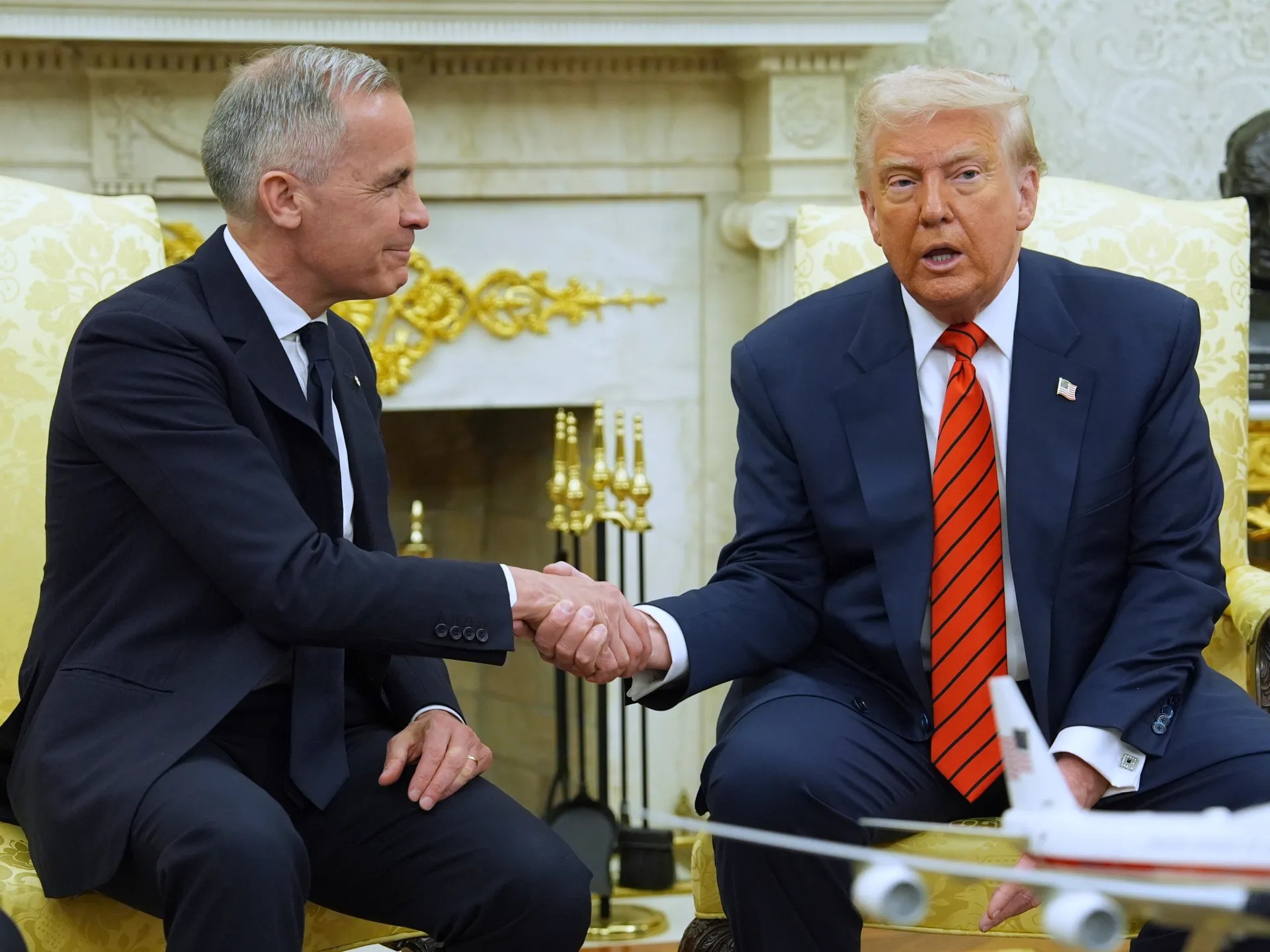
Where things stand
Since trade talks broke down in August, the U.S. has put 50 per cent tariffs on a wide range of Canadian goods, including vehicles. In September, it banned some Canadian products outright, including motorcycles, some alcohol and dairy.
Canada responded in September with dollar-for-dollar counter-tariffs.
Trump has said he'll lift some of the 50 per cent tariffs at the end of October while adding new ones on dozens of Canadian products. Neither country has announced new talks since August.
For Albertans, whose economy depends heavily on selling energy and goods south of the border, every new tariff, product ban and "only kidding" adds to the uncertainty.
Two presidents, one week
Obama's remarks came four days after Clinton's. Together, they put two former U.S. presidents squarely against Trump's approach to Canada.
In Detroit, a few minutes' drive from the border, Obama boiled it down to one line. Canadians are the nicest people, he said. And somehow, America has made them mad.
Sources
Obama campaign speech in Detroit, full transcript (Rev): https://www.rev.com/transcripts/obama-campaigns-in-detroit
CNN transcript, Oct. 24, 2026: https://transcripts.cnn.com/show/cnr/date/2026-10-24/segment/07
AP-NORC Center for Public Affairs Research, September 2026 survey: https://apnorc.org/projects/most-blame-president-trump-for-higher-prices-and-are-unhappy-with-how-he-is-handling-the-economy/
U.S. Court of International Trade: https://www.cit.uscourts.gov/


Comments
Conversation