
Donald Trump says Canada is being "taught a little lesson."
The U.S. president made the comment at a White House event Wednesday, while accusing Canada's leaders of taking advantage of the United States for years.
"They were very bad. But now they're being taught a little lesson," Trump said.
New U.S. restrictions on some Canadian products had taken effect the day before. And a poll released this week shows Americans don't see Canada the way they used to.
Just 26 per cent of Americans now call Canada a close ally.
Three years ago, 62 per cent did.
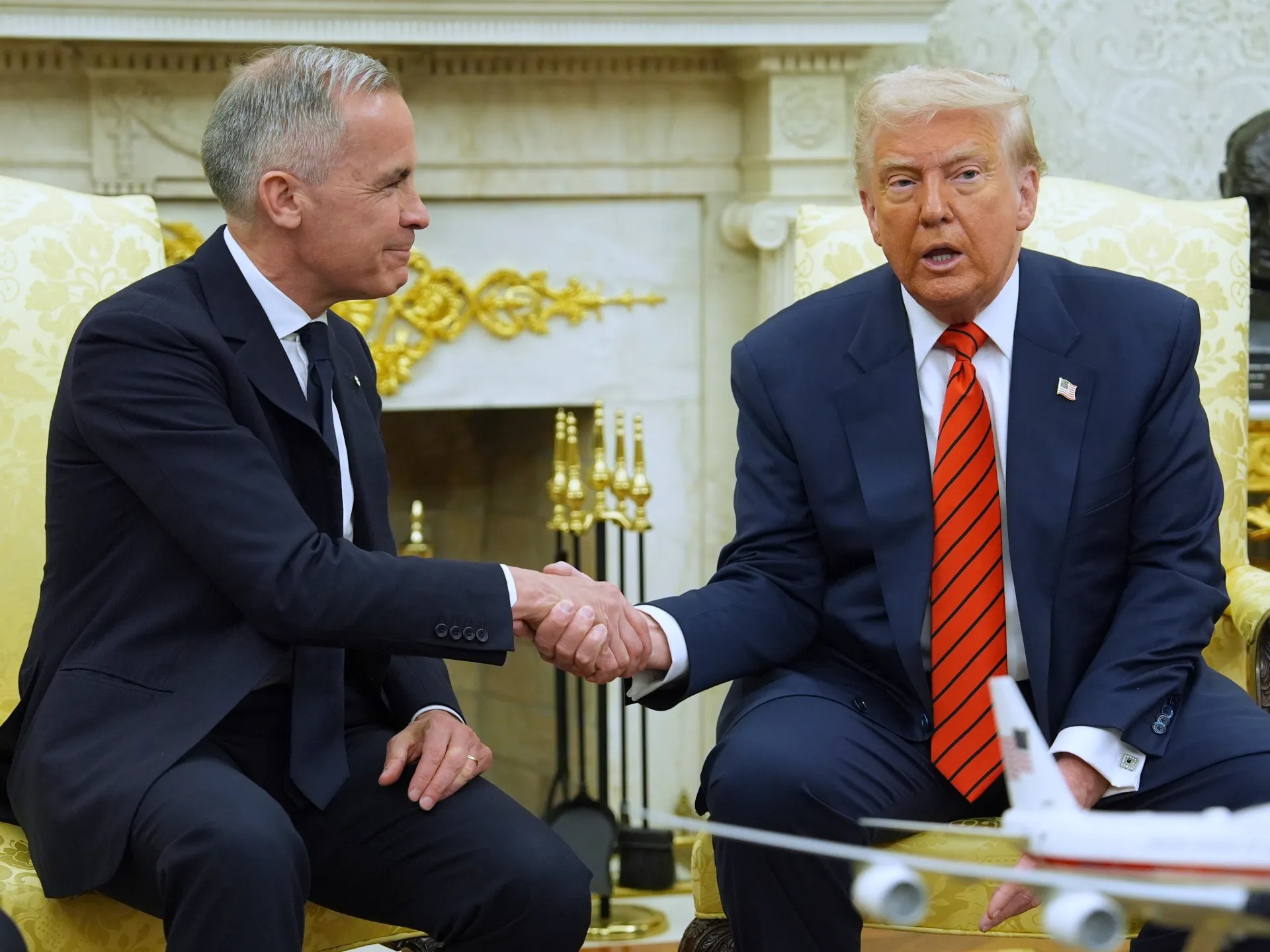
How American views of Canada have changed
The Associated Press-NORC poll found the share of Americans calling Canada a close ally dropped from 62 per cent in 2023 to 45 per cent in March 2025, and now to 26 per cent.
That doesn't mean most Americans see Canada as an enemy. Another 35 per cent said the two countries are friendly but not close allies, and 30 per cent said relations aren't friendly, but the countries aren't enemies.
The poll surveyed 2,140 U.S. adults from Sept. 24 to 28, with a margin of error of plus or minus 2.9 percentage points.
First Gretzky, then the 'lesson'
Trump's comments came during a Hispanic Heritage Month event at the White House on Sept. 30.
"Canada has taken advantage of us for so many years. The worst of any country," he said.
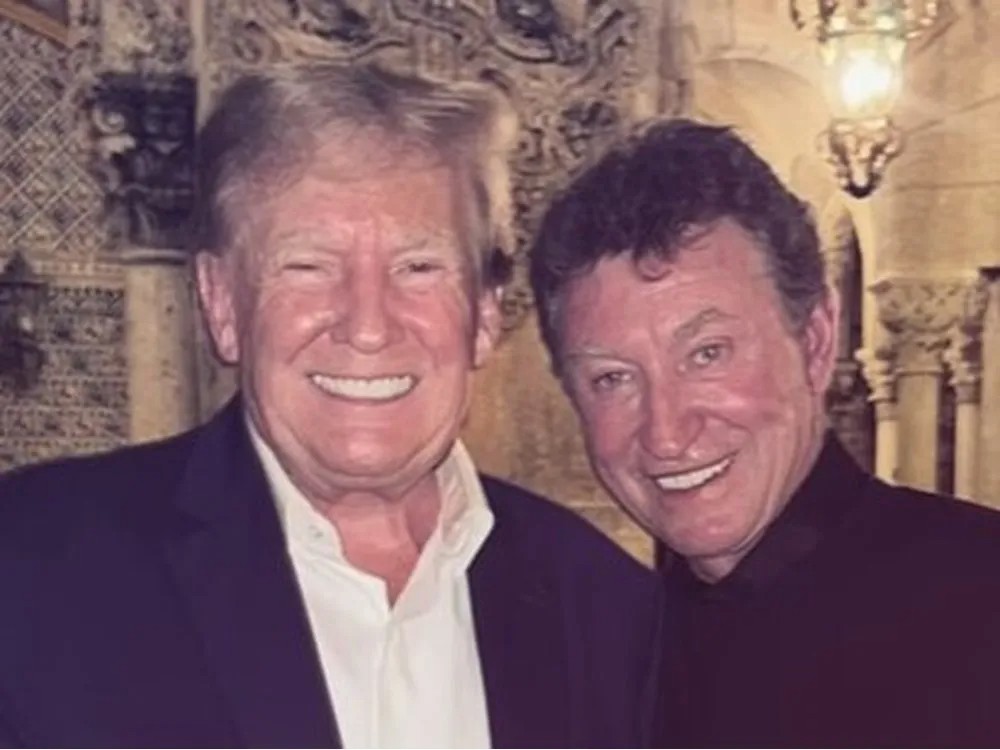
Then he softened, briefly, turning from Canada's government to Canadians themselves. He even brought up Wayne Gretzky.
"I love the Canadian people. So many friends. Wayne Gretzky, I love the Great One," Trump said, also mentioning Gretzky's wife.
Then he went straight back to Canada's leaders.
"The leaders have taken advantage of our stupid leadership for many, many years. They felt emboldened. They charge our farmers 400% tariffs, and they act like they're totally innocent. They're not. They were very bad. But now they're being taught a little lesson."
Seconds later, he brought up Lake America.
Trump pointed to his order renaming Lake Ontario as an example of the "lesson." The order, signed Aug. 27, tells U.S. federal agencies to use "Lake America" in maps and official records. It doesn't change what Canada calls the lake.
He then told the largely Hispanic audience that renaming the Gulf of Mexico was "even cooler," adding, "There could be a few people in the room that don't love that one."

What the U.S. actually banned
The new measures took effect at 12:01 a.m. Eastern on Sept. 29.
They're narrower than a ban on all Canadian goods. U.S. Customs and Border Protection says products covered by three presidential proclamations can no longer be imported. They fall into three groups: specified Canadian alcoholic beverages, dairy-related products and motor vehicles, based on tariff codes in the proclamations.
That includes many Canadian beers, wines and spirits, along with certain whey products, molasses, non-alcoholic beer and some large-engine motorcycles.
These products aren't facing a tariff. They're being turned away at the border.
Canada exported about $1.2 billion worth of beer, wine and spirits last year, according to Statistics Canada.
Why Washington says it did it
U.S. Trade Representative Jamieson Greer says the ban is retaliation for how Canada has treated American exports, including provinces pulling U.S. alcohol off shelves and limiting American companies from bidding on provincial contracts.
"We gave them a lot of leeway," Greer told Fox Business. "But at a certain point we said, 'That's enough, you need to take that off, and if you don't, we'll just match it.'"
Canada sees it the other way around: its measures were a response to U.S. tariffs that came first.
Prime Minister Mark Carney declined to respond directly. "Canada stands ready to negotiate in good faith," he said.
Greer said the U.S. door is "always open" to a deal, but added, "We're pretty comfortable with where we are."
What the trade numbers show
Trump frames the relationship around the U.S. trade deficit with Canada. The full picture has two sides.
On goods, the U.S. imported US$381.9 billion from Canada in 2025 and exported US$333.6 billion, according to the Office of the U.S. Trade Representative. That's a goods deficit of US$48.3 billion.
On services, it runs the other way. The U.S. exported US$92.3 billion in services to Canada and imported US$64.5 billion, a U.S. surplus of US$27.7 billion.
Where Alberta oil fits
Energy is a big part of the goods side, which puts Alberta at the centre of any argument about the deficit.
The U.S. buys huge amounts of Canadian crude, most of it from Alberta. Some refineries in the U.S. Midwest depend almost entirely on that supply.
Western Canadian heavy crude has also historically sold at a discount to U.S. and world benchmarks. How big that gap is depends on pipeline space, refinery demand and oil markets.
So part of the deficit Trump points to comes from something American companies want: Canadian crude for U.S. refineries.
A trade deficit isn't a bill Canada sends Washington. It means the U.S. bought more goods from Canada than Canada bought from the U.S.
And oil prices can move that number a lot.
The surplus shrank when oil prices fell
Statistics Canada says Canada's goods surplus with the U.S. fell from $101.3 billion in 2024 to $81.8 billion in 2025.
A big reason was energy. Canadian energy exports dropped by $11.8 billion, mostly from a $13.7-billion fall in crude oil exports as prices dropped.
Same oil, same border, lower price. The surplus shrank with it.
What Trump means by 400 per cent
Trump again said Canada charges American farmers tariffs as high as 400 per cent.
Canada does put very high tariffs on some supply-managed products, including dairy. But they don't apply to every American dairy product entering Canada.
Canada uses a quota system. A set amount can come in at a low rate. Only imports above that amount face the very high tariffs.
Canadian alcohol makers are stuck
The alcohol ban is already being felt.
Canadian distillers, wineries and breweries that relied on U.S. customers have lost that market for the banned products. Some smaller producers are now looking harder at selling at home, Reuters reported this week, and running into an old problem: different alcohol rules in every province that make selling across Canada difficult.
Where things stand
Neither side has announced a breakthrough.
Canada's countermeasures remain in place, while Washington has moved beyond tariffs to blocking some Canadian products at the border.
In 2023, nearly two-thirds of Americans surveyed by AP-NORC called Canada a close ally.
Three years later, it's one in four.
Sources
Remarks by Donald Trump at Hispanic Heritage Month celebration, transcript via Roll Call Factbase, September 30, 2026
Most blame President Trump for higher prices and are unhappy with how he is handling the economy, AP-NORC Center for Public Affairs Research, October 1, 2026
U.S. Customs and Border Protection, guidance on import exclusions, September 2026
Canada, Office of the U.S. Trade Representative
Statistics Canada, Canadian international merchandise trade, 2025
Executive Order 14422, The White House, August 27, 2026




Comments
Conversation