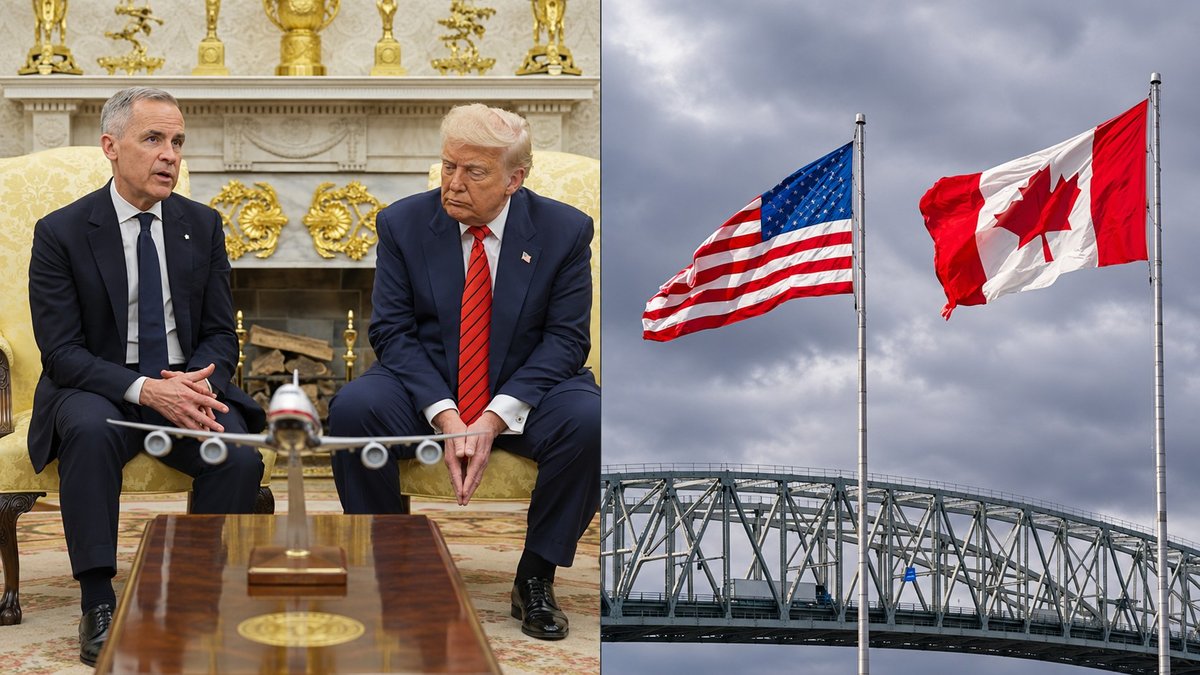
For most of this year, the fight over Trump’s tariffs on Canada has been a Canadian worry. That’s starting to change.
After the Nov. 3 midterms, the cost of the trade war has turned into an American political problem. Business leaders are pushing back in Washington. Economists are tallying what U.S. shoppers are paying. And Republicans who backed the tariffs are facing questions from voters who just handed both chambers of Congress to Democrats.
Meanwhile, the two governments are still talking.
U.S. Trade Representative Jamieson Greer told CNBC on Nov. 12 that Canada and the U.S. had spoken “within the past few days” about a deal. He said Prime Minister Mark Carney and President Donald Trump “speak regularly.” He gave no deadline. “The substance of the deal is more important than a timeline,” he said.
That’s the reality for businesses on both sides of the border. The political mood in Washington is shifting, but every tariff is still in place.

The backlash is coming from inside the U.S.
The loudest warnings this week came from Washington’s own business crowd.
At the B20 business summit in Washington on Nov. 11, Canada’s ambassador to the U.S., Mark Wiseman, argued that tariff whiplash is scaring off the very investment Trump wants.
“Uncertainty increases your cost of capital,” Wiseman said. “If you’re going to build a new plant, add a new ship, spend money on R&D, the more certainty you have, the more likely you’re going to do that.”

Gary Cohn, Trump’s former chief economic adviser, was blunter. He called tariffs “a consumption tax on the U.S. consumer.”
Even Greer acknowledged that critics call some of the administration’s tariffs “chaotic or reckless.” He said there’s “room to work with” incoming Democrats. He also said the U.S. is “going to keep taking trade actions as necessary.”
The White House shows no sign of backing off. “And we are just getting started,” Jim Goyer, director of the White House Office of Public Liaison, told the same summit, according to CNBC.
Why the midterms matter, and why they don’t settle it
Democrats won both chambers of Congress, and they’ve said Trump’s Canada tariffs are near the top of their list. We broke down their plan in Democrats Plan to End Trump’s Canada Tariffs and Repair Ties.
But winning Congress isn’t the same as winning the White House.
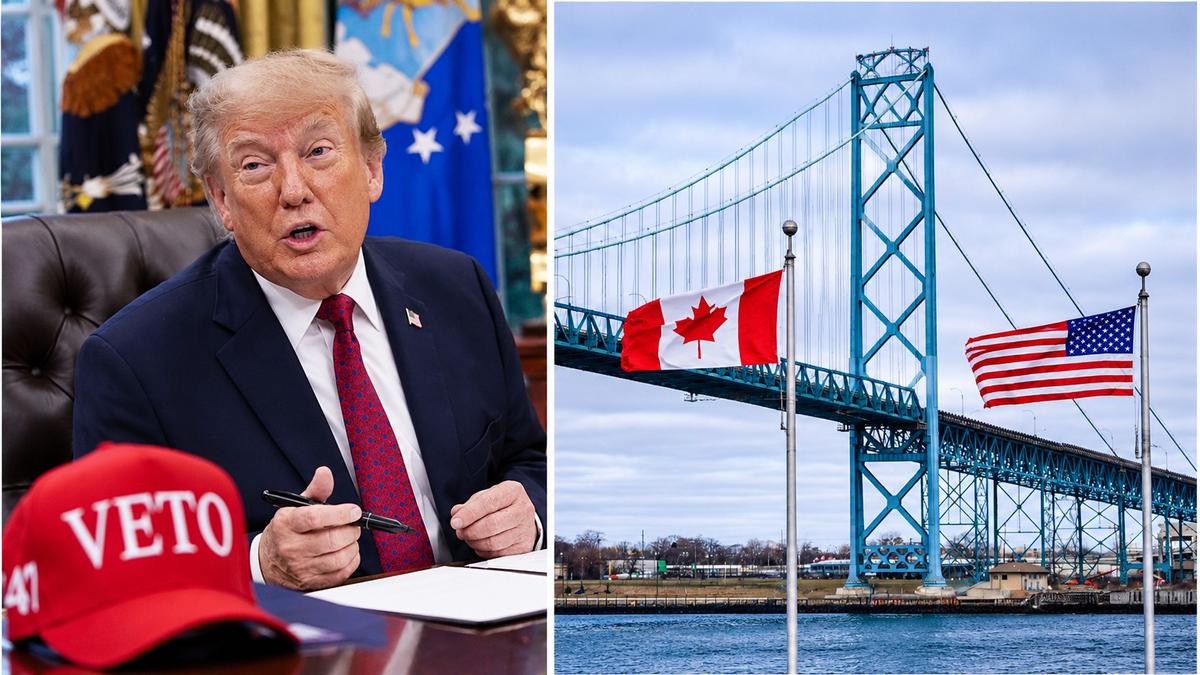
Trump can veto any bill that rolls back the tariffs. Overriding a veto takes two-thirds of both chambers: 67 senators and 290 House members. Democrats would need a lot of Republicans to cross over.
Timing works against them too. The new Congress isn’t sworn in until Jan. 3. Trump’s 50 per cent tariffs on Canadian cars, trucks, auto parts and steel are scheduled to start two days earlier.
So the most likely outcome isn’t one sweeping repeal. Watch for fights over specific products, and for pressure that pushes both governments toward a deal.
Who actually pays a U.S. tariff on Canadian goods?
A U.S. tariff is paid by the American company importing the goods. From there, the cost spreads.
A Congressional Research Service report says U.S. duties on Canadian imports rose to about $10 billion in 2025, up from $400 million in 2024. That’s 25 times higher, and it was collected from American importers.
How much of that reaches shoppers? Economists at the Federal Reserve Bank of New York looked at how tariffs passed through to prices. They found that for every one-point increase in average tariffs, U.S. consumer goods prices rose about a quarter of a point within a year.
In plain terms, a 10 per cent tariff on all imports would push consumer goods prices up about 2.6 per cent after 12 months.
About two-thirds of that comes from imported goods getting more expensive. The other third shows up in American-made products, because U.S. manufacturers pay more for imported parts and materials. The full effect takes about a year to work through.
That’s the irony at the centre of the debate. A tariff meant to protect American factories can raise costs for American factories that rely on Canadian steel, aluminum or components.

What it means if you’re an American living in Canada
Thousands of Americans live and work in Canada, and many follow this fight from both sides.
When you shop here, U.S. tariffs don’t show up on your receipt. Canada’s counter-tariffs can, on some American goods. If you run a business that sells into the U.S., or work for one, the tariffs on your products are what matter most.
And if you’re watching prices back home, the New York Fed’s research explains why relatives in the U.S. may be paying more for goods that never crossed a border.
Trade talks are happening, but there’s no deal yet
Greer’s comments confirm contact, not an agreement.
That matters after weeks of mixed signals. Trump said in late October that the two countries had the “concept” of a deal. Days earlier, Carney said Canada isn’t ready to sign one.
Foreign Affairs Minister Anita Anand, speaking at Oxford University on Thursday, said Washington now faces “a lame duck U.S. Congress” and that “it will take some time for the recalibration to occur.”
She said Ottawa won’t rush. “We will always negotiate in good faith,” Anand said. “We will always negotiate professionally, protecting Canadian interests and Canadian sovereignty at every turn.”
The tariffs Canadians are dealing with right now
According to the Bank of Canada’s October outlook:
About 80 per cent of Canadian exports to the U.S. still cross tariff-free, mostly because they qualify under CUSMA.
The average U.S. tariff on Canadian goods has risen to about 7.5 per cent, up from 5 per cent in July.
In August, the U.S. imposed 50 per cent tariffs on a range of Canadian goods, including machinery, plastics, furniture, and wood and paper products. They apply regardless of CUSMA, and in some cases on top of existing duties.
The U.S. also banned some Canadian alcohol and dairy products.
Crude oil and other energy, potash and critical minerals are exempt from those new tariffs.
Canada hit back with counter-tariffs on about $28 billion of U.S. goods, mostly steel, aluminum and other inputs.
An average is just that. Some products face no tariff at all, while others face 50 per cent or more.
Across the country, the pain lands differently
Every region feels this in its own way:
Ontario’s auto sector faces the Jan. 1 tariffs on cars, trucks and parts.
Quebec and Ontario steel and aluminum producers have been under tariffs the longest.
B.C. and other lumber regions face new tariffs on top of long-running softwood duties.
Alberta, Saskatchewan and Newfoundland are partly shielded, because oil, potash and critical minerals are exempt. But machinery, plastics and wood products from those provinces are hit like anyone else’s.
Dairy farmers and craft alcohol makers across the country face the U.S. bans.
The factory numbers show the strain
Statistics Canada reported Friday that manufacturing sales were essentially flat in September at $80.2 billion. That number hides a drop.
Adjusted for prices, factory sales fell 1.5 per cent. Sales dropped in 11 of 21 industries. Primary metals, which include steel and aluminum, fell 9.5 per cent. Wood products fell 7 per cent. Petroleum and coal products rose 10 per cent, mostly because prices went up.
In other words, Canadian factories sold fewer goods. Higher prices just kept the dollar total looking steady.
Ottawa is still putting money into helping businesses adapt through programs like the Regional Tariff Response Initiative. That helps companies buy equipment or find new markets, but it doesn’t make the duties go away.
Canadians are hopeful, but wary
A Leger survey of 1,527 Canadian adults, taken Nov. 6 to 9, found:
48 per cent think the midterm results will make it easier for Canada to get good trade terms. Only 7 per cent think it’ll get harder.
72 per cent see the results as good news for Canada.
38 per cent call the U.S. an enemy, down from 41 per cent in August. Only 20 per cent call it an ally.
Leger’s online panel isn’t a random sample, so a standard margin of error doesn’t apply.
Canada is still looking elsewhere
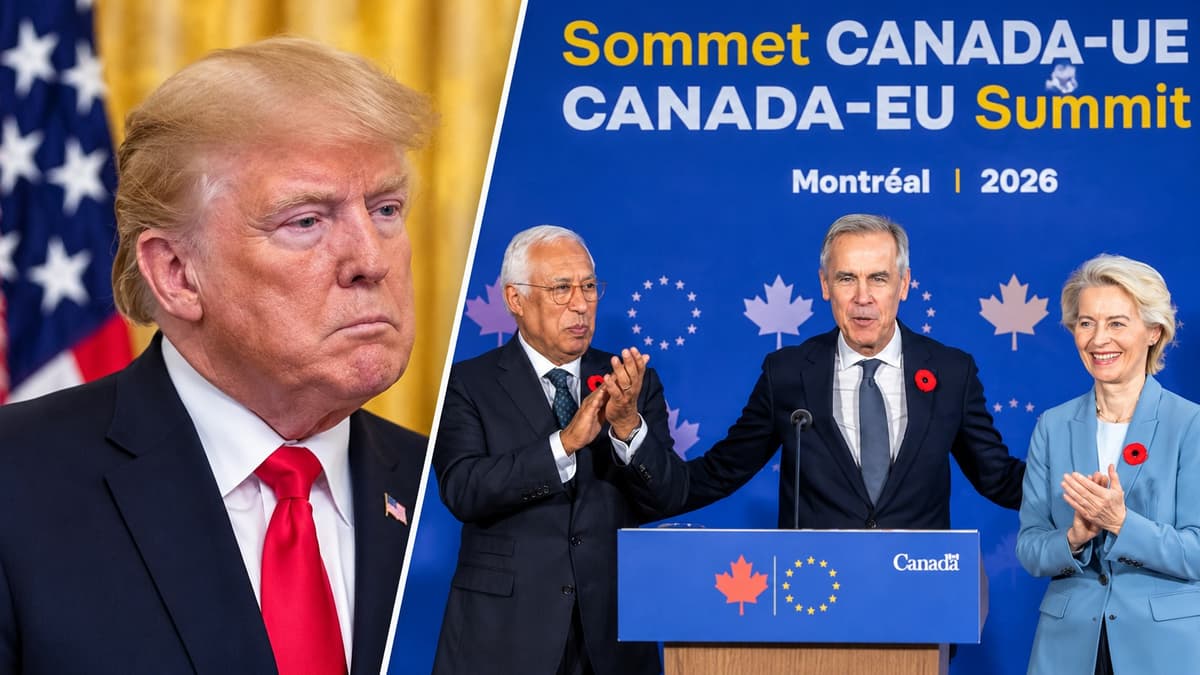
Ottawa wants to double trade with countries outside the U.S. over the next decade. That’s behind the new Canada-EU alliance, deeper ties with China and Prairie grain heading to Europe through the Port of Churchill.
Anand was clear about the limits. “Even when we double non-U.S. trade, 70 percent of our trade and commerce will be with the United States,” she said.
What would count as a breakthrough
Talk is cheap. Here’s what would actually change things:
Published terms: which products, what rates and when they take effect
Matching announcements from both Ottawa and Washington
A delay or cancellation of the Jan. 1 auto and steel tariffs
Republicans backing specific bills, not just grumbling about costs
Movement on CUSMA before its next annual review
Until then, the debate in Washington is shifting, the two governments are talking, and businesses in both countries are still paying.
Sources
Congressional Research Service: U.S.-Canada Trade Relations (IF12595, Sept. 2026)
Bank of Canada: Monetary Policy Report, October 2026, Tariff and other assumptions
Jamieson Greer interview, CNBC, Nov. 12–13, 2026
Leger, survey of Canadian adults, Nov. 6–9, 2026





Comments