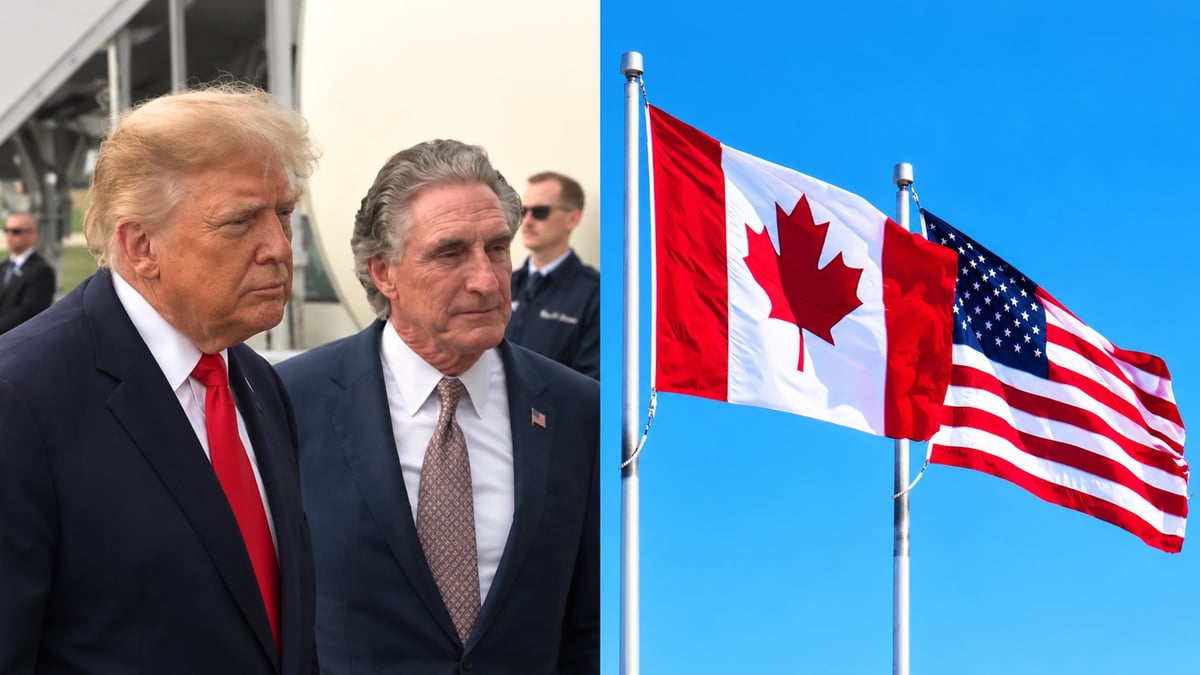
Donald Trump says Canada is going to build the Keystone pipeline and pay for every bit of it.
“We have the concept of a very good deal with Canada,” the president told reporters in Dubuque, Iowa, on Sunday, Nov. 1. “They’re going to build the Keystone Pipeline. They’re going to pay for it. They’re going to pay for all of it.”
“We’re going to give them the route, and it’s largely been determined.”
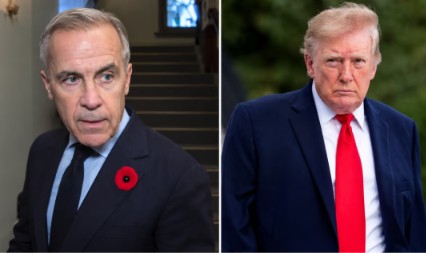
Mark Carney confirmed he’d spoken with Trump about trade. He didn’t mention a pipeline.
For Alberta, which has already lost money on Keystone XL once, the big question is who Trump means by “Canada.”
What Trump said
Trump called it the “concept” of a deal, one he said would be “great for our farmers.” That means the two sides are close, not finished.
He also went back to his favourite complaint about the relationship. “We’ve been losing money for many years with Canada,” he said. “Many, many years. Seventy, seventy-five years.”
He didn’t say whether “they” means Ottawa, Alberta or private companies, and he didn’t say which route he meant.
Trump has been circling this idea for months. In August, he said Keystone XL “may be awoken from the grave.”
What Carney actually said about the trade talks
Carney confirmed the talks, but his public statement didn’t mention Keystone or any Canadian promise to pay for it.
In a post on X on Sunday morning, Carney described a “good conversation with President @realDonaldTrump on the future of Canada-U.S. trade.”
“This builds on our recent constructive discussions on the outlines of a mutually beneficial trade deal that would create jobs for our workers, boost affordability for families, and fully respect Canada’s languages, culture, and sovereignty,” he wrote.
“Our teams will now be working in the coming weeks to deliver that outcome.”
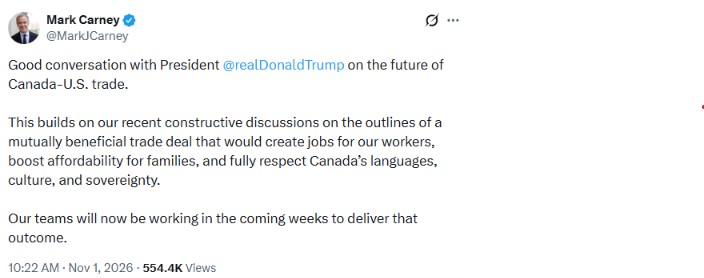
That wording matters. Carney described what the two sides are still negotiating toward. He didn’t announce a finished deal.
His statement doesn’t confirm or deny that Keystone came up privately. It doesn’t name a pipeline, a financing plan or who would pay. Trade Minister Dominic LeBlanc’s office had nothing to add, and Energy Minister Tim Hodgson’s office declined to comment.
It’s still a shift in tone. Four days earlier, Carney said Canada was “not at that position right now.”
Who would actually pay?
“Canada will pay” could mean very different things:
Private companies building and financing a commercial pipeline, the way most pipelines are built
Alberta taxpayers putting money in, as they did on Keystone XL in 2020
Ottawa backing it, as it did when it bought Trans Mountain
Those carry very different risks for Canadians. Neither leader has said which one is on the table.
Alberta has been burned on Keystone before
Keystone XL was a private project, led by TC Energy. But Alberta put public money behind it.
In 2020, Premier Jason Kenney’s government committed about $1.5 billion in equity and a $6-billion loan guarantee to help get it built.
On Jan. 20, 2021, his first day in office, President Joe Biden revoked the pipeline’s cross-border permit. TC Energy formally killed the project that June. Alberta later said its final cost would be “materially within $1.3 billion.”
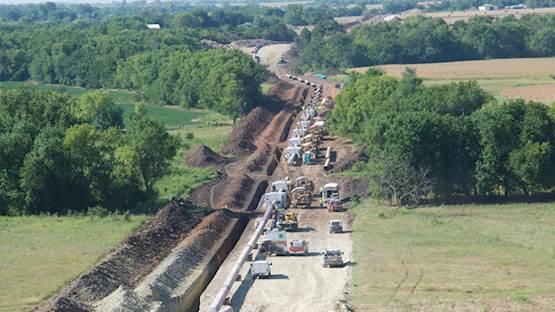
As planned, Keystone XL would have run about 1,947 kilometres from Hardisty, Alta., to Steele City, Neb., carrying up to 830,000 barrels a day of oil sands crude toward U.S. refineries.
Only the XL expansion was cancelled. The original Keystone pipeline system still runs today. TC Energy later spun its oil pipelines off into a new company, South Bow.
So when Trump says Canada will pay, Albertans have reason to ask for the details first.
Which pipeline would actually get built?
There’s already a proposal that reuses part of Keystone XL.
South Bow’s Prairie Connector would run from Hardisty to the Montana border and link up with U.S. partner Bridger Pipeline’s system heading toward Wyoming, carrying about 550,000 barrels a day. On the Canadian side, it would use about 380 kilometres of new pipe and about 150 kilometres of Keystone XL pipe that was already laid and preserved, plus two pump stations.
South Bow is aiming for a final investment decision in mid-2027. That’s the decision on whether to build, not a start or finish date. It’s a private project, and the company was unavailable for comment Sunday.
Trump said the route is “largely determined.” It could be the original Keystone XL path, Prairie Connector or something new. Reusing some old pipe isn’t the same as bringing all of Keystone XL back.
What else is in the deal?
For Trump, farmers are a big part of the pitch. He talked about eliminating Canadian tariffs on American agricultural exports, though no details have been confirmed.
On the Canadian side, the main target has been relief from U.S. tariffs of up to 50 per cent on steel and 25 per cent on autos, along with the 50 per cent tariffs on a long list of other goods that took effect in August.
Until both governments release terms, those are each side’s goals, not commitments.
Why Alberta oil sits at the centre
Canada is the world’s fourth-largest oil exporter, and more than 90 per cent of its crude goes to the U.S. Most of it comes from Alberta.
That oil is a big part of the trade deficit Trump keeps calling a loss. Last week, he claimed the U.S. “lost $90 billion” to Canada last year. His own trade office puts the 2025 goods deficit at US$48.3 billion, much of it energy that American refineries need.
Another pipeline south would tie even more Alberta oil to American buyers. That cuts against Ottawa’s recent push to reach other markets, from naming the Alberta-to-B.C. Pacific Link pipeline Canada’s first project of national interest to Carney’s new alliance with Europe.
Read more: Alberta-to-B.C. Pacific Link Pipeline Named Canada’s First Project of National Interest
Canada can do both, though: negotiate better access to its biggest customer while building up others.
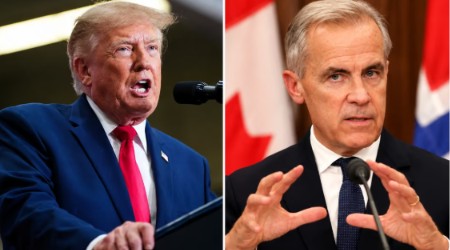
How we got here
Talks fell apart on Aug. 22, when Carney said the U.S. made last-minute demands on Canada’s other trade deals, French-language protections and autos. Canada answered Trump’s tariffs with dollar-for-dollar counter-tariffs.
Since then, Trump has said Canada was being “taught a little lesson,” was “willing to give us anything” and was “learning their lesson.”
What happens next
It’s a busy week. Americans vote in the midterms Tuesday, and tariffs on Canada have become an issue in border states like Michigan and Maine. Canada’s federal budget is due Thursday.
Carney says negotiators will work “in the coming weeks.” No deal text has been released.
A confirmed Keystone deal would need several things neither leader has offered yet: a signed agreement, a named developer, a financing plan, a route and U.S. permits.
Until then, Trump says Canada will pay for all of it. Canada hasn’t said it will.

Comments