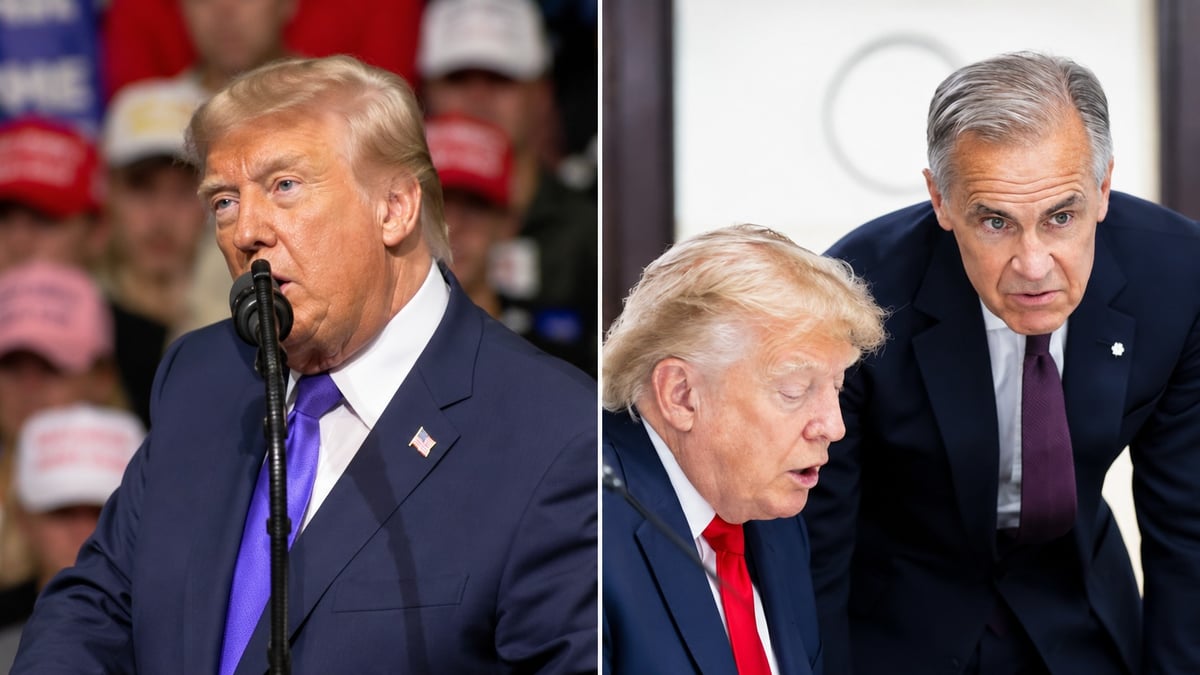
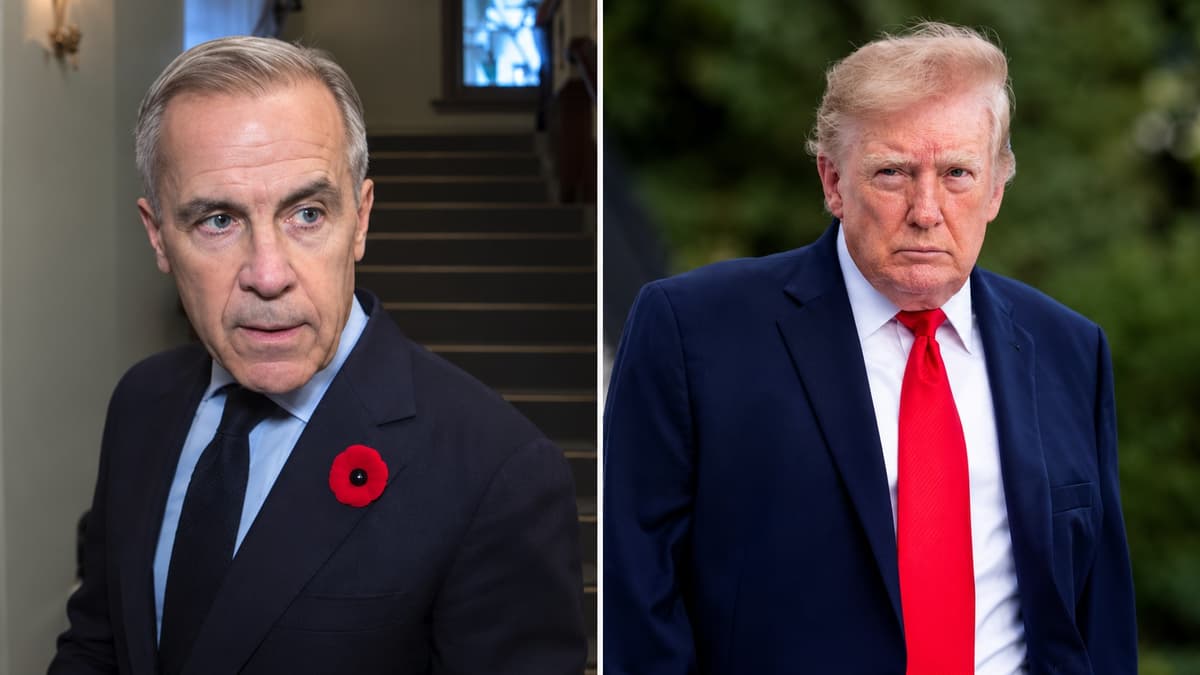
A month ago, Donald Trump said Canada was being “taught a little lesson.”
Now he says it’s learned it.
“Canada is learning their lesson,” the president told a campaign rally in Rock Hill, S.C., on Thursday. “They took advantage of us for many, many years. We lost $90 billion last year with Canada.”
His own trade office doesn’t agree. The Office of the U.S. Trade Representative puts the 2025 U.S. goods deficit with Canada at US$48.3 billion. Once trade in services is counted, the overall gap is closer to US$20 billion.
Trump also credited his tariffs for what he described as a new attitude in Ottawa. “Now we put tariffs on them, and they’re treating us extremely nicely lately.”
A day earlier, a Canadian official said trade talks had made “limited progress.”
What Trump said
Trump was in South Carolina campaigning for Republican Sen. Darline Graham, five days before the U.S. midterms. Canada came up while he was criticizing past presidents on trade.
“If you have a stupid president, and we had a lot of them, to be honest, because we got killed on trade,” he said. “Canada is learning their lesson.”
“We don’t mind helping them out, but we’re not going to subsidize Canada to do $90 billion,” he said. “And now we put tariffs on them, and they’re treating us extremely nicely lately.”
Then he moved straight on to Mexico. “Mexico also. I mean, they’re not happy that I changed the name of the Gulf of Mexico to the Gulf of America.”
He didn’t say what Canada had done to earn the compliment.
Is the $90 billion number right?
No.
| U.S. figure for 2025 | |
|---|---|
| Trump’s claim | US$90 billion “lost” |
| Goods deficit with Canada | US$48.3 billion |
| Services surplus with Canada | US$27.7 billion |
| Overall gap, goods and services | About US$20.6 billion |
Source: Office of the U.S. Trade Representative
Trump’s number is almost double the official goods deficit, and more than four times the overall gap.
A deficit also isn’t a loss or a subsidy. It means Americans bought more Canadian goods than Canadians bought American goods. A big share of what the U.S. buys is energy, meaning crude oil, natural gas and electricity.
Trump has used different figures over the past year, at times saying US$200 billion. None of them match his own trade office.
Where the talks actually stand
Ottawa isn’t describing the relationship the way Trump is.
“While discussions have continued, there has been limited progress,” a Canadian government official with knowledge of the talks said Wednesday.
The two sides are trying to ease U.S. tariffs on Canadian steel, which run as high as 50 per cent, and on autos, at 25 per cent. Dominic LeBlanc and U.S. Commerce Secretary Howard Lutnick have been talking directly.
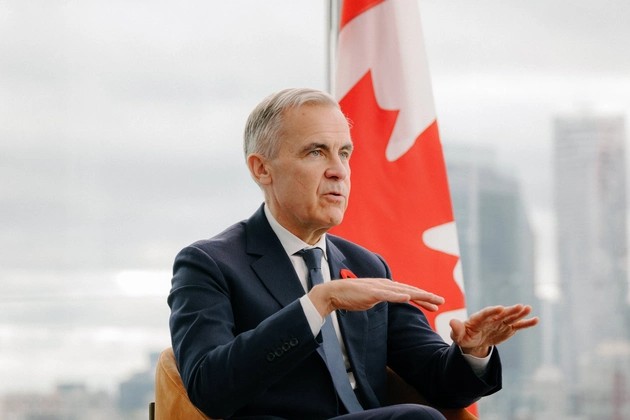
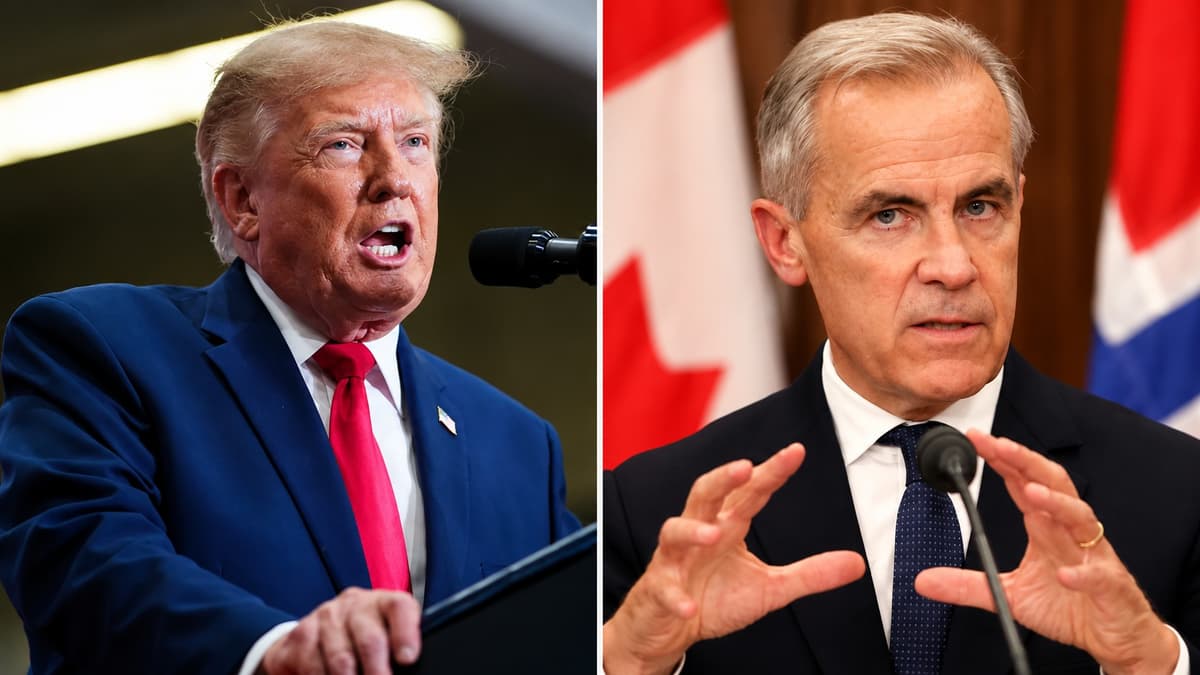
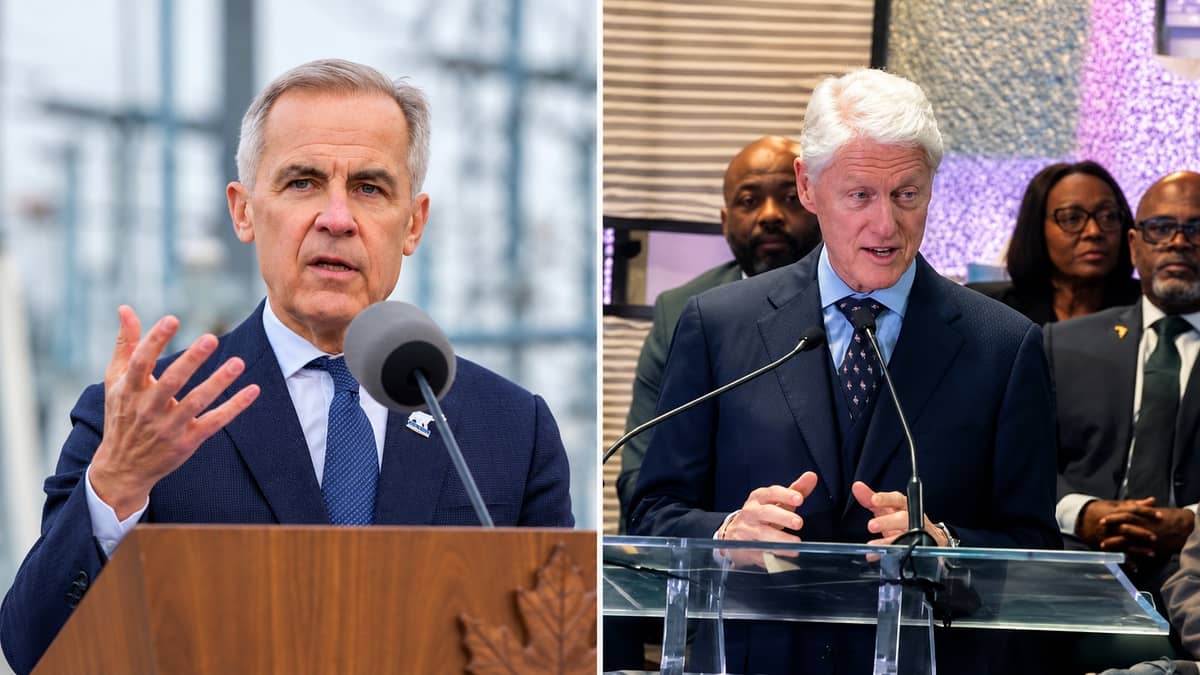
Mark Carney isn’t rushing. “If those deals present themselves, we will pursue them,” the prime minister said Wednesday. “But we’re not at that position right now.”
Which tariffs are in place
Not every Canadian product faces the same rate.
In August, Trump put 50 per cent tariffs on a long list of Canadian goods, from wine to hockey sticks to cement, under a rarely used 1930s trade law. Steel faces tariffs of up to 50 per cent, and autos 25 per cent, under separate U.S. national security tariffs.
Canada walked away from talks on Aug. 22. “In short, they asked too much, and they offered too little,” Carney said at the time. U.S. Trade Representative Jamieson Greer said Canada backed away from terms agreed earlier that week. Canada answered with retaliatory duties of its own.
Washington has changed the list several times since. The latest changes took effect Friday, removing some Canadian products from the 50 per cent list and adding others.
From “a little lesson” to “learning their lesson”
Thursday’s line follows a month of shifting messages about Canada on the campaign trail.
On Sept. 30, Trump said Canada was being “taught a little lesson.” The same week, a poll found just 26 per cent of Americans still called Canada a close ally, down from 62 per cent in 2023.
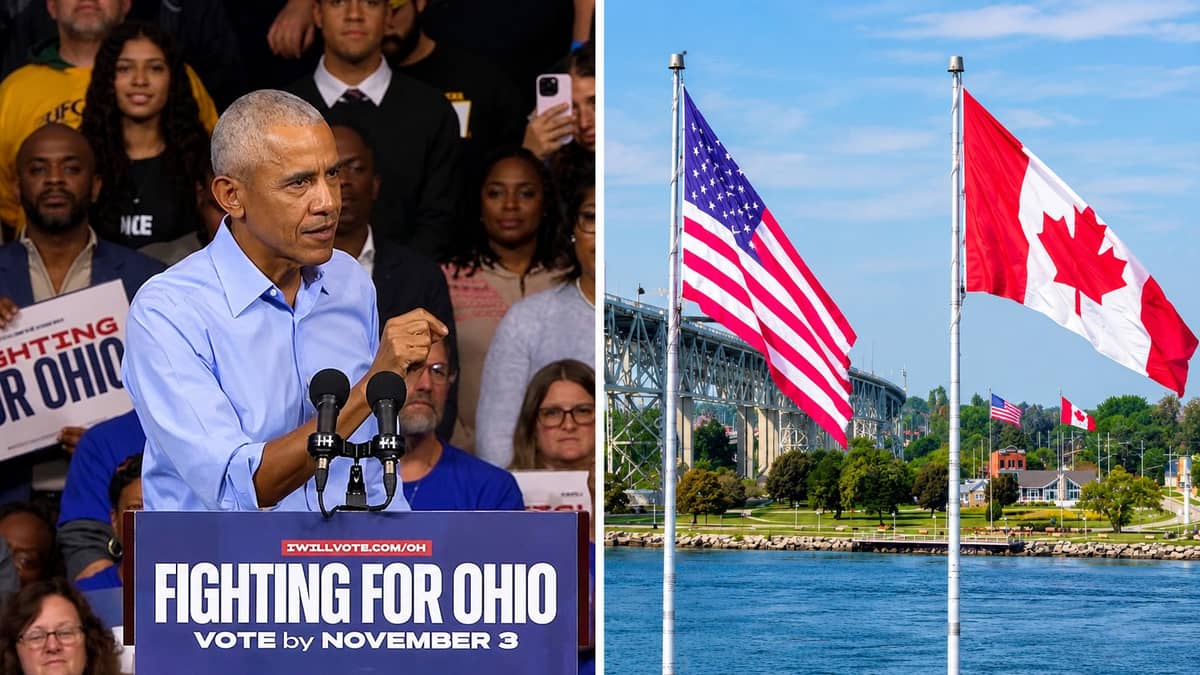
On Oct. 24, Barack Obama mocked the trade war in Detroit. “They’re so nice,” he said of Canadians. “And somehow we’ve gotten them so mad.”
On Oct. 25, in Port Huron, Mich., Trump said Canada was “willing to give us anything” and predicted the trade war would be “settled pretty soon.”
Four days later, Canada was “learning their lesson.”
Canada’s other trade partner
While Trump was talking about Canada in South Carolina, Carney was in Montreal hosting the Canada-EU summit. He said Canada would become the European Union’s first “associate” member, a partnership that stops short of joining. The two sides committed to define what that means by the 2027 summit.
Carney’s goal is to double Canada’s exports to countries other than the U.S. over the next decade. Right now, the U.S. buys about 72 per cent of them.
What’s next
Americans vote Tuesday, Nov. 3. Every House seat and about a third of the Senate are on the ballot.
No deal has been announced. The tariffs and the counter-tariffs are still in place. Trump says Canada has learned its lesson. Ottawa calls the progress limited.


Comments