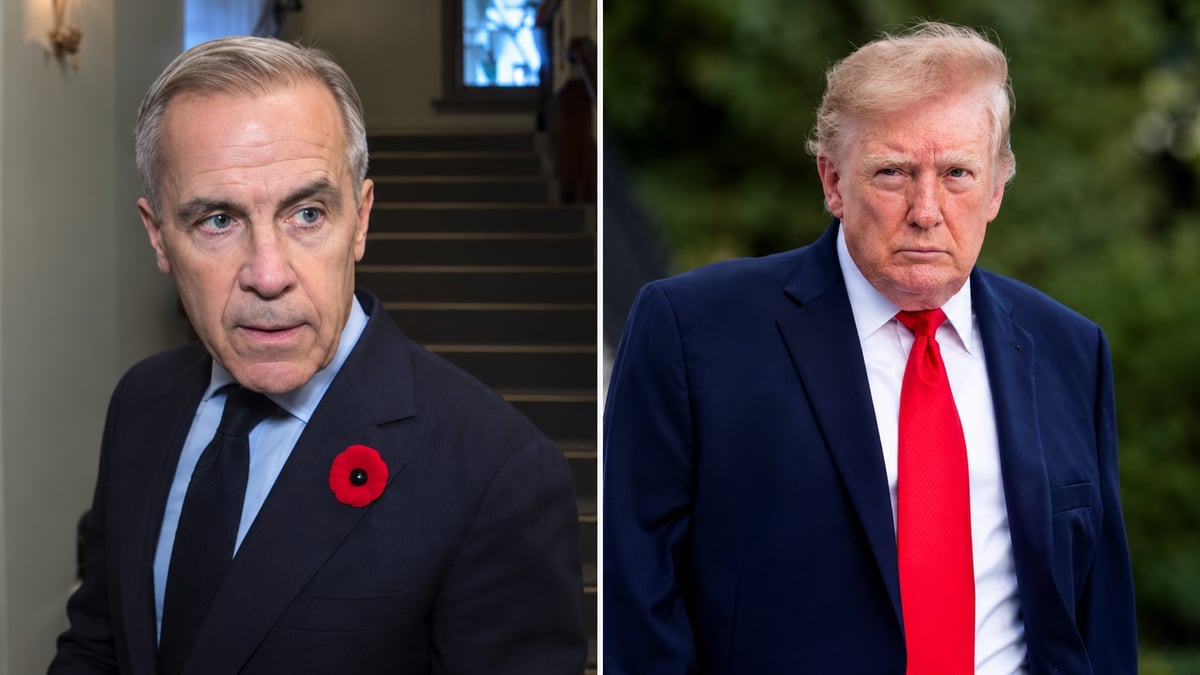
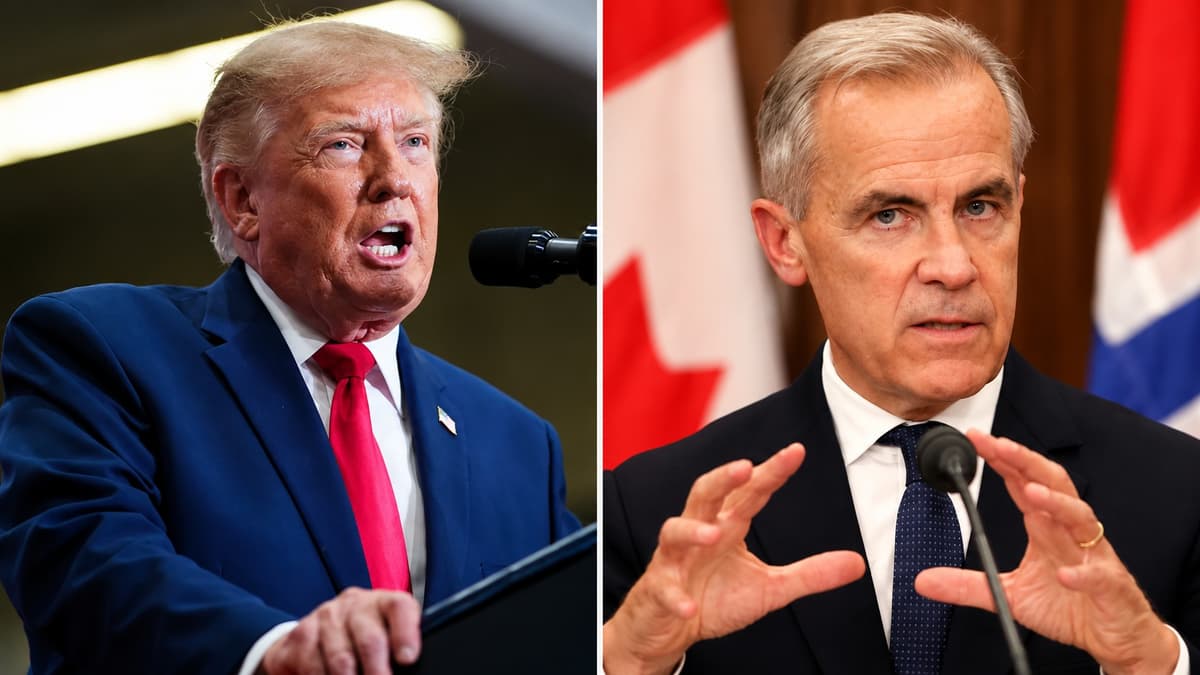
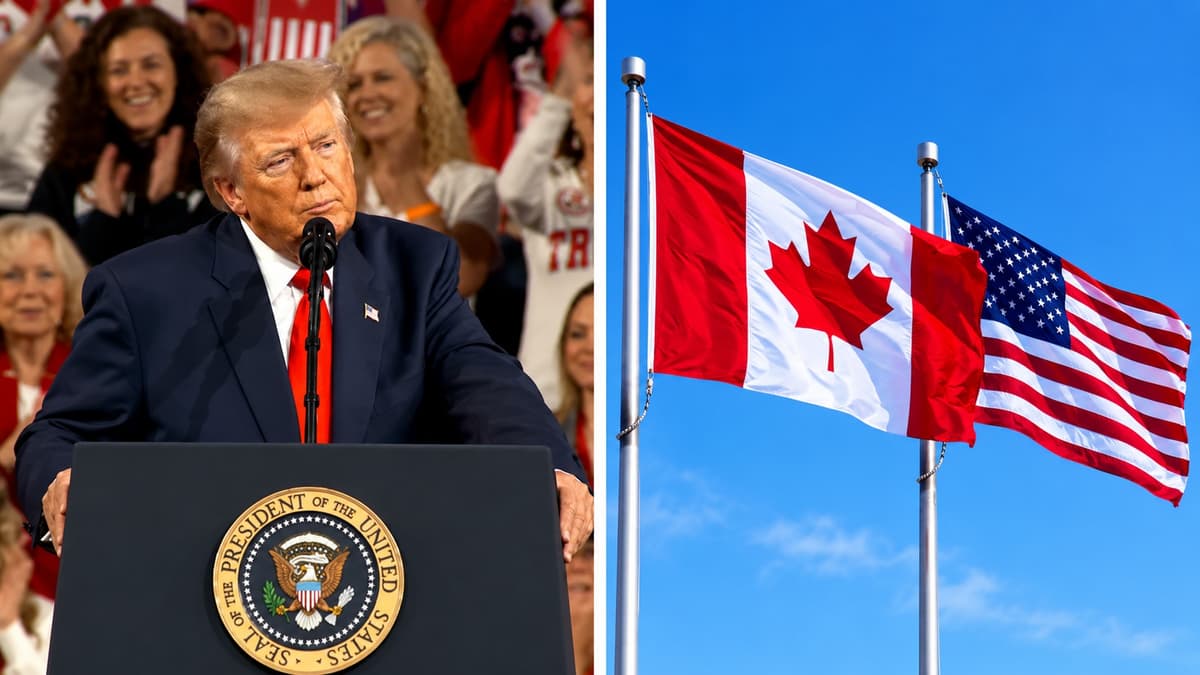
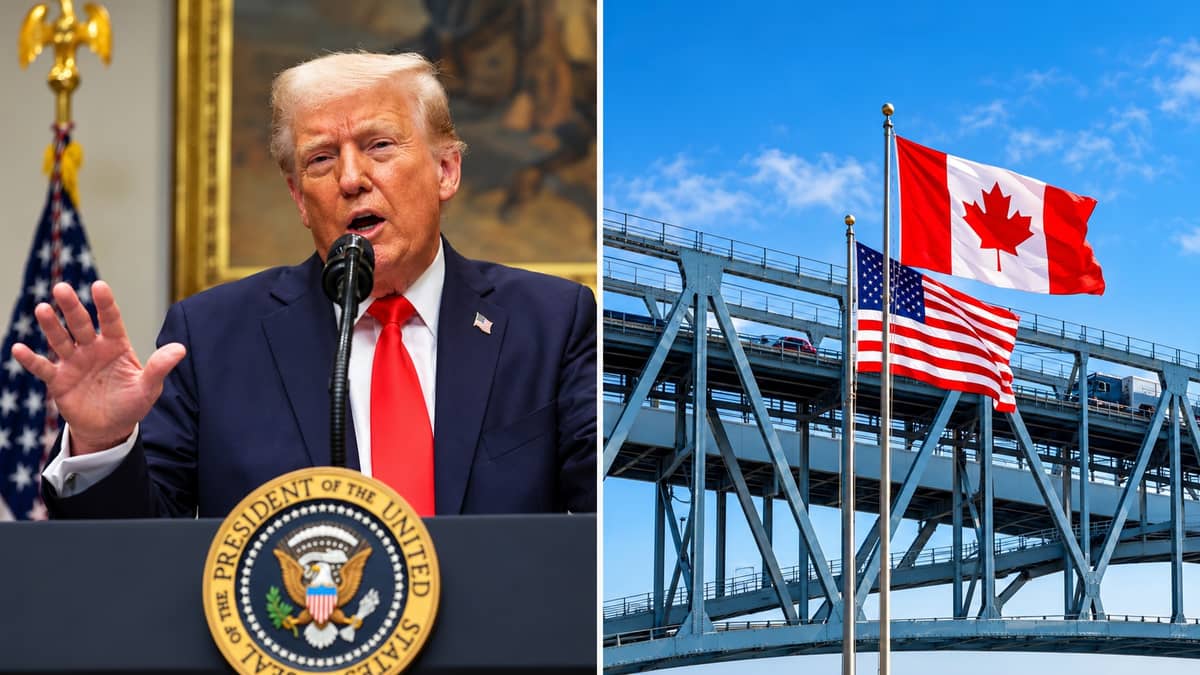
Mark Carney says Canada isn’t ready to sign a trade deal with Donald Trump, and the U.S. midterms won’t change that.
On Wednesday, the prime minister was asked on Parliament Hill, on his way into the weekly Liberal caucus meeting, whether the Americans were setting Canada up to be the “fall guy” ahead of the Nov. 3 vote.
“Well, that’s an interesting way of framing it,” Carney said.
“We are prepared to have a good deal for Canadians, the right deal for Canadians.”
He said Canada would take a deal that’s in its interest “first and foremost, but also in the interest of the United States.”
“If those deals present themselves, we will pursue them,” he said. “But we’re not at that position right now.”
The question wasn’t random. Hours earlier, CTV News reported that U.S. Ambassador Pete Hoekstra had told a private business lunch in Ottawa that Canada could take the blame if Trump’s Republicans lose key races next week.
What Hoekstra reportedly said
According to three sources who spoke to CTV News, Hoekstra made the comments Tuesday at a lunch at his official residence. The event was off the record, and the sources weren’t authorized to discuss it.
The sources said Hoekstra named Michigan and Maine, two states with important Senate races. He reportedly warned that if Republicans lose those contests, things could get harder for Canada after the election, because the president wouldn’t be happy and Canada could be blamed.
The U.S. embassy disputes that account. A spokesperson told CTV the “reported comments are grossly taken out of context from a broader discussion,” but didn’t say what the broader context was.
“Americans will decide American elections based on issues that are important to them,” the spokesperson said.
Beth Burke, CEO of the Canadian American Business Council, which helped organize the lunch, said Hoekstra “spoke very positively about the U.S.-Canada relationship and his hopes that a deal will be reached.”
Carney didn’t mention Hoekstra or the lunch in Wednesday’s exchange.
This fight has been building for weeks
Hoekstra has been pointing at Canada for most of October.
In a podcast interview earlier this month, he said some Canadian actions “could be inferred to be election interference” under U.S. election norms. He said American officials were “monitoring it” and that “America will respond to it” if it crossed the line.
He pointed to Industry Minister Mélanie Joly’s comment that Canada would “target tariffs in politically sensitive states.” He also brought up Ontario’s anti-tariff TV ads from last year, which used Ronald Reagan’s voice.
On Oct. 21, the U.S. embassy went further. It released a list of quotes from Canadian politicians, mostly Joly, that it said showed “plans to influence American politics.” Ontario Premier Doug Ford was also on the list.
Two days later in Istanbul, Carney shot back.
“There is no merit to these claims,” he said. “I’m disappointed that their envoy sees that as his role, to make these suggestions.”
Canada keeps coming up on the U.S. campaign trail
Hoekstra’s reported warning is just the latest example. Canada has become a regular talking point on the American campaign trail, and not just for Trump.
On Sept. 30, Trump said Canada was being “taught a little lesson.” Around the same time, an AP-NORC poll found that just 26 per cent of Americans considered Canada a close ally, down from 62 per cent in 2023.
On Oct. 19, Trump joked at a Kansas rally that Canada could keep hockey and O Canada if it became the 51st state. The next day, a New Jersey food importer sued to have his Canadian tariffs declared illegal.
Democrats have been talking about Canada too. On Oct. 20, Bill Clinton said the U.S. is treating its allies “like they’re dirt” and called Carney “about the most well-qualified leader in the world.”
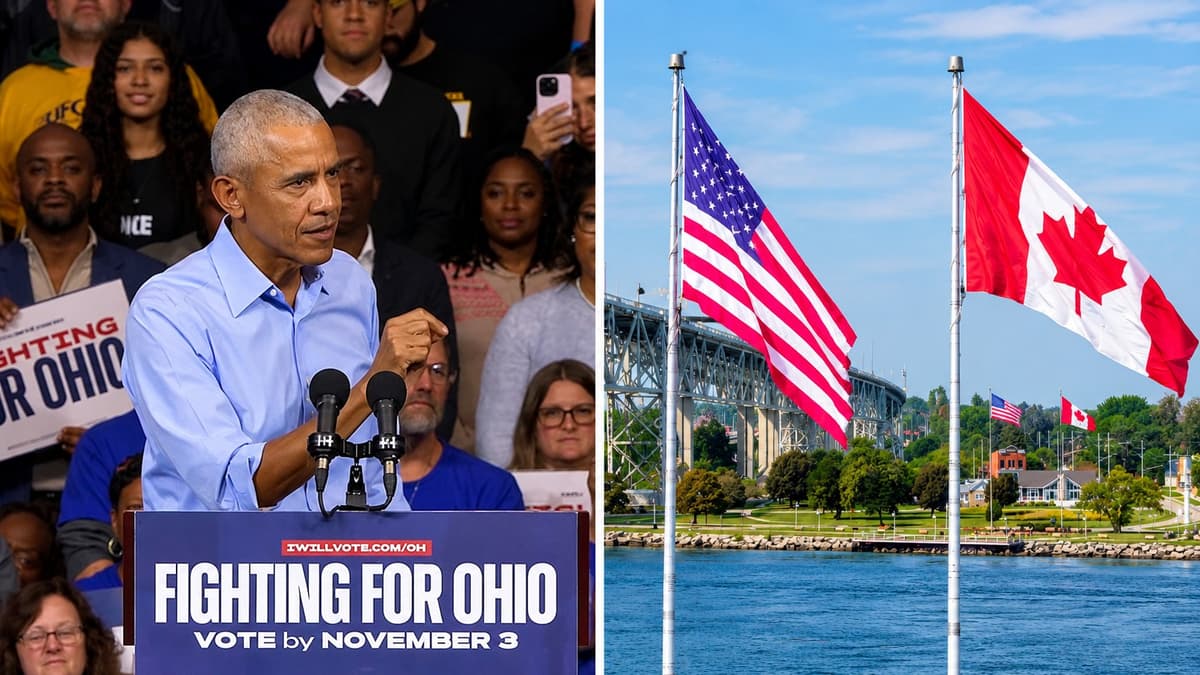
Four days later, Barack Obama mocked the trade war at a rally in Detroit. Michigan is one of the two states Hoekstra reportedly named.
“They’re so nice,” Obama said of Canadians. “And somehow we’ve gotten them so mad.”
In less than a month, Canada has gone from the target of Trump’s tariff talk to a talking point for Democrats attacking his policies. Now, according to CTV News, Trump’s ambassador has privately warned that Canada could take the blame if Republicans lose.
Why Michigan and Maine
Trump’s tariffs on Canada have turned into a campaign problem for his own party in both states.
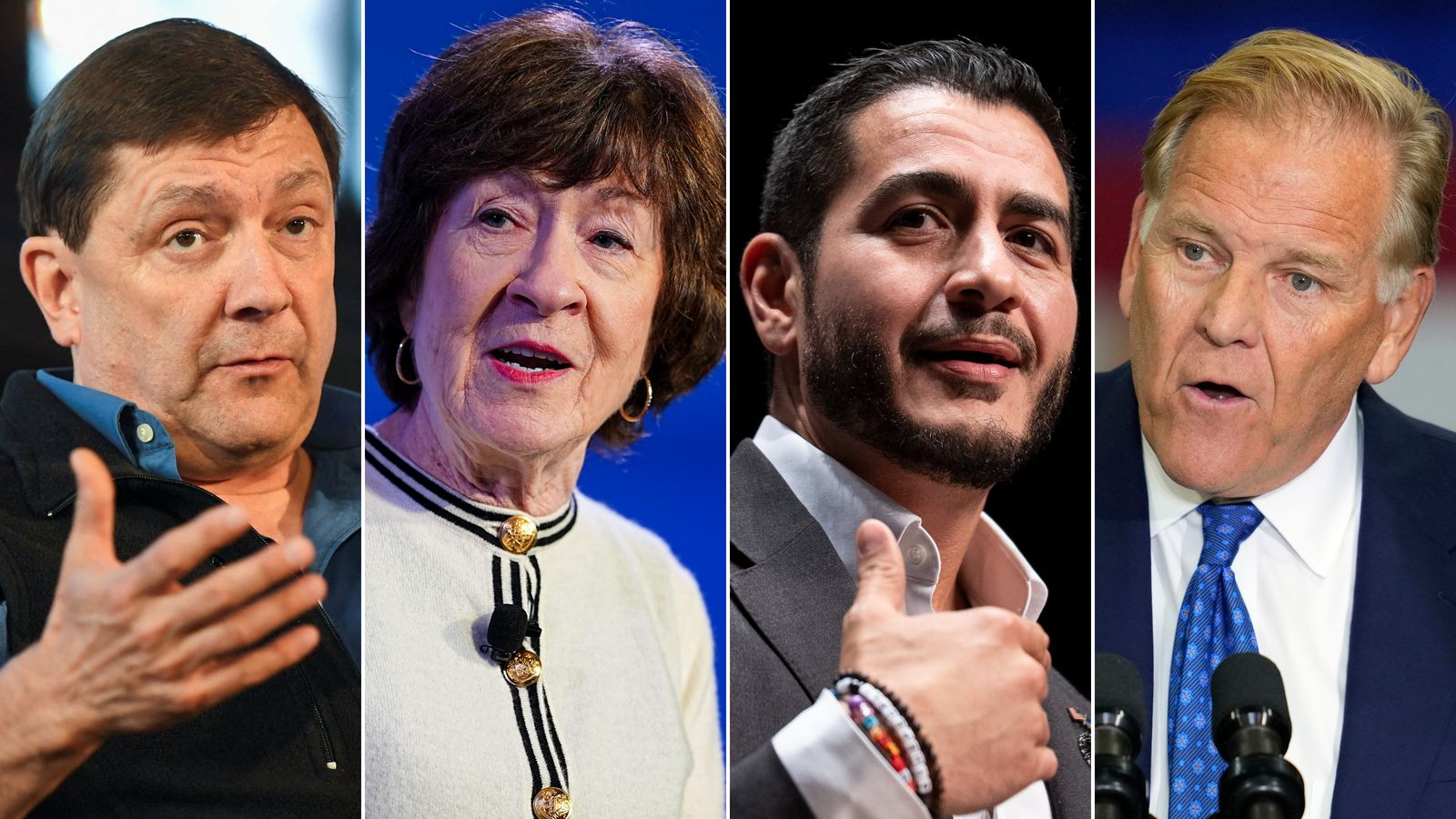
Maine trades heavily with New Brunswick and Quebec, and Republican Sen. Susan Collins is fighting to keep her seat. Last Friday, Trump announced he would lift some 50 per cent tariffs on Canadian goods, effective Oct. 30. According to Collins’s office, the exemptions cover blueberries, potatoes, apples and seaweed, along with packaging, refrigeration equipment and machinery. Collins said she won the relief by lobbying U.S. Trade Representative Jamieson Greer and Commerce Secretary Howard Lutnick directly.
Michigan builds cars with parts that cross the Ontario border, sometimes more than once. Its Republican Senate candidate, Mike Rogers, has run an ad calling on Trump to end the trade war with Canada. That’s an unusual message from a candidate in Trump’s own party, and it’s the same trade war Obama mocked in Detroit days later.
Every House seat and about a third of the Senate are on the ballot. Republicans hold both chambers now. As of Tuesday, the non-partisan Cook Political Report rated the House as leaning Democratic and the Senate as a toss-up.
How we got here
The 50 per cent tariffs came first. Trump signed them in July under a rarely used 1930s trade law, citing Canadian treatment of U.S. vehicles, alcohol and dairy. They took effect Aug. 19 and covered a wide range of Canadian goods, from wine to hockey sticks to cement. The Associated Press puts the total at roughly $20 billion in goods.
Days later, on Aug. 22, Canada walked away from the talks.
Carney said the U.S. made new demands in the final hours. They included limits on Canada’s ability to sign trade deals with other countries, auto terms Ottawa wouldn’t accept, and pressure on Canada’s cultural and French-language protections.
“The U.S. introduced at the last hours, in the last hour, efforts to restrict our ability to have other trade deals,” Carney said at the time. “It’s a power play.”
“In short, they asked too much, and they offered too little.”
U.S. Trade Representative Jamieson Greer disputed that, saying Canada backed away from terms agreed earlier that week.
Since then, Washington has expanded and adjusted the tariff list more than once, and Canada has answered with retaliatory duties of its own.
Talks are moving, but not fast enough for Ottawa
The two sides are talking again, and both are sounding a little more hopeful.
On Monday, Carney said there had been a “slight, slight intensification” in talks. “To the extent any progress has been made, it’s because the U.S. is coming closer to our position,” he said.
Trump was more confident at a rally in Port Huron, Mich., on Sunday. “We’ll have that settled pretty soon,” he said. “They’re willing to give us anything at this moment.”
Behind the scenes, the gap looks wider. Global News reported that Trade Minister Dominic LeBlanc is leading Canada’s side at the political level. It also reported that Canada’s lead negotiator, Janice Charette, said formal talks between trade officials haven’t started. Reuters has reported that the two countries are looking at a narrower deal covering tariffs on Canadian steel and autos.
Nothing has been announced.
What happens after Nov. 3
If there’s no deal by election day, the talks don’t end. The political math in Washington just changes.
A Democratic House or Senate couldn’t cancel Trump’s tariffs on its own, because the White House controls most trade policy. It would give his critics more power to push back, and some of those critics are Republicans from border states.
The other possibility is the one Hoekstra reportedly raised: a bad night for Republicans and a president looking for someone to blame.
For now, Carney’s answer is that Canada will sign when the deal is right, not when the calendar says so.
Sources
CBC News video: Canada’s not in a ‘position right now’ to agree to a U.S. trade deal: Carney
CTV News, “EXCLUSIVE: Hoekstra tells closed-door meeting Canada could be blamed if U.S. midterms go against Trump,” Oct. 28, 2026 (add direct link)


Comments
Conversation