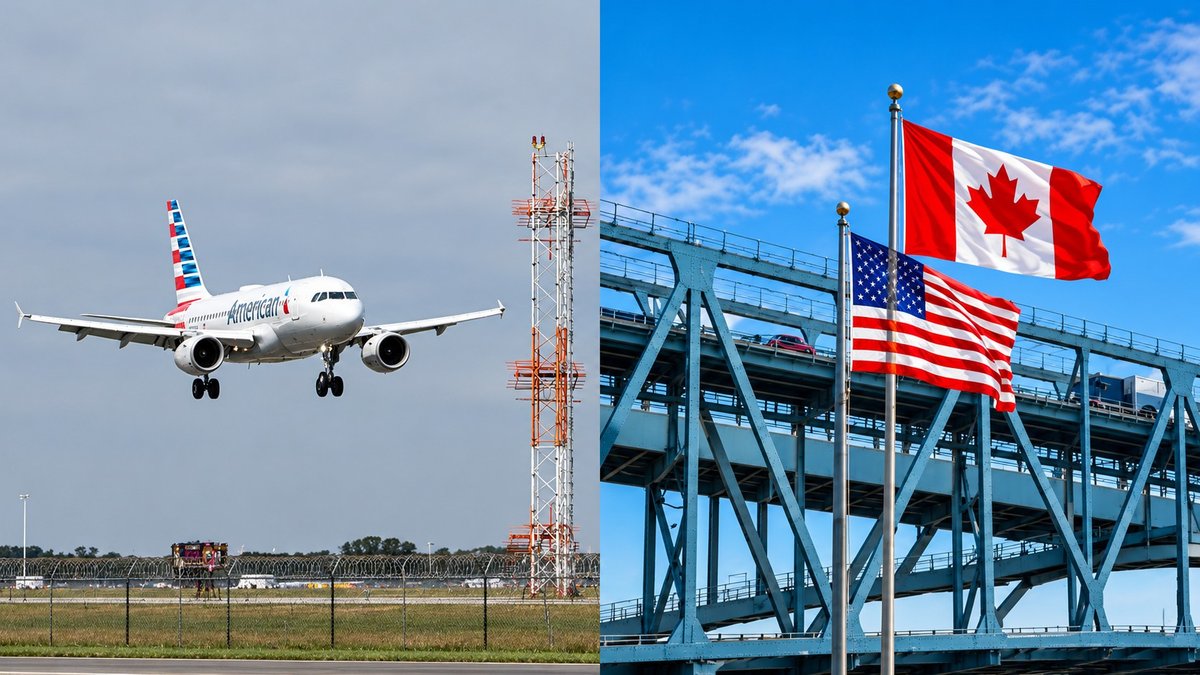
Canada and the U.S. are fighting a trade war. On Friday night, Canada offered to help its neighbour anyway.
As a communications failure halted departures at airports across the United States, Transport Minister Steven MacKinnon said Ottawa was ready to take American flights if needed.
“Canada has offered its full assistance to the Federal Aviation Administration (FAA) as it manages the situation, including accommodation of US-bound aircraft as required,” MacKinnon posted on X.
“We remain ready to provide support to our American colleagues as the situation evolves.”
In plain terms, if planes headed for the U.S. needed somewhere to land, Canadian airports would take them.
The FAA lifted its nationwide ground stop Friday evening, more than four hours after it began. For thousands of passengers, the disruption isn’t over.
What Canada offered, and what happened next
MacKinnon’s offer was about room on the ground: space for U.S.-bound aircraft that couldn’t get where they were going.
An offer isn’t the same as planes landing. As of 7:32 p.m. ET, the U.S. had not taken Canada up on it, according to travel industry publication Open Jaw. Neither Ottawa nor Nav Canada has said how many diverted U.S. flights, if any, ended up in Canada.
Earlier in the afternoon, MacKinnon had said Ottawa was monitoring the situation and in contact with Nav Canada. “While Canadian systems are operating normally, travel to the United States may be disrupted as a result of the ground stops,” he said then.
How the outage unfolded
| Time (Friday, Nov. 13) | What happened |
|---|---|
| 3:36 p.m. ET / 2:36 p.m. Alberta | Problems begin affecting radar and communications at U.S. air traffic facilities, according to Transportation Secretary Sean Duffy |
| 3:54 p.m. ET / 2:54 p.m. Alberta | The FAA orders a nationwide ground stop |
| Early evening | MacKinnon offers Canada’s “full assistance” |
| 8:15 p.m. ET / 7:15 p.m. Alberta | The FAA lifts the ground stop |
That’s about four hours and 21 minutes of grounded departures.
Planes already in the air were allowed to keep flying. More than 3,500 were airborne when the order came down, Duffy said. International flights were handled case by case.
By 7:05 p.m. ET, at least 827 flights had been diverted, according to aviation data firm Cirium.
What went wrong
Duffy said overloaded switches and routers in the FAA’s aging air traffic network were producing inconsistent data, which disrupted radar and communications. Officials grounded departures to keep things safe.
There’s no evidence of a cyberattack, according to Homeland Security Secretary Markwayne Mullin. The system was rebooted, and the underlying failure is still under investigation.
The outage came three days after the FAA expanded a new traffic management system called SMART. Nothing so far links the two.
It’s only the third time in 25 years that the U.S. has grounded flights nationwide. The others were after the Sept. 11, 2001, attacks and during a computer failure in January 2023.
Help, in the middle of a trade war
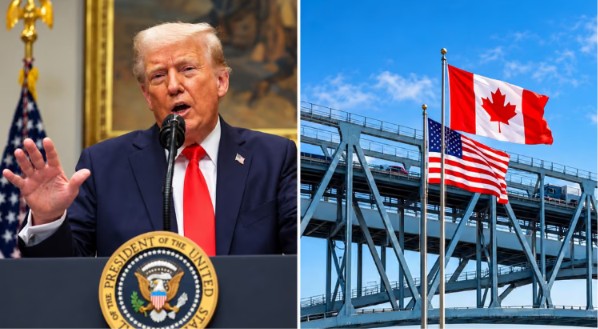
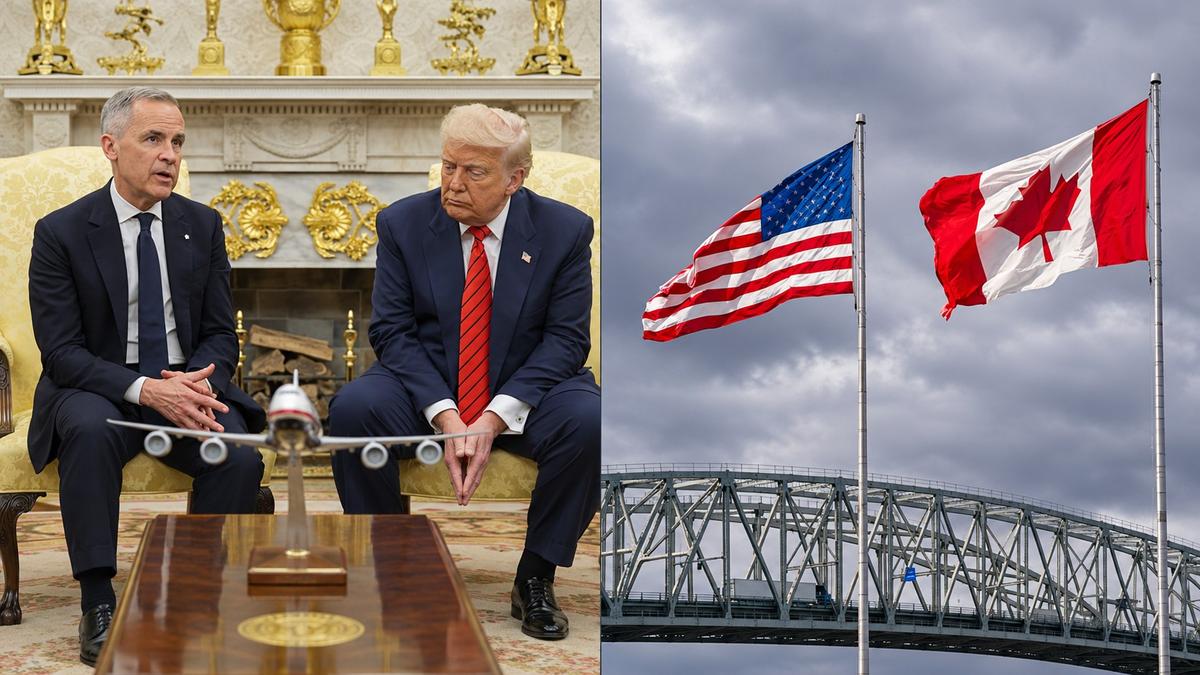
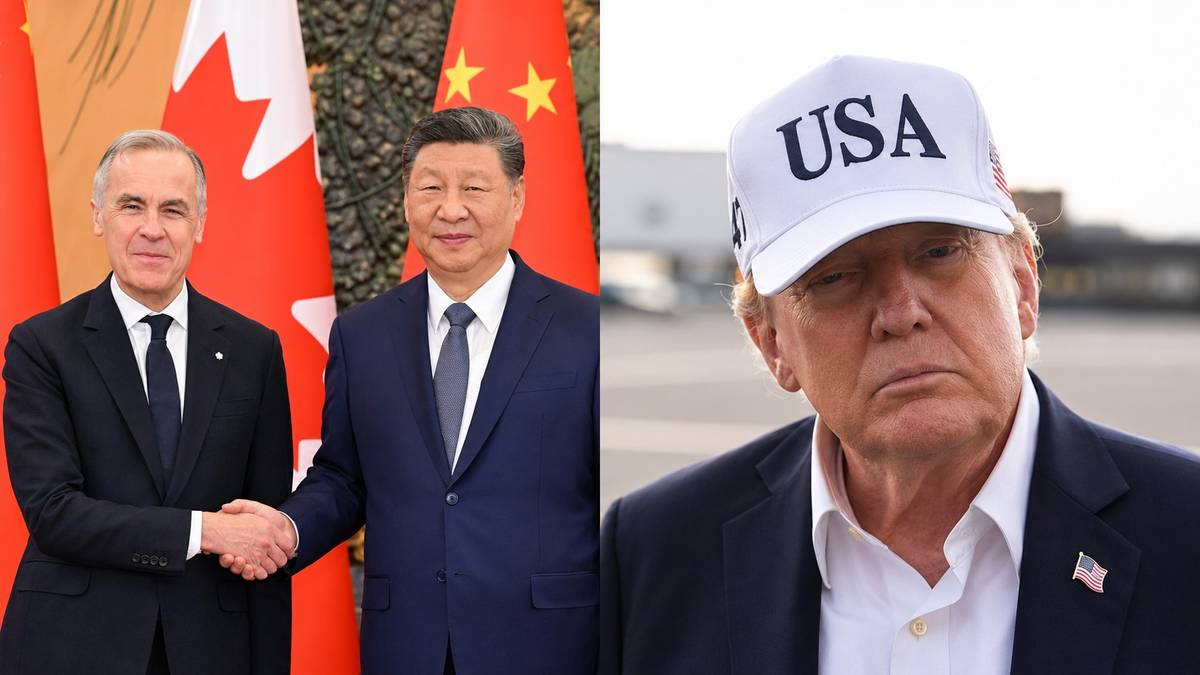
The offer landed at a tense moment between the two countries.
Trump’s tariffs on Canadian goods are still in place, and there’s no trade deal. Fifty per cent tariffs on Canadian cars, trucks and auto parts are scheduled to start Jan. 1. Talks are ongoing, but Washington has set no deadline.
Trump also keeps returning to annexation. In October, he said Canada could keep hockey and “O Canada” as the 51st state, then said he was kidding. Later that month, he claimed his tariffs had Canada “learning their lesson” and “treating us extremely nicely.”
It’s taken a toll on how Canadians see their neighbour. In a Leger survey taken Nov. 6 to 9, 38 per cent of Canadians described the U.S. as an enemy. Just 20 per cent called it an ally.
MacKinnon’s post said nothing about trade. It was about airplanes and keeping people safe. Coming in the middle of a trade war, though, the gesture stood out.
Canada’s system kept running, but flights didn’t
Canada’s own air traffic system wasn’t affected. Nav Canada, which runs the country’s civil air navigation system, kept guiding planes through Canadian airspace, including any diverted from the U.S.
It put traffic management measures in place at Toronto Pearson, Montréal-Trudeau, Calgary and Vancouver to handle the extra volume.
But almost every flight between Canada and the U.S. needs American airports or airspace, so Canadian travellers felt it:
Calgary: All U.S.-bound departures were held, and all Friday flights to the lower 48 states were cancelled.
Edmonton: Several U.S.-bound departures were affected.
Toronto Pearson: More than 100 U.S. flights and about 20 other international flights were cancelled.
Toronto Billy Bishop: Air Canada and Porter cancelled all remaining Friday U.S. flights.
Montréal-Trudeau: All U.S. flights were suspended.
Vancouver: U.S. flights and some international flights that cross U.S. airspace were delayed.
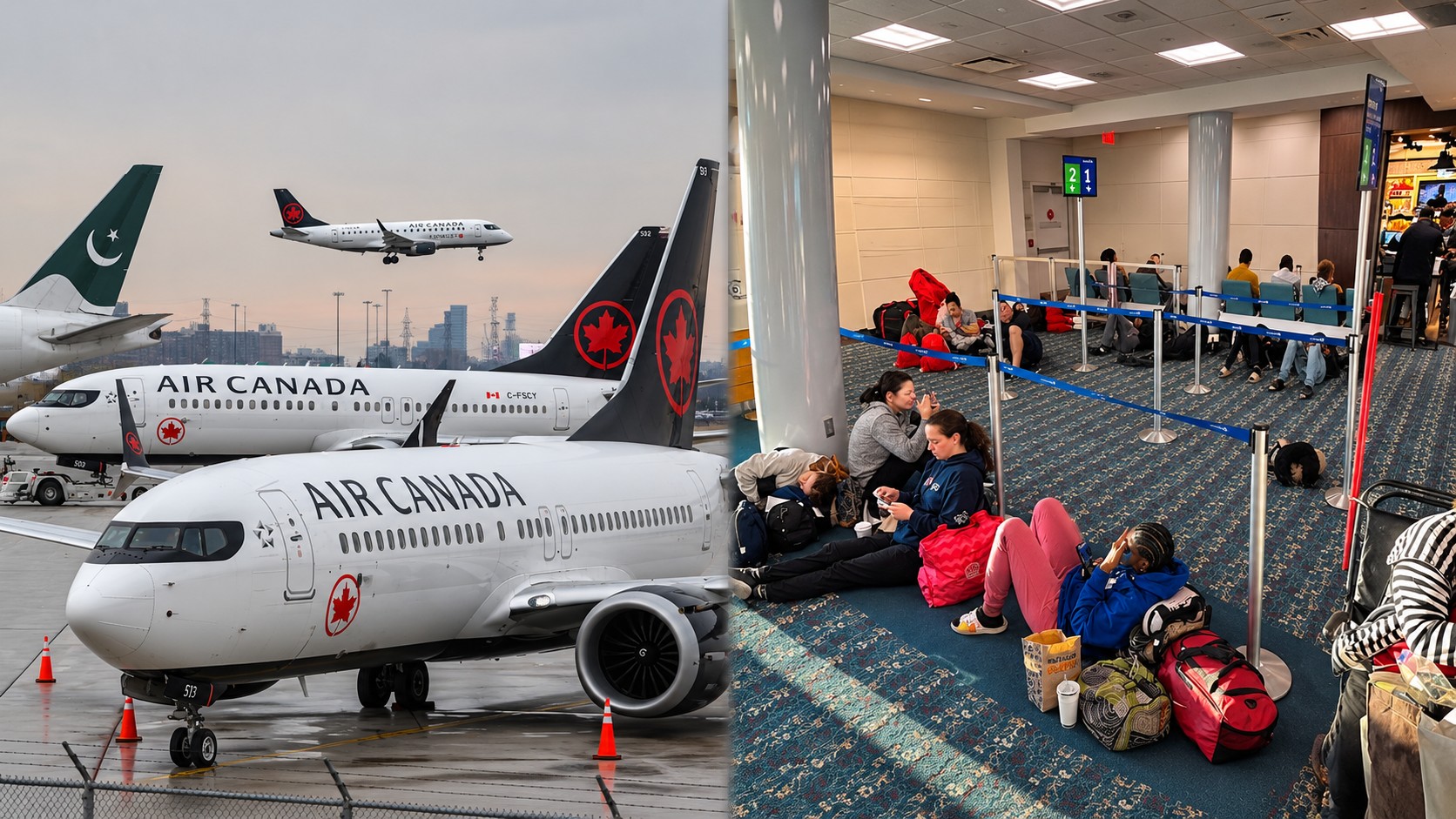
Air Canada cancelled the rest of its Friday flights between Canada and the U.S. It warned that some flights to the Caribbean and South America could be affected too, because they cross U.S. airspace. WestJet said it was monitoring the situation and following regulatory direction.
What travellers should check now
The ground stop is over. The backlog isn’t.
“Some delays may continue while operations return to normal and backlogs are cleared,” Nav Canada said after the stop lifted.
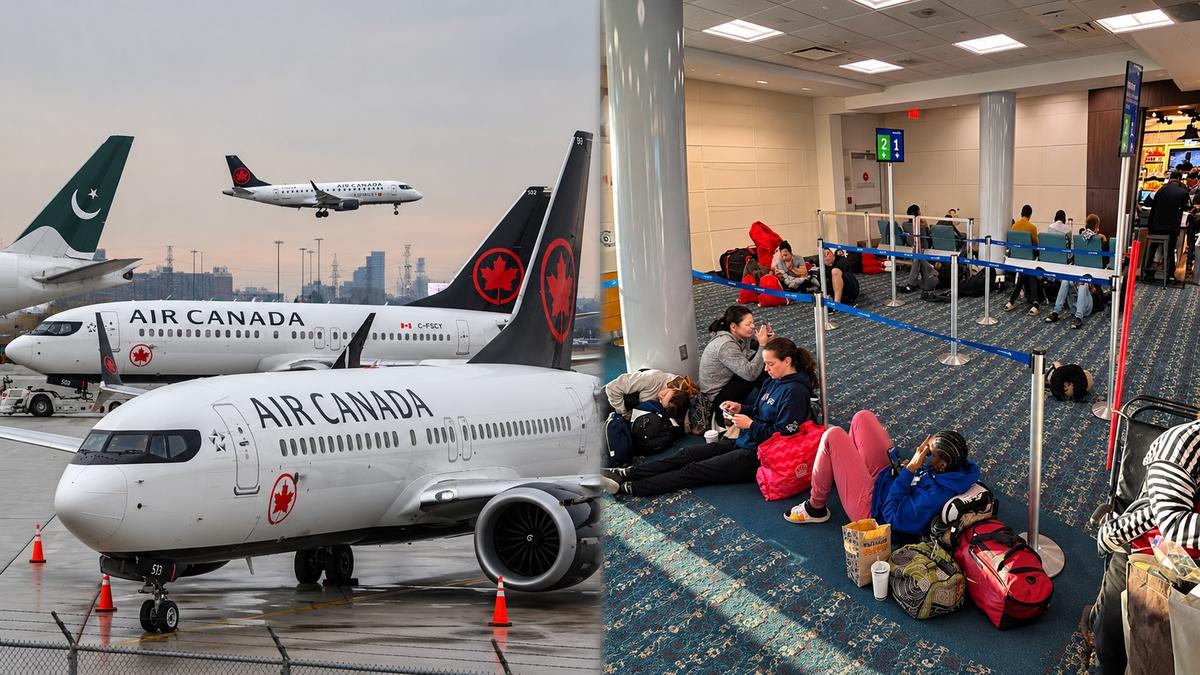
Planes and crews spent more than four hours stuck in the wrong cities, and flights airlines already cancelled won’t come back automatically. Saturday is likely to be rough, especially on routes between Canada and the U.S.
If you’re flying this weekend:
Check your flight directly with your airline before leaving for the airport.
Check every leg, especially if you connect through a U.S. airport.
Don’t cancel on your own until you know your rebooking and refund options.
Don’t arrive late. A delayed departure doesn’t change check-in deadlines.
Keep receipts and notices in case you need to talk to your airline or insurer.
Under Canadian rules, an air traffic control failure is outside an airline’s control. That means compensation generally isn’t owed, but airlines still have to rebook you within 48 hours or offer a refund or other options if they can’t.
Sources
Transport Minister Steven MacKinnon (@stevenmackinnon) on X, Nov. 13, 2026
Nav Canada, statements, Nov. 13, 2026
U.S. Transportation Secretary Sean Duffy (@SecDuffy) on X and remarks, Nov. 13, 2026
Federal Aviation Administration: National Airspace System Status
Leger, survey of Canadian adults, Nov. 6–9, 2026
Canadian Transportation Agency: Air Passenger Protection Regulations





Comments