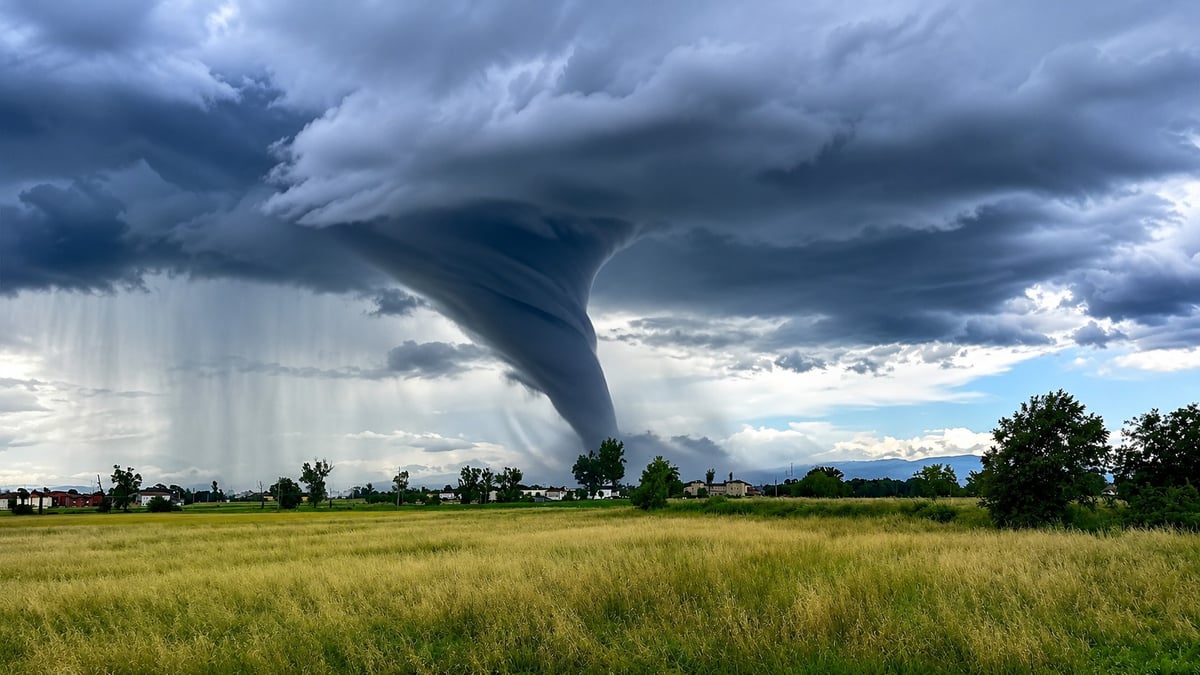
Tornadoes touched down in the Rocky Mountain House area Saturday evening, damaging about 40 homes across Clearwater County and the town, according to local reporting, along with farm buildings, businesses, roads and enough trees to bury whole properties. The extreme risk zone that morning sat east of Edmonton. The storm came down about 215 kilometres to the southwest instead.
Nobody was seriously hurt. Given what the damage path ran through, that's remarkable.
Our forecast coverage from Saturday morning is here:
https://www.culturealberta.com/articles/edmonton-tornado-risk-today-environment-canada-warns-of-extreme-storm-threat-with-baseball-sized-hai
It wasn't one tornado
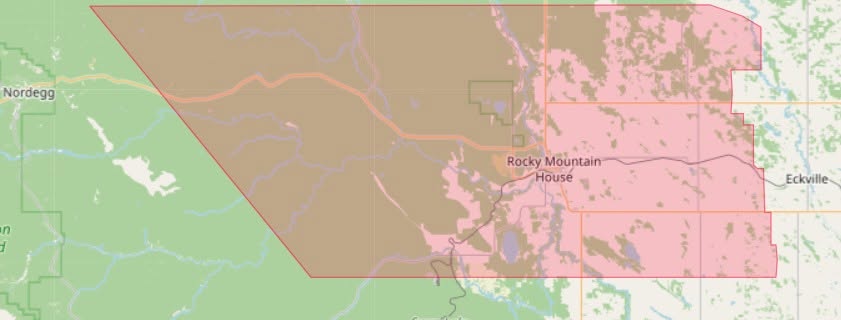
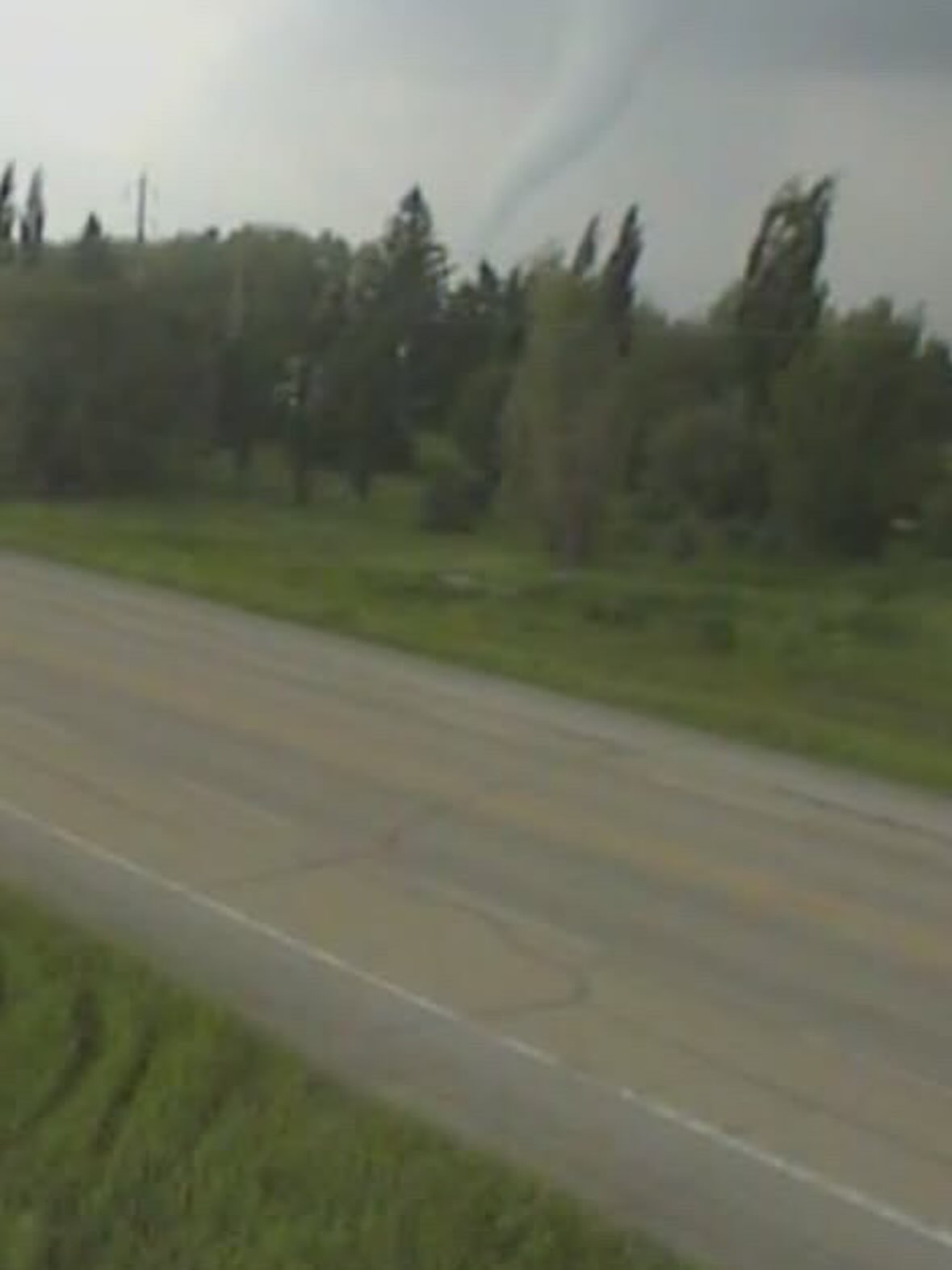
Environment Canada picked up the tornado-producing thunderstorm near Ferrier late Saturday afternoon and issued a red tornado warning around 5:20 p.m., triggering an Alberta Emergency Alert for Clearwater County and Rocky Mountain House. The warning called it a very dangerous and potentially life-threatening situation. A provincial traffic camera on Highway 11 caught a funnel on video east of town, and by 6:21 p.m. Environment Canada was tracking a tornado near Rocky Mountain House itself, moving east toward Codner.
Veteran Alix-based storm chasers Darlene and Theresa Tanner intercepted the storm near Leslieville and saw two tornadoes: the first touching down around 6:30 p.m. just south of the hamlet, and a larger one about 20 minutes later. Darlene Tanner, who has chased storms across the Prairies for years, called the second one probably the biggest she's seen.
She also flagged something worth remembering. Smoke and haze made the tornadoes hard to spot until they were close, when they'd normally be visible from miles away. In a wildfire-smoke summer, the funnel you're watching for may never show itself. The sirens matter more than your eyes.
The Northern Tornadoes Project, the Western University group that investigates every Canadian tornado, confirmed at least one tornado near Rocky Mountain House and surveyed the damage path Sunday on foot and by drone. Their survey will produce the official count and EF ratings in the coming days.
The town was grazed. The county was hit
Inside Rocky Mountain House, the tornado clipped the southeast corner of town. Trees came down and a handful of businesses took siding and roof damage, but no buildings were lost, and Mayor Shane Boniface told Central Alberta Online the town was spared the worst of the storm.
Clearwater County took the real blow. County officials describe significant damage to buildings, homes, trees, roads and infrastructure, with multiple homes, outbuildings, granaries and shops damaged across the rural area. Even so, the county reeve says there have been no reported injuries and no livestock deaths.
Cleanup: where debris goes and which roads to avoid
For residents in the area, the practical details as of Monday.
Crews from the town, county, Alberta Forestry and Parks, Fortis and Blue Mountain Power have been clearing trees and downed lines since Sunday morning. Storm debris is being hauled to the Giant Truck and Car Wash snow dump site for temporary storage, and town residents are asked to bring their own storm debris to the same location. 42nd Avenue was closed temporarily to give crews working room. Cleanup runs 8:30 a.m. to 6 p.m. Monday, then 7 a.m. to 5 p.m. daily until the debris is gone.
Residents are asked to stay out of damaged areas and clear of downed trees and power lines. Updates are posted at clearwatercounty.ca and rockymtnhouse.com.
The province's response, and the tree problem
Four ministers issued a joint statement Sunday, and it flags the issue that will define this cleanup: trees. The province says it has heard "loud and clear" that residents are worried about the volume of downed trees on their properties, and Forestry Minister Todd Loewen says the government is working with local partners on it, with details promised after damage assessments finish.
That's worth watching, because tree removal on private property is exactly the kind of cost that falls into a gap: too widespread for homeowners to handle alone, not always covered cleanly by insurance, and not yet attached to any announced provincial program. The commitment is on record. The details aren't.
What insurance actually covers after a tornado
Buried in the province's statement is the most practical information for anyone with damage, so here it is in plain terms.
Most residential insurance policies cover windstorm and tornado damage to your home. Vehicle damage is covered only if you carry comprehensive or all-perils coverage, basic insurance won't do it. If your home is uninhabitable or you were ordered out, you may be eligible for additional living expense coverage, which pays for temporary accommodation. Businesses may have coverage for lost income and interruption, depending on the policy.
The province's advice: contact your insurer as soon as possible, and document everything before cleanup where it's safe to. For insurance questions, the Insurance Bureau of Canada's Consumer Information Centre is at 1-844-227-5422.
A season that keeps producing
This caps a stretch that's becoming hard to ignore. The tornadoes landed on the same day forecasters flagged storm fuel values they called nearly unheard of in Alberta, one week after a tornado tore through the Dillberry Lake campground near Lloydminster and sent campers to hospital, and in a summer where tornado watches cycled through Edmonton, Red Deer and Lethbridge inside a single week.
Saturday also showed the system working. A red warning and emergency alert went out roughly an hour before the tornado reached town, people took shelter, and a storm that damaged about 40 homes seriously injured no one. That's not luck. That's the warning doing its job.
Sources:
Government of Alberta, West central Alberta tornado joint statement, July 19, 2026: https://www.alberta.ca/release.cfm?xID=96525DC20B3B7-9284-54EF-B545325D32C47710
Alberta Emergency Alert / Environment Canada tornado warning, July 18, 2026
Town of Rocky Mountain House and Clearwater County public updates, July 18–20, 2026
Northern Tornadoes Project, tornado confirmation, July 18, 2026





Comments
Conversation